

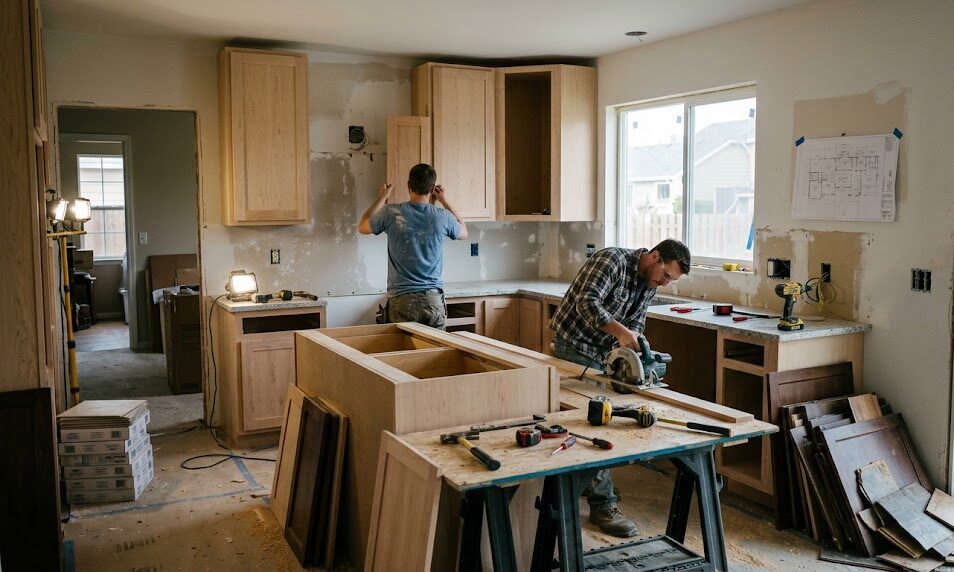
Kitchen Remodeling in Utah: Built to Last
A durable kitchen remodel isn’t just about finishes—it’s about a plan that holds up under real life.
In Utah homes, kitchens take a beating: busy family routines, entertaining, winter boots at the back door, quick breakfasts, homework at the island, and the daily churn of dishes. A “pretty kitchen” can still be a frustrating kitchen if the layout, storage zones, ventilation, lighting, and appliance clearances weren’t designed around how your household actually moves.
In this homeowner-friendly pillar guide, you’ll learn:
- how the design–build process reduces uncertainty (scope, budget, timeline),
- which layout decisions matter most for flow, storage, and seating,
- how to choose cabinets, countertops, appliances, and materials for longevity,
- what to plan early for electrical, lighting, ventilation, and clearances,
- and a practical checklist to help you lock key decisions before ordering cabinets and appliances.
The Fortress Builders is a Utah design–build company built on “strength through structure.” Every project starts with a detailed design blueprint that aligns your vision, budget, and build timeline—then we manage permitting, coordination, and construction with clear communication and disciplined craftsmanship.
Helpful links while you plan:
Quick framing: This page is the “big picture” guide to kitchen remodeling in Utah. If you already know what you’re deciding next, jump into the deeper guides:
What “built to last” means in a kitchen remodel
“Built to last” is a practical standard: the kitchen should stay functional, comfortable, and visually cohesive after the novelty wears off. In real kitchens, durability is a combination of layout, materials, installation quality, and systems planning (electrical, ventilation, and lighting).
Durability has three layers
- Structural + systems durability: properly planned rough-ins, safe electrical work, and ventilation that keeps heat/grease/moisture under control.
- Functional durability: storage that fits your routines, appliance clearances that don’t create daily pinch points, and work zones that reduce friction.
- Finish durability: surfaces that match how your household actually lives—kids, pets, cooking frequency, cleanup habits, and wear patterns.
Homeowner takeaway: A durable kitchen is less about “choosing the most expensive option” and more about choosing the right option for how you live—then installing it correctly with a plan.
Why design–build matters for kitchen remodeling in Utah
Kitchens involve more moving parts than most rooms: cabinetry, countertops, plumbing, electrical, lighting, appliances, ventilation, flooring transitions, and often structural changes. A design–build approach is built to coordinate those parts in the right sequence.
What a clear process prevents
- Late layout changes after cabinets are ordered (expensive and time-consuming).
- Appliance fit surprises (door swings, clearances, panel-ready requirements).
- Ventilation misses (CFM sizing, duct routing, and make-up air planning).
- Lighting regrets (glare, shadows on counters, not enough task light).
- Change-order chaos caused by missing decisions or unclear allowances.
If you’ve ever heard “we’ll figure it out as we go,” that’s the opposite of durability. A kitchen remodel goes smoother when key decisions are locked before demolition.
Step 1: Start with the problems you’re solving (not the finishes)
Most kitchen remodel frustration comes from a mismatch between what you need and what the kitchen currently forces you to do. Before you pick cabinets or countertops, define the problems you want the remodel to eliminate.
Common “real-life” problems worth solving
- Traffic cuts through the work zone (kids and guests pass behind the cook).
- Not enough landing zones near the fridge, sink, or cooktop.
- Storage doesn’t match how you cook (pans far from the range, trash far from prep).
- Counter space exists but isn’t usable (appliances and clutter take it over).
- Ventilation is loud or ineffective (odors linger, grease builds up).
- Lighting creates shadows (prep is harder than it should be).
Simple prompt: “What are the top 5 moments each week when our kitchen feels the worst?” Those moments usually point directly to layout and storage fixes that matter.
Step 2: Layout decisions that drive everything else
Your layout determines what cabinetry can do, where appliances can go, how ventilation is routed, and how comfortable the kitchen feels day to day. This is why layout should be finalized before cabinet orders.
Work triangle vs. work zones (quick refresher)
The traditional work triangle can still be useful, but many modern kitchens perform better when planned as work zones (prep, cooking, cleanup, pantry/storage, coffee/snack station). Start here if you want the framework:
Clearances are where “good on paper” layouts fail
Door swings, walkways, and aisle widths determine whether two people can work at once or whether one open dishwasher shuts down the kitchen.
Islands: value add, or traffic hazard?
Islands can add storage, seating, and prep space—but only if clearances are right. If you’re debating island size, seating, or whether an island belongs at all, use:
The layout rule that saves money: Design the walkways and work aisles first. Size the island (and seating) to what the aisles can comfortably support.
Step 3: Cabinets and storage that fit your routines
Cabinet choices aren’t just style—they’re how your kitchen stays organized for years. The highest ROI cabinet upgrades are usually the ones you feel every day: better drawers, better access, and storage planned around zones.
Start with “what needs to live where”
- Prep zone: knives, cutting boards, mixing bowls, trash, compost (if you use it), and commonly used spices.
- Cooking zone: pots/pans, sheet trays, utensils, oils, and cooking tools near the range/cooktop.
- Cleanup zone: dishes near dishwasher, glassware near storage, and a logical unload path.
- Pantry zone: dry goods, snacks, small appliances, and bulk storage.
Cabinet quality: semi-custom vs custom (and what you’re paying for)
Not every kitchen needs full custom cabinets. But you do want quality construction and smart storage options. Use this guide if you’re weighing your cabinet tiers:
Hardware placement and consistency
Small inconsistencies in hardware placement can make even expensive cabinetry look “off.” For the standards and pro-level alignment rules:
Cabinet style decisions that affect cleaning and longevity
Door style influences cleaning, fingerprints, and how “timeless” the kitchen feels. If you’re deciding between popular modern looks:
Homeowner takeaway: The best cabinet plan is the one that reduces daily friction: fewer steps while cooking, easier unload, and storage that matches the way your household actually uses the kitchen.
Step 4: Countertops, sinks, and the daily “wear zones”
Countertops and sinks take direct abuse. The best choice balances appearance, maintenance, heat/scratch realities, and how you live (kids, entertaining, cooking frequency).
Countertop materials (durability vs maintenance)
If you’re deciding between the big three, start here:
Sink placement affects workflow more than you think
Sink location can either support prep and cleanup—or create constant collisions in the busiest zone of the kitchen.
Step 5: Appliances and ventilation (comfort + performance)
Appliances are a major investment, but they only perform well when the kitchen is designed around their clearances, door swings, power needs, and ventilation requirements.
Plan appliance placement early
Appliance doors that collide with walkways and seating become daily annoyances. Avoid this by planning appliance specs early and coordinating cabinetry around them:
- Built-In Appliances: Layout Tips for Fridges, Wall Ovens, and Microwaves
- Microwave Placement Guide: Drawer, Built-In, or Over-the-Range?
- Dishwasher Placement Rules: Clearances, Door Swings, and Loading Flow
Ventilation: make the kitchen feel clean, not “cooked-in”
Good ventilation improves comfort, reduces lingering odors, and helps keep grease from settling into cabinets and finishes. For the sizing fundamentals:
- Range Hood CFM Sizing: How to Choose Ventilation That Works
- Make-Up Air in a Kitchen Remodel: What It Is and When You Need It
Important note: ventilation and make-up air requirements can vary by jurisdiction and by the hood/appliance specs you choose. Confirm requirements with qualified professionals and local authorities when applicable.
Step 6: Lighting and electrical that make the kitchen easier to use
Lighting is one of the highest-ROI upgrades in a kitchen because it affects safety, comfort, and how the finishes look day and night. Electrical planning matters because kitchens have more outlets, appliances, and task zones than most rooms.
Layered lighting beats “one bright ceiling light”
- Ambient: general light for the entire room (recessed or other fixtures).
- Task: focused light for counters and prep (under-cabinet and targeted fixtures).
- Accent: adds warmth and depth (pendants, toe-kick lighting, interior cabinet lighting).
Go deeper on task lighting and glare control:
- Under-Cabinet Lighting Done Right: Bright Counters Without Glare
- Kitchen Lighting Layers: Recessed, Pendants, and Task Lighting That Works Together
Outlet planning that doesn’t create “afterthought clutter”
Outlet placement is a practical part of design: islands, coffee stations, appliance garages, and charging zones all need power. Planning early prevents visible cords and awkward placements later:
Step 7: Flooring and transitions that handle Utah seasons
In Utah, kitchens see grit, snow melt, and daily wear. The right flooring balances water resistance, comfort underfoot, cleaning, and how it transitions into surrounding rooms.
Start here for a comparison of common options:
- Durable Kitchen Flooring for Utah Homes: Tile, LVP, Hardwood, and More
- Kitchen Floor Transitions: Where to Stop Tile and How to Handle Doorways
Kitchen remodel scope: what “full remodel” can include
Every kitchen remodel is different. A clear scope helps you avoid budget surprises and prevents decision fatigue. In general, kitchen remodeling scope tends to fall into three levels:
| Scope level | What it typically includes | Best for |
|---|---|---|
| Refresh | Selective updates: paint, lighting swaps, new fixtures, maybe countertops or backsplash—layout stays mostly the same. | When the kitchen “works” but looks dated, and you want faster impact. |
| Functional remodel | New cabinets + counters + appliances, improved lighting, better storage, possibly minor layout adjustments. | When daily friction is the issue: storage, workflow, and usability upgrades matter. |
| Full redesign | Layout change, potential structural adjustments, new systems coordination (ventilation, electrical), full material selection plan. | When the layout is the problem and you want a “forever kitchen” built around your routines. |
What to decide before you order cabinets and appliances
Most expensive kitchen regrets come from late changes. The goal is to make the right decisions early—then execute cleanly.
Pre-order “lock list” (print this)
- Final layout: work zones, traffic path, island size, seating plan.
- Appliance specs: model dimensions, door swings, panel-ready needs, venting requirements.
- Ventilation plan: hood type, duct route, make-up air considerations (if applicable).
- Cabinet plan: storage features, drawer sizes, fillers, end panels, toe-kick plan.
- Lighting + electrical plan: recessed layout, under-cabinet lighting, switches, outlet locations.
- Plumbing plan: sink location, disposal, dishwasher connection, shutoff access.
- Flooring + transitions: material choice, where transitions land, height changes.
- Finish schedule: cabinet color, countertop choice, backsplash plan, hardware selection.
Budget and timeline realities (without the sales fluff)
Kitchen remodel timelines vary based on scope, selections, and lead times. Even in well-managed projects, long-lead items (like certain cabinets, appliances, specialty tile, or custom elements) can influence scheduling.
Rather than guessing, build a plan around:
- Scope clarity: what’s included and what’s not (avoid “phantom scope”).
- Selection timing: when each decision must be made to avoid delays.
- Contingency planning: older homes can reveal surprises during demo (plumbing, wiring, framing conditions).
If you’re staging your remodel or prioritizing, this helps:
Utah-specific considerations homeowners should plan for
Utah homes can vary widely by age, construction style, and location. A few factors come up frequently in remodeling projects:
Ventilation and air management
High-powered cooking and frequent entertaining can make ventilation feel like a quality-of-life upgrade. If you’re upgrading a range hood, confirm duct routing feasibility and any make-up air implications early.
Older homes: electrical and framing updates
In older homes, bringing electrical and circuits into alignment with modern kitchen demands can be part of the project. Requirements vary by jurisdiction and scope, so confirm details with qualified professionals and local authorities.
Flooring durability and transitions
Snow melt, grit, and daily wear make durable flooring and thoughtful transitions important—especially near exterior doors and high-traffic paths.
FAQ: kitchen remodeling in Utah (decision-ready answers)
| Question | Practical answer | What to verify |
|---|---|---|
| What should I plan first in a kitchen remodel? | Start with the problems you’re solving (workflow, storage, traffic), then lock the layout and appliance plan before choosing finishes. | Appliance specs, door swings, and ventilation feasibility early—those drive cabinet and electrical decisions. |
| Is an island always a good idea? | No. Islands are great when they improve work zones and seating without shrinking the aisles. Poorly sized islands create pinch points. | Confirm aisle widths and door swings with a real-life test. Use: Island Size Guide. |
| Do I need make-up air for a new range hood? | Sometimes. It depends on hood capacity, how tight your home is, and local requirements. | Confirm with qualified professionals and local authorities; start with: Make-Up Air Guide. |
| What cabinet upgrades are “worth it”? | Full-extension drawers, soft-close hardware, and storage features that match zones tend to have the biggest daily payoff. | Confirm cabinet box quality and drawer hardware specs; see: Semi-Custom vs Custom. |
| How do I avoid expensive late changes? | Use a decision schedule: layout, appliance specs, ventilation, cabinetry plan, electrical/lighting, then finishes. | Use the pre-order lock list above and a planning checklist: Kitchen Remodel Planning Checklist. |
| What’s the simplest way to make my kitchen feel more functional? | Improve work zones, reduce traffic through the cook zone, add task lighting, and optimize storage for daily routines. | Verify clearances and unload paths; start with: Work Zones Guide. |
Real-world proof: how a kitchen comes together in phases
Kitchen remodels feel overwhelming when the sequence is unclear. A simple way to understand the flow is to think in phases:
- Planning + design: define scope, lock layout, choose appliances, build a decision schedule.
- Selections: cabinets, counters, fixtures, flooring, lighting, hardware—timed to lead times.
- Build prep + demo: protect the home, remove old elements, confirm any hidden conditions.
- Rough-ins: plumbing, electrical, ventilation routing—before walls close up.
- Install + finish: cabinets, counters, appliances, lighting, trim details, punch list.
Explore deeper kitchen planning resources
If you’re in “decision mode,” these pages help you go from general ideas to specific choices:
- Kitchen Layout Measurement Guide: How to Measure for Design and Quotes
- Kitchen Seating Options: Island vs. Peninsula vs. Banquette
- Pantry Design Ideas: Walk-In vs. Cabinet Pantry vs. Butler’s Pantry
- Counter-Depth vs. Standard Refrigerators: Fit, Storage, and Cost
- Gas Line vs. Electric for a Kitchen Remodel: What to Plan Early
- Kitchen Backsplash Materials: Tile vs. Slab vs. Panels (Pros and Cons)
Want a kitchen plan that feels calm now—and works for years?
Request a design consult before you order anything
A kitchen remodel goes best when layout, appliances, ventilation, lighting, and finishes are coordinated early—before cabinets are ordered and demo begins.
If you’re planning a kitchen remodel in Davis or Weber County, Fortress Builders can help you clarify scope, validate your layout, and create a decision schedule that prevents expensive late changes.
Request a Design Consult View Kitchen Portfolio Kitchen Planning Checklist
Bring whatever you have—a rough floor plan, a few photos, and your “pain points” list. We’ll help you translate that into a kitchen plan that’s durable, functional, and built to last.