

KITCHEN REMODEL PLANNING
Kitchen Remodel Planning Checklist You Need
A kitchen remodel has a lot of moving parts—layout, cabinets, countertops, lighting, appliances, flooring, and often permits and inspections. The difference between a smooth project and a stressful one usually isn’t luck. It’s planning.
This checklist helps Utah homeowners define scope, make key decisions early, and reduce change orders that can surprise your budget and timeline.
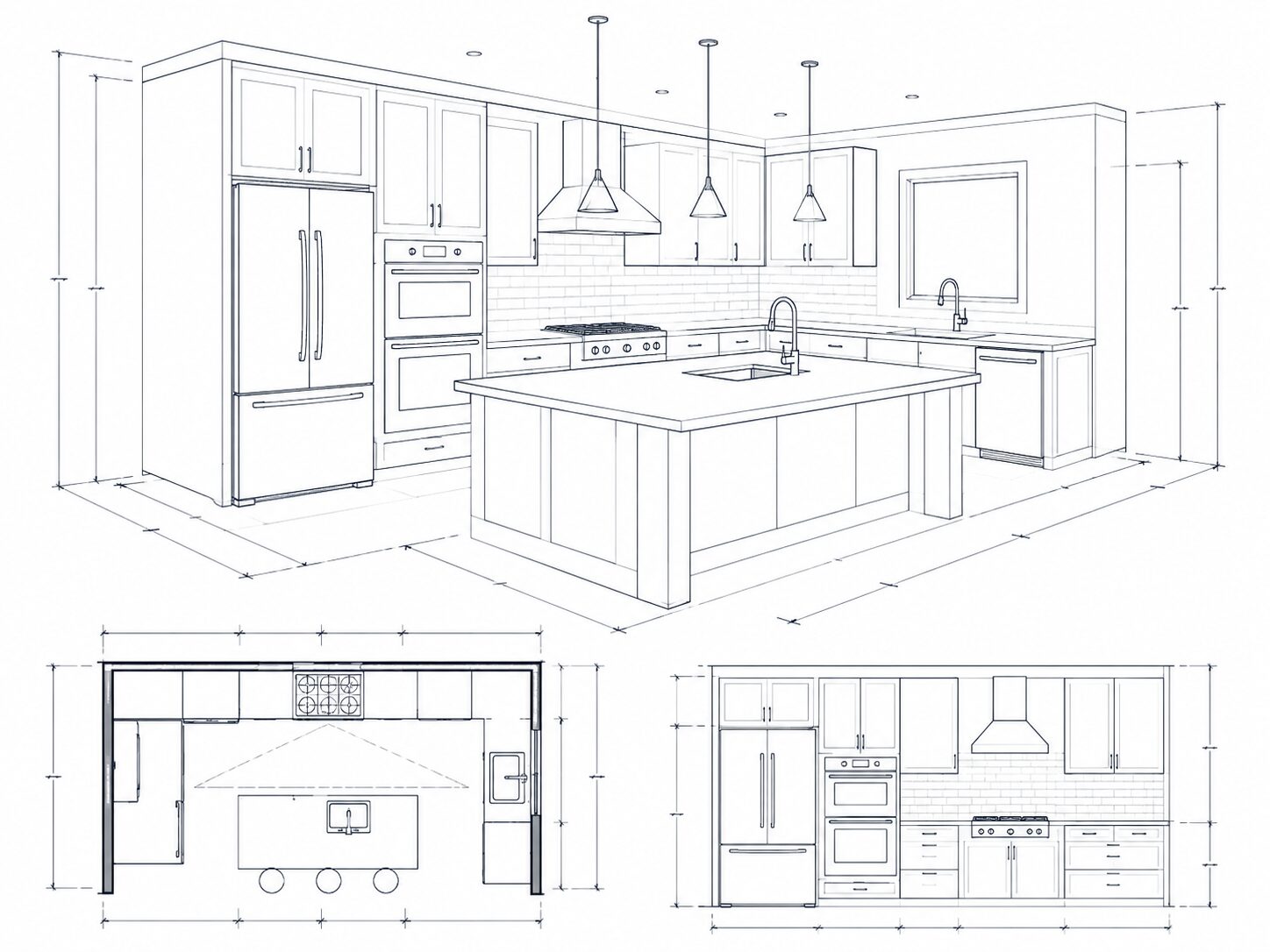
WHY PLANNING MATTERS
Why a Kitchen Remodel Checklist Saves Money and Stress
Most budget overruns come from undefined scope and late decisions. When materials aren’t selected, appliance specs aren’t confirmed, or lighting plans are incomplete, contractors can’t price accurately—and schedules can’t be locked.
Before you get bids, define your scope of work. The more specific your plan is, the more accurate pricing and scheduling can be.
Clear scope
Clearer bids mean fewer allowances and fewer surprises.
Early selections
Cabinets, appliances, and specialty items often have longer lead times.
Planned rough-ins
Electrical, plumbing, and ventilation are easiest to adjust before walls close up.
STEP-BY-STEP CHECKLIST
Use These Steps in Order
Each step reduces decision fatigue later and helps you avoid mid-project changes.
Write your goals
Start with how you want the kitchen to work day-to-day, then add the look and feel. Consider whether you cook daily, entertain often, where traffic flow gets stuck, storage problems, and what you want to keep the same to control cost.
1.
Set a realistic budget range
Even well-planned remodels can uncover hidden conditions behind walls. Build your numbers around overall scope, priorities, must-haves, nice-to-haves, and a contingency reserve.
2.
Define your scope of work
Prevent change orders by deciding what exactly is included: layout, cabinetry, countertops, flooring, lighting, appliances, and the details that drive cabinet and rough-in planning.
3.
Measure what matters
Capture room dimensions, ceiling height, windows, doors, plumbing, gas, electrical, HVAC registers, soffits, islands, walkways, and dining-zone clearances.
4.
Confirm layout strategy
Good kitchens reduce steps and reduce clutter. Focus on work zones for prep, cooking, cleaning, and pantry storage, while keeping circulation out of the main work area.
5.
Choose appliances early
Appliance specs drive cabinet sizes, clearances, ventilation, and electrical requirements. Confirm models before cabinets are finalized.
6.
BEHIND THE WALLS
Plan Rough-Ins Before Walls Close
Plumbing, electrical, lighting, and ventilation decisions determine how the kitchen functions for years. They are easier to plan than to fix later.
Lighting & Electrical
Layered lighting, outlet locations, dedicated circuits, under-cabinet lighting, and dimming all affect daily comfort and safety.
Appliances & Ventilation
Hood selection, duct routing, make-up air considerations, and quiet performance should be coordinated before cabinet order and rough-in work.
Flooring & Surfaces
Floor-height changes, transitions, thresholds, and durable materials should be coordinated with cabinetry and appliances.
Important: Building code requirements, including electrical, ventilation, make-up air rules, and inspection processes can vary by city and project conditions. Confirm details with qualified professionals and your local building department. A design-build team can coordinate plans and permitting so requirements are addressed early, not mid-project.
SELECTIONS & LEAD TIMES
Finalize Materials Before the Schedule Depends on Them
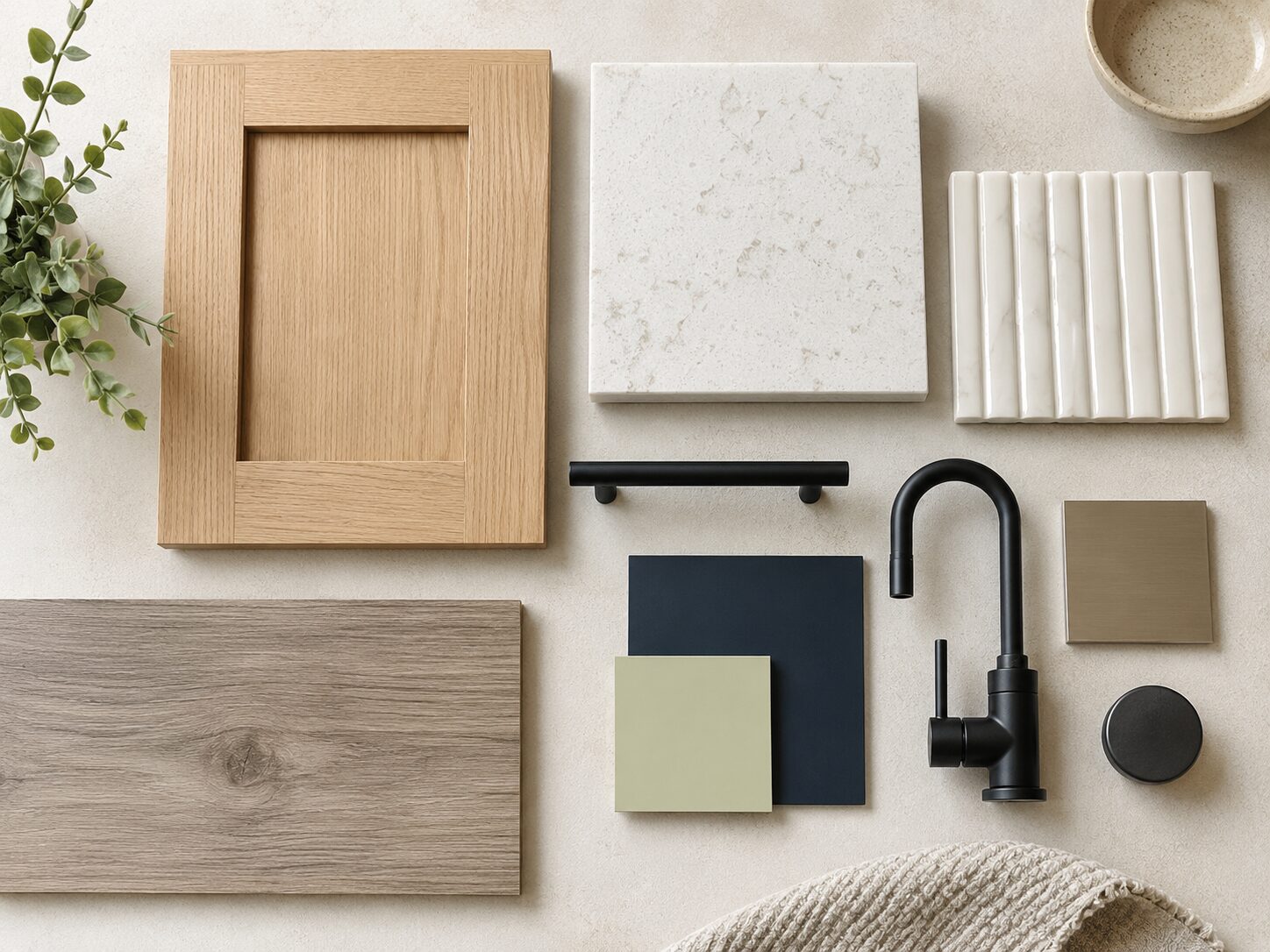
Selections are where budgets often drift. Keep it organized, confirm what’s included, and track lead times before construction depends on missing pieces.
Detail planning—like what goes in which drawers—helps you design storage intentionally and can reveal smart places to keep what’s working to control costs.
- Cabinet door style, finish, and hardware
- Countertops, backsplash, grout, and edge details
- Sink, faucet, and garbage disposal
- Appliances, model numbers, trim kits, and panels
- Lighting fixtures, bulb temperatures, and dimmers
- Flooring material, pattern direction, and transitions
- Paint colors and trim details
TIMELINE & LIVABILITY
Build a Realistic Timeline That Includes Planning, Ordering, and Daily Life
Your timeline should include planning and ordering—not just construction. Plan for design, scope alignment, ordering, permits if required, construction sequencing, inspections, finishes, installation, punch list, and final walkthrough.
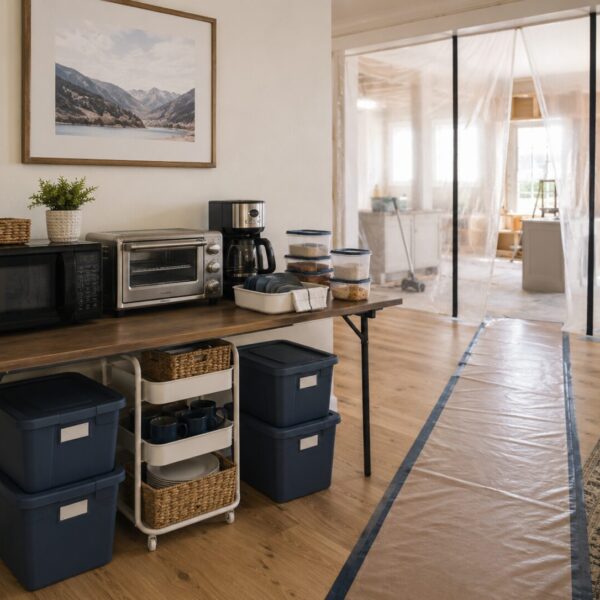
Kitchens affect daily routines more than almost any other room. Decide where small appliances will live, how you’ll handle dishwashing and food storage, how adjacent rooms will be protected from dust and traffic, and what daily cleanup expectations look like.
Design & scope
Layout, selections, drawings, and pricing alignment.
Ordering
Cabinets, appliances, fixtures, and lead-time tracking.
Construction
Demo, rough-ins, inspections, drywall, finishes, install, and punch list.
Closeout
Final walkthrough, care instructions, and any applicable warranty details.
Final Before-You-Start Kitchen Remodel Checklist
The goal isn’t perfection. It’s clarity. Clear decisions early create smoother builds, fewer surprises, and a finished kitchen that feels intentional.
Scope is written
What’s in, what’s out, and what is being priced.
Layout is finalized
Island size, seating, clearances, and circulation are confirmed.
Appliance models are confirmed
Sizes, power needs, and ventilation plan are documented.
Lighting plan is complete
Fixture locations, dimmers, and under-cabinet lighting are planned.
Flooring plan is complete
Material, transitions, direction, and thresholds are clear.
Selections are documented
Cabinets, hardware, counters, backsplash, paint, and trim are listed.
Lead times are checked
Ordered items are tracked so schedule risks are visible early.
Permits are clarified
Applicable permits and inspections are confirmed and scheduled appropriately.

If remodeling costs feel confusing, come back to scope. Price becomes clearer when what’s included is clearly defined.
KEY TAKEAWAYS & FAQ
Kitchen Remodel Planning Questions
Scope first. Define what’s included and excluded before bids and pricing. Decide early. Appliances, lighting, and selections drive cabinets, rough-ins, and lead times. Document everything. Clear decisions reduce change orders and protect the schedule.
Start with function. Clarify how you cook, entertain, move through the space, store everyday items, and what you want to keep the same to control cost.
Appliance specs drive cabinet sizes, clearances, ventilation, and electrical requirements. Confirming appliances early helps prevent expensive cabinet and rough-in changes.
Write a specific scope of work, document selections, confirm lead times, finalize lighting and appliance requirements, and clarify what is included before construction begins.
Permit needs vary by city and project conditions, especially where electrical, ventilation, plumbing, and structural changes are involved. Confirm requirements with qualified professionals and your local building department.
Plan a temporary kitchen, decide where small appliances will live, handle dishwashing and food storage, protect adjacent rooms, and agree on daily cleanup expectations and jobsite boundaries.
YOUR VISION. OUR CRAFT. ONE FORTRESS.
Want a Pro to Sanity-Check Your Kitchen Remodel Plan?
The fastest way to reduce stress is to confirm your scope, selections, and timeline before you commit. Fortress Builders is a design-build team built on strength through structure: clear plans, disciplined execution, and durable results.
We’ll help you clarify decisions that protect your budget, align expectations, and keep your kitchen remodel moving forward with confidence.
