

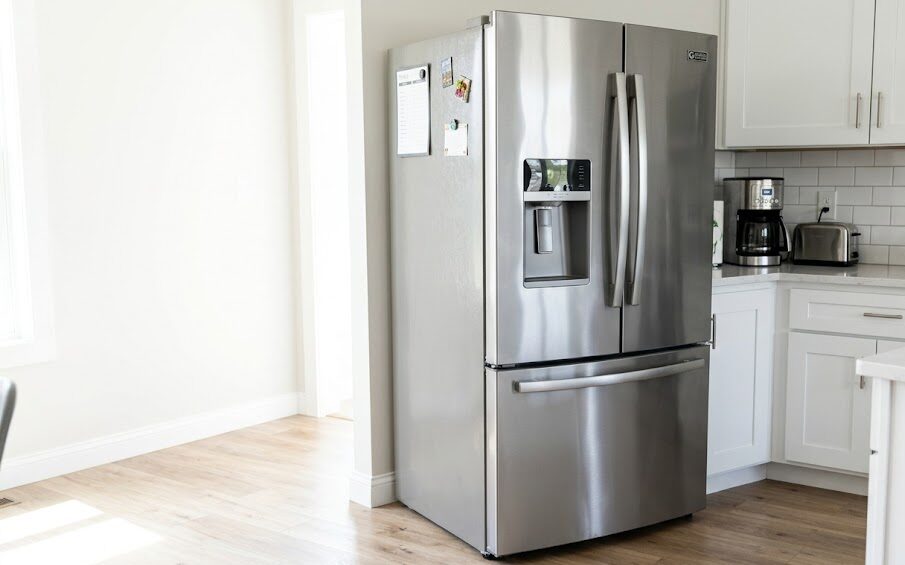
Counter-Depth vs. Standard Refrigerators: Fit, Storage, and Cost
A well-planned kitchen remodel saves time, money, and daily frustration. And one of the easiest ways to create avoidable frustration is to choose a refrigerator based on a showroom look instead of how it will actually fit, function, and interact with your cabinets, walkways, and daily routines.
At first glance, the choice between a counter-depth refrigerator and a standard-depth refrigerator sounds simple. One sits closer to the cabinet line. The other gives you more interior capacity. But once you start planning a real kitchen, the decision affects far more than appearance. It influences aisle clearances, door swing, landing zones, pantry reliance, cabinet depth strategy, utility placement, and even how open or crowded the room feels once the remodel is complete.
In this homeowner-friendly guide, you’ll learn:
- what “counter-depth” and “standard-depth” really mean in real kitchens,
- how to compare fit, storage, and cost without getting lost in marketing language,
- which option works better for different cooking, shopping, and hosting habits,
- what to confirm before ordering cabinets and appliances,
- and how refrigerator planning connects to ventilation, lighting, layout, and cabinet design.
The Fortress Builders approaches kitchen remodeling as a coordinated design-build process. That matters here because refrigerators are not stand-alone purchases in a remodel. Their size and placement affect cabinet panels, filler pieces, appliance garages, island clearance, and how the kitchen feels every day once the dust settles.
Helpful Fortress Builders pages while you plan:
What “counter-depth” and “standard-depth” actually mean
Before comparing anything else, it helps to clear up one common misunderstanding: “counter-depth” does not mean a refrigerator sits perfectly flush with your counters like a true built-in. And “standard-depth” does not automatically mean it will look awkward or oversized. These are general categories, not precise visual guarantees.
Counter-depth refrigerators are designed to project less into the room than full-depth models. They usually align more closely with surrounding cabinetry and can make a kitchen look more streamlined.
Standard-depth refrigerators extend farther past the cabinet line but usually offer more interior storage for the same width category. They are often chosen when maximizing usable volume is more important than minimizing projection.
Even within these categories, actual dimensions vary by brand, door style, hinge design, handle projection, and whether the unit is freestanding, panel-ready, or designed to mimic a built-in look. That is why refrigerator planning should always be based on the exact model specifications—not just the label.
Homeowner takeaway: A “counter-depth” refrigerator is usually about visual fit and aisle friendliness. A “standard-depth” refrigerator is usually about storage value. But the right answer depends on how your kitchen is laid out and how your household lives.
Why this decision matters more in a remodel than in a simple appliance swap
If you are replacing a refrigerator without changing cabinets, the decision is mostly about what fits the existing opening. In a remodel, the refrigerator choice shapes the kitchen itself. Cabinet runs, panel details, traffic flow, pantry sizing, and the feel of the room all start shifting around this one appliance.
- Cabinet depth coordination: Counter-depth models usually look more integrated with surrounding cabinetry.
- Walkway comfort: Standard-depth units can project farther into aisles and affect how roomy the kitchen feels.
- Storage strategy: A smaller refrigerator may push you toward a better pantry plan or more disciplined organization.
- Door swing and landing zones: Refrigerator doors, drawers, and adjacent cabinet doors all need to work together.
- Overall kitchen balance: In some kitchens, a deeper fridge feels fine. In others, it can become the visual “bump” that makes the whole room feel tighter.
That is why a design-build team will usually evaluate refrigerator depth alongside layout and cabinet planning, not after the cabinets are already being ordered.
The simplest comparison: fit, storage, and cost
| Factor | Counter-Depth Refrigerator | Standard-Depth Refrigerator |
|---|---|---|
| Visual fit | Usually aligns better with cabinetry and looks less bulky in the room. | Projects farther into the kitchen and is more noticeable visually. |
| Interior storage | Usually offers less capacity than a similar-width full-depth model. | Usually offers more usable storage volume for groceries and larger items. |
| Aisle impact | Often helps preserve walkway comfort in tighter layouts. | Can reduce perceived openness in narrow kitchens or around islands. |
| Price value | Often costs more per cubic foot because the shallower profile is part of the premium. | Often offers better storage value for the price. |
| Best fit | Design-focused remodels, tighter kitchens, and homeowners prioritizing a streamlined look. | Families prioritizing capacity, bulk shopping, and maximum function per dollar. |
Fit: where counter-depth often wins
Fit is not just about whether the refrigerator physically slides into the opening. It is about how the appliance interacts with the whole room once installed. This is where counter-depth refrigerators usually make their strongest case.
They usually keep the cabinet line cleaner
Because they project less into the room, counter-depth refrigerators often make the kitchen feel more tailored. That can be especially valuable in design-forward remodels, open-concept kitchens, and spaces where you want the appliance wall to feel less dominant.
They can improve traffic flow in tighter kitchens
In galley kitchens, compact U-shaped kitchens, and kitchens with tight island clearances, even a few inches matter. A refrigerator that sticks out farther can create pinch points during busy moments—especially when multiple people are moving through the space.
They often support a more intentional built-in look
Although counter-depth is not the same as a true built-in appliance, it can support a more cohesive appearance—especially when paired with side panels, finished end panels, or tall surrounding cabinetry.
If you are trying to avoid awkward door collisions or tight walkways, these guides help: Kitchen Clearances, Doorways, and Walkways, Kitchen Island Size Guide, and Built-In Appliances Planning.
Counter-depth is often the stronger fit choice when:
- Your kitchen is narrow or walkway space is already tight.
- You want the appliance wall to feel quieter and less bulky.
- The refrigerator sits near an island, doorway, or major traffic path.
- You are investing in cabinetry and want the appliance to feel better integrated.
- You are aiming for a more modern, transitional, or design-forward result.
Storage: where standard-depth often wins
The strongest argument for standard-depth refrigerators is straightforward: they usually store more. For many households, that alone makes the decision. More depth often means more flexibility for large platters, leftovers, meal prep containers, bulk items, and the general messiness of real life.
More capacity for larger households
If you cook often, buy in bulk, host regularly, or have a larger family, refrigerator capacity may matter more than cabinet alignment. A fuller-depth unit can reduce the daily friction of overstuffed shelves, difficult organization, and constant cramming.
Better value per cubic foot
Standard-depth refrigerators often deliver more usable storage for the money. If the budget has to cover cabinetry, countertops, lighting, and other upgrades, some homeowners would rather allocate less money to the “sleek fit” premium and more money to overall kitchen function.
Less dependence on pantry overflow
Choosing a shallower refrigerator sometimes pushes more burden onto pantry design, freezer planning, and overflow storage. That is not necessarily bad if the kitchen is designed accordingly—but it is something to think through in advance.
If food storage strategy is a big priority, these related planning articles may help: Pantry Design Ideas, Kitchen Workflow Planning for Families, and Work Triangle vs. Work Zones.
Practical truth: Homeowners rarely regret having enough cold storage. They do sometimes regret choosing a sleek-looking refrigerator that feels too tight once the kitchen is in daily use.
Cost: it is not only about sticker price
When comparing counter depth vs standard refrigerator cost, many homeowners focus only on the appliance price. That matters, of course—but in a remodel, cost should also include cabinet coordination, storage tradeoffs, and whether the selected unit forces additional design adjustments.
Appliance price
Counter-depth refrigerators often cost more for less capacity. In many product lines, you are paying a premium for appearance and fit rather than raw storage volume.
Cabinet and panel coordination
A design that emphasizes clean alignment around the refrigerator may call for finished side panels, filler pieces, tall end panels, or more custom cabinet planning. Sometimes that is worth it. Sometimes it is not. But it should be counted as part of the decision.
Storage replacement cost
If a smaller refrigerator means you need a larger pantry, secondary beverage fridge, garage freezer, or more built-in organization, those decisions also affect overall kitchen cost and layout.
When comparing cost, ask:
- What is the appliance price difference between the exact models I’m considering?
- Will the refrigerator depth change cabinet or panel costs?
- Will I need extra pantry or overflow storage if I choose the shallower unit?
- Does the better fit improve the kitchen enough to justify the premium?
- Which option will I still be happier with after a year of daily use?
Clearances, door swing, and ergonomic placement matter more than depth alone
A refrigerator can technically fit and still be the wrong choice if the doors do not open comfortably, drawers cannot pull out fully, or nearby traffic shuts down every time someone grabs milk. This is one of the most important kitchen remodeling tips to keep in mind during appliance planning.
Door swing clearance
Refrigerator doors need room to open wide enough for drawers, bins, and crispers to function properly. A nearby wall, island, or tall pantry can interfere even if the appliance itself “fits” the opening.
Handle projection matters too
Do not forget handles. In some models, handle projection adds several inches to the total front profile and affects how far the appliance extends into the room.
Landing zones help daily comfort
The refrigerator is one of the most-used appliances in the kitchen. It works best when there is nearby counter space for groceries, lunches, snacks, and everyday unloading. That may influence whether you prioritize a shallower profile or greater interior capacity.
Family routines matter
In some homes, the fridge is mostly accessed by one or two adults. In others, kids, guests, and multiple cooks are constantly moving through that zone. The right refrigerator depth can reduce friction during breakfast rushes and evening cleanup.
These related guides support this part of the planning process: Kitchen Sink Placement: Island vs Perimeter, Kitchen Seating: Island vs Peninsula vs Banquette, and Kitchen Clearances, Doorways, and Walkways.
Simple test: If the refrigerator zone already feels crowded on paper, a deeper unit rarely makes it feel better in real life.
How your cooking and shopping habits should drive the decision
The best refrigerator is not always the one that looks the best in a staged kitchen photo. It is the one that works for the way your household shops, cooks, stores, and hosts.
Choose based on how you shop
- Frequent smaller grocery trips: Counter-depth may work just fine.
- Bulk shopping or warehouse runs: Standard-depth often makes life easier.
- Meal prep households: More capacity may be worth the projection.
- Minimalist or highly organized households: A counter-depth unit may feel sufficient and more visually satisfying.
Choose based on how you cook
If your kitchen supports heavy weekly cooking, large produce loads, leftovers, marinating, and large serving dishes, the storage difference becomes more important. If cooking is simpler and the kitchen is more about aesthetics and ease of movement, the shallower profile may be the better overall choice.
Choose based on how you host
Hosts often need more beverage space, party tray space, and overflow capacity. That may point toward a standard-depth refrigerator—or toward a counter-depth main fridge paired with a beverage station, bar fridge, or better pantry design elsewhere in the home.
The 5-minute refrigerator planning profile
- Household size: How many people use the kitchen every day?
- Shopping frequency: Small frequent trips or fewer large stock-up trips?
- Cooking volume: Light daily use or heavy batch cooking?
- Hosting style: Rare entertaining or frequent gatherings?
- Kitchen size: Generous layout or tighter walkways?
Why this matters: These answers usually reveal whether capacity or fit should take priority.
Cabinet planning: the refrigerator affects more than the refrigerator opening
One of the most common planning mistakes is assuming the refrigerator only matters within its own footprint. In reality, it affects surrounding panels, overhead cabinets, filler pieces, end conditions, ventilation gaps, and the way the appliance wall feels as a whole.
Surround panels and fillers
If you want the refrigerator to feel integrated, cabinet side panels and filler allowances need to be planned from the beginning. This is especially important with counter-depth models, where appearance is part of the value proposition.
Tall cabinet relationships
Refrigerators often sit near pantry cabinets, oven towers, or tall utility storage. The visual balance between these vertical elements affects whether the kitchen feels custom or pieced together.
Upper cabinet depth and alignment
The refrigerator choice may affect how adjacent upper cabinets terminate or how deep surrounding cabinetry should appear. That is why appliance selection belongs in the cabinet design phase—not the day before ordering.
Helpful related reads: Semi-Custom vs. Custom Cabinets, Cabinets and Countertops, and Cabinet Refacing vs. Replacing.
Utilities: power, water, and planning access early
Most refrigerator comparisons focus on depth and storage, but in a remodel, utilities still matter. Refrigerators may require dedicated electrical placement, water line access for ice and filtered water, and enough installation space to avoid awkward service issues later.
Power location
Outlet placement should be coordinated so the refrigerator can sit correctly without forcing awkward cord routing or interfering with depth and rear clearance requirements.
Water line placement
If the refrigerator includes ice or water, the water line location should support clean installation and future serviceability. Exact requirements vary by model and by how the cabinetry is designed around the appliance.
Service and pull-out access
Even the best refrigerator will eventually need cleaning, servicing, or replacement. Planning enough access around the appliance helps avoid future headaches.
Important note: Appliance electrical, water supply, and installation requirements vary by model and home conditions. Final utility placement should always be confirmed using the exact manufacturer specifications and coordinated with qualified professionals.
Where ventilation enters the conversation
The refrigerator itself does not drive kitchen ventilation the way a cooktop or range hood does. But appliance planning as a whole should still be coordinated together. When homeowners are comparing refrigerator sizes and refrigerator wall layouts, they are often also deciding where ranges, wall ovens, microwaves, and ventilation will go.
That means the refrigerator decision should not happen in isolation from the rest of the appliance plan. The kitchen needs to work as a system.
Coordinate appliance zones together
A refrigerator that fits beautifully but forces awkward placement of the range, wall ovens, or ventilation strategy is not a win. Consider the full appliance wall and cooking zone at the same time.
Ventilation still matters to the overall plan
If the refrigerator decision changes layout enough to affect where the cooktop or hood sits, you will also want to think through hood type, duct routing, airflow, and noise. Those details are covered in Range Hood CFM Sizing, Make-Up Air in a Kitchen Remodel, and Kitchen Appliances & Ventilation.
Which option usually works best in different kitchen types?
Galley kitchens
Counter-depth refrigerators often perform well in galley layouts because walkway space is so precious. Even a small reduction in projection can help the kitchen feel more comfortable.
Related read: Galley Kitchen Remodel Ideas.
Open-concept kitchens
In open-concept spaces, counter-depth often wins on appearance because the appliance is visible from multiple angles. That said, larger households in open layouts may still prefer standard-depth for capacity.
Related read: Open-Concept Kitchen Remodel: Pros and Cons.
Large family kitchens with generous aisles
If you have the space, standard-depth can be a practical choice. A larger kitchen can absorb the projection more easily, making the storage benefit harder to ignore.
Design-forward kitchens with paneling or integrated looks
Counter-depth often makes more sense when the goal is a refined appliance wall or a more furniture-like cabinet composition. In those kitchens, visual fit may be worth the capacity tradeoff.
| Kitchen Situation | Option That Often Makes More Sense |
|---|---|
| Narrow kitchen or tight island clearance | Counter-depth often helps preserve comfort and reduce crowding. |
| Large family that shops in bulk | Standard-depth often provides the capacity advantage that matters most. |
| High-design kitchen with integrated cabinetry goals | Counter-depth often supports the cleaner look more effectively. |
| Budget-sensitive remodel prioritizing function | Standard-depth often gives more storage per dollar. |
Common mistakes homeowners make with refrigerator planning
Mistake 1: Choosing only by appearance
A sleek refrigerator can look great in a showroom but feel frustrating at home if the interior capacity does not match your habits.
Mistake 2: Choosing only by cubic feet
More capacity is attractive, but not if the refrigerator creates daily collisions at the island, blocks a doorway, or makes the kitchen feel cramped.
Mistake 3: Ignoring exact model specs
Depth category alone is not enough. Always review the actual cut sheet, including door thickness, handle projection, hinge clearance, and required installation dimensions.
Mistake 4: Finalizing cabinets before locking the appliance model
This is one of the most expensive refrigerator planning mistakes. Cabinet and panel details should be based on the actual refrigerator model—or a tightly narrowed shortlist—before final orders are placed.
Mistake 5: Forgetting the pantry and overflow plan
A shallower refrigerator can work beautifully if the pantry and kitchen storage plan support it. Without that support, the tradeoff may feel more painful after move-in.
Before ordering, confirm all of the following:
- Exact refrigerator model number
- Total depth with handles
- Door swing and drawer pull-out clearance
- Side clearance if doors need to open fully
- Panel, filler, and cabinet surround plan
- Electrical and water line locations
- Landing zone near the fridge
- How the choice affects pantry and food storage strategy
Ordering timelines and remodel coordination
Appliance selection timing matters more than many homeowners expect. If the refrigerator is chosen too late, cabinet dimensions, panel plans, and surrounding appliance coordination can all suffer.
Select early enough to support cabinet design
Even if you do not purchase immediately, narrowing the refrigerator choice to an exact model or a short list early helps prevent redesigns and change orders later.
Coordinate all major appliances together
The refrigerator decision should align with cooktop or range placement, wall oven plans, microwave strategy, and pantry layout. It is much easier to make good tradeoffs when all those pieces are visible together.
Use the design phase to solve the hidden details
This is one reason Fortress Builders starts with a design blueprint. Appliances, cabinets, layout, and selections are all tied together before demolition begins, which reduces surprises and mid-project compromises.
Helpful planning support: Timeline and What to Expect, Budgeting for Your Remodel, and Your Guide to a Seamless Remodel.
FAQ: Counter-depth vs. standard refrigerators
Is a counter-depth refrigerator the same as a built-in refrigerator?
No. A counter-depth refrigerator is generally shallower than a full-depth model, but it is not the same as a true built-in appliance. It usually still projects somewhat beyond cabinets and has different installation and price implications.
Do counter-depth refrigerators always look better?
They often look cleaner and less bulky, especially in design-forward kitchens. But “better” depends on the layout, cabinet plan, and whether the reduced storage fits your daily life.
Are standard-depth refrigerators always the better value?
Often, yes, in terms of storage per dollar. But overall value depends on whether the larger projection creates layout compromises or reduces comfort in the room.
Which option is better for resale?
There is no one-size-fits-all answer. A beautifully planned kitchen that functions well and looks intentional tends to matter more than the refrigerator category by itself. The stronger resale choice is usually the one that best fits the kitchen design and household expectations for the home’s price range.
Can I make a standard-depth refrigerator look more built-in?
Sometimes, yes, with thoughtful paneling and cabinet design. But it will still project more into the room than a shallower model. The best visual result depends on the exact layout and appliance wall composition.
Conclusion: choose the refrigerator that makes the whole kitchen work better
The counter-depth vs. standard refrigerator decision is not really about which option is “best.” It is about which option makes your kitchen work better as a whole.
If you value a streamlined look, tighter walkways, and a more integrated cabinet line, a counter-depth refrigerator may be worth the premium. If you value raw storage, grocery flexibility, and more capacity per dollar, a standard-depth refrigerator may be the better fit. The right choice depends on your layout, shopping habits, cooking routines, and how much the visual profile matters in your specific kitchen.
A smart kitchen renovation planning process looks at all of that before cabinets are ordered and before the appliance gets reduced to a last-minute showroom decision. That is how you avoid choosing something that looks right on paper but feels wrong in daily life.
Want a second set of eyes on your refrigerator and appliance plan before you commit?
If you’re remodeling a kitchen in Davis or Weber County, Fortress Builders can help you evaluate refrigerator depth, cabinet integration, clearances, landing zones, and the broader appliance layout so the final kitchen feels as good as it looks.
Request a Design Consult Explore Kitchen Remodeling Appliances & Ventilation
Bring your rough kitchen layout, appliance shortlist, and any cabinet ideas you already have. Fortress Builders can help you sort through the tradeoffs before you order materials or start demolition.