

Kitchen Design & Layouts: Built to Last
We plan, design, and build kitchens that combine smart layouts, custom cabinetry, durable surfaces, and thoughtful lighting — delivered on time and within budget for homeowners across Davis & Weber Counties.
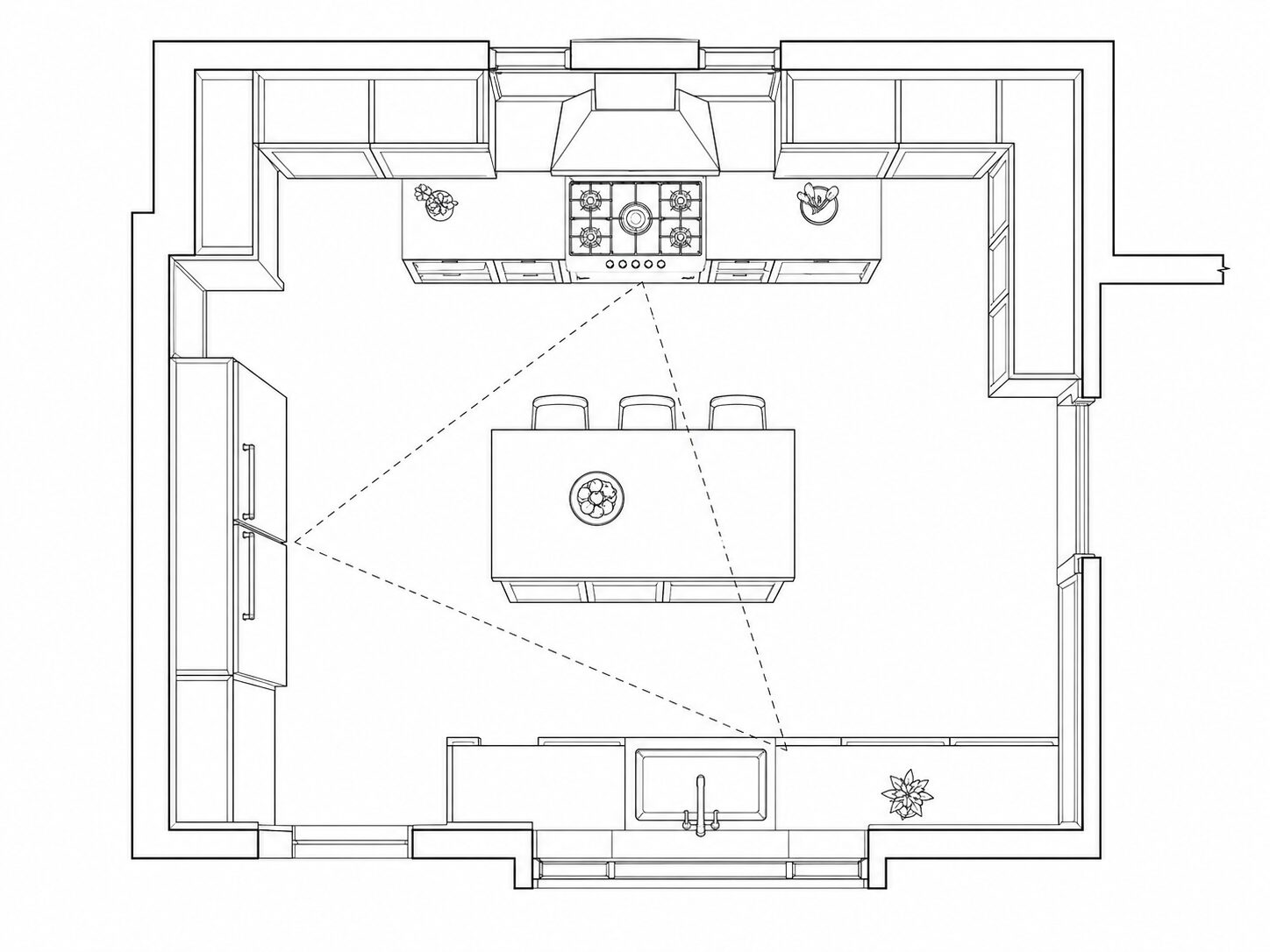
Great kitchen design starts with how you actually cook, gather, and live.
We make it a joy to use — thoughtful layouts, durable materials, and details that make everyday cooking, hosting, and cleanup easier. With clear timelines and respectful job sites, you’ll enjoy the journey as much as the finished space.
KEY LAYOUT PRINCIPLES
The Work Triangle
Connect your stove, sink, and refrigerator with minimal steps for efficient cooking and cleanup flow.
Task Zoning
Dedicate areas for cooking, prepping, cleaning, and socializing — with islands and breakfast bars pulling double duty.
Space Planning
Vertical storage for small kitchens, open-plan layouts for large ones — every square foot should earn its place.
Layered Lighting
Task, ambient, and accent lighting working together — under-cabinet LEDs, pendants over the island, and natural light where possible.
Design Best Practices
Natural Light & Ventilation
Larger windows, glass doors, or skylights create a bright, airy atmosphere. Modern range hoods keep the air clean while adding a design element — especially important in open-plan layouts.
Smart Storage Solutions
Pull-out shelves, lazy Susans, corner organizers, walk-in pantries, and appliance garages keep counters clutter-free and everything within reach. Good storage is what separates a kitchen that looks great on day one from one that still works on year ten.
Durable, Sustainable Materials
We favor materials that stand up to daily use — quartz and granite countertops, energy-efficient appliances, low-VOC finishes, and flooring that handles foot traffic without showing it. Style that lasts is always more practical than style that fades.
Design Trends Worth Considering
Bold Colors & Patterns
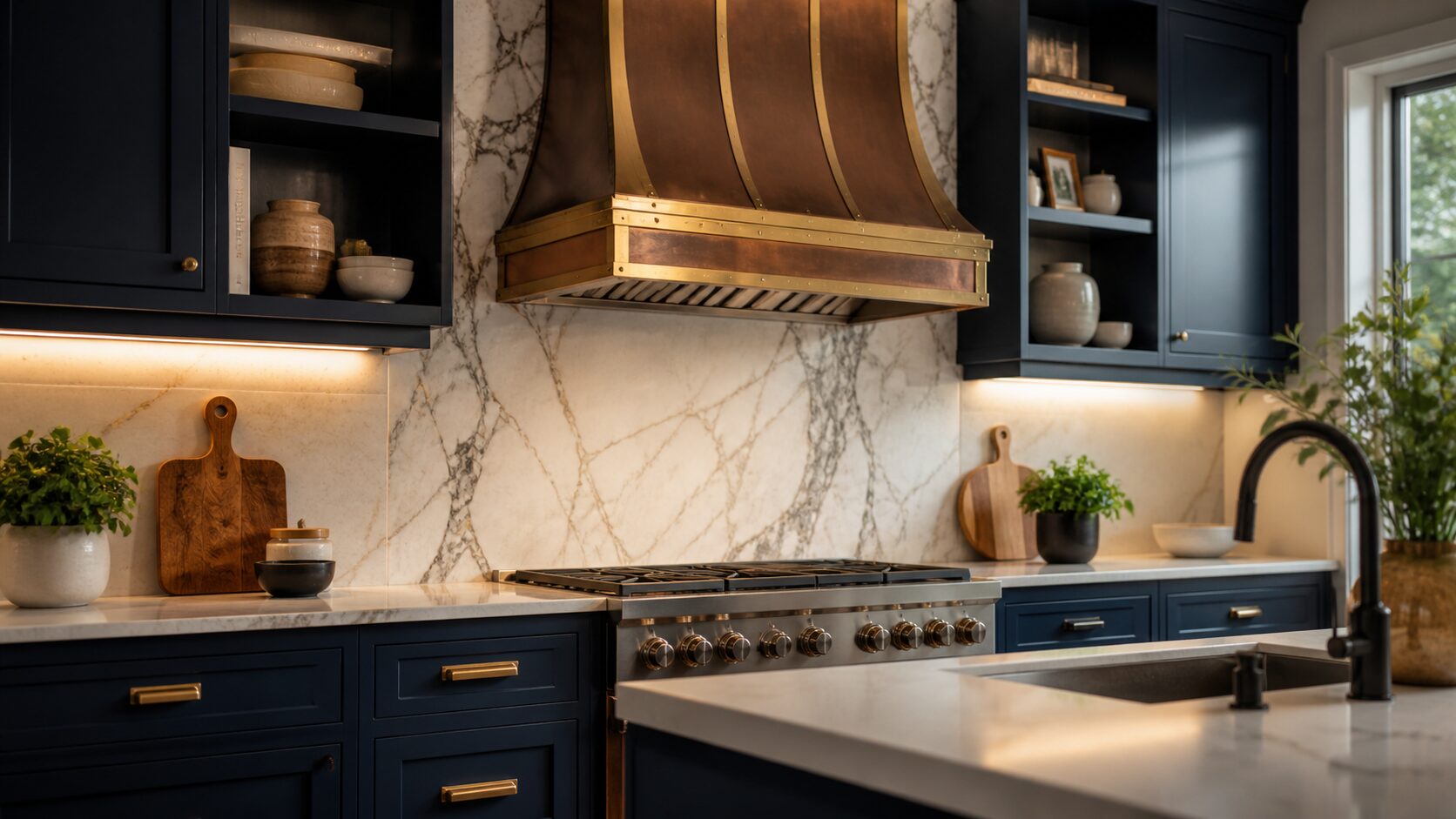
Deep blues, greens, and rich accent tones on cabinetry and backsplashes are replacing all-white and gray kitchens. Used thoughtfully, bold color adds personality and warmth without overwhelming the space.
Full-Height Backsplashes & Statement Hoods
Matching your backsplash to your countertop material — especially natural stone — creates a dramatic, seamless look. Statement range hoods in copper, brass, or wood become a natural focal point.
Open & Flexible Layouts
Open-concept is popular, but flexibility matters more. Partial dividers, sliding doors, and multifunctional islands let you adapt the space for work, family, and entertaining without a full redesign.
Common Pitfalls to Avoid
Underestimating Storage
A kitchen can look beautiful but fall apart if there’s nowhere to put things. We help you plan for enough cabinets, pantries, and organizational systems before the build begins — not after.
Ignoring Workflow
Counter space next to the stove, a sink within reach of both the fridge and stovetop, smooth transitions between tasks — these details determine whether your kitchen actually works for you day-to-day.
Choosing Trends Over Function
Marble looks gorgeous, but it scratches and stains. We guide you toward materials like quartz or granite that deliver both the aesthetic and the durability a working kitchen demands.
OUR PROCESS
CONSULT
We listen first and define scope, priorities, and budget.
1.
DESIGN
Selections and layouts aligned to your vision, timeline, and investment.
2.
PLAN
Clear schedule, permits, and site protection to minimize disruption.
3.
BUILD
Craftspeople who respect your home and communicate throughout.
4.
WALKTHROUGH
Quality checks, finishing touches, and post-project support.
5.
WHY CHOOSE FORTRESS
BUILT TO LAST
Integrity, function, and craftsmanship — start to finish.
A PROCESS YOU CAN TRUST
Communication and transparency at every step.
MODERN, APPROACHABLE DESIGN
Quality results with a warm, contemporary feel.
Frequently Asked Questions
For smaller kitchens, galley and L-shaped layouts make the most of limited square footage. We focus on vertical storage — cabinetry that reaches the ceiling, pull-out shelves, and deep drawers — to keep counters clear and maximize every inch. An efficient work triangle is especially important in tight layouts.
Timelines depend on scope, but most kitchen remodels run 6 to 12 weeks from demolition to final walkthrough. We set a clear schedule upfront, communicate weekly, and protect the rest of your home during the build so disruption stays as minimal as possible.
It depends on how you use the space. Open layouts are great for entertaining and keeping an eye on kids, while closed or partially divided layouts reduce cooking noise and contain messes. We often recommend flexible solutions — like a partial divider or a sliding door — that give you the best of both.
Quartz and granite are our most-recommended options. Both offer excellent durability, heat resistance, and low maintenance. Marble is beautiful but more prone to staining and scratching — we’ll help you weigh the trade-offs based on how you actually use your kitchen.
Not every kitchen needs one — it depends on your floor plan and workflow. If you have the space (typically at least 10 feet of clearance around the island), it can add prep surface, seating, storage, and a natural gathering spot. We’ll help you determine if it improves function or just takes up room.
WHERE WE WORK
LAYTON · FARMINGTON · BOUNTIFUL · GREATER DAVIS & WEBER COUNTIES · KAYSVILLE · LAYTON · FARMINGTON · BOUNTIFUL
IF YOU’RE NEARBY, THERE’S A GOOD CHANCE WE CAN HELP.
Ready to elevate your kitchen, bathroom, or basement — without the headache?
Start with a design consult and a clear plan.
Related Articles
Design and Layouts
Kitchen Island or Peninsula? A Layout Test Before You Commit
Island or peninsula? Test walkways, seating, appliance doors, and landing space in your actual kitchen before you commit to a...
Read more →
Design and Layouts
Walk-In Pantry, Cabinet Pantry, or Butler Pantry?
Not sure which pantry fits your kitchen remodel? Compare footprint, walkways, what you store, and when a butler or beverage...
Read more →
Design and Layouts
How to Compare Remodeling Bids Without Comparing the Wrong Scope
Two bids, two different scopes? Here's how to line up allowances, exclusions, permits, and change orders before you compare price...
Read more →