

Gas, Induction, or Dual Fuel? Remodel Questions to Answer Before Cabinets
Your range choice drives electrical, gas, and ventilation work. Settle gas vs. induction before cabinet drawings in your Davis or Weber County kitchen.
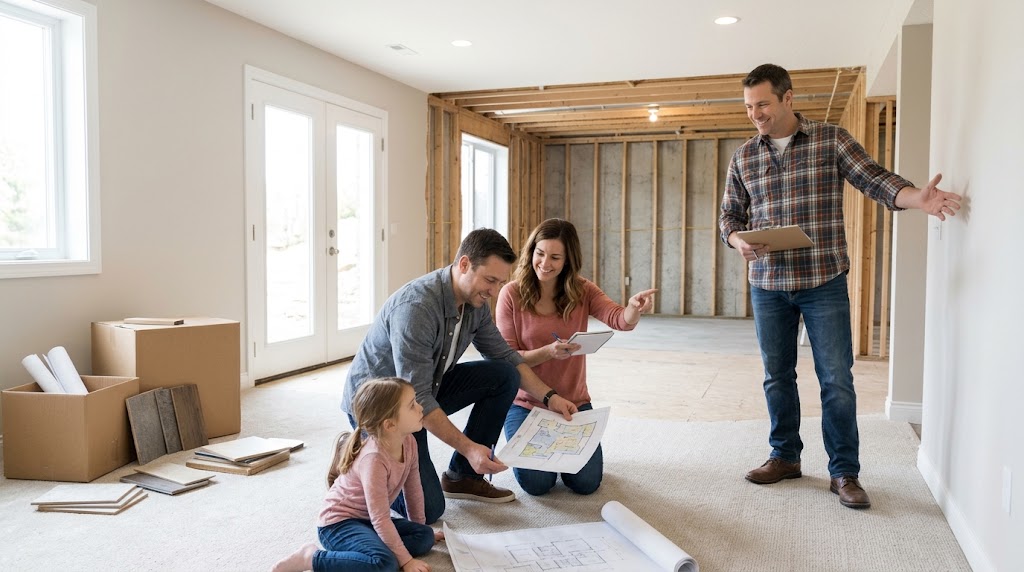
Settle it before anyone draws cabinets. That’s my advice for every kitchen remodel I plan in Davis and Weber Counties. Your range choice decides what electrical work the kitchen needs, whether a gas line stays, moves or goes away, what kind of hood you need and where its duct runs, and the exact opening the cabinets have to leave. So the order matters: decide how you like to cook, pick an actual range model, have your electrician and gas professional confirm what that model needs, settle the hood and its route, and only then finalize the cabinet drawings. That sequence works whether you land on gas, induction or dual fuel.
Range problems worth avoiding rarely come from the fuel itself. They come from choosing it too late, after the cabinets were already sized around something else.
Gas burners on the cooktop, using a flame you can see and adjust.
Confirm: a gas connection at the range location, and what the model’s installation sheet requires.
ENERGY STAR explains that induction uses electromagnetic energy to heat compatible magnetic cookware, rather than a flame.
Confirm: the model’s electrical requirements with your electrician, and whether your pans are compatible.
Commonly pairs gas burners on top with an electric oven below.
Confirm: both the gas and electrical needs listed in that exact model’s installation sheet.
The U.S. Department of Energy lists it as a separate cooking technology from gas and induction.
Confirm: electrical requirements for the model you choose.
Every option. EPA notes that cooking itself produces indoor particles, and running a hood that vents outdoors can reduce exposure.
Confirm: hood type, duct route and the cabinet space above the range.
What Homeowners Get Wrong About Gas vs. Induction
The fuel debate gets most of the attention online. The mistakes that actually cost homeowners time and rework are about sequence and assumptions, not about which fuel is “best.” Here are the ones I’d steer you away from:
- “Induction doesn’t need a hood.” EPA’s guidance on indoor particles says cooking itself produces them. Ventilation belongs in the plan whichever fuel you choose.
- “The outlet behind my old range will work.” Maybe, maybe not. Electrical requirements vary by model, and your electrician is the one who reads the installation sheet and checks what’s already in the wall. Don’t assume either way.
- “All my pans will work on induction.” ENERGY STAR notes that induction requires compatible cookware. Some of what’s in your cupboard may not work.
- “Dual fuel is gas and electric, so it’s plug and play.” Dual-fuel ranges commonly need both a gas connection and electrical supply, and hookups vary by model. Read the sheet for the one you’re buying.
- “We have a gas line, so keeping gas is automatic.” An existing connection still needs a qualified gas professional to confirm it suits the model and location you choose.
- “We’ll pick the range after the cabinets.” This is the one that causes the most rework. The range width, the hood above it and the duct route all shape the cabinets around them.
How Do You Actually Cook, and Which Range Type Fits That Routine?
Start here, before you think about wiring or ducts. The right range is the one that suits how your household cooks on an ordinary Tuesday, not the one that looks best in a showroom. I won’t tell you which fuel is healthier, cheaper to run or better for the planet. Those questions need specific product data, and they shouldn’t drive a remodel decision on secondhand claims.
What I’d ask instead:
- Do you like cooking over a visible flame, or would you rather have precise electric control at the cooktop?
- What pans do you use most? If you’re considering induction, check them against the cookware guidance for the model you like.
- Do you bake a lot, roast a lot or mostly use the cooktop?
- How many people cook at once in your kitchen?
- Who cleans the cooktop, and how much does a flat surface versus grates matter to them?
- Are you replacing a gas range, an electric range or something else, and do you want to keep that fuel?
Be honest with the answers. A family that makes pancakes on Saturday and pasta on Wednesday has different needs from someone who cooks elaborate weekend dinners. Either one can be happy with gas, induction or dual fuel. The point is to know your priorities before the technical questions start narrowing the options.
Visit, look, and handle the controls
If you can, stand in front of the kinds of ranges you’re considering. Look at how the controls are laid out, how the cooktop surface feels to clean, and how the oven door opens in relation to where you’d stand. Those details matter every day, and they’re hard to judge from a spec sheet.
What Changes When You Switch From Gas to Induction?
Switching fuels is a bigger change than swapping one range for another of the same kind. Here’s what it touches.
Electrical
An induction range runs on electricity, and its requirements are specific to the model. ENERGY STAR’s product data for electric cooking lists fields like installation type, dimensions, voltage and amperage, reported by each manufacturer. That’s exactly the information your electrician needs. I don’t quote circuit sizes or tell homeowners whether their panel can handle it. That’s the electrician’s call, made by reading the installation sheet and looking at what’s actually in your home.
The existing gas connection
If you’re leaving gas behind, the connection at the range location has to be dealt with properly by a qualified professional. That’s not a weekend task, and it belongs in the plan and the scope rather than being left for later.
Cookware
Because induction heats compatible magnetic cookware, some of your current pans may not work. Sort through them before you commit, so the new range doesn’t arrive with a cupboard full of surprises.
Cabinets and the hood
A new range may be a different width or depth than the old one, and the hood still matters. The cabinet opening and the space above it need to be drawn around the model you’ve actually chosen.
If the electrical or gas work requires permits where you live, your trades can tell you. Ask early so it’s part of the schedule.
What If You’re Switching From Electric to Gas?
The reverse switch has its own questions. A gas range needs a gas connection at the range location. If there isn’t one, getting gas there is a job for a licensed gas professional, who assesses what’s possible in your home. I don’t size gas lines or guess at what your house can support.
What I’d bring to that conversation:
- The specific range model and its installation sheet.
- Where the range will sit in the new layout, since a move changes the route.
- Whether the oven you want is gas or electric, which affects whether the range also needs electrical supply.
- How the hood will vent, since the ventilation plan comes with the range.
None of this is a reason to avoid gas. It’s a reason to answer these questions before cabinets are built around a range location that doesn’t have what the range needs.
What Does Dual Fuel Require That One-Fuel Ranges May Not?
A dual-fuel range commonly pairs gas burners on top with an electric oven below. The appeal is easy to understand: flame control on the cooktop and an electric oven for baking. The construction consequence is just as clear. You’re planning for two utilities at one appliance.
- Gas at the range location, confirmed by a gas professional for that model.
- Electrical supply at the range location, confirmed by your electrician from the installation sheet.
- Model-specific hookups. Not every dual-fuel range has the same requirements. Two models that look alike may need different connections.
I’d also gently push back on the idea that dual fuel is automatically the right choice for people who bake. It may suit you well. It’s still a model-by-model decision, and the installation sheet decides what the kitchen needs, not the category name.
Why Does the Hood Decision Matter for Either Fuel?
This is the decision that gets pushed to the end most often, and it’s one of the hardest to change once cabinets are built. EPA’s guidance on indoor particles notes that cooking itself produces them, and that running a range hood that vents outdoors can reduce exposure. That applies to gas, induction and dual fuel alike.
The Fortress appliances and ventilation page describes how I coordinate appliance clearances, hood type, duct routing and electrical needs early in design. Here’s why that order matters for the hood in particular:
- The hood type shapes the wall or ceiling above the range. A wall-mounted hood, an insert inside a cabinet and an island hood all need different things from the surrounding design.
- The duct route decides what goes above the range. If the duct runs up through a cabinet, that cabinet has to be designed for it.
- The path outdoors depends on your house. Where the nearest exterior wall or roof route is, and what’s in the way, varies from home to home.
- The hood needs power and controls, which belong in the electrical plan with everything else.
I don’t give hood airflow numbers or duct sizes in an article. Those depend on the specific hood, the range and your kitchen, and they’re confirmed with the hood supplier and the trades. What I can tell you is that a hood chosen after the cabinets are built usually means compromising on one or the other.
The basis for this guide: ENERGY STAR’s information on electric cooking products, including how induction works and the product data manufacturers report; the U.S. Department of Energy’s definitions of residential cooking technologies; the U.S. Environmental Protection Agency’s guidance on indoor particles from cooking and range hood use; and Fortress Builders’ own appliance and ventilation planning approach. Model-specific electrical, gas and ventilation requirements come from the installation sheet for the appliance you choose and from your licensed trades.
Which Measurements and Installation Sheets Belong Ahead of Cabinet Drawings?
Cabinet drawings are where a range decision becomes permanent. Before they’re finalized, I want these in hand:
- The exact range model. Not a style or a brand, a model. Its dimensions set the cabinet opening.
- Its installation sheet. This lists the connections, clearances and requirements the electrician and gas professional will check.
- Electrician review. Your electrician compares the sheet with what’s in your home and tells you what work, if any, is needed.
- Gas review, if gas is involved. A gas professional confirms the connection at the range location suits the model.
- Hood selection and route. The hood type is chosen and the duct route outdoors is settled with the hood supplier and trades.
- Then the cabinet drawings. Now the opening, the cabinet above and the trim around the range can be drawn around real equipment.
- Then ordering. Appliances and cabinets get ordered against the same set of decisions.
That order sounds slow, but it’s the fast way in practice. Every step after cabinet drawings depends on the ones before it. Swap the order and the cabinets end up waiting on a decision, or worse, built around the wrong range.
What happens when the order slips
The usual result is a chain of small compromises: a filler strip where the range came in narrower, a cabinet above the range that won’t take the duct, or an outlet in the wrong place. None of them are disasters on their own. Together, they’re the difference between a kitchen that looks planned and one that looks patched.
What Does the Range Choice Change in the Cabinets Around It?
The range sits in the middle of the busiest wall in the kitchen, so its effects spread to everything beside and above it. Once you’ve picked a model, these are the cabinet details it settles:
- The opening. The model’s width and depth, from its installation sheet, set the gap the cabinets leave. A range that’s even a little different from the old one changes the run.
- The cabinet or wall above. A hood insert lives inside a cabinet built for it. A wall-mounted hood may replace that cabinet entirely. Either way, the duct route decides what can go up there.
- The drawers beside it. Pots, pans and lids need a home within reach of the cooktop. If you’re switching to induction and replacing some cookware, plan that storage around the new set.
- The backsplash and side panels. How the range meets the counter and the cabinets on each side depends on whether it’s freestanding, slide-in or built into the counter, which the installation type on its sheet tells you.
- The outlets and gas location. Where the connections land behind the range has to match the model, and those locations are set before the cabinets go in.
None of these is complicated on its own. The trouble comes when they’re decided in the wrong order, so the cabinets get built first and the range has to adapt. Pick the range first, and the cabinets can be drawn to fit it exactly.
Helpful things to have on hand early
If you’re early in the process, you don’t need final selections yet. A short list of range models you like, a photo of the current range wall from a few steps back, a photo of what’s behind the old range if you can safely see it, and a note on which of your pans you’d hate to give up will move the conversation forward quickly. If you already own a range you love and plan to keep, bring its model number. Keeping an existing range is a perfectly good choice, and the same planning order applies to it.
What Should Your Electrician, Gas Professional and Hood Supplier Confirm?
Bring each of them the range model and its installation sheet, and ask these questions. Their answers set the scope.
Your electrician
What does this model’s installation sheet require? Can the existing wiring at the range location support it? What work would be needed, and does it involve the panel? Does the hood need its own power? Are permits needed for this work where I live?
Your gas professional
Is there gas at the range location, and does the connection suit this model? If the range is moving, what does that change? If we’re removing gas, how should the connection be handled?
Your hood supplier
Which hood type suits this range and layout? Where can the duct go to vent outdoors? What does the hood need from the cabinet or wall above the range? What power and controls does it need?
Before you hire anyone
The state keeps a public lookup of professional licenses through Utah’s Division of Professional Licensing. Use it to check an electrician’s or gas professional’s license status before work starts.
Write their answers down and bring them to your design conversation. They become the requirements the cabinet drawings have to meet.
How I Sequence Range Decisions in a Fortress Kitchen
In a full kitchen remodel, the range decision fits into the same process I use for everything else:
Consult
We talk about how you cook, what you have now and what you want to change. The fuel question comes up here, before any drawings.
Design
You choose a range model and hood. Installation sheets go to the trades, and their answers shape the layout and cabinet plan.
Plan
Electrical, gas and ventilation work is scheduled in the right order, along with any permits, and your home’s protection during the work.
Build
We install cabinets sized for the range and hood you actually ordered, so nothing gets trimmed or shimmed to fit.
Walkthrough
We go through the finished kitchen together, including the range and hood, before you start cooking in it.
Your part
Make the cooking decision early, and get model numbers to us before cabinet drawings are finalized.
Whether your kitchen is in Kaysville, Layton, Farmington or Bountiful, my honest answer to the gas-or-induction question is the same: I care less about which fuel you choose than about when you choose it.
Frequently Asked Questions
Will my existing pans work with induction?
Some may not. ENERGY STAR notes that induction heats compatible magnetic cookware. Check your pans against the guidance for the model you’re considering.
Can an induction range use the electrical service already in my kitchen?
It depends on the model and your home. Have your electrician compare the installation sheet with what’s in the wall before you commit.
Does a dual-fuel range need both gas and electricity?
Dual-fuel ranges commonly pair gas burners with an electric oven, so they typically need both. Confirm with the installation sheet for your model.
Do I still need ventilation if I choose induction?
Yes. EPA notes that cooking itself produces indoor particles, and a hood that vents outdoors can reduce exposure.
Should I choose the hood or the cabinets first?
The hood. Its type and duct route shape the cabinet above the range, so settle it before cabinet drawings are final.
Can I decide on the range after demolition?
You can, but it often means waiting or compromising. Choosing early lets the electrical, gas, hood and cabinets be planned around it.
Weighing gas against induction?
Ready to talk through scope and timeline? A design consult is the right first step. Send me the range models on your short list, and we’ll sort out the electrical, gas, hood and cabinet questions for your Davis or Weber County kitchen before anything gets drawn.