

Why Kitchen Ventilation Should Be Planned Before Appliances Are Ordered
Plan kitchen ventilation planning Utah with Fortress Builders: scope, selections, code-aware checks, and durable design-build decisions for Utah homes.
Thinking about ordering appliances before your kitchen plan is finished?
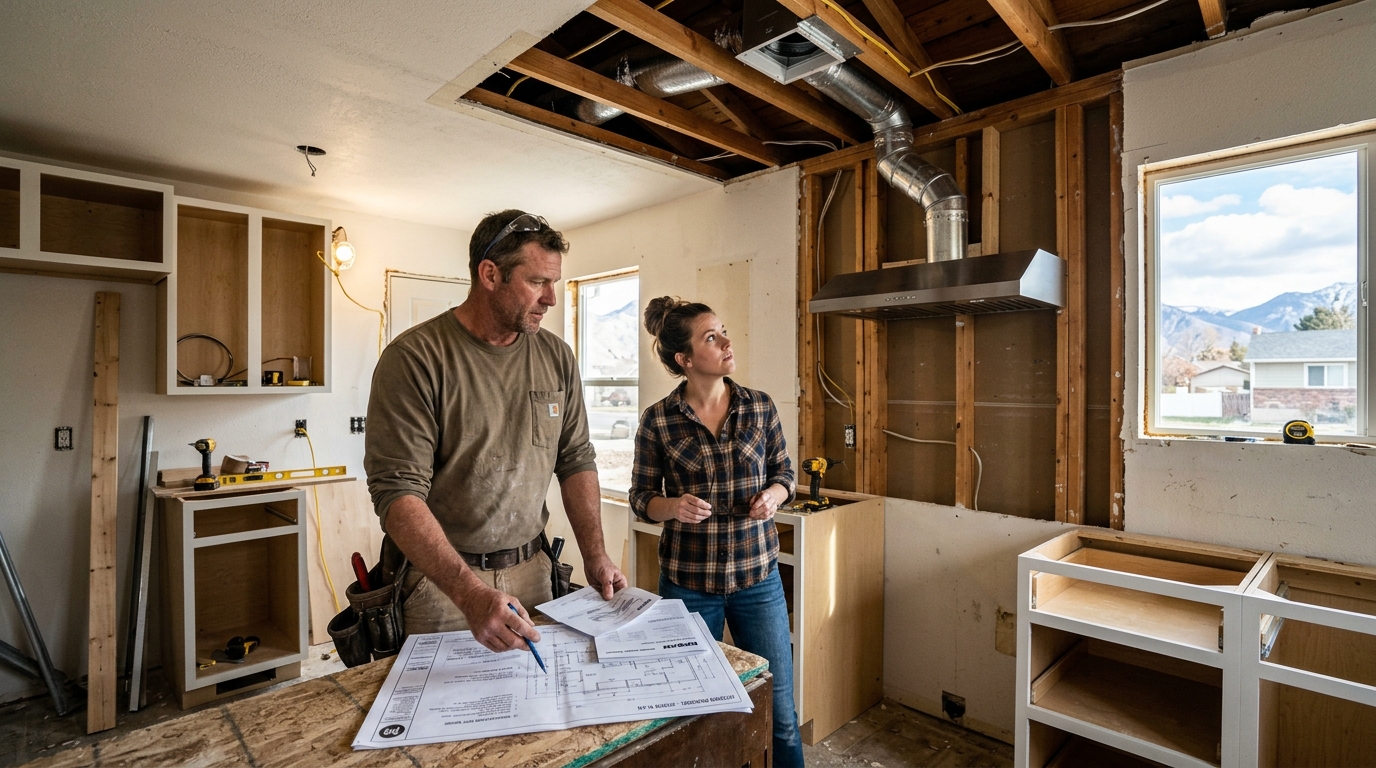
The honest answer is that ventilation should be planned before appliances are ordered, especially if you are changing the range, moving the cook zone, adding a larger hood, or opening the kitchen to the living area. A range hood is not just a decorative fixture. It is tied to cabinet dimensions, duct path, electrical planning, noise, make-up air, and inspection requirements.
I have seen homeowners spend time choosing the perfect range and then discover the duct route does not work cleanly. That is avoidable. If you are planning kitchen ventilation in Utah, the right sequence is simple: define the cooking equipment, verify the ventilation path, coordinate cabinets and electrical, then order.
Why ventilation belongs in the first planning meeting
Ventilation affects the room before finishes ever show up. If the range moves to an island, the hood changes. If the range gets wider, the hood and cabinet opening may change. If the ceiling structure limits duct routing, the design may need to change. If the home is tighter or the hood is stronger, make-up air may become a discussion.
That is why I bring ventilation into the first planning conversation. In a Northern Utah kitchen, you may be dealing with older framing, finished spaces above, attic access, exterior wall limitations, or a layout that was never designed for the appliance package you want now.
The approved appliances and ventilation page is a good place to understand how the equipment and the building plan work together.
How appliance specs affect cabinets and rough-ins
Appliance specifications are not paperwork to file away. They tell us opening width, clearances, electrical requirements, gas or induction planning, cutout dimensions, ventilation recommendations, and sometimes cabinet protection details.
If those specs arrive late, someone may have to adjust cabinet drawings, move outlets, rework duct plans, or modify trim. That is the kind of rework a clear scope is meant to prevent. I would rather spend more time planning than charge you later for changes that could have been avoided.
This also connects directly to cabinets and countertops and lighting and electrical. The hood location affects upper cabinets. The range affects outlet or circuit planning. The island may affect pendant spacing. These decisions overlap.
Duct route, noise, and make-up air questions
A good hood that vents poorly is not a good system. The duct route needs to be realistic. Shorter and straighter is generally easier to plan than long runs with several turns. But every home is different, and existing framing decides what is practical.
Noise matters too. A hood that is loud enough to discourage use will not protect the kitchen well because people will leave it off. That is why hood performance, duct sizing, and blower location should be discussed together instead of as separate purchases.
- Where can the duct exit cleanly?
- Will the hood be wall-mounted, cabinet-mounted, custom, or island-style?
- Does the appliance package change electrical or gas planning?
- Could make-up air requirements affect the scope?
- Will the hood be quiet enough that you will actually use it?
What to verify with local code and inspections
Ventilation is one of those areas where guessing is not helpful. Requirements can depend on the jurisdiction, the adopted code, the equipment, the duct route, and the existing home. If your project is in Kaysville, Layton, Farmington, Bountiful, Weber County, or another Northern Utah jurisdiction, verify the requirements with the proper building department or inspector before work begins.
I do not want homeowners making expensive decisions based on a forum post or an appliance showroom comment. The safer path is to bring the appliance specs, proposed hood, and rough layout into the planning process. Then we can identify what needs confirmation before ordering and before walls close.
A homeowner checklist before ordering appliances
Confirm exact appliance models
Model numbers matter because dimensions and requirements vary.
Map the hood and duct path
Decide how ventilation leaves the home before cabinet drawings feel final.
Coordinate cabinets and clearances
Upper cabinets, hood width, trim, and range placement should work as one system.
Verify electrical and gas planning
Rough-ins should match the equipment, not the other way around.
Use the kitchen remodel planning checklist before you commit to appliance orders. It helps keep scope, sequence, and decisions in the right order.
FAQ: kitchen ventilation planning Utah
Can I use a recirculating hood?
Sometimes homeowners ask about it, but I would not assume it is the right fit. Venting, performance expectations, and code-related questions should be reviewed for your specific home and appliance package.
When should I choose the range hood?
Choose it early enough to coordinate cabinet drawings, duct route, electrical planning, and inspection questions before ordering cabinetry.
Does induction still need ventilation?
Yes. Even when combustion is not the issue, cooking still creates steam, grease, odors, and heat that need to be managed.
Who confirms code requirements?
The proper local jurisdiction or inspection office should confirm requirements for your specific project. A contractor can help prepare the right questions and documents.
Ready to talk through scope and timeline?
A design consult is the right first step. We’ll map the scope, timeline, layout, and decisions that need to happen before anyone starts guessing.