

Layered Kitchen Lighting: How to Plan Ambience, Task Light, and Safer Circuits
Plan kitchen lighting design Utah with Fortress Builders: scope, selections, code-aware checks, and durable design-build decisions for Utah homes.
Ever been in a kitchen that looks nice during the day but feels dim, harsh, or awkward at night?
The honest answer is that lighting has to be planned as part of the remodel, not added at the end. A good kitchen lighting design in Utah needs more than pretty pendants. It needs work light where you prep, soft light when you gather, safe circuits for appliances, clear switch zones, and fixture placement that matches the layout.
In Davis and Weber County homes, older kitchens often have one central fixture trying to do every job. That does not work well for cooking, cleaning, homework, hosting, or late-night use. Here’s what I’d recommend instead: plan the lighting layers at the same time you plan cabinets, appliances, island size, and electrical rough-ins.
Why lighting plans fail when they start too late
Lighting gets expensive and frustrating when the plan starts after framing, electrical rough-in, or drywall. At that point, fixture placement may be boxed in by joists, cabinets, ceiling changes, or appliance locations. You can still make changes, but changes after rough-in are exactly what a clear scope is supposed to reduce.
The lighting plan needs to answer practical questions early. Where do you chop food? Where does the island seating go? Where will the hood sit? Will upper cabinets block light? Do you need outlets under cabinets? Which lights should dim together? Which switches should be near the garage entry or dining room?
The approved lighting and electrical guide is a good starting point because it treats lighting as a working system, not a fixture shopping list.
The four layers every working kitchen needs
Ambient lighting gives the room general brightness. Recessed lights, ceiling fixtures, or a balanced ceiling plan usually carry this layer. It should feel even, not full of dark corners or harsh hot spots.
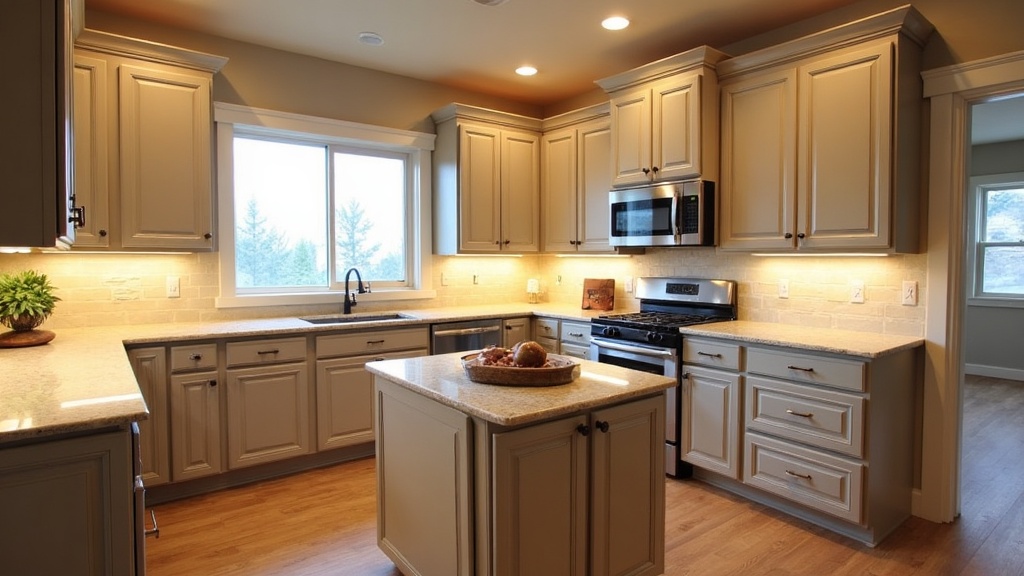
Task lighting handles work surfaces. Under-cabinet lighting, sink lighting, range lighting, and prep-zone lighting matter because food prep and cleaning need visibility. If the light sits behind you, your body casts a shadow over the counter. That is a design problem, not just a bulb problem.
Accent lighting adds warmth and depth. This can be inside glass cabinets, around open shelving, or near a feature wall. I use this layer carefully. It should support the room, not make the kitchen feel over-designed.
Night or pathway lighting helps with real life. Toe-kick lights, low-output cabinet lights, or soft dimmed zones can help when someone walks through early or late. It is a small detail that can make the room feel calmer.
Switches, dimmers, outlets, and dedicated circuits
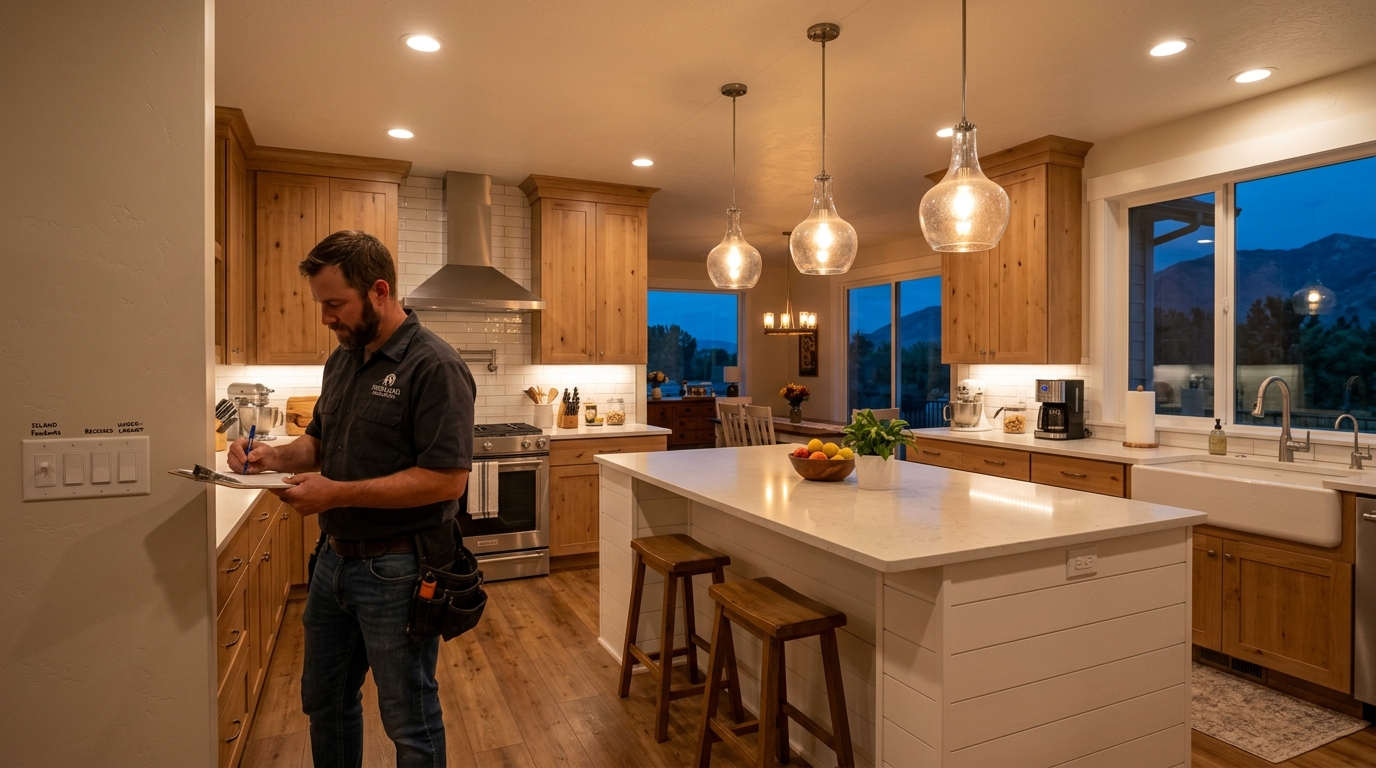
A beautiful lighting plan can still be annoying if the switches are wrong. Switches should match how you enter and use the room. If you come in from the garage with groceries, you should not have to cross a dark kitchen to turn on the main lights. If the island is used for homework or breakfast, it may need its own zone.
Dimmers matter, but they have to be planned with the fixture type. Under-cabinet lights, pendants, recessed fixtures, and accent lights may need different controls. Outlets matter too, especially around islands, small-appliance zones, coffee areas, and charging spots.
Dedicated circuits should be discussed with the whole appliance plan. Lighting, appliances, ventilation, and small-appliance use all interact, which is why this article pairs naturally with appliances and ventilation.
How island lighting affects layout and sightlines
Island lighting is where homeowners often start because pendants are visible. I would start one step earlier: what does the island do? If it is for prep, it needs task light. If it is for seating, glare matters. If it faces the family room, fixture height and sightlines matter.
Pendants that are too large can block views. Pendants that are too high can feel disconnected. Pendants that are centered on the island but not aligned with seating, sink, or ceiling features can make the room feel slightly off. That is why island size, clearance, and lighting should be planned together.
If your island is still in the planning stage, use the kitchen island size guide before selecting fixtures. The island footprint and the lighting plan should support the same daily use.
What to finalize before drywall closes
- Recessed light locations and spacing.
- Island pendant count, placement, and switch zone.
- Under-cabinet lighting type and power plan.
- Outlet locations for counter, island, pantry, and small appliances.
- Dedicated circuit needs and inspection requirements.
- Dimmers and controls for each lighting layer.
If you are still mapping the full remodel, the kitchen remodel planning checklist will help you keep lighting, layout, and selections in the right order.
FAQ: kitchen lighting design Utah
Can I choose fixtures after construction starts?
You can choose final styles later in some cases, but locations, wiring, switch zones, and rough-ins need to be planned early.
Do I need under-cabinet lighting?
If you use perimeter counters for prep, under-cabinet lighting is often one of the most useful layers. It reduces shadows and makes the kitchen easier to work in.
Should all kitchen lights be on one dimmer?
Usually no. Separate zones give you better control for cooking, cleaning, gathering, and low-light use.
What should I verify locally?
Electrical scope, permits, and inspection details should be confirmed for the proper local jurisdiction and the specific work being performed.
Ready to talk through scope and timeline?
A design consult is the right first step. We’ll map the scope, timeline, layout, and decisions that need to happen before anyone starts guessing.