

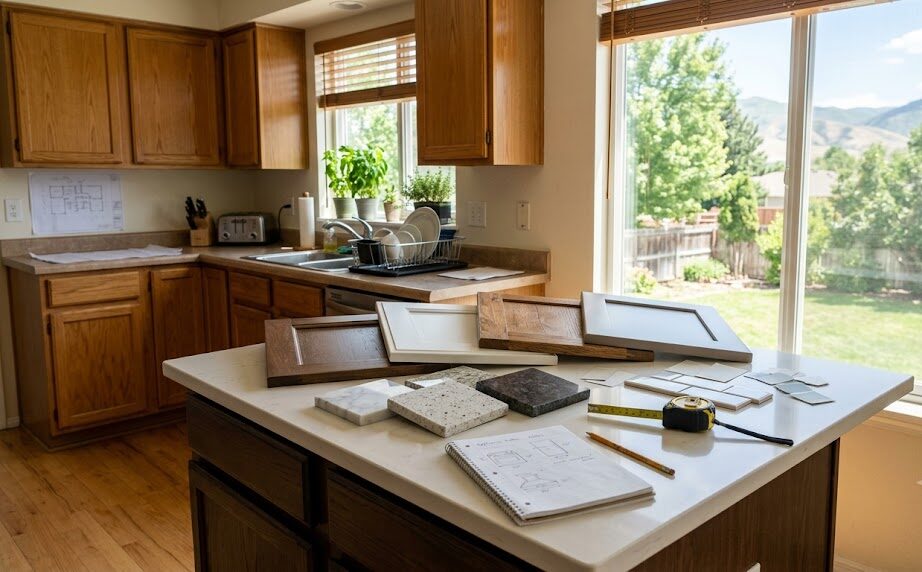
What to Decide in July Before Planning a Fall Kitchen Remodel
Here’s the honest answer: it’s not just early enough, it’s the right time. A fall kitchen remodel doesn’t start with picking a contractor. It starts with deciding what isn’t working in your current kitchen, your layout and cabinetry direction, your appliance and ventilation priorities, and a realistic budget range. Make those calls in July and your fall timeline stays realistic instead of rushed.
We work with homeowners across Davis and Weber County, and the ones who feel calm about their remodel later are almost always the ones who did this thinking early.
- Is July too early? No – it’s the window where decisions still feel easy instead of rushed.
- What should you decide first? What isn’t working in your current kitchen, before finishes.
- What matters beyond cabinets? Appliance efficiency and ventilation, which are easy to treat as an afterthought.
- What’s the safest move on budget and timeline? Get a comfort range now, confirm specifics at your design consult.
Why July Is the Right Time to Plan a Fall Kitchen Remodel
A kitchen remodel has a planning phase before it ever has a construction phase. Design decisions, material selections, and scope conversations take time, and that time gets harder to find once fall schedules fill up with school, holidays, and everyone else who waited until August to start thinking about their own project.
Starting in July doesn’t lock you into anything. It just means you’re making decisions while you still have room to think them through instead of compressing everything into a few rushed weeks. This isn’t about pressure or a hard deadline. It’s about sequencing. The homeowners across Davis and Weber County who feel calm about their kitchen remodel later in the process are almost always the ones who did the thinking early.
Start With What Isn’t Working in Your Kitchen Right Now
It’s tempting to start with cabinet colors and countertop samples. We’d recommend starting somewhere else: what already frustrates you every day. A remodel is most successful when it solves real problems, not just refreshes a look.
Walk through your kitchen and be specific. A few prompts that tend to surface the real issues:
- Where do you lose time or bump into someone else while cooking?
- What do you not have enough of: counter space, cabinet storage, pantry room, seating?
- Which appliances are outdated, undersized, or in the wrong spot for how you actually cook?
- Is the lighting too dim, too harsh, or in the wrong places for prep and cleanup?
- Does the layout work for how your household gathers, or does it fight against it?
A few planning mistakes show up again and again, and they’re worth avoiding from the start:
- Choosing finishes before settling on layout, which often means redoing decisions later
- Skipping the ventilation conversation because it’s less visible than cabinets or countertops
- Underestimating how long the planning phase itself takes, separate from construction
- Assuming every contractor handles scope and change orders the same way
Layout, Cabinetry, Appliance, and Ventilation Decisions to Make Early
Once you know what’s not working, the next step is deciding direction on the bigger structural and functional choices. These take longer to settle than finish selections, so they’re worth tackling first.
| Decision Area | Why It Matters | When to Decide |
|---|---|---|
| Layout and workflow | Determines whether the kitchen fits how your household actually cooks and moves | Decide early, before design |
| Cabinetry style and storage | Affects both function and overall project scope | Decide early, before design |
| Appliances | Sizing and placement affect layout decisions | Confirm during estimate |
| Ventilation | Affects air quality and comfort, especially during cooking | Decide early, before design |
On layout and design, the goal is a floor plan that matches your real-life routine, not just a popular configuration. On cabinets and countertops, think in terms of storage and daily use first, finish second.
For the appliance and ventilation guidance in this section, we’re relying on published consumer information from the U.S. Department of Energy’s Energy Saver program and the EPA’s indoor air quality resources. Both are official federal sources, and we treat them as a starting point for the conversation, not a substitute for your design consult.
Appliances are worth more thought than most people give them. The U.S. Department of Energy notes that the ENERGY STAR label is the simplest way to identify more efficient refrigerators, dishwashers, and stoves, and that induction stoves are currently among the most efficient stove options, even though they cost more upfront. It’s also worth deciding whether you actually want features like an automatic ice maker, since the Department of Energy points out that they tend to increase breakdowns, leaks, and energy use over time. These are the kinds of tradeoffs worth weighing before, not during, your appliance and ventilation selections.
Ventilation is easy to treat as an afterthought, but it shouldn’t be. The EPA notes that local kitchen exhaust fans vented outdoors remove contaminants directly from the room and increase outdoor air ventilation, and specifically names cooking as an activity that benefits from this kind of ventilation. The EPA also points out that source control is usually the most effective and cost-efficient way to improve indoor air quality, since adding ventilation can raise energy costs — which is exactly the kind of tradeoff worth talking through with your designer rather than guessing on your own. If your current setup recirculates air instead of venting it outside, that’s worth raising at your consult.
Lighting, Flooring, and Finish Durability: What Holds Up Long-Term
Lighting, flooring, and finish choices are where personal style shows up the most, but durability deserves equal weight. A finish that looks great on a sample board can perform very differently under daily traffic, water exposure, or heat.
A few practical questions worth asking at your design consult, rather than guessing on your own:
- How does this flooring option hold up to daily kitchen traffic and moisture?
- Does this countertop material need regular maintenance, or is it low-upkeep?
- Where does task lighting need to be placed so prep areas aren’t working in shadow?
- Are there finish options that look similar but perform differently over time?
On lighting and electrical, the right plan accounts for both ambiance and the practical reality of prepping food and cleaning up at the end of the day. Bring your daily habits into that conversation, not just an inspiration board.
Budget, Timeline, and Living-Through-Construction Expectations
We won’t give you a number here, because every kitchen and every scope is different, and a real budget range only comes from an actual design consult. What we can tell you is what’s worth deciding before that conversation.
| Planning Factor | What to Decide Now | What to Confirm at Your Consult |
|---|---|---|
| Budget range | A rough comfort range, even if it’s flexible | What that range realistically covers for your scope |
| Must-haves vs. nice-to-haves | Which changes solve real problems vs. which are optional | How tradeoffs affect scope and sequencing |
| Timeline goal | Your ideal fall window | A realistic schedule based on current scope and availability |
| Living through construction | Whether you need a temporary kitchen setup | How long that setup will realistically be needed |
Living through a kitchen remodel is its own kind of planning. Even a well-run project means time without your normal kitchen. Thinking through a temporary setup, whether that’s a folding table with a microwave and slow cooker or something more involved, makes the actual construction phase far less stressful.
What to Bring to Your Design Consult
A design consult moves faster, and feels more useful, when you walk in with clear answers instead of open-ended ideas. Here’s what to bring:
Your list of what currently isn’t working in the kitchen, from the section above
Photos of your current layout, including angles that show storage and traffic flow
A rough sense of your must-have changes versus your flexible ones
Your comfort budget range, even if it’s broad
Your ideal fall timeline, and any hard dates you’re working around
Any inspiration images, but treated as a starting point, not a final plan
Explore layout approaches built around how your household actually cooks and gathers.
Compare storage-first cabinetry and countertop options for everyday durability.
See how appliance and ventilation choices fit together in a working kitchen.
Plan task and ambient lighting around how you really use the space.
Frequently Asked Questions
Is July too early to start planning a fall kitchen remodel?
No. July is actually a strong window, because it gives you time to make layout, cabinetry, appliance, and finish decisions before fall schedules tighten up. Starting early means making clearer decisions, not rushed ones.
What should I decide before requesting a kitchen remodel estimate?
At minimum, know what isn’t working in your current kitchen, your direction on layout and cabinetry, your appliance and ventilation priorities, and a rough budget range. The more specific you are, the more useful the estimate conversation will be.
What should I think about for kitchen ventilation during a remodel?
Whether your current range hood vents outdoors or just recirculates air is worth raising with your designer. The EPA notes that outdoor-vented kitchen exhaust removes cooking-related contaminants directly from the room rather than just filtering and recirculating them.
Should I pick layout and cabinetry before choosing finishes?
We’d recommend it. Layout and cabinetry decisions affect the overall scope and are harder to change later, while finishes can be selected once those bigger decisions are settled. Choosing finishes first often means redoing decisions down the line.
What should I bring to my first design consult?
Bring your list of current pain points, photos of your existing kitchen, a rough budget range, your ideal timeline, and a sense of your must-haves versus flexible preferences. That’s enough for a productive first conversation.