

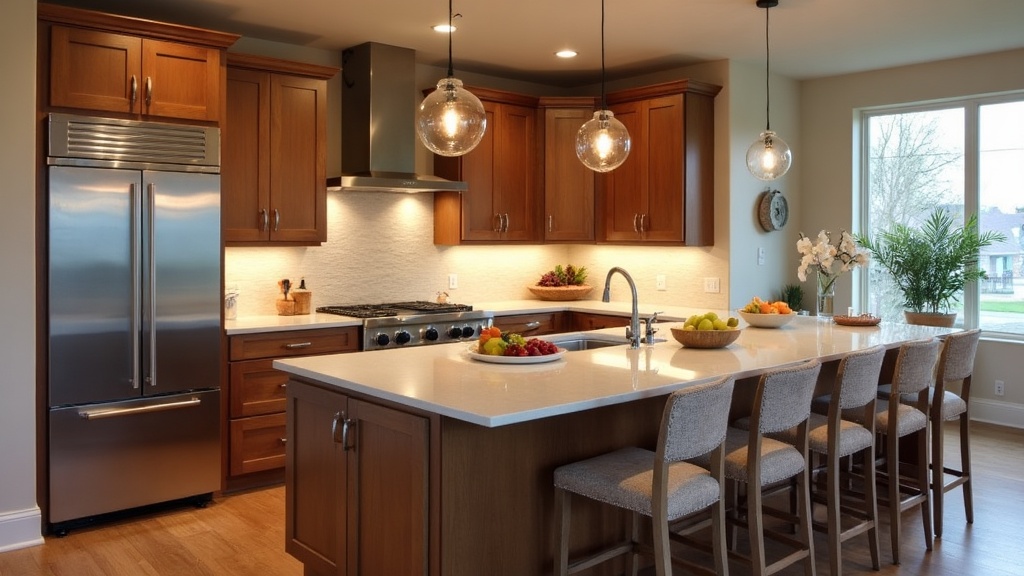
Kitchen Floors That Handle Snow, Pets, and Daily Cooking in Utah Homes
Plan durable kitchen flooring Utah with Fortress Builders: scope, selections, code-aware checks, and durable design-build decisions for Utah homes.
Need a kitchen floor that can handle snow, pets, and daily cooking without looking worn out too quickly?
The honest answer is that durable kitchen flooring in Utah has to be planned as part of the whole remodel system. It is not just a color or surface decision. Flooring affects cabinet installation, appliance height, transitions into nearby rooms, comfort underfoot, cleaning, and how the kitchen holds up during real Northern Utah seasons.
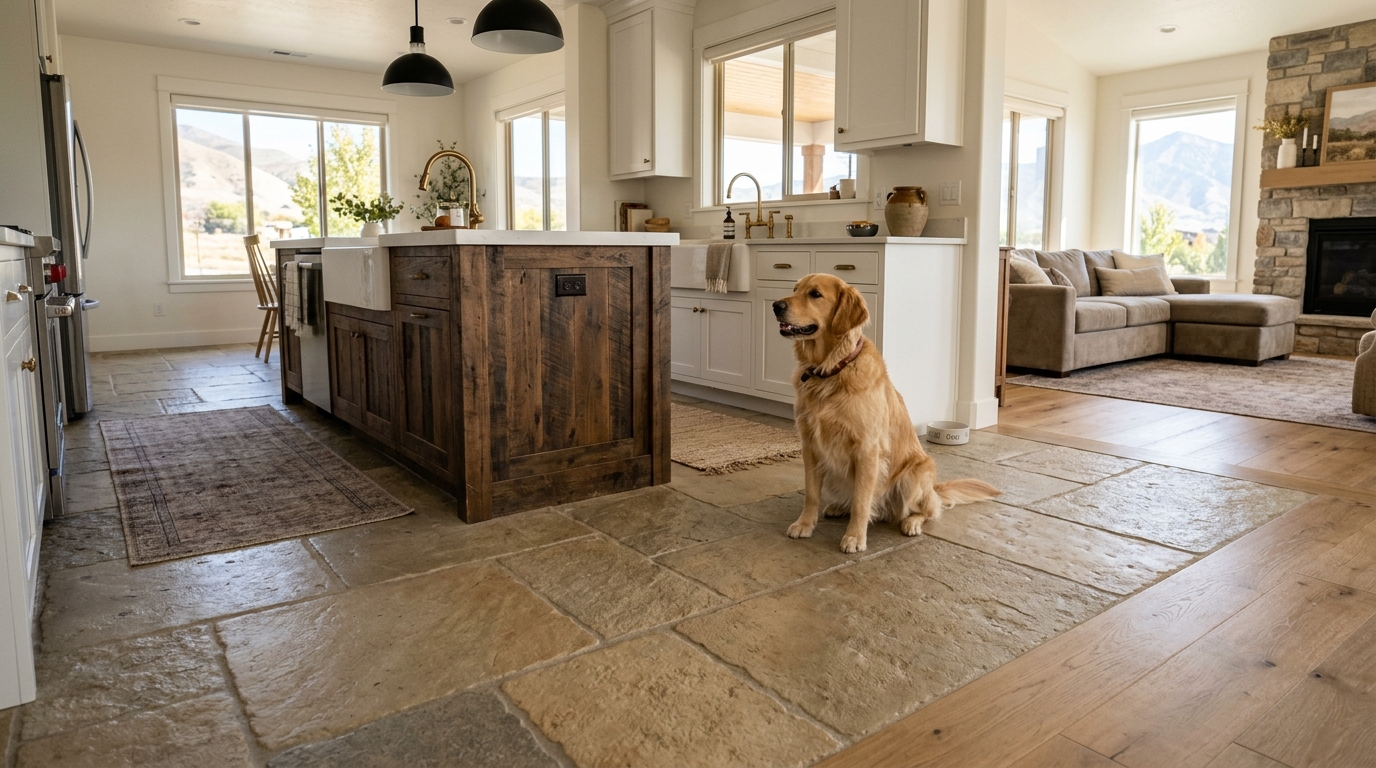
In Davis and Weber County homes, I think about garage traffic, winter grit, backyard mud, pets running through the island path, and open-plan transitions. A floor that looks good in a showroom may not be the right floor for your home. Here’s what I’d recommend looking at before you decide.
Why kitchen flooring is a system decision
Kitchen flooring sits under or around everything. Cabinets, islands, appliances, base trim, pantry doors, and adjacent spaces all interact with it. If flooring height changes, appliance fit can change. If the transition to the living room is not planned, the remodel can feel patched together. If cabinets are set without thinking through finished floor height, details at the toe kick and dishwasher can get tight.
This is why I bring flooring into the planning conversation early. The right choice depends on the subfloor, layout, cabinet sequence, adjacent rooms, and how the kitchen is used. You can review the approved flooring and surfaces guide for a broader look at durable options.
What Utah traffic does to floors
Utah kitchens work hard in the winter. Snow melts near the entry. Small rocks and grit come in on shoes. Dogs track water from the yard. Kids drop backpacks and sports gear near the island. If the kitchen connects to the garage or mudroom, the floor may see more abuse than any other surface in the house.
That does not mean every home needs the same material. It means the decision should match your traffic pattern. A household with pets may care more about scratch resistance and texture. A heavy-cooking household may care more about cleanability. A home with open transitions may need the kitchen floor to connect visually with the family room.
The best floor is not the toughest sample on the board. It is the surface that fits your traffic, your cleaning habits, and the way the remodel is actually built.
Tile, engineered wood, LVP, and stone-look surfaces
Tile can be a strong kitchen option when you want durability and water resistance, but it can feel harder underfoot and needs a good installation plan. Grout selection, layout, subfloor prep, and transitions matter.
Engineered wood can bring warmth and continuity when the kitchen connects to living spaces, but it needs the right expectations around water, finish durability, and maintenance. I would look carefully at your household habits before choosing it for a high-traffic kitchen.
LVP and other resilient surfaces are popular because they can offer water resistance, comfort, and natural-looking visuals. But product quality, locking system, subfloor prep, and transition details still matter. A floor is only as good as the installation beneath it.
Stone-look surfaces and large-format materials can look clean and current, but again, the question is not just “Does it look good?” The question is “Will it fit the subfloor, the layout, the transitions, and the way you live?”
Floor height, cabinet timing, and transitions
Floor height is one of those details homeowners do not usually think about until something rubs, catches, or looks uneven. The finished height can affect dishwasher removal, refrigerator fit, cabinet toe kicks, door swings, stair transitions, and the connection into nearby rooms.
Cabinet timing matters too. Some flooring goes before cabinets, some after, and some depends on product type, layout, and installer recommendations. That sequence should be decided before the job starts, not while materials are stacked in your garage.
This also connects to design and layouts and countertop planning. If you are choosing surfaces across the whole kitchen, the approved guide on quartz vs granite vs porcelain countertops can help you think beyond the floor and into the full surface palette.
How to choose a surface that still looks good years later
- Will the surface hide normal dust, grit, and pet traffic?
- Can you clean it without special routines you will not keep?
- Does it feel comfortable for cooking and standing?
- Does it transition well into adjacent rooms?
- Does the installation plan protect durability?
If the answer is unclear, slow down. A floor should support your home for years, not just pass the first impression test. The kitchen remodel planning checklist can help you keep this decision tied to the whole remodel scope.
FAQ: durable kitchen flooring Utah
What kitchen floor is best for pets?
Look for scratch resistance, traction, water resistance, and a texture that does not show every paw mark. The right answer depends on the product, your pet, and the installation conditions.
Should kitchen flooring go under cabinets?
It depends on the flooring type, cabinet plan, and installer recommendations. Decide the sequence before construction so appliance and toe-kick details are handled cleanly.
Is tile better than LVP?
Tile and LVP solve different problems. Tile can be very durable but harder underfoot. LVP can be comfortable and water-resistant, but product and installation quality matter.
What should I bring to a flooring consult?
Bring photos of adjacent rooms, notes on pets and traffic, appliance plans, cabinet plans if available, and any concerns about transitions or water exposure.
Ready to talk through scope and timeline?
A design consult is the right first step. We’ll map the scope, timeline, layout, and decisions that need to happen before anyone starts guessing.