


What Utah Homeowners Should Decide Before Starting a Kitchen Remodel in 2026
A grounded walk-through of the scope, layout, and selection decisions to lock in before anyone draws a plan — from a Davis County remodeler with 26+ years on the job.
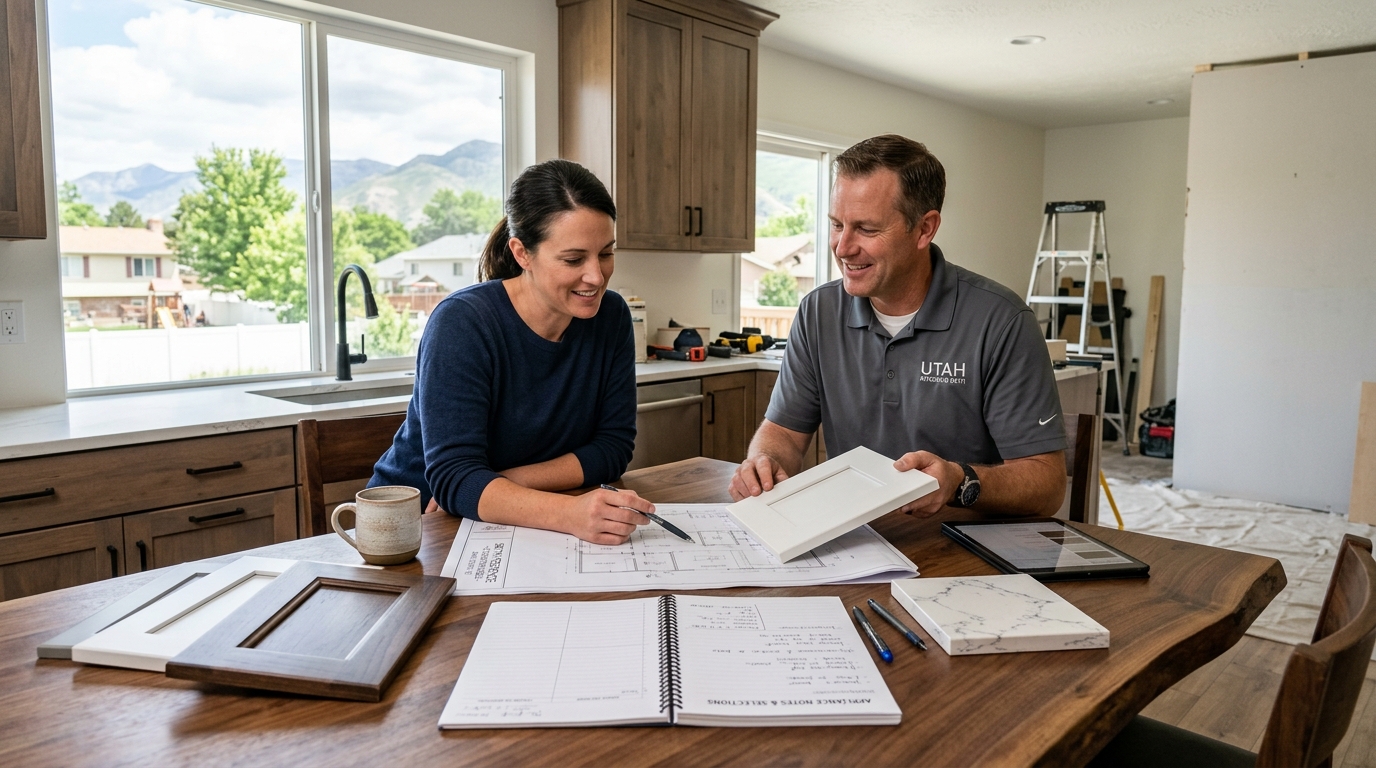
Thinking about remodeling your kitchen in Davis County, Weber County, or somewhere else in Northern Utah?
The honest answer is that the decisions you make before anyone draws a plan or swings a hammer will shape the whole project — your scope, your budget, your timeline, and how much rework you end up paying for later.
Here’s why I want you to start with decisions rather than products. I’ve been remodeling homes in Davis County since 1998, and the kitchens that go smoothest are not the ones with the prettiest Pinterest board. They’re the ones where the homeowner walks in with a clear answer to three things: what does this kitchen need to do, who actually lives in it, and what is the scope I can realistically commit to?
A clear scope prevents the three things that hurt Utah kitchen remodel planning most often — allowances that balloon mid-project, change orders that drag out the timeline, and selections rushed because demo already started. This guide walks you through what I’d recommend locking in before you call anyone, whether that’s Fortress Builders or someone else.
Why the first decisions shape the entire remodel
When a kitchen remodel goes sideways, it almost always traces back to a decision that got skipped at the start. Maybe the layout was treated as an afterthought once the cabinets were ordered. Maybe the appliances were picked before the rough-ins were planned. Maybe the budget was set before anyone really knew what was inside the walls.
In an older Davis County home — Kaysville, Layton, Farmington, Bountiful — what’s behind the drywall is rarely what the listing photos suggested. Older electrical, mixed-vintage plumbing, and HVAC routing that wasn’t sized for a modern kitchen are common discoveries. If you decide on cabinet boxes before you understand what may have to change behind them, the whole sequence gets rebuilt on the fly. That’s where the change orders show up.
Here’s what this means for you: the early decisions are not just “design preferences.” They’re scope decisions. They set what’s possible, what costs more than expected, and what the timeline really looks like — long before construction starts.
A clear scope at the start saves more money than any single selection later. If you cannot describe the kitchen’s job in one paragraph, you’re not ready to order anything yet.
What to decide before design starts
These are the decisions I’d want you to bring to the first conversation. Not a final answer on every line — just enough clarity that the design phase isn’t running on assumptions.
Who uses this kitchen, and how
Two people cooking three nights a week is a different kitchen than four people with overlapping schedules, a teenager who bakes, and grandparents over Sundays. The use pattern shapes the layout before any cabinet box is ordered.
What’s not working in the current kitchen
Storage, traffic flow, lighting, the way the dishwasher hits the island, prep space next to the cooktop. Knowing the problem tells me what the new kitchen actually has to solve.
Whether you’re staying in the footprint or moving walls
This single decision often defines whether you’re looking at a 6-week project or something much longer. It pulls in structural review, electrical re-routing, and HVAC planning — and it’s where good design and layout work earns its keep.
Your scope ceiling — not your aspiration
A cosmetic refresh, a mid-scope remodel that keeps the footprint, or a full remodel that opens walls and reconfigures rough-ins are three different conversations with three different price ranges and timelines. Pick the ceiling first.
Appliance direction
Gas vs induction, paneled vs stainless, range vs separate cooktop and wall oven. These drive rough-ins — gas line, dedicated circuit, vent path. Lock them in before cabinets are ordered. Appliance and ventilation planning belongs early, not late.
Long-term livability
Aging-in-place, multigenerational use, an elderly parent moving in — if any of that is on your horizon, build it into the layout now while the floor is open. It’s a fraction of the cost compared to retrofitting later.
Selection direction
You don’t need every finish picked. But knowing whether you’re going warmer and timeless or more statement-driven helps the design align before selections get made under deadline pressure. The current cabinet and countertop conversation is leaning toward warmer woods, natural stone, and durability over flash — useful context, not a checklist.
Can you live through the project
Some homeowners can. Some can’t. A Kaysville family with young kids may need a temporary kitchen plan; a Layton couple with a finished basement may not. This affects scope, sequence, and how the crew protects the rest of your home.
If you want a structured starting point, our kitchen remodel planning checklist walks through these decisions in order.
How scope affects price, timeline, and selections
Scope is the single biggest driver of what your kitchen remodel will cost and how long it will take. The more scope you confirm before design, the fewer surprises you’ll hit mid-project. Here’s a practical way to think about it.
Cosmetic refresh
Cabinet refacing or paint, countertop swap, hardware, lighting fixtures, maybe an appliance update. Footprint and rough-ins stay put. Shorter timeline. Narrower selection pressure. Less impact on the rest of the home.
Mid-scope remodel
Full cabinet replacement, layout tweaks inside the footprint, lighting and electrical adjustments, flooring, updated ventilation. Most of our kitchen remodels in Davis and Weber County land here. Selections matter more. Sequencing matters more.
Full remodel
Walls moved, rough-ins changed, structural review, possibly the kitchen swallowing an adjacent room. Layout, design, and structural planning have to be tightly coordinated. This is where a strong design phase pays for itself several times over.
Inside each tier, the selections amplify or soften the timeline. Custom cabinets versus semi-custom. Quartz versus exotic stone. Standard ventilation versus a make-up air system to match a higher-CFM hood. A vinyl plank floor versus tile that needs a mortar bed. None of those choices are wrong — they’re just choices with consequences. The clearer your scope upfront, the easier it is to choose flooring and surfaces and lighting and electrical details that fit the project rather than fight it.
What Utah homeowners should verify before construction
Before a cabinet is ordered, I’d want you to verify a handful of things. Some are universal. Some are specific to Utah, Davis County, and Weber County.
- Local permitting. A cosmetic refresh may not require a permit. A mid-scope or full remodel almost always does — especially anything touching plumbing, electrical, gas, or load-bearing walls. Verify current requirements with Davis County Planning or Weber County Inspection, or your specific city office. Kaysville, Layton, Farmington, and Bountiful each run their own process.
- Existing conditions. Older Northern Utah homes — and even some newer builds — can hide aluminum branch wiring, undersized supply lines, mixed-vintage plumbing, or HVAC layouts that won’t support a relocated cooktop. The earlier these show up, the easier they are to plan around.
- Structural review. If you’re thinking about removing a wall or relocating a sink to a different exterior wall, get a structural opinion before you finalize the layout. Load paths in some Utah homes route through interior walls that don’t look load-bearing.
- Ventilation planning. Range hoods, especially higher-CFM models, may need make-up air to meet code. A 1,200+ CFM hood is a different conversation than a 400 CFM hood. Plan it before the soffit is closed.
- HVAC and electrical capacity. Induction, larger dishwashers, undercabinet lighting, smart appliances, and refrigerated drawers all draw on the home’s electrical service. Verify whether your panel has capacity, or whether part of your scope is a service upgrade.
None of these checks are exotic. They’re the boring questions that prevent expensive surprises later. The point of asking them early is to keep the scope honest — not to scare you off the project.
Questions to ask before a design consult
Before the first design conversation, I’d recommend writing down honest answers to these. They don’t need to be polished — but they should be specific.
What does this kitchen need to do that the current one doesn’t?
Storage, prep space, traffic, lighting, entertaining, family routine. Pick the top three frustrations and bring them in writing.
Who lives here now, and who might live here in 5 to 10 years?
Kids growing, parents aging, a basement that might become a rental — all of that affects the layout you choose today.
What is our scope ceiling — without stretch budget?
The number you’d be comfortable signing for on a Tuesday morning, not the wishlist number.
Are we keeping the footprint, opening it up, or restructuring?
One sentence is fine. But the answer changes everything downstream.
What appliances are we committed to, and which are still open?
Make and model can wait. Category, dimensions, and fuel type can’t.
Can we live through the project, or do we need a temporary kitchen?
Be honest. A bad answer to this one is the most common source of mid-project stress.
If you can answer most of these going into the conversation, the design phase moves twice as fast — and the scope you walk away with is one I can actually commit to. That’s the real value of a design consult: less guesswork, fewer change orders, and a project that ends with a clean final walkthrough instead of a punch list.
Utah kitchen remodel planning is mostly about reducing unknowns. The clearer you are on what you want, what you can commit to, and what you need verified, the more useful a design consult becomes — and the less likely you are to get pushed around by change orders, allowances, or surprises later. If you want more context as you keep planning, our remodeling blog covers more of the topics that come up in real Davis and Weber County kitchens.
Frequently asked questions
Should I finalize my budget before or after talking to a designer?
You should have a budget range and a ceiling before you talk to anyone. Without those, the design pulls toward whatever fits the page, not whatever fits your wallet. The exact line items get refined during design, but the ceiling is set by you — and that ceiling protects you from feature creep later.
Do I need a building permit for a kitchen remodel in Davis or Weber County?
Most cosmetic refreshes — cabinet refacing, countertop swap, hardware — generally don’t require one. Anything touching plumbing, electrical, gas, structural elements, or relocating fixtures usually does. Rules vary by city and by year, so verify directly with Davis County or Weber County, or with your specific city office in Kaysville, Layton, Farmington, or Bountiful.
How long does kitchen remodel planning take before construction starts?
It depends on scope. A cosmetic refresh can move from consult to start in a few weeks. A mid-scope remodel typically needs a longer design phase to lock in cabinet drawings, selections, appliance specs, and rough-in coordination. A full remodel with structural changes can take longer still — sometimes the planning takes as long as the build itself. I’d rather move slowly here than fast on-site.
Should I pick appliances before the cabinet layout is finalized?
At minimum, you should pick appliance categories and dimensions before final layout. The actual brand can wait, but range size, refrigerator depth, dishwasher location, and ventilation requirements all affect cabinet runs and rough-ins. Locking these in late causes some of the most common rework I see in Utah kitchen remodel planning.
What’s the most common reason Utah kitchen remodels run into change orders?
Three things, usually together: selections finalized late, existing conditions discovered during demo, and scope that wasn’t fully agreed on before construction started. All three are mostly preventable with a clear design phase. Change orders during construction are usually a planning problem, not a build problem.
Is design-build different from hiring a designer and contractor separately?
Design-build keeps the design phase and the build phase under one team. That’s how Fortress Builders works. The advantage is fewer hand-offs, fewer surprises between drawing and execution, and one point of accountability. Hiring a designer and contractor separately can also work, but it adds coordination on your end — and that coordination is where details tend to fall through.
Ready to talk through scope and timeline?
If you’re planning a kitchen remodel and want a second set of eyes on layout, selections, and the conditions in your existing home — a design consult is the right first step. No pressure. Just a clear plan, a realistic timeline, and respectful crews when the time comes.