

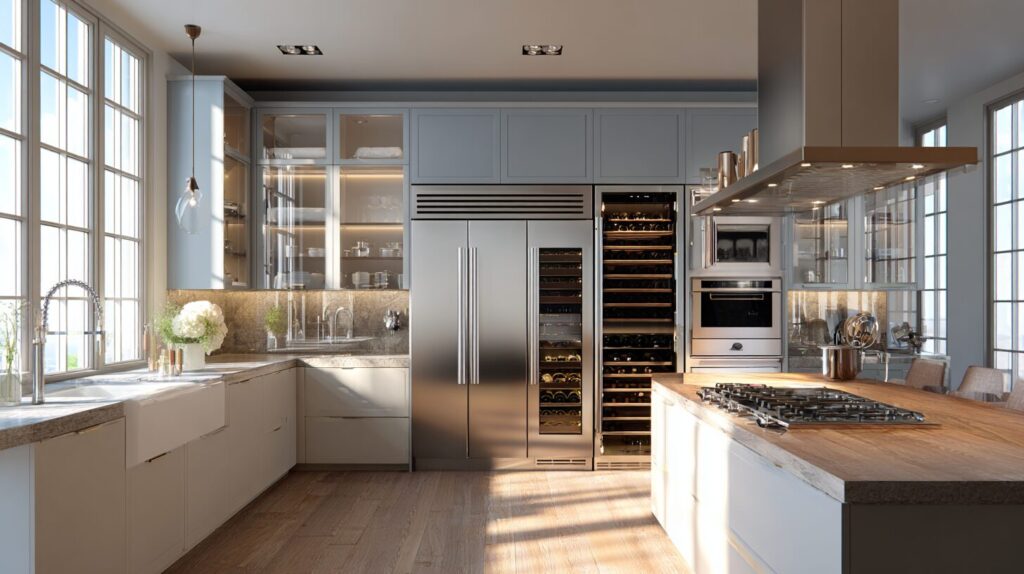
Kitchen Appliances & Ventilation Upgrades in Davis & Weber Counties
A kitchen can look beautiful and still feel frustrating if the appliances don’t fit, the hood is noisy, or cooking odors linger for hours.
Fortress Builders helps homeowners plan appliances and ventilation as one coordinated system—so your kitchen performs as well as it looks, with fewer surprises once construction starts.
If you’re updating appliances, moving the range, adding a cooktop, or upgrading a hood, this page is for you.
Why appliances and ventilation should be planned together
Appliances and ventilation affect more than just “what you buy.” They influence:
Cabinet layouts and clearances (built-ins, wall ovens, fridge panels, filler strips)
Electrical load and circuit planning (especially with induction, double ovens, or microwave drawers)
Duct routing and roof/wall penetrations
Air quality and comfort (smoke, grease, humidity, lingering odors)
Noise levels (a powerful hood isn’t helpful if it’s too loud to use)
When these pieces aren’t coordinated early, homeowners often end up with last-minute compromises—like downsizing appliances, reworking cabinets, or living with a hood that underperforms.
What this service includes
When your remodel scope includes appliance upgrades and/or ventilation changes, Fortress Builders coordinates the details that typically cause stress late in the process.
Appliance planning and layout coordination
We help plan:
Appliance placement and clearances (range/cooktop, wall ovens, fridge, dishwasher)
Built-in and panel-ready integration (where applicable)
Workflow considerations (prep, cook, clean zones)
Ventilation design and range hood planning
We coordinate:
Hood type selection (insert, wall-mounted, under-cabinet, concealed, etc.)
CFM guidance based on cooking style, cooktop/range type, and layout
Duct routing strategy (path, turns, termination location)
Noise reduction considerations (sizing, duct design, and component selection)
Make-up air coordination (when required)
Depending on hood size and local requirements, make-up air may be needed. We plan for it early so it doesn’t derail the project later.
Electrical coordination and “real-world usability”
We plan for:
Dedicated circuits and appliance requirements
Outlet placement that supports the way you use your kitchen
Switch/dimmer placement (especially when hood and lighting plans overlap)
Finish integration and final coordination
We coordinate the small details that make the install feel seamless:
Cabinet panels and trim alignment
Appliance reveals and spacing
Final fit and finish checks before sign-off
Key decisions that matter most (and how we help)
Decision fatigue is real—especially in kitchens. Here are the choices that actually move the needle.
1) Appliance package and clearances
Before anything gets built, we want to confirm:
Are you switching from electric to gas (or going induction)?
Are you changing appliance widths (30″ → 36″)?
Do you want built-in features like wall ovens, warming drawers, beverage fridges, or microwave drawers?
Why it matters: Appliance specs change cabinetry, ventilation, and electrical requirements.
2) Range hood performance (CFM) vs. comfort (noise)
A hood that’s too weak won’t capture smoke and grease. A hood that’s too loud won’t get used.
We plan for a balance of:
Effective capture (not just “big CFM”)
Practical fan settings you’ll actually run daily
Duct design that supports performance without excess noise
3) Duct routing and termination
The duct path affects performance more than most homeowners realize.
We look at:
Short, straight runs when possible
Minimizing sharp turns
Termination location that makes sense for your home
Avoiding “last-minute duct surprises” after cabinets are installed
4) Make-up air (when needed)
If make-up air is required, it’s better to treat it as part of the design—not a bolt-on.
We help you think through:
Where the system can be placed
How it integrates with the home’s airflow
How to keep it as unobtrusive as possible
5) Cabinet and finish integration
Built-in appliances and hoods often look “off” when details aren’t planned.
We coordinate:
Cabinet sizing and filler strategy
Panel alignment (if using panel-ready appliances)
Proper spacing so doors and drawers function correctly
What it’s like to work with Fortress Builders on this part of your kitchen remodel
Fortress Builders is built for homeowners who want a clear plan, disciplined execution, and durable results—without guessing through the most technical decisions.
Step 1: Design consult + goals and constraints
We start with what matters to you:
Cooking habits and comfort priorities
Must-have appliance features
Budget and timeline realities
Existing conditions in your home
Step 2: Layout confirmation + coordination planning
We align:
Appliance specs with cabinetry and layout
Ventilation and duct strategy
Electrical needs and placements
Step 3: Selections + “decision simplification”
We help reduce decision fatigue by focusing on:
Options that fit your home and priorities
The few decisions that have the biggest impact
Avoiding upgrades that don’t improve daily life
Step 4: Build coordination + quality checks
During construction, we coordinate:
Mechanical and electrical rough-ins
Cabinet and appliance timing
Final install sequencing to prevent rework
Step 5: Final testing + walkthrough
We confirm fit, finish, and usability—so you’re not discovering issues after the project is “done.”
Who this is for
This appliances + ventilation planning is a great fit if you:
Are doing a full or partial kitchen remodel
Want to upgrade to higher-performance cooking appliances
Need a new range hood or want better ventilation
Are considering built-in or panel-ready appliances
Want fewer surprises and a smoother construction experience
If you’re in Davis County or Weber County and you want your kitchen planned “right the first time,” this is exactly the kind of coordination that prevents stress later.
Common questions homeowners ask
Do I really need a new range hood if I’m remodeling?
If you’re upgrading appliances, changing layout, or cooking more often, it’s usually worth evaluating ventilation. A kitchen can’t feel “finished” if odors and grease linger.
How do I know what hood size (CFM) I need?
It depends on cooking style, cooktop/range type, kitchen layout, and duct design. We help you choose a system that performs well without becoming too loud to use.
What is make-up air?
Make-up air replaces air exhausted by a powerful hood. In some situations (often with higher CFM systems), it can be required or strongly recommended for performance and comfort.
Can we do built-in appliances in my kitchen?
Often yes—if we plan cabinet sizes, clearances, and electrical early. Built-ins look best when the details are designed from the start.
How early should I pick appliances?
Earlier is better—appliance specs influence cabinetry, ventilation, and electrical. We prefer to confirm key specs before finalizing cabinet plans.
Related pages to explore next
If you’re planning a full kitchen remodel, these typically pair with appliances + ventilation:
Kitchen Lighting and Electrical (layout, outlets, lighting layers)
Kitchen Flooring and Surfaces (durable floors, countertops, backsplash planning)
Kitchen Remodel Portfolio (see completed kitchens and design directions)
Ready to plan a kitchen that performs beautifully?
If you’re considering appliance upgrades, a new hood, or ventilation improvements, the best next step is a design consult. We’ll help you clarify the scope, the key decisions, and the plan—so your kitchen remodel feels organized and confident from the start.
Ready to elevate your kitchen?
Start with a design consult and a clear plan.