

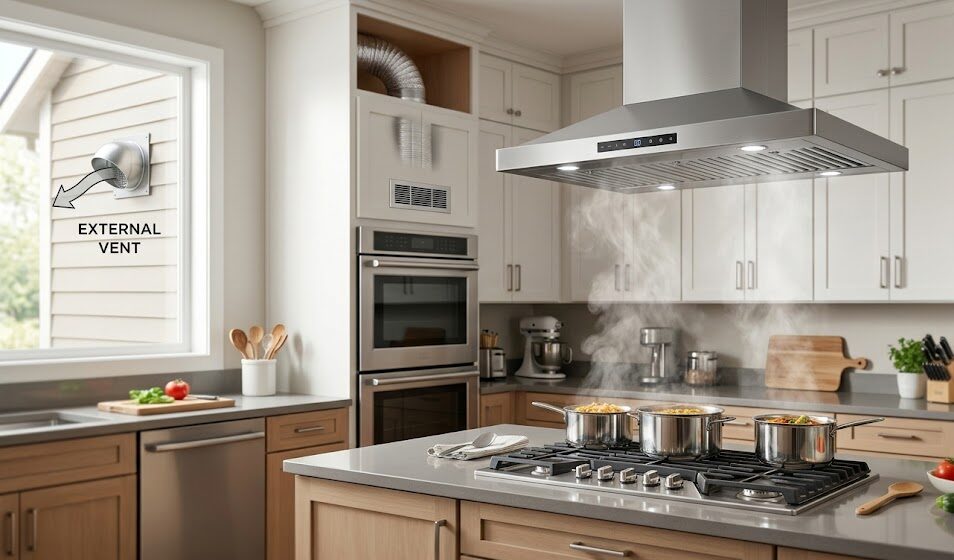
Kitchen Appliances & Ventilation Upgrades in Davis & Weber Counties
A kitchen remodel succeeds or fails on details most people don’t see on day one: clearances, power, gas, ducting, and whether your ventilation can actually keep up with the way your household cooks.
Appliances are not “plug-and-play” in a remodel. The size you choose affects cabinet widths, filler panels, landing zones, electrical circuits, gas line placement, duct routing, and even whether you’ll need make-up air. When those decisions happen late, you end up paying twice—once in changes, and again in daily frustration.
In this homeowner-friendly guide, you’ll learn:
- how to choose kitchen appliances that fit your layout and routines,
- how to plan ventilation for real performance (not just looks),
- what to lock early so cabinets and appliances actually fit together,
- common mistakes that cause noise, odors, and rework,
- and a practical checklist for Davis & Weber County remodel planning.
The Fortress Builders is a Utah design–build company built on “strength through structure.” Our process begins with a design blueprint that aligns vision, budget, and build timeline—so appliance and ventilation decisions happen early, not mid-construction.
Helpful internal pages while you plan:
- Kitchen Remodeling in Utah: Built to Last
- Kitchen Appliances & Ventilation (Service Overview)
- Range Hood CFM Sizing: How to Choose Ventilation That Works
- Make-Up Air in a Kitchen Remodel: What It Is and When You Need It
- Induction vs. Gas Cooking: Which Is Better for Your Remodel?
- Built-In Appliances: Layout Tips for Fridges, Wall Ovens, and Microwaves
- Request a Design Consult
Why appliances and ventilation should be planned together
Most homeowners choose appliances first, then “figure out the hood later.” In real kitchens, those choices are connected:
- Cooking method affects ventilation needs. High-heat searing, wok cooking, frequent frying, and heavy spice use create more smoke and particulates than simple reheating and light sautéing.
- Range size affects hood size. A larger range often needs a wider hood and more airflow to capture smoke effectively.
- Layout affects capture. A great hood can still underperform if the cooktop is positioned in a windy traffic path or if ceilings are high and hood placement is off.
- Power and ducting affect what’s possible. A dream appliance package can be held back by electrical capacity, gas availability, duct routing limitations, or make-up air requirements.
Homeowner takeaway: Treat “appliances + ventilation” as one system decision. You don’t want an expensive range paired with weak capture, or a high-CFM hood that creates comfort or code issues because make-up air wasn’t planned.
Start with how your household actually cooks
Before you compare brands or finishes, define your cooking reality. This keeps you from paying for features you won’t use—or underbuying the systems you’ll rely on daily.
The 5-minute cooking profile
- Frequency: How many nights per week are you cooking at home?
- Heat: Do you sear, grill, or fry regularly—or mostly simmer and bake?
- Odors: Are you sensitive to lingering smells (fish, onions, curry, bacon)?
- House layout: Is your kitchen open to living spaces (easy odor spread) or more enclosed?
- Noise tolerance: Do you want conversation-level ventilation, or is performance the priority?
Why this matters: Your answers determine the right balance of hood type, airflow (CFM), duct strategy, and where it’s worth investing in quieter systems.
Appliance planning basics that prevent expensive surprises
1) Measure for “installed reality,” not the brochure
Appliance spec sheets often show nominal widths (like 30″ or 36″), but installation requires clearances, door swing space, and sometimes extra room for ventilation or panels.
- Refrigerators: door swing + drawer pull-out + handle projection + side clearance for full opening.
- Dishwashers: door drop + aisle clearance + access to plumbing/electrical.
- Ranges/cooktops: clearance to combustibles, counter spacing, and ventilation capture area.
- Wall ovens: cabinet cutout specs, electrical requirements, and safe landing zones.
If you’re designing around built-ins or panels, use this guide as a companion: Built-In Appliances: Layout Tips for Fridges, Wall Ovens, and Microwaves.
2) Decide “package level” early
Most remodel regret comes from mixing decisions—premium range, budget hood; or luxury fridge, weak electrical planning. Instead, pick a coherent package tier:
- Value-focused: reliable core appliances, practical ventilation, fewer custom panels.
- Mid-tier performance: better cooking performance, quieter hood, improved storage features (full-extension drawers, better interior organizers).
- Premium: pro-style cooking, higher-performance ventilation, panel-ready integration, more specialized features.
3) Lock landing zones and clearances
Appliance placement is not just about fit—it’s about flow. You want places to set items down without crossing the work zone or blocking traffic.
- Fridge landing zone: a clear counter section for groceries and daily grab items.
- Range landing zone: safe space for hot pans and plates, not a narrow sliver.
- Oven landing zone: nearby counter space that doesn’t force you to pivot across an aisle.
Small change, big difference: A kitchen with the same appliances can feel dramatically better if landing zones and door swings are planned around your “peak traffic” moments (breakfast, dinner, school mornings).
Kitchen ventilation: what “good” actually means
Most homeowners think ventilation is about removing smells. In reality, a good system does three jobs:
- Captures: pulls smoke/steam/grease-laden air at the source before it spreads.
- Exhausts: moves that air outside (not just through a recirculating filter).
- Stays usable: performs at a noise level your household will actually run.
Exhaust vs. recirculating: the practical difference
In general, venting to the exterior is the strongest performance option when feasible. Recirculating hoods rely on filters and do not remove moisture the same way, which matters when you cook frequently.
Design note: Sometimes duct routing limitations affect what’s possible. That’s why ventilation planning belongs in the design phase—before cabinets and finishes lock you into compromises.
CFM, ducting, and “why my hood is loud but still doesn’t work”
CFM is not the whole story
Airflow (often discussed as CFM) matters, but it’s only one part of performance. A hood can be powerful and still underperform if:
- ducting is undersized or has too many bends,
- the hood is mounted too high or too shallow for the cooktop,
- capture area doesn’t match the range width and cooking style,
- make-up air isn’t addressed, causing negative pressure issues.
For a homeowner-friendly breakdown of sizing and performance, reference: Range Hood CFM Sizing: How to Choose Ventilation That Works.
Duct routing: what to ask during design
Duct routing is where many kitchens win or lose. During planning, ask your remodeler or designer:
- Where does the duct run, and how long is it?
- How many elbows/bends are required?
- What duct size is planned, and does it match the hood spec?
- Where does it terminate (roof/wall), and is that location practical for weather and maintenance?
Noise reality check: Many homeowners run the hood on low because high speed is loud. A well-designed system prioritizes usable performance—quiet enough to run during normal cooking, and strong enough to clear high-heat events when needed.
Make-up air: when powerful ventilation needs a plan
When a hood exhausts a lot of air, your home needs a safe way to replace it. Without make-up air planning, you can see issues like backdrafting, drafts, doors that feel “sticky,” or inconsistent performance.
This isn’t a scare tactic—it’s simply how air pressure works in tight homes. Requirements can vary based on local code, equipment specs, and how the home is built.
For a clear explanation and what to discuss early, see: Make-Up Air in a Kitchen Remodel: What It Is and When You Need It.
Verification note: Make-up air needs and requirements can vary by project and jurisdiction. Confirm final requirements with qualified HVAC professionals and local authorities as part of your remodel planning.
Appliance layout decisions to lock early
1) Range vs. wall oven: ergonomics and traffic flow
Your cooking setup shapes how people move through the kitchen. A wall oven can improve ergonomics for some households, but it also requires cabinet space, electrical planning, and a safe landing zone. A range consolidates cooking, but places more importance on hood capture and range clearances.
If you’re weighing this decision, you’ll likely also want: Built-In Appliances Planning.
2) Fridge placement: the “daily touchpoint” appliance
The refrigerator is often the most frequently used appliance. The best fridge placement is not always the “prettiest wall.” It’s the one that supports daily routines:
- easy access without cutting through the cook zone,
- a nearby landing zone for groceries, lunches, and snacks,
- door swing that doesn’t collide with islands, stools, or wall returns.
3) Dishwasher location: keep the cleanup loop tight
Dishwashers block aisles when open. In a good plan, the open dishwasher doesn’t shut down the whole kitchen. Your goal is a cleanup loop that works even during peak traffic.
4) Microwave placement: not just a convenience detail
Microwave placement impacts safety (kids), counter space, and ventilation strategy—especially if you’re considering an over-the-range microwave hood combo. If you haven’t finalized this, cross-reference: Microwave Placement Guide: Drawer, Built-In, or Over-the-Range?
Ventilation design options homeowners should understand
Option A: Under-cabinet hood
This is common in many kitchens. Performance depends heavily on hood depth, capture area, and duct strategy.
Option B: Chimney hood
Often used when the range is on an open wall. It can work well when properly sized and ducted.
Option C: Insert hood (built into a custom surround)
Popular when homeowners want a custom look. The insert’s performance still depends on correct sizing and ducting.
Option D: Downdraft ventilation
Downdraft systems can be useful in specific layouts (like island cooktops), but they often have performance tradeoffs versus overhead capture—especially for smoke and grease rising with heat.
|
Decision
What matters most |
Vent type (under-cabinet, chimney, insert, downdraft) should be chosen based on capture effectiveness, duct feasibility, and how you cook—not just aesthetic preference. Duct routing often matters as much as the hood itself. Noise matters because you’ll only use a system you can live with. |
|
Verification
What to confirm |
|
Common appliance + ventilation mistakes (and how to avoid them)
Mistake 1: Choosing cabinets before confirming appliance specs
Cabinet orders are hard to undo. Appliance specs should be locked (or at least narrowed to exact models) before cabinet layouts and panels are finalized.
Fix: Confirm appliance model numbers, cut sheets, and install requirements during design.
Mistake 2: Treating the hood as a decorative feature
A hood that looks good but doesn’t capture is a frustration you’ll live with for years.
Fix: Size for capture and usability, not just style. Use: Range Hood CFM Sizing Guide.
Mistake 3: Ignoring duct routing until framing is done
Late duct routing can force extra elbows, smaller duct sizes, or awkward soffits.
Fix: Plan duct route early and coordinate with structure and lighting plans.
Mistake 4: Overbuying “pro” without matching the system
A powerful range can outpace a weak hood. Or a high-CFM hood can create issues if make-up air isn’t planned.
Fix: Build a balanced system package and confirm requirements early: Make-Up Air Basics.
Planning checklist: lock these decisions before you order
Use this checklist before cabinets are ordered or rough-ins begin:
- Appliance models selected: Model numbers + cut sheets saved for fridge, range/cooktop, ovens, microwave, dishwasher.
- Clearances checked: Door swings, drawer pull-outs, aisle widths, and landing zones validated.
- Ventilation selected: Hood type, size, capture strategy, and controls confirmed.
- Duct route planned: Route length and elbows reviewed; termination location confirmed.
- Electrical planned: Required circuits, outlet locations, and any panel capacity considerations reviewed with qualified pros.
- Gas planned (if applicable): Line location and shutoff access confirmed with qualified pros.
- Make-up air considered: If higher airflow ventilation is planned, confirm if make-up air applies for your project.
- Cabinet compatibility: Panel-ready specs, filler sizes, and appliance garage/tall unit details coordinated.
- Noise strategy: Plan how you’ll use the hood day-to-day (quiet low setting + high performance when needed).
How appliance and ventilation choices connect to the rest of the kitchen
Appliances and ventilation don’t live in isolation. They connect directly to:
- Layout and traffic flow: where people pass, where doors swing, and where kids/guests naturally stand.
- Cabinet design: fillers, panels, storage zones, and appliance garages.
- Lighting and electrical: task lighting, hood lighting, outlets, and switch placement.
- Flooring and surfaces: transitions, durability under heavy traffic, and cleaning reality.
If you’re building out the full plan, these pages support the complete picture:
- Kitchen Lighting & Electrical Designed for Real Life
- Durable Kitchen Flooring & Surfaces Built to Last
- Design and Layouts for Kitchens
- Cabinets and Countertops Planning
FAQ: Kitchen appliances and ventilation (homeowner edition)
Do I really need exterior venting?
If you cook frequently, exterior venting is typically the strongest option because it removes moisture and particulates rather than filtering and recirculating them. If exterior ducting is difficult, discuss alternatives early so the final design doesn’t force compromises late in the build.
How do I keep the hood quiet?
Start with good duct design and correct hood sizing/capture. Noise is often a symptom of a system working too hard because capture or routing is inefficient. A quiet, usable “low” setting is often more valuable than a powerful but unbearable “high.”
When should I choose appliances in the remodel timeline?
Before cabinet layouts and rough-ins are finalized. Even if you don’t purchase immediately, locking model choices early prevents cabinet redesigns, filler mistakes, and electrical/gas surprises.
Do I need make-up air?
It depends on the hood airflow, the home’s tightness, and local requirements. Treat it as a design-phase question, not a post-installation surprise. Review: Make-Up Air in a Kitchen Remodel.
What’s the biggest “ROI” decision in appliances?
Buying appliances that match your real cooking habits, then pairing them with correct ventilation and layout support. The “best” brand won’t feel great in a layout that fights you every day.
Want a second set of eyes on your appliance and ventilation plan before you commit?
If you’re remodeling a kitchen in Davis or Weber County, Fortress Builders can review appliance placement, clearances, hood performance strategy, and the planning details that prevent mid-project surprises.
Request a Design Consult Explore Kitchen Remodeling Ventilation Sizing Guide
Bring your rough layout, appliance wish list (even if it’s early), and a few photos of the existing kitchen. We’ll help you align decisions so your final kitchen is comfortable, durable, and built to last.