

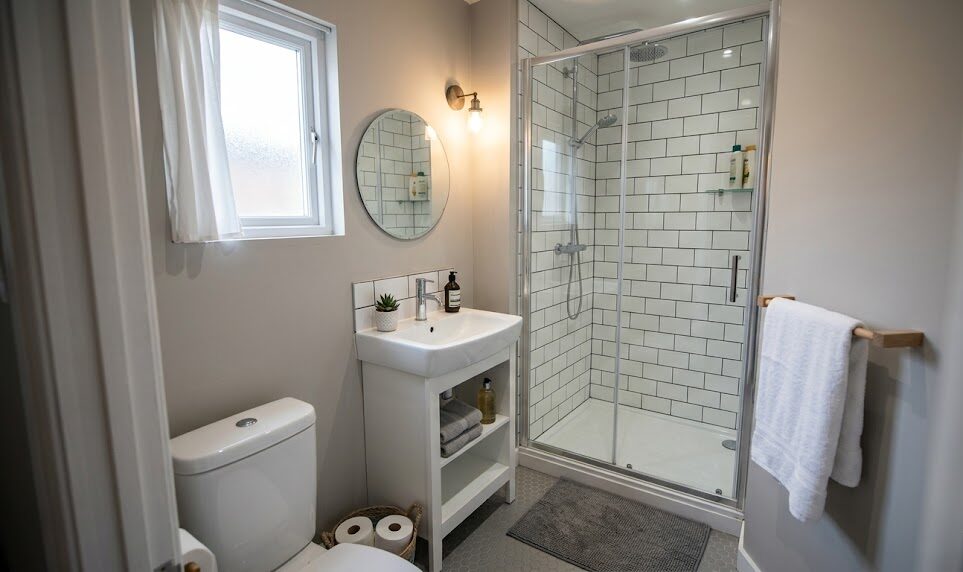
Small Bathroom Layout Mistakes to Avoid: Door Swings, Shower Size, and Storage
Bathrooms fail fast when layout, moisture control, and details are not planned early, and small bathrooms make those mistakes show up even faster.
This guide explains small bathroom layout mistakes in plain English and highlights the decisions worth making before you commit. The short version is this: small bathrooms usually go wrong when homeowners choose pretty products before they solve the room’s true constraints. Door swings get ignored, vanity depth gets oversized, showers get planned by wishful thinking instead of by usable dimensions, storage gets treated like an accessory instead of part of the layout, and rough-in-sensitive decisions happen too late. The best small bathrooms are rarely the ones with the most stuff in them. They are the ones where every inch is doing a clear job.
That is why a small-bathroom remodel is not simply a miniature version of a large-bath remodel. It is a different kind of design problem. Tight clearances, moisture exposure, storage pressure, lighting, ventilation, and plumbing locations all matter more because the room has less room to forgive you. A few inches in the wrong place can make a small bathroom feel crowded every day. A few smart decisions early can make the same room feel much calmer, more comfortable, and more capable than homeowners expected.
The Fortress Builders approaches remodeling through one core principle: strength through structure. Every project begins with a design blueprint that aligns client goals, room constraints, budget, and build sequence before materials are ordered. That structure matters especially in small bathrooms because layout mistakes are harder to hide later. When the room is planned well, the finished result feels simple and effortless. When it is not, the room can look expensive and still feel annoying every single morning.
- Why small bathrooms magnify layout mistakes faster than larger rooms do
- How routines, door swings, and fixture clearances shape the room more than many homeowners expect
- What commonly goes wrong with shower sizing, vanity depth, and storage planning
- Which selections need to be made early because they affect rough-ins, waterproofing, and schedule
- What to confirm before ordering materials or starting demo
Why small bathrooms go wrong faster than larger rooms
Small bathrooms are unforgiving. A larger room can sometimes absorb a slightly oversized vanity, a less-than-perfect door swing, or a storage plan that is merely average. A small bathroom usually cannot. Once the vanity projects too far, the walkway tightens immediately. Once the shower opening is awkward, the whole room feels more cramped. Once the storage is weak, the counters fill up and the space stops feeling finished.
That is why the most common small-bathroom mistakes are usually not about style. They are about sequence. Homeowners often choose tile, fixtures, and vanity styles before they have fully solved the room’s movement, dimensions, storage zones, or moisture strategy. The room may still get built beautifully, but it will not necessarily feel good to use. In a small bathroom, comfort is a layout achievement more than a decorating achievement.
Less Margin for Error
A few inches in the wrong place can change whether the room feels comfortable or constantly cramped.
Layout Decisions Compound
Door swings, vanity depth, shower entry, and storage choices all affect each other more intensely in a tight room.
Clutter Shows Up Fast
Weak storage planning becomes visible immediately because there is less extra surface area to absorb daily-use items.
Moisture Issues Feel Bigger
Ventilation and waterproofing matter even more because humid air and splash zones have less space to dissipate.
Rough-In Choices Matter More
Small bathrooms do not forgive late plumbing, lighting, or layout changes as easily as larger rooms do.
Every Inch Must Earn Its Keep
The strongest small bathrooms feel intentional because almost every element is solving a real problem.
Start with routines: who uses the space and what has to happen there?
The first mistake to avoid is designing a small bathroom around abstract inspiration instead of real routines. A powder room, a kids’ hall bath, a compact guest bath, and a small primary bath may all be small, but they should not all be designed the same way. The right plan depends on how many people use the room, when they use it, and what they need the room to hold and support.
That is why the best small-bathroom layouts begin with use patterns. Is the room handling rushed school mornings? Does it need to support shaving, makeup, hair tools, and skincare daily? Is it mainly a guest room that should feel simple and uncluttered? Does it need to balance comfort with aging-in-place concerns? The answers shape whether the room needs more counter landing space, more enclosed storage, a larger shower, or fewer but better-placed features.
Small primary baths need different priorities than guest baths
A compact primary bath often needs better vanity organization, stronger lighting, and better routine flow. A guest bath may be better served by simpler, quieter choices that prioritize openness and easy cleaning.
Daily overlap matters
If two people are using the bathroom back-to-back or at the same time, storage zones, sink placement, and circulation become more important than decorative flourishes.
The room should be planned for the busiest moments
It helps to picture the most crowded or rushed time of day. That is usually where layout problems show themselves first.
If the room is not clearly organized around how it is actually used, the remodel is probably overvaluing finishes and undervaluing function.
| Bathroom Type | What It Often Needs Most |
|---|---|
| Compact Primary Bath | Better vanity planning, lighting, storage zoning, and circulation that supports repeated daily use |
| Hall Bath | Durable finishes, easy-clean surfaces, and storage that hides clutter fast |
| Guest Bath | Straightforward comfort, simple organization, and a layout that feels tidy without overbuilding the room |
| Powder Room | Strong visual clarity, simple circulation, and fixtures that fit without crowding the entry experience |
This is why small-bath planning usually works best when it is treated as part of the larger bathroom remodeling process rather than as a string of independent product selections.
Door swing mistakes that quietly ruin a small bathroom
One of the most common small-bathroom layout mistakes is underestimating what the door does to the room. A door swing can eat up the best vanity position, crowd the toilet zone, interrupt storage, or make the room feel awkward the moment someone steps inside. Because doors are so familiar, homeowners often stop noticing how much they control the usable geometry of the space.
Ignoring the entry sequence
If the door opens directly into the vanity, into a tight toilet zone, or into a person trying to exit the shower, the room may technically function, but it will never feel graceful.
Choosing vanity size before solving the door swing
A beautiful vanity that blocks the door or crowds circulation is still the wrong vanity. In small bathrooms, door planning should happen before the vanity is finalized.
Forgetting that alternate door strategies exist
Sometimes the solution is a smaller vanity or a slightly different layout. Sometimes it is a better door strategy, such as a pocket door, when the wall conditions and privacy expectations support that choice.
- letting the door swing into the best usable storage or vanity wall
- creating a collision between the door and the toilet or shower entry
- assuming the existing swing is “good enough” without testing the room with the new fixtures in mind
- overlooking whether a different door solution could meaningfully improve the layout
- finalizing cabinetry or storage before confirming how the entry sequence will feel
These issues often connect directly to related layout topics such as small bathroom vanity planning and pocket doors in bathrooms, especially when the room is fighting for every inch of usable space.
Shower-size mistakes that make a small bathroom feel worse, not better
Another common mistake is planning the shower by appearance rather than by usable size, entry comfort, and waterproofing reality. Homeowners often want the shower to feel more luxurious, which is understandable, but in a small bathroom an oversized or awkwardly shaped shower can steal the exact space the rest of the room needs to work properly.
Bigger is not automatically better
A larger shower sounds appealing until it forces a too-small vanity, blocks better storage, or compresses the toilet and entry clearances. The strongest small-bathroom showers are usually the ones that feel easy to enter, easy to clean, and well integrated into the room.
Entry and glass planning matter more than homeowners expect
Even when the shower footprint is technically adequate, a poor entry strategy or an awkward glass swing can make the room feel tighter than it needs to.
Curbless and walk-in decisions need real planning
Walk-in showers and curbless entries can be excellent in the right room, but they still need disciplined planning around slope, drainage, waterproofing, and how the rest of the small bathroom handles water.
Oversized Footprints
A shower that takes too much floor area often pushes the rest of the bathroom into cramped compromises.
Awkward Entries
A tight or poorly oriented shower entry can make the whole room feel harder to use even if the shower itself is attractive.
Glass Conflicts
Shower doors and panels need to be coordinated with vanity and toilet clearances, not treated as a separate late decision.
Water Management
Small bathrooms need shower layouts that control splash and humidity well, not just layouts that look clean in photos.
The best small-bath shower is not the biggest one. It is the one that preserves comfort, supports waterproofing, and still leaves the rest of the room usable.
This is why shower decisions usually belong next to walk-in shower planning, curbless versus curb shower planning, and tub-to-shower conversion planning.
Storage mistakes that make a small bathroom feel cluttered on day one
Small bathrooms tend to feel finished for about ten minutes when storage is underplanned. Then the daily items arrive. Spare towels, tissue, skincare, hair tools, backup toiletries, medications, kids’ items, cleaning supplies, and shower bottles all need a home. When the room does not provide one, the countertop and tub ledges take over.
Oversized vanities can still deliver weak storage
A large vanity does not automatically mean good storage. If the sink plumbing dominates the cabinet space and the drawers are poorly organized, the room can still feel short on useful storage despite the footprint it sacrificed.
Open shelving is often overrated in tight bathrooms
Open shelves can look attractive in inspiration images, but many real small bathrooms need more concealed storage and less visual clutter, not more opportunities to display mismatched daily items.
Shower storage must be planned before tile starts
Niches, corner shelves, and benches affect framing, waterproofing, and tile layout. They are not minor accessories to add casually once the rest of the room is underway.
- relying on countertop space instead of real drawer and cabinet planning
- choosing a vanity that looks good but stores poorly
- adding open shelves where the room really needs concealed storage
- forgetting towel storage near the shower or tub zone
- waiting too long to plan niches, benches, or recessed storage
That is why small-bath layout planning often overlaps closely with small bathroom vanity storage planning and shower niche and shelf planning.
Late rough-in decisions are one of the most expensive small-bathroom mistakes
Small bathrooms do not absorb late changes gracefully. When plumbing, lighting, fan location, vanity size, valve placement, or heated-floor decisions are left unresolved for too long, the room loses flexibility quickly. Homeowners often think they still have time because the bathroom seems small and simple. In reality, compact rooms can become less forgiving faster because everything is stacked so closely together.
Vanity size affects more than storage
It changes sink placement, mirror strategy, lighting centering, outlet locations, and how the room clears at the entry.
Shower controls and storage need early coordination
Valve locations, shower hardware, niches, and glass decisions are not things to casually settle after the walls are already in motion.
Lighting and ventilation should not be secondary decisions
In a small bathroom, glare, shadowing, and humidity problems feel bigger because the room is compact and used repeatedly.
| Selection | Why It Should Be Clarified Early |
|---|---|
| Vanity Size and Type | It influences storage, plumbing, mirror strategy, lighting, and how the room clears in daily use |
| Shower Valve and Layout | It affects rough-ins, waterproofing, entry comfort, and the coordination of glass and storage details |
| Lighting and Mirrors | These determine how the bathroom actually feels during grooming routines and can be hard to fix late |
| Vent Fan Strategy | Moisture control is essential in small bathrooms, so ventilation choices should not wait until the last minute |
This is why small-bath planning usually belongs in the same early conversation as fixtures and lighting, ventilation and moisture control, and timeline expectations.
Waterproofing and ventilation mistakes can ruin even a beautiful small bathroom
Small bathrooms do not just magnify layout mistakes. They also magnify moisture mistakes. Tight rooms, active showers, and repeated daily use create a lot of humidity and water exposure in a small amount of space. That is why waterproofing and ventilation are not side topics. They are fundamental parts of whether the remodel will last.
Tile is not the waterproofing system
Beautiful tile can still fail as a long-term bathroom solution if the shower system behind it was not planned and executed correctly.
Ventilation protects more than comfort
A properly planned fan helps with humidity control, mirror clearing, finish longevity, and reducing the conditions that let mold and moisture issues develop.
Small bathrooms need disciplined wet-zone planning
Because surfaces sit closer together and air has less room to disperse, the quality of the waterproofing and ventilation approach matters even more.
- treating tile as if it alone solves water management
- underplanning fan sizing and venting paths
- placing niches, benches, or shelves without thinking through waterproofing details
- ignoring how curbless or open shower designs change splash control
- assuming humidity will “work itself out” in a compact room
This is why related planning pages like bathroom waterproofing basics, bathroom vent fan sizing, humidity-sensing fan planning, and mold-prevention basics are so important in small bathrooms.
Common small-bathroom layout mistakes homeowners regret later
Choosing the vanity before solving the room
A beautiful vanity is still the wrong one if it crowds the entry, chokes storage, or forces a bad circulation path.
Using too much of the room on the shower footprint
A shower that looks generous on paper can make the rest of the bathroom feel pinched and under-supported.
Ignoring the door swing until too late
Small bathrooms often live or die on the first few feet inside the room, and the door controls that more than many homeowners expect.
Underplanning enclosed storage
When the room has no clear place for daily-use items, the bathroom starts looking cluttered almost immediately after completion.
Leaving moisture strategy too vague
Fan sizing, waterproofing, and wet-zone planning matter as much as the visible materials if the room is going to age well.
Settling rough-in-sensitive decisions too late
Small bathrooms have less flexibility for last-minute changes, so late decisions tend to cost more and compromise more.
Most small-bathroom regrets are not caused by one terrible product choice. They are caused by solving the room in the wrong order.
What to confirm before you order materials or start demo
By the time demolition begins, the bathroom plan should be more than a mood board. The room should already have a clear logic for how people enter it, where the vanity sits, how the shower is sized and accessed, where daily storage goes, and how moisture will be managed. That does not mean every accessory must be chosen, but the layout logic should be strong enough that the build can move forward without preventable confusion.
Confirm the layout with real measurements
Door swings, vanity depth, shower width, toilet clearances, mirror positions, and circulation paths should all be tested against actual field dimensions.
Confirm the rough-in-sensitive selections
Vanity size, shower hardware, lighting strategy, fan location, niches, and any heated-floor or specialty upgrade should be understood early enough to support the build.
Confirm the moisture-control approach
Waterproofing and ventilation should be planned as essential parts of the bathroom system, not treated like optional add-ons.
- who uses the bathroom and what the room must support during real daily routines
- that the door swing, vanity depth, shower entry, and storage zones all work together
- which selections affect plumbing, electrical, waterproofing, glass, or schedule
- that the room has enough concealed storage to stay calm after move-in
- that any code, permit, inspection, plumbing, electrical, or ventilation questions are reviewed with qualified professionals and local authorities where applicable
How Fortress Builders would approach a small bathroom layout in a real remodel
A strong design-build process would not start with “Which tile do you want?” It would start with how the bathroom is used, where the room is fighting itself, how the entry works, what the shower really needs to be, and how the room will stay organized and dry over time. That is how a small bathroom stops feeling like a cramped compromise and starts feeling intentional.
In one room, the smartest move may be a smaller, better-planned vanity and stronger drawer storage. In another, it may be reworking the shower entry and reclaiming space through a different door strategy. In another, it may be keeping the footprint mostly the same but dramatically improving lighting, waterproofing, and storage so the room works better without pretending it is larger than it is. The right answer depends on the room and the people using it.
The most important thing is making those decisions early enough that plumbing, lighting, waterproofing, ventilation, and finish planning can all support the final layout cleanly.