

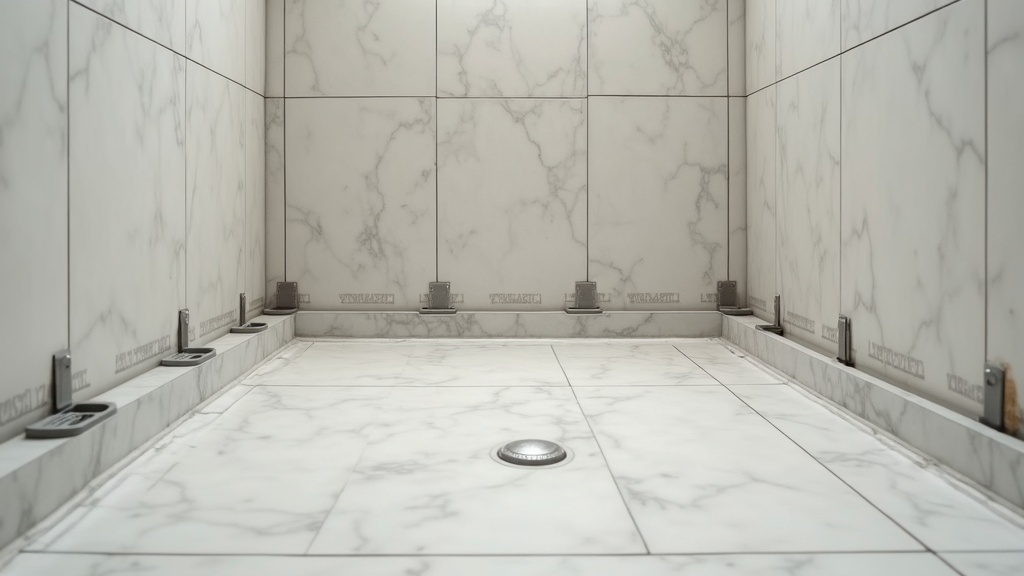
Large-Format Tile and Waterproofing: How to Build a Bathroom That Lasts
A clear explanation of why large-format tile raises the stakes for substrate prep, waterproofing, drainage, flatness, and installer planning.
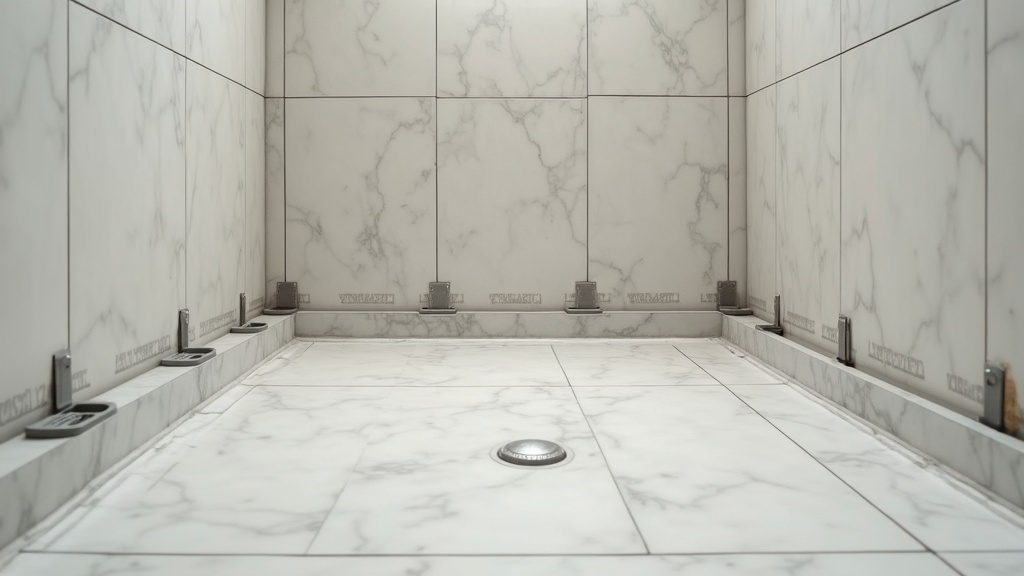
Thinking about large-format bathroom tile because you want fewer grout lines and a cleaner shower? The honest answer is that large tile can be a great choice, but bathroom tile waterproofing in Utah has to be planned correctly before the first tile is set.
Large-format tile is less forgiving than smaller tile. If the wall is not flat, the substrate is not ready, the waterproofing is rushed, or the drain and niche details are not planned, the finished room can look uneven or fail behind the surface.
Here’s what I’d want you to understand before you choose tile: the part you see is only the last layer. The part underneath is what makes the bathroom built to last.
Why large-format tile changes the install plan
Large-format tile changes the way a shower or bathroom wall is built. Big tiles bridge across more surface area, so dips, bows, and out-of-plane walls become more obvious. The prep has to be better.
That means the framing, backing, flattening, waterproofing, mortar selection, layout, cuts, and handling all matter. A large tile can make a bathroom feel calm and clean, but it gives the installer fewer places to hide a poor substrate.
The bigger the tile, the less forgiving the prep. I would never sell large-format tile as a shortcut. It is usually the opposite — it needs more planning, not less.
Waterproofing is not the same as tile
Tile and grout are finish materials. They are not the waterproofing plan. The shower needs a waterproofing system behind or under the tile that handles seams, corners, penetrations, niches, benches, curbs, and drain integration.
This matters in any bathroom, but especially in showers with large tile, minimal grout lines, and glass enclosures. Water still finds edges. Steam still moves. The system has to be ready for it.
If you are planning a bathroom remodel, ask about the waterproofing approach before asking only about tile style.
Substrate, slope, drain, and niche details
A durable shower is built from small decisions made in the right order. Drain location affects slope. Slope affects tile layout. Tile layout affects cuts. Niche placement affects waterproofing. Glass placement affects splash patterns. None of those should be left to chance.
Substrate flatness
Walls and floors should be prepared to support the tile size being installed.
Drain planning
Linear drains, center drains, and offset drains each affect slope and tile layout.
Niche placement
A niche should be useful, reachable, and waterproofed correctly around all edges.
Bench and curb details
Horizontal surfaces need slope and proper waterproofing so water does not sit where it should drain.
Grout, movement joints, and maintenance
Fewer grout lines can make cleaning easier, but that does not mean maintenance disappears. Corners, changes of plane, glass edges, and transitions still need the right materials and detailing.
Bathrooms move. Homes move. Temperature and humidity change. Movement joints and flexible sealant in the right places help the finished tile assembly handle that reality.
Grout choice
The grout should match the tile, joint size, and cleaning expectations.
Movement joints
Corners and changes of plane need the right treatment.
Glass coordination
Shower glass should be planned with tile layout and waterproofing in mind.
Drying behavior
Ventilation and surface design should help the shower dry between uses.
This is also why ventilation and moisture control belongs in the same conversation as tile.
Questions to ask before tile work begins
Before tile work begins, ask the questions that reveal whether the installation plan is complete.
- What waterproofing system will be used, and where?
- How will seams, corners, niches, benches, and curbs be handled?
- Is the substrate flat enough for the tile size?
- How will the shower floor slope to the drain?
- Where will movement joints or flexible sealant be used?
- How will the tile layout work around glass, valves, niches, and edges?
If those answers are vague, slow down. The tile you see is only one part of the system. The plan behind it is what protects your home.
Questions homeowners ask before they decide
Is large-format tile harder to install?
Usually, yes. It requires flatter surfaces, careful layout, proper mortar coverage, and experienced handling.
Does grout make a shower waterproof?
No. Grout is not the waterproofing system. The wall and floor assembly behind the tile must be waterproofed correctly.
Can large tile be used on a shower floor?
Sometimes, but slope, drain type, tile size, and slip resistance all matter. Smaller tile is often easier on sloped shower floors.
What should I ask a contractor before tile starts?
Ask about the substrate, waterproofing system, drain integration, niche details, layout, movement joints, and inspection needs.
Planning a tile bathroom that needs to hold up?
Ready to talk through scope and timeline? A design consult is the right first step. We’ll walk through tile size, waterproofing, drain planning, ventilation, and the hidden details before installation begins.
Planning note: Remodel scope, permits, inspection requirements, and existing conditions vary by city and home. Use this article as a practical starting point, then verify project details through your local jurisdiction and a qualified contractor before construction begins.