

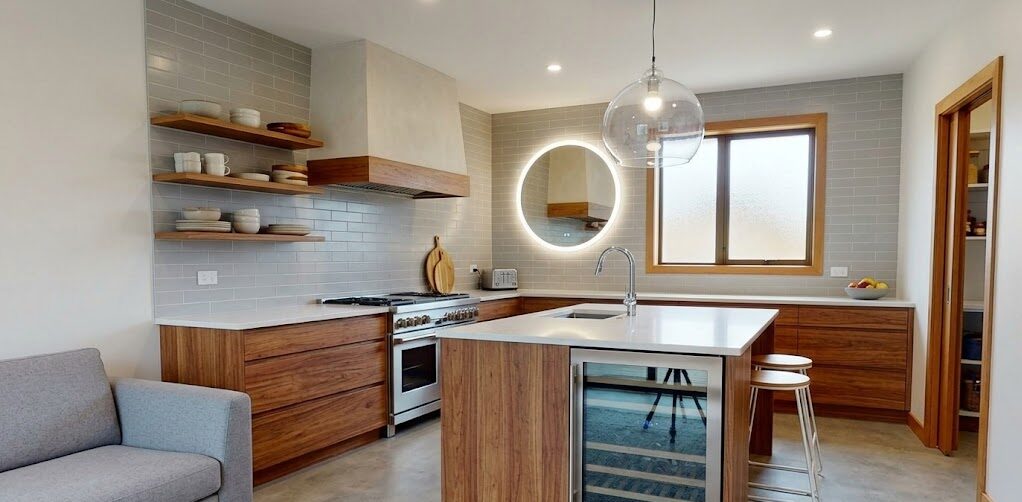
Open concept kitchen remodel pros cons: when it works (and when it doesn’t)
Open-Concept Kitchen Remodel: When It Works (and When It Doesn’t)
Open concept can make a home feel brighter and more connected—but it can also create noise, mess visibility, awkward traffic, and a kitchen that never feels “settled.” The difference is planning: goals, layout, storage zones, and the structural/mechanical realities behind the wall.
Explore related Fortress resources and services:
The truth about open concept: it’s not a style—it’s an operating system
Open concept gets talked about like a “look,” but it behaves like an operating system for your home. When you remove walls, you change:
- Traffic patterns (people cut through the kitchen more often)
- Sound travel (dishwashers, range hoods, and conversations move farther)
- Smell management (cooking odors don’t stay contained)
- Visual exposure (mess is always “on stage”)
- Lighting strategy (one room becomes multiple zones that must still feel cohesive)
Best framing question: Do you want your kitchen to be a workshop you can partially hide, or a stage you’re comfortable seeing every day? Open concept usually turns it into a stage.
When open concept works exceptionally well
Open concept tends to succeed when it’s solving a specific problem—not just chasing a trend. Here are the situations where it usually pays off.
1) You need better daylight and sightlines
If the kitchen is dark, cut off, or isolated from the main living areas, opening sightlines can make the home feel larger and more welcoming. This can be especially helpful for households that cook while kids do homework or guests gather.
2) You host often (and want kitchen + living to function as one zone)
Open concept supports “one conversation across multiple zones”—prep at the island, drinks in the living room, kids moving in and out. But it only works if the kitchen has enough landing space, seating clearances, and storage to stay orderly during real events.
3) Your layout can support true work zones
Modern kitchens work best when designed in zones: prep, cooking, cleanup, pantry/storage, beverage/coffee, and sometimes baking. If your footprint supports zoned planning, open concept feels calm instead of chaotic.
If you want a quick layout framework, start with Work Triangle vs. Work Zones and apply it to your floor plan before committing to wall removal.
4) You can commit to better ventilation and quieter appliances
Open concept makes ventilation performance more important, not less. Cooking odors and grease travel farther when there’s no separation. If you’re serious about open concept, plan ventilation early through Kitchen Appliances & Ventilation and consider resources like:
Note: ventilation requirements and make-up-air needs can vary by project scope, equipment selection, and local code interpretation. Confirm specifics with qualified professionals and local authorities.
When open concept doesn’t work (or needs a hybrid approach)
Open concept can backfire when it introduces new problems you didn’t plan for. In many homes, a hybrid approach—partial openness with strategic separation—delivers a better day-to-day experience.
1) Your kitchen is a high-mess, high-activity workspace
If you cook frequently, meal-prep heavily, or run a busy household where the kitchen is always in motion, open concept can create constant visual noise. Dirty dishes, prep clutter, and kid items become part of the living room experience.
2) Noise control matters in your home
In open concept, dishwasher cycles, range hood sound, and multiple conversations can overlap. If someone works from home, kids are sleeping, or the living room doubles as a quiet space, consider strategies that reduce sound transfer instead of opening everything up.
3) The layout forces traffic through the cooking zone
A common open-concept failure is a “kitchen as hallway” plan. If people must cut directly between fridge, sink, and cooktop to reach other spaces, the kitchen becomes stressful and unsafe.
Before committing, map traffic flow. Your goal is: walkways around work zones, not through them. Use the clearances guidance from the Kitchen Island Size Guide as a starting point.
4) You don’t have a storage plan (open concept needs MORE storage)
Open concept usually needs more intentional storage because you lose “hiding places.” Your kitchen must hold what used to be stored in adjacent rooms, and it must look composed from more angles.
Start with pantry decisions (walk-in, cabinet pantry, butler’s pantry) using Pantry Design Ideas. Then work through cabinet strategy with:
5) Structural and mechanical realities make it costly or awkward
Removing walls can trigger structural framing changes, beam placement decisions, and rerouting electrical/plumbing/HVAC. Sometimes the “clean open concept look” is hard to achieve without visible soffits, posts, or dropped ceilings.
Note: Permit and inspection requirements vary by jurisdiction and scope. If your remodel includes wall removal, electrical relocation, ventilation changes, or structural changes, confirm requirements with qualified professionals and local authorities before demolition.
Open concept options: full open vs. “soft separation” (the hybrid approach)
In real homes, “fully open” isn’t the only option. Here are three common approaches, and why homeowners choose them.
Option A: Fully open kitchen + living
- Best for: social households, good storage plans, quieter appliance specs, strong ventilation plan.
- Tradeoffs: mess visibility, smell travel, noise overlap.
Option B: Kitchen open to dining, with partial living separation
- Best for: people who entertain but want a calmer living area.
- Tradeoffs: less “one big room” feel, but often better daily comfort.
Option C: Open sightlines with functional boundaries
This might mean a wider opening, a pass-through, a peninsula, a partial-height wall, or a change in ceiling detail that defines zones without fully closing them off.
The decisions to make BEFORE you commit to open concept
This is where open concept succeeds or fails. The goal is to lock the decisions that prevent rework and change orders.
1) Clarify your goals (what problem are you solving?)
- Light: Are you trying to brighten the kitchen, or improve lighting layers?
- Connection: Do you want sightlines to kids/guests while cooking?
- Space: Do you need more usable prep and serving space?
- Flow: Is the current layout forcing awkward traffic?
- Storage: Are you trying to reduce visible clutter?
2) Map traffic flow (and protect the work zones)
Draw a simple plan (or mark it on the floor with tape) that shows:
- Main paths from entry → kitchen → living
- Paths to fridge, pantry, sink, dishwasher, trash
- Where kids or guests typically “hover”
Your open concept design should create walkways around the cooking and prep zones. If you need help thinking in zones, revisit Work Triangle vs. Work Zones.
3) Plan storage zones (prep, cooking, dishes, pantry) before cabinet drawings
A common regret is ordering cabinets before you’ve defined storage zones. In open concept, that leads to clutter that never finds a home.
- Prep zone: knives, cutting boards, mixing bowls, prep tools near your main prep counter.
- Cooking zone: oils/spices/pans/utensils near cooktop and ovens.
- Clean-up zone: dish storage near dishwasher, trash/recycling near sink.
- Pantry zone: snacks, staples, small appliances—planned so counters stay clear.
Use Pantry Design Ideas to pick the pantry style that fits your footprint and habits.
4) Check clearances, door swings, and seating needs
Open concept often adds seating (islands/peninsulas). Seating is great—until it blocks circulation or puts stools in the path of a working kitchen.
Reference Kitchen Island Size Guide and validate:
- Walkways stay clear even when stools are occupied.
- Appliance doors (dishwasher, oven, fridge) can open without collisions.
- Seating doesn’t block the primary traffic route through the space.
5) Lock appliance and ventilation decisions early
Open concept puts more pressure on ventilation, electrical planning, and appliance placement. If you lock cabinets first and appliances later, you invite compromises.
6) Plan lighting as zones (not a single “big room” light)
Open concept rooms need layered lighting: task lighting for cooking/prep, ambient lighting for comfort, and accent lighting for warmth. If you’re upgrading lighting and electrical, see Kitchen Lighting & Electrical Designed for Real Life.
Note: electrical requirements vary by scope and jurisdiction. Confirm specifics with qualified professionals and local authorities.
Pros and cons: a homeowner-friendly decision guide
Pros
- More natural light and a brighter feel
- Better social connection while cooking
- Flexible hosting with one cohesive gathering zone
- Improved sightlines for families
- Potential layout upgrades that fix awkward circulation
Cons
- Mess visibility increases (kitchen is always “on”)
- Noise overlap (appliances + conversation + TV)
- Odor travel without strong ventilation planning
- Traffic stress if flow runs through work zones
- More storage demand to keep the room calm
Practical takeaway: If your home needs openness for light and connection, consider a hybrid plan that improves sightlines while still giving the kitchen some functional boundaries. It often delivers the “open” feeling with fewer regrets.
Before you demo: a simple planning checklist
- We’ve defined the problem we’re solving (light, connection, flow, storage).
- We mapped traffic paths and protected prep/cooking zones.
- We chose pantry strategy and defined storage zones.
- We validated island/seating clearances and door swings.
- We selected appliances and planned ventilation early.
- We planned lighting in layers (task/ambient/accent).
- We understand structural implications and permit expectations.
- We’re not ordering cabinets until the plan is truly locked.
For a deeper step-by-step, start with the Kitchen Remodel Planning Checklist.
Real-world inspiration: open concept reveals and layout resets
Conclusion: open concept is worth it when your plan is honest about real life
An open-concept kitchen remodel can be a game-changer—when it solves real problems (light, flow, connection) and you plan for the tradeoffs (storage, noise, ventilation, and traffic).
The biggest regrets tend to come from committing to openness before the layout is proven, the storage is defined, and the appliances/ventilation plan is locked. If you want open concept to feel calm, it needs a design blueprint—not just a demo plan.
Want a second set of eyes before you order cabinets or start demo?
Fortress Builders can review your goals, layout, storage zones, and key clearances so your kitchen remodel supports real routines—without awkward flow or preventable rework.
Request a Design Consult Explore Kitchen Remodeling View Kitchen Portfolio
If you’re still early, start with the Kitchen Remodel Planning Checklist and build your decisions in the right order.