

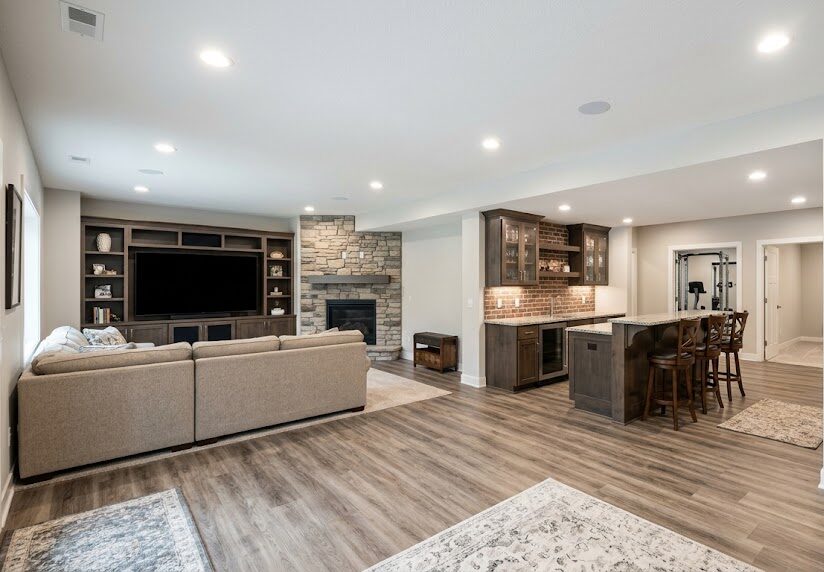
Basement Finishing in Utah: Space, Comfort & Value
An unfinished basement is rarely just “extra space.” In many homes, it is the biggest opportunity to add comfort, flexibility, and long-term value without changing the footprint of the house. The challenge is that basement finishing is not just about drywall, flooring, and paint. A basement remodel in Utah needs to start with what is happening behind the walls: moisture management, insulation, lighting, layout, and how the finished area will actually be used.
When basement finishing is planned well, it can become some of the most useful square footage in the home. It can create room for gathering, working, relaxing, hosting guests, adding a bathroom, building a theater, or simply making the house function better day to day. But if the planning is rushed, the space can end up dim, cold, noisy, or compromised by moisture issues that should have been addressed first.
In this guide, you’ll learn:
- how to approach finished basement planning with a design-build mindset,
- why moisture management, insulation, and lighting matter as much as layout and finishes,
- how to think about basement bedrooms, bathrooms, theaters, bars, offices, and flexible-use zones,
- what decisions tend to add the most comfort and long-term value,
- and how to avoid common basement remodel Utah mistakes before construction starts.
The Fortress Builders approaches basement design build projects through a process rooted in one principle: strength through structure. That means the plan begins with how the space should work, what the house conditions allow, and what details need to be solved early so the finished basement feels durable, comfortable, and intentional—not like leftover square footage with nicer finishes.
Helpful Fortress Builders pages while you plan:
- Basement Finishing in Utah: Space, Comfort & Value
- Basement Moisture Checklist: What to Fix Before You Finish the Space
- Radon and Basement Finishing: When to Test and How to Plan Mitigation
- Basement Insulation Basics for Comfort and Sound Control
- Basement Egress Basics: What Homeowners Should Know Before Adding a Bedroom
- Basement Layout Planning: Zones That Make the Space Feel Bigger
- Basement Bathroom Rough-In Guide
- Basement Kitchenette Planning
- Basement Lighting for Low Ceilings
- Home Theater Basics: Screen Wall, Seating Distance, and Sightlines
- Basement Soundproofing Strategies
- Basement In-Law Suite Planning
- Wet Bar Design 101
- Basement HVAC & Ventilation Planning
- Permits and Inspections for Basement Finishing
- Request a Design Consult
Why basement finishing can add so much value to a home
Basements often represent the largest untapped space in the home. When that square footage is unfinished, the house may feel smaller and less flexible than it actually is. Finishing the basement can create meaningful value in several ways at once.
- It adds usable living space. A finished basement can become a family room, theater, guest zone, office, gym, playroom, bar, or multi-use retreat.
- It helps the home adapt. Families change, routines change, and a well-planned basement can absorb those changes more easily than many other parts of the house.
- It can improve comfort in the full home. Better use of basement space can relieve pressure on upstairs rooms and make the whole house function better.
- It can strengthen long-term resale appeal. A finished basement that feels well designed and built properly can make the home more attractive and more versatile overall.
Homeowner takeaway: The real value of basement finishing is not just “more square footage.” It is better square footage—space that actually improves how the home lives and feels.
Finished basement planning should start with use, not finishes
Many homeowners jump quickly to flooring, wall color, or built-in ideas. But finished basement planning works best when it begins with what the space is supposed to do. A good basement layout is one that reflects real life, not just a list of room labels.
Ask what problem the basement needs to solve
Does the family need more gathering space? A quiet office? A guest suite? A kids’ zone that keeps activity out of the main floor? An entertainment area? The stronger the answer, the more useful the final design tends to be.
Think in zones, not just rooms
Basements often work best when they are zoned into complementary functions rather than chopped into too many small rooms. For example, a lounge area, a game area, and a small bar zone may work better together than several disconnected boxes.
Leave room for flexibility
One of the best things about a basement is its ability to adapt over time. A well-planned basement does not lock every square foot into one very narrow purpose.
The 5-minute basement planning profile
- What is the basement supposed to do first? Entertain, host guests, provide extra bedrooms, create work space, or support family life?
- What does the main floor currently lack? Quiet space, gathering space, privacy, storage, or flexibility?
- Will the basement need plumbing? Bathroom, bar, kitchenette, laundry, or future adaptability?
- Will the basement include bedrooms or sleeping space? If so, egress and layout matter early.
- How important are sound control and lighting? In many basements, those two factors dramatically affect whether the space feels finished well.
Why this matters: These answers shape the right basement design build strategy far more effectively than picking finishes too early.
Moisture management comes before finishes
If there is one basement topic that should always come before drywall, flooring, or decorative decisions, it is moisture management. Finishing over unresolved basement moisture issues is one of the easiest ways to undermine the entire investment.
Basements live differently than above-grade spaces
Because basements interact more directly with the ground and below-grade conditions, moisture planning matters more here than in many other parts of the home. That does not mean every basement has serious water problems. It does mean the space should be evaluated honestly before finishes go in.
Small warning signs still matter
Musty smells, condensation patterns, damp-feeling walls, and past water events should all be taken seriously during planning. Ignoring them because the basement “mostly seems fine” is rarely a strong strategy.
Fix first, finish second
Related guide: Basement Moisture Checklist: What to Fix Before You Finish the Space.
Best practice: A finished basement only feels valuable if it feels dry, healthy, and dependable. Moisture management is what gives the rest of the remodel permission to last.
Comfort and sound: the difference between “finished” and “actually enjoyable”
Some finished basements technically look complete but still feel cold, hollow, noisy, or disconnected from the rest of the home. That usually points back to comfort planning—especially insulation, sound strategy, and HVAC considerations.
Insulation matters for more than temperature
A good insulation strategy helps the basement feel more comfortable and consistent, but it also affects sound control and how well the finished space feels integrated with the house. Related guide: Basement Insulation Basics for Comfort and Sound Control.
Sound control matters more than homeowners expect
If the basement will include a theater, bedroom, office, game area, or music-heavy family zone, soundproofing decisions can dramatically improve how useful the space becomes. Related guide: Basement Soundproofing Strategies.
Comfort is part of value
A basement that looks finished but feels chilly or echoey often gets used less. A basement that feels warm, quiet, and inviting is much more likely to become part of daily life.
| Comfort Issue | Why It Matters in a Basement |
|---|---|
| Temperature consistency | Helps the basement feel like living space instead of lower-level overflow |
| Noise transfer | Improves theaters, guest rooms, offices, and family gathering zones |
| Air movement | Supports year-round usability and helps the space feel fresher |
| Material warmth | Influences whether the basement feels cozy or cold and institutional |
Lighting is one of the biggest reasons a basement feels good or bad
Lighting often makes or breaks a basement. Many basements start with lower ceilings, fewer windows, and awkward existing conditions. That means lighting has to be planned intentionally if the space is going to feel welcoming and usable rather than dim or cave-like.
Basement lighting should be layered
Relying only on general overhead lighting often flattens the space. Basements usually benefit from a mix of ambient, task, and accent lighting, especially when the plan includes multiple use zones.
Low ceilings change the lighting strategy
Basement lighting needs to respect ceiling height and sightlines. Related guide: Basement Lighting for Low Ceilings.
Lighting supports flexibility
A basement used for movies, work, games, guests, or family lounging needs more than one “mode.” Better lighting control helps the space shift between those functions gracefully.
Simple rule: A basement starts to feel like real living space when the lighting helps it forget it is below grade.
Bedrooms, egress, and flexible sleeping space
Many basement remodel Utah projects include the desire for one or more bedrooms, guest rooms, or flexible sleeping areas. That can add meaningful value and function, but it also makes early planning more important.
Egress needs to be taken seriously
If the basement will include a true bedroom, egress considerations usually become part of the conversation early. Related guide: Basement Egress Basics: What Homeowners Should Know Before Adding a Bedroom.
Privacy and zoning matter too
Sleeping areas generally work better when they are separated thoughtfully from louder entertainment zones or high-traffic paths.
Flexible space can still be planned intelligently
Not every basement needs a formally labeled bedroom. Sometimes a future-flex room, guest retreat, or office-guest hybrid is the better long-term solution.
Before adding a basement bedroom, ask:
- Does the space have the right access, light, and layout conditions?
- Will the bedroom feel private enough from louder basement uses?
- Should the room be a full-time bedroom or a more flexible-use room?
- Are egress and code-related planning issues being addressed early enough?
- Would the basement benefit more from one good bedroom or multiple weaker rooms?
Basement bathrooms, rough-ins, and why plumbing strategy matters early
A bathroom can dramatically increase the usefulness of a finished basement. It can support guests, family use, home theaters, in-law zones, and longer stretches of basement living without constant trips upstairs. But plumbing decisions are rarely something to figure out late.
Rough-in location affects layout options
If a bathroom is being added, plumbing conditions help shape where the room can go and how efficiently it can be planned. Related guide: Basement Bathroom Rough-In Guide: Plumbing, Venting, and Smart Placement.
Even simple bathrooms need good planning
A compact powder room can still add major convenience if it is placed well and designed efficiently.
Plumbing affects future adaptability too
Sometimes a bathroom decision is partly about what the basement may need later, not just today.
Important note: Plumbing, venting, bathroom rough-in conditions, egress requirements, inspections, and other technical or code-related details can vary by home and jurisdiction. Final planning decisions should always be confirmed with qualified professionals and local authorities where applicable.
Kitchenettes, wet bars, and entertaining-focused basement zones
Some basements are all about family overflow and relaxing. Others are designed more deliberately for hosting. In those cases, a kitchenette, wet bar, or beverage zone can make the basement feel far more complete and self-sufficient.
Kitchenettes support longer stays and more independence
They can be especially useful in in-law suite scenarios, basement guest zones, or entertainment-heavy homes. Related guide: Basement Kitchenette Planning: Power, Plumbing, and Layout Tips.
Wet bars can make the gathering zone stronger
A good wet bar does not have to be oversized. It just needs to support the way the basement will actually be used. Related guide: Wet Bar Design 101.
Entertaining zones should still relate to the rest of the basement
The strongest basement layouts let these zones support the main function without overpowering the overall plan.
Home theaters, media rooms, and why sightlines and sound control matter
Basements are natural candidates for theaters and media rooms, but a true home-theater setup is more than just a big screen on a wall. Seating distance, sightlines, sound control, and lighting all matter if the room is going to feel special instead of improvised.
Screen wall and seating need to be planned together
Related guide: Home Theater Basics: Screen Wall, Seating Distance, and Sightlines.
Acoustics matter more than the screen alone
Without enough sound control and thoughtful material planning, the room may look like a theater without performing like one.
Media rooms can still be flexible
Not every basement needs a dedicated theater. A media-friendly family room may be the better balance depending on the household.
Best practice: The best basement theater is the one that matches the household’s actual use patterns. Some families need a dedicated theater. Others need a flexible entertainment room that can do more than one thing well.
In-law suites, guest zones, and long-term flexibility
Basements often become the best place in the house to add privacy and independence. That is why in-law suites, guest zones, or semi-separate living arrangements are such common basement design build goals.
Privacy zones matter
These spaces work best when sleeping, bathroom, and lounge areas are arranged to feel distinct rather than loosely scattered. Related guide: Basement In-Law Suite Planning.
Storage and comfort still matter
Even when the basement is not intended to function as a full apartment, it tends to feel more complete when it supports real, comfortable stays.
Flexibility increases long-term value
A basement that can shift between guest use, family use, and future life-stage needs often becomes more valuable than one locked into a narrower purpose.
| Basement Use Goal | Planning Priorities |
|---|---|
| Family hangout space | Open zoning, lighting layers, sound control, durable finishes |
| Guest suite or bedroom zone | Egress, privacy, bathroom access, comfort, storage |
| Home theater / media space | Sightlines, acoustics, lighting control, seating layout |
| Bar / kitchenette / hosting zone | Plumbing strategy, power, layout flow, cleanup ease |
| In-law or longer-stay suite | Privacy zones, bathroom access, kitchenette planning, sound control |
HVAC, ventilation, and year-round basement comfort
Basements can feel stuffy, cool, or disconnected from the rest of the home if the HVAC and ventilation strategy is not planned thoughtfully. That is why basement comfort planning should include more than insulation alone.
Airflow matters
A finished basement should feel like part of the home, not like a separate climate zone that is always a little off.
Consistency matters too
Even if the basement is technically finished, it may not feel comfortable enough to use fully if temperature and air movement lag behind the rest of the house.
Planning should happen early
Related guide: Basement HVAC & Ventilation: Keeping Finished Spaces Comfortable Year-Round.
Practical truth: A basement that looks good but feels slightly off in temperature or air quality often gets used less. Comfort is not a bonus. It is part of the space becoming truly livable.
Permits, inspections, and why sequencing matters
Basement finishing includes more than just design choices. Framing, electrical, HVAC, plumbing, egress, and room use can all affect permitting and inspection requirements. That is why finished basement planning needs a clear construction sequence as well as a clear design vision.
Permits protect the process
They help ensure the work is being approached with the right level of seriousness and coordination. Related guide: Permits and Inspections for Basement Finishing.
Sequence reduces rework
Moisture evaluation, layout planning, rough-ins, insulation, drywall, flooring, and finish work all need to happen in a sensible order if the project is going to stay efficient and clean.
A design-build process helps keep the whole system aligned
That is one of the biggest reasons basement projects often benefit from a more integrated planning and execution approach.
Common basement finishing mistakes homeowners regret
Mistake 1: Finishing before checking moisture conditions
This is one of the biggest ways a basement project can go wrong. Problems hidden behind new finishes are still problems.
Mistake 2: Chopping the basement into too many small rooms
This often makes the space feel smaller, darker, and less flexible than it needs to be.
Mistake 3: Underestimating lighting
A basement can technically be finished and still feel dim or flat if the lighting strategy is weak.
Mistake 4: Ignoring sound and comfort
Without good comfort planning, the basement may become “extra space” that no one truly wants to spend time in.
Mistake 5: Planning for the photo, not for real life
The strongest basements are the ones that support real routines, changing needs, and long-term use—not just one idealized design moment.
Before finishing your basement, confirm:
- Moisture conditions have been evaluated honestly
- The layout solves real family or household needs
- Lighting is being planned intentionally for basement conditions
- Sound, insulation, and HVAC comfort are part of the plan
- Bathrooms, kitchenettes, or bedrooms are being planned early enough for rough-ins and code-related needs
FAQ: Basement finishing in Utah
What adds the most value in a basement finish?
Value usually comes from making the basement genuinely useful and comfortable. Strong layout, good moisture planning, better lighting, and flexible living space often matter more than one flashy feature by itself.
Should I add a basement bathroom?
Often yes, if the basement will be used regularly for entertaining, guests, bedrooms, or longer stays. A bathroom can dramatically improve convenience and the overall usability of the space.
What should I do before finishing a basement?
Start by evaluating moisture conditions, intended use, layout possibilities, insulation and comfort strategy, lighting, and any plumbing or egress implications. Finishes should come after those basics are addressed.
Are basement bedrooms worth adding?
They can be, especially if the home needs more sleeping space or flexible guest use. But the layout, privacy, and egress planning all need to be addressed early and thoughtfully.
What makes a finished basement feel like part of the home?
Usually a combination of comfort, lighting, layout, sound control, and material choices that make the space feel intentional rather than leftover. When those things come together, the basement stops feeling “below” the home and starts feeling fully part of it.
Conclusion: a finished basement should feel intentional, comfortable, and built to last
Basement finishing in Utah can add real space, comfort, and value—but only when the project starts with the right priorities. Moisture management, layout, insulation, lighting, HVAC, sound control, and use planning all matter just as much as the finishes you choose later.
That is what separates a basement that is simply completed from one that is truly successful. The best finished basements solve real problems, adapt to real life, and feel like an intentional extension of the home instead of an afterthought below it.
Thinking about finishing your basement?
If you’re planning a basement remodel in Davis or Weber County, Fortress Builders can help you think through layout, moisture management, insulation, lighting, theater space, bathrooms, kitchenettes, and the comfort details that make the finished basement truly worth the investment.
Request a Design Consult Explore Basement Finishing Read the Moisture Checklist
Bring your ideas, your rough floor plan, and the way you want the basement to support your home. Fortress Builders can help turn that into a finished basement plan that feels durable, comfortable, and built with clarity from the start.