

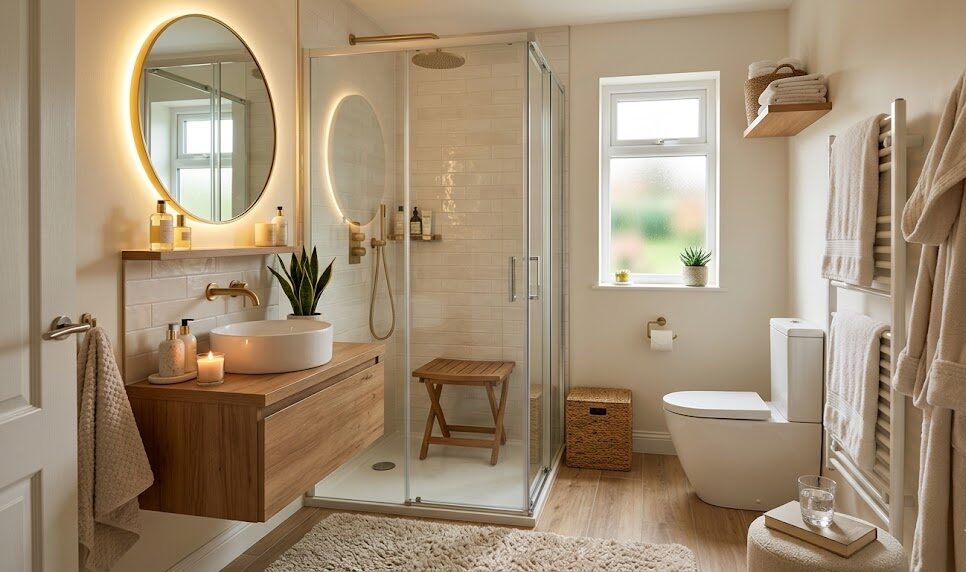

Toilet Placement and Clearances: Comfort Standards for Small Bathrooms
Bathrooms fail fast when layout, moisture control, and tight-space details are not planned early enough, and toilet placement is one of the clearest examples.
This guide explains toilet placement and clearance planning in plain English and focuses on what homeowners should decide before they commit. In a small bathroom, the toilet is not just another fixture to drop into the remaining space. It affects door swings, vanity width, shower size, circulation, cleaning access, comfort, privacy, and whether the whole room feels balanced or cramped. A layout can technically fit a toilet and still feel frustrating every single day if the clearances are weak.
The most useful way to think about toilet placement is not “How small can this room be?” The better question is “How can this bathroom feel comfortable, usable, and easy to maintain once all the real-life routines are happening?” That means looking beyond the fixture footprint itself and evaluating side clearance, front clearance, nearby storage, paper holder location, wall proximity, and how the person using the space actually moves through the room.
The Fortress Builders approaches remodeling through one core principle: strength through structure. Every project starts with a design blueprint that aligns layout, budget, and build sequence before materials are ordered or demo begins. That structure matters in small bathrooms because a few inches in the wrong place can affect the whole room. The strongest bathrooms usually feel simple and comfortable not because the space is large, but because the layout decisions were made early and made well.
- How toilet placement affects comfort, cleaning, circulation, and the feel of a small bathroom
- What side and front clearance ideas matter when planning around vanities, showers, and doors
- How small-bathroom constraints can make a “fitting” layout still feel uncomfortable in real life
- Which decisions affect rough-ins, nearby storage, and long-term usability
- What to confirm before ordering fixtures or starting demo
Why toilet placement matters more than many homeowners expect
Toilet placement is often treated like a technical dimension problem, but in practice it is one of the biggest comfort and usability decisions in a small bathroom. The toilet sits in a zone that people need to access comfortably, clean around, and use without feeling boxed in by walls, vanities, doors, or glass. If that zone is too tight, the bathroom feels cramped even if everything technically fits.
That is why good bathroom planning is not just about whether the toilet can be installed. It is about whether the room still feels livable after the toilet is in place, the vanity doors open, the toilet paper holder is mounted, and a real person is moving through the room. A narrow gap beside the toilet, a crowded front approach, or a badly placed door can make a finished bathroom feel compromised far faster than most homeowners expect.
Daily Comfort
Small shifts in placement can make the difference between a bathroom that feels easy to use and one that feels constantly cramped.
Circulation
Toilet location affects how people enter, turn, approach the vanity, and move around the room during real routines.
Cleaning Access
The tighter the clearances around the toilet, the harder it often is to keep the bathroom looking truly clean over time.
Door and Fixture Conflicts
Door swings, vanity drawers, and shower glass can all interact badly with a toilet zone if the layout is not coordinated early.
Privacy and Balance
Even in a small bathroom, the toilet should feel placed intentionally rather than squeezed into leftover space.
Rough-In Consequences
Toilet relocation decisions affect plumbing, layout flexibility, and the overall planning logic of the remodel.
Start with routines: who uses the bathroom, and how?
The first step in a toilet placement guide is not measuring the toilet alone. It is understanding who uses the bathroom and what the room has to support. A primary bath used by adults every day may call for more comfort, privacy, and stronger spacing around the fixture. A children’s hall bath may need better cleaning access and layout simplicity. A guest bath may prioritize straightforward function in a smaller footprint.
Thinking about routines early makes the layout smarter. Does the room get used during rushed mornings? Is one person usually using the toilet while another needs the vanity? Does the bathroom have to feel easy for guests to navigate? Does someone need more generous access or a more comfortable entry path? Those questions influence whether the toilet location really works, even if the plumbing technically says it can.
Use pattern changes what “comfortable” means
A bathroom that is only used occasionally can tolerate different compromises than one that gets used constantly by the whole household.
The room should work during its busiest moment
It helps to picture the most crowded real-life use case. That usually reveals whether the toilet is crowding the vanity zone, entry path, or shower approach.
Future comfort matters too
Even if the bathroom is small now, thoughtful spacing can help the room feel more usable for a longer time rather than locking in a layout that already feels tight on day one.
If the toilet placement is decided without considering who uses the bathroom and what the room has to support, the layout often ends up responding to plumbing convenience instead of everyday comfort.
| Bathroom Type | What It Often Suggests About Toilet Placement |
|---|---|
| Primary Bath | Usually benefits from a little more breathing room, stronger privacy logic, and better coordination with vanity and shower use |
| Hall Bath | Often needs simpler circulation, easier cleaning, and a placement that avoids crowding the entry path |
| Guest Bath | May prioritize intuitive layout and straightforward use over highly customized spacing decisions |
| Small Shared Bath | Needs careful balance so the toilet does not consume the limited room needed for vanity access and storage |
This is why toilet placement belongs inside the bigger conversation around bathroom remodeling rather than being treated as an isolated fixture question.
Core clearance principles for toilet comfort in small bathrooms
Homeowners often search for exact numbers, and exact dimensions do matter. But what matters just as much is understanding the principle behind them: the toilet needs enough room at the sides and in front of it to feel usable, cleanable, and comfortable in a real bathroom, not just on a plan. Small bathrooms especially benefit from treating clearances as comfort zones rather than just as code minimums or technical thresholds.
Side space matters more than many layouts suggest
If the toilet is pushed too close to a vanity, wall, cabinet, or shower glass edge, the bathroom will often feel tighter than expected. Even when the overall fixture arrangement fits, weak side clearance can make the room feel pinched every time it is used.
Front clearance affects the feel of the whole room
The toilet needs enough space in front of it that the approach does not feel blocked by a vanity corner, a door swing, a tub edge, or a glass panel.
Comfort standards and minimum standards are not always the same thing
Many bathrooms can technically pass a fitting test without feeling especially good in daily life. That is why homeowners should think beyond absolute minimums and ask whether the room will still feel comfortable once it is furnished and in use.
- Does the toilet have enough side breathing room to feel comfortable, not just installable?
- Is there enough front space for the room to feel open rather than blocked?
- Will the toilet area still feel usable when the vanity drawers, door, or shower glass are all part of the room?
- Does the layout create enough room to clean around the fixture without frustration?
- Would a slightly different fixture or layout improve comfort meaningfully?
Because bathroom comfort depends on more than one fixture, these clearance decisions often make more sense alongside small bathroom vanity planning and bathroom lighting planning, since all three shape how the room feels at once.
Small-bathroom layout constraints: doors, walls, showers, and vanity depth
Most toilet placement problems in small bathrooms are not caused by the toilet itself. They are caused by the surrounding constraints. Door swings, narrow walls, tub edges, shower curbs, vanity depth, and awkward room geometry all compress the usable space around the toilet zone. That is why the room has to be evaluated as a whole rather than by fixture footprint alone.
Door swings can ruin a layout surprisingly fast
A toilet that seems fine on paper can suddenly feel crowded if the bathroom door opens into the approach path or interferes with the feeling of entry. In some bathrooms, changing the door approach can improve the whole layout more than changing the toilet itself.
Vanity depth can steal more comfort than homeowners expect
Even a slightly overbuilt vanity can crowd the toilet zone or reduce the usable aisle in front of it. That is one reason small-bathroom vanities should be selected for actual room performance, not just maximum storage size.
Showers and glass panels influence perceived space
In tighter bathrooms, the placement of a curb, fixed glass, or shower opening can make the toilet feel far more boxed in than the plan dimensions suggested.
Door Conflicts
A bathroom can technically fit a toilet and still feel awkward if the door interrupts the approach or visual openness of the room.
Vanity Overbuild
Too much vanity depth can crowd the toilet area and make the whole bathroom feel tighter than necessary.
Shower Encroachment
Curbs, glass, and shower-entry geometry can all change how much space the toilet zone feels like it really has.
Wall Conditions
Narrow alcoves, offsets, and structural conditions can all affect whether the toilet sits comfortably in the room.
In a small bathroom, toilet comfort is usually the result of the whole room working together. If the surrounding elements are poorly coordinated, the toilet is often where the discomfort becomes most obvious.
This is why homeowners often benefit from considering toilet placement alongside related layout topics like curbless versus curb shower planning, walk-in shower layouts, and small bathroom vanity decisions.
Storage, paper placement, and nearby fixtures all shape toilet comfort
Once the toilet itself is placed, the rest of the nearby details still matter. Toilet paper location, towel storage, base cabinets, shower glass, wall niches, and vanity drawer function can all change how the toilet area feels in daily life. This is especially true in compact bathrooms where the toilet often sits close to other features.
Paper holder placement should feel natural, not improvised
If the holder ends up in an awkward reach zone because the toilet was pushed too tightly into the layout, the bathroom will feel less thoughtful every single day.
Nearby storage should not crowd the seat zone
It is possible to gain storage and still make the toilet area feel overbuilt. Balance matters. Storage should support the room, not compress it.
Cleaning access still matters after everything is installed
A toilet that barely fits between other elements can turn basic cleaning into a regular annoyance. That often becomes obvious only after move-in, when it is much too late to correct easily.
| Nearby Detail | Why It Affects the Toilet Zone |
|---|---|
| Toilet Paper Holder | Its placement should feel reachable and natural without forcing awkward wall crowding or uncomfortable reach |
| Vanity Drawers / Doors | Opening functions can change how usable the toilet area feels if the room is already tight |
| Shower Glass | Even when visually light, it can still affect how boxed in or exposed the toilet area feels |
| Towel / Supply Storage | Helpful storage can become a crowding problem if it intrudes too aggressively into the toilet zone |
That is why toilet placement often belongs in the same early planning conversation as shower storage planning, vanity storage strategy, and bathroom fixtures and lighting.
Rough-in, fixture size, and selection decisions need to be coordinated early
Toilet placement is not only a layout issue. It is also a rough-in and selection issue. Different toilets and bathroom plans can interact differently with the room depending on the plumbing location, tank profile, bowl projection, and whether the layout is trying to preserve a vanity, enlarge a shower, or improve the front approach. That is why toilet planning should happen before the room gets too far into selection mode.
Toilet location affects more than the toilet
Moving the toilet can influence vanity size, shower opportunity, storage potential, and the whole geometry of the room. Sometimes keeping it where it is makes the most sense. Sometimes relocating it unlocks a meaningfully better plan.
Fixture size and projection matter in tight rooms
Not every toilet occupies the room in exactly the same way. In a compact bathroom, a few inches can change how the front clearance feels.
Rough-in choices should be tied to the full bathroom strategy
It is usually not enough to decide the toilet in isolation. The plumbing approach should support the layout the homeowner is really trying to create.
- Is the current toilet location helping the room, or limiting better layout options?
- Would a different fixture profile improve comfort without forcing other compromises?
- Is the vanity size being protected at the expense of toilet comfort, or vice versa?
- Would a shower or tub change affect the toilet area positively or negatively?
- Are plumbing changes worth the gain in daily usability?
These are the kinds of questions that belong naturally beside bathroom remodel planning, tub-to-shower conversion decisions, and fixture selection planning.
Ventilation, moisture, and comfort still matter even though this is a layout topic
It is easy to treat toilet placement like a pure sizing exercise, but small bathrooms do not separate layout from performance very well. If the room is cramped, poorly ventilated, slow to dry, or hard to clean, the discomfort compounds. That is why the most successful toilet layouts usually exist inside bathrooms that are also handling moisture, lighting, and storage intelligently.
A cramped bathroom often feels more cramped when humidity is poorly controlled
Bathrooms that stay damp or stuffy usually feel less comfortable overall, even when the fixture spacing technically works.
Comfort is cumulative
The toilet zone may be the visible issue, but the room’s overall success still depends on lighting, moisture control, and easy maintenance.
Layout and performance should support each other
A toilet that fits well in a room that ventilates poorly or cleans poorly does not solve the full problem. The bathroom still has to function as a whole.
Ventilation
Good airflow and moisture control help compact bathrooms feel more comfortable and protect the long-term condition of the finishes.
Lighting
Proper lighting can make a small bathroom feel less boxed in and make the overall layout easier to use naturally.
Cleaning Simplicity
The easier the room is to clean, the better the toilet zone usually performs over time in a real household.
Whole-Room Balance
Strong bathroom planning works because layout, moisture control, and fixture choices support one another.
That is why even a sizing-focused guide like this one still connects naturally with ventilation and moisture control, mold-prevention basics, and bathroom lighting planning.
Common small-bathroom toilet placement mistakes homeowners regret later
Letting the toilet live in leftover space
If the toilet is only placed after the vanity and shower decisions are made, it often ends up in whatever space remained instead of in a truly comfortable zone.
Prioritizing vanity size too aggressively
Extra vanity width can feel appealing until it steals too much side or front comfort from the toilet area.
Ignoring door swing problems
A door that collides visually or physically with the toilet zone can make the whole room feel more cramped than the square footage suggests.
Forgetting about paper placement and cleaning access
The room can technically work and still feel awkward if those real-life details were never considered during layout planning.
Using minimum-fit logic instead of comfort logic
A bathroom that just barely works on paper often feels noticeably less satisfying once the remodel is complete and in daily use.
In small bathrooms, “it fits” is rarely the best standard. The stronger standard is whether the room will still feel clean, balanced, and comfortable once real life happens inside it.
What to confirm before you commit to the toilet location
Before ordering fixtures or starting demolition, the toilet location should be clear enough that the rest of the bathroom plan can support it. That does not mean every accessory must already be chosen, but it does mean the homeowner and the project team should understand the room’s circulation, the comfort zone around the fixture, and whether the toilet placement is helping or hurting the overall layout.
Confirm the approach from the doorway
The room should feel easy to enter and use, not immediately pinched by the toilet zone.
Confirm the relationship to the vanity and shower
The toilet should not be solving one problem by creating another, such as crushing vanity function or crowding the shower entry.
Confirm the room as built, not just the fixture in isolation
Look at the toilet area with storage, paper location, mirror logic, door swings, and cleaning reality all in mind.
- that the toilet has comfortable side and front breathing room in the finished layout
- that the door swing, vanity, and shower do not create hidden conflicts around the toilet zone
- that cleaning access still feels realistic after all nearby fixtures are installed
- that the plumbing location is supporting the best room layout, not just the easiest rough-in
- that the bathroom still feels balanced as a whole once the toilet is placed
If plumbing changes, inspections, permits, accessibility questions, or other project-specific conditions apply, those details can vary. Final layout and construction decisions should always be confirmed with qualified professionals and local authorities where applicable.
How Fortress Builders would approach toilet placement in a real small-bath remodel
A strong design-build process would not treat toilet placement as a leftover plumbing detail. It would place the toilet inside the full bathroom strategy: routines, clearances, door swings, vanity size, storage, shower geometry, and the comfort level the room is supposed to deliver. That is how the toilet stops being a fixture stuffed into the room and starts becoming part of a bathroom that actually works.
In one bathroom, that may mean keeping the existing toilet location but resizing the vanity and refining the doorway so the room feels dramatically better. In another, it may mean moving the toilet because the current rough-in is locking the whole room into a weak layout. In another, it may mean selecting a different fixture profile so the front approach and side comfort improve without a larger plumbing shift. The right answer depends on the room and the life happening inside it.
The most important thing is making that decision early enough that the rest of the layout can support it cleanly, instead of trying to rescue a weak toilet zone after the rest of the remodel has already been committed.