

Water-Efficient Bathroom Fixtures: Comfort, Performance, and Savings
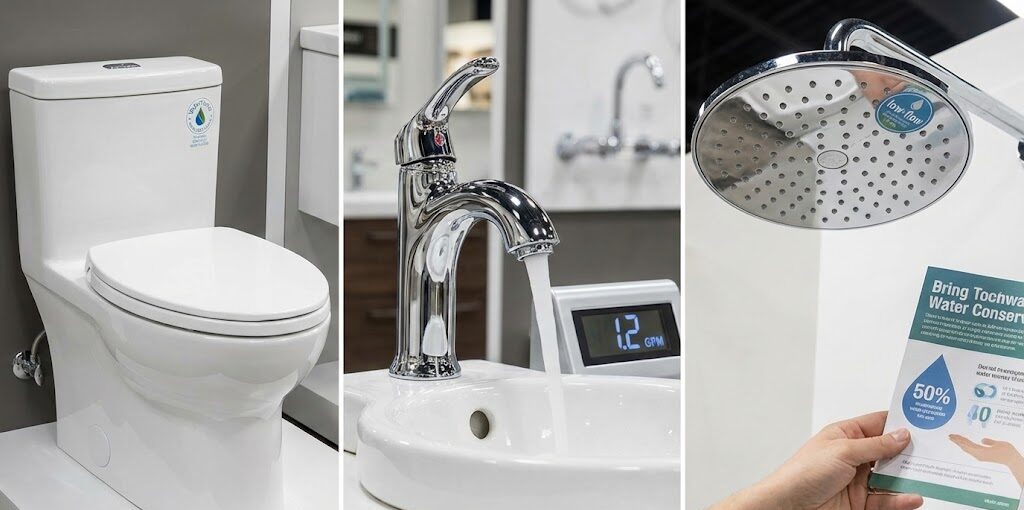
Water Efficient Bathroom Fixtures: Comfort, Performance, and Savings
Efficient doesn’t have to mean disappointing. Modern toilets, faucets, and showerheads can reduce water use without turning your shower into a sad drizzle or your sink into a slow-motion handwash station.
The key is knowing what “efficiency” actually measures (flow and flush volume), and choosing fixtures that are designed to feel good at real-world water pressure—not just look good in a showroom.
This guide is built for homeowners planning a bathroom remodel in Utah (or anywhere water-saving matters). We’ll cover:
- How water efficient bathroom fixtures are measured (in plain English)
- How to choose a water efficient toilet that flushes confidently
- How to find a water saving showerhead with good pressure (yes, it’s possible)
- What to look for in a low flow bathroom faucet that still feels usable
- Compatibility notes that impact your remodel (rough-ins, valves, trim kits, sink hole patterns)
- A practical value checklist so you can buy once—and live happy
The Fortress Builders is a Utah design–build company built on one principle: strength through structure. That means we plan the systems behind the finishes—layout, plumbing, waterproofing, ventilation, and fixture coordination—so your bathroom performs as well as it looks.
Related internal resources:
- Bathroom Remodeling in Utah: Built to Last
- Bathroom Fixtures & Lighting That Elevate Daily Routines
- Bathroom Ventilation & Moisture Control Done Right
- Tile & Waterproofing Systems Built for Longevity
- Request a Design Consult
Important note: Plumbing requirements, fixture rating rules (especially in wet areas), and permitting/inspection practices can vary by jurisdiction and project scope. Always confirm details with qualified professionals and local authorities, and follow manufacturer instructions for every fixture and valve.
Efficient can feel amazing—if you choose the right fixtures (and plan them early)
“Water-saving” used to have a bad reputation because older low-flow products often sacrificed comfort. That’s why many homeowners still worry about:
- a toilet that needs two flushes,
- a shower that feels weak,
- or a faucet that makes washing hands annoying.
But modern Utah water saving fixtures (and water-saving fixtures in general) can be a win when two things are true:
- The product is designed for performance at a lower flow/flush volume.
- The remodel is coordinated so rough-ins, valves, and trim are selected early (not last-minute).
Big idea: Choose toilets, shower valves/trim, and faucets early enough to coordinate plumbing rough-ins and sink/countertop drilling. Great fixtures are only great when they’re installed in the right place, the right way.
Quick definitions: what “water efficient” actually means
Water efficiency in bathrooms is mostly measured using two simple numbers:
- Toilets: gallons per flush (GPF)
- Faucets and showerheads: gallons per minute (GPM) at a test pressure (real-world output can vary by home)
Those numbers tell you how much water a fixture is designed to use. They don’t tell you everything about how it will feel. Comfort and performance depend on design details like:
- spray pattern and nozzle design in showerheads,
- valve design and aerator type in faucets,
- flush mechanism and bowl/trapway design in toilets,
- and your home’s water pressure and plumbing conditions.
Look for reliable labeling (like WaterSense)
One homeowner-friendly shortcut is to look for recognized efficiency labeling on packaging for new fixtures (for example, EPA’s WaterSense program in the U.S.). Labels don’t guarantee you’ll love the feel—but they do help you identify products designed to use less water.
Note: Labels and standards are one part of the decision. You still want fixtures that are well-reviewed for performance and that match your household routines.
Start where it counts: the big three fixtures that drive bathroom water use
If you want real impact without obsessing over every drop, focus on:
- Toilets (flush volume adds up quickly)
- Showerheads (minutes of flow)
- Faucets (smaller contributor, but easy to optimize)
The best approach is to choose each fixture category based on your household’s “real life”:
- How many people use the bathroom daily?
- Do you take long showers or quick ones?
- Do you have kids who forget to turn the water off quickly?
- Do you have guests who prefer simple, intuitive controls?
- Are you planning for aging-in-place (ease of use matters)?
| Fixture | Comfort / Performance Priority | Efficiency “Quick Win” | Plan This Early Because… |
|---|---|---|---|
| Toilet | Strong flush, clog resistance, comfort height, bowl shape | Replace older high-volume models; consider efficient, well-designed options | Rough-in distance, floor height/flange, and clearance affect placement |
| Showerhead | Spray feel, coverage, “good pressure” sensation, easy cleaning | Choose a quality low-flow design with a satisfying spray pattern | Valve and trim decisions happen at rough-in (not after tile) |
| Faucet | Usable flow, splash control, handle comfort, finish durability | Choose an efficient faucet/aerator that still feels practical | Sink and countertop hole configuration must match the faucet style |
Water efficient toilet selection: how to get a confident flush (without wasting water)
Toilets are where many homeowners have the strongest opinions—because everyone remembers the “bad low-flow era.” The good news: performance today is often more about design than brute-force water volume.
Step 1: Identify what you have now (it’s more revealing than you think)
Before you choose a replacement, take 10 minutes to understand your existing toilet:
- Age/manufacture date: Many toilets made before the mid-1990s used significantly more water per flush than modern standards. The date is often stamped inside the tank.
- Condition: A running toilet or leaking flapper can waste a surprising amount of water over time.
- Comfort: Is the seat height comfortable? Do you prefer an elongated bowl? Does the toilet feel too low?
- Cleaning: Are you constantly fighting stains or grime around the base?
Homeowner tip: If your toilet occasionally “runs” or refills when nobody used it, treat that as a leak to fix—whether you’re remodeling now or later. Fixing a leak is often one of the fastest paths to water savings.
Step 2: Choose comfort features that make the toilet feel “right” daily
Efficiency is important, but you still want a toilet that feels comfortable and practical:
- Bowl shape: Elongated bowls are common for comfort; round bowls can help in tight bathrooms.
- Seat height: “Comfort height” (taller) can feel better for many adults and can support aging-in-place goals.
- Flush controls: Handle vs top buttons—choose what feels intuitive for your household.
- Noise level: Some flush systems are louder than others; this can matter for bathrooms near bedrooms.
If you’re remodeling a smaller bathroom and every inch counts, toilet shape and clearance matter. This related planning guide can help you think through tight layouts: Small Bathroom Vanity Guide: Storage, Clearance, and Daily Comfort.
Step 3: Understand the main toilet types (in homeowner language)
You don’t need to be a plumber to make a good selection. Here are the main categories you’ll see:
- Gravity-flush toilets: The most common type in homes. Performance depends on bowl design and how the flush directs water.
- Pressure-assisted toilets: Often very strong flush performance, but can be louder. More common in certain use-cases where flush strength is prioritized.
- Dual-flush toilets: Two flush options (typically a lower flush for liquids and a higher flush for solids). Great for some households, but you want buttons/controls everyone will actually use correctly.
- Wall-hung toilets: Space-saving, easy-to-clean under the bowl, and design-forward—but requires in-wall carrier framing and careful planning. Often best in a full remodel where walls are open.
Planning note: Wall-hung toilets can look incredible in modern bathrooms, but they’re not a “swap the toilet” change. They require structural support in the wall and careful rough-in coordination.
Step 4: Don’t forget the “fit” details that affect installation
Toilet performance is important—but so is making sure the new toilet actually fits your bathroom without awkward compromises.
- Rough-in distance: Many homes use a 12″ rough-in measurement, but not all do. Measure from the finished wall (not baseboard) to the center of the toilet flange/bolts.
- Door and knee clearance: Tight bathrooms can create uncomfortable clearances if the toilet projects too far.
- Floor height changes: If you’re changing flooring thickness or tile build-up, toilet flange height and sealing details matter.
Why this belongs in remodel planning: Floor layers, waterproofing details, and the toilet connection all need to work together. If you’re doing tile, this service page connects the dots: Tile & Waterproofing Systems Built for Longevity.
Step 5: A quick reality check on “saving water” vs “saving frustration”
In an ideal world, every toilet saves water and never clogs. In real life, the best choice is the toilet that:
- fits your space,
- matches your household comfort needs,
- has a reputation for reliable flush performance,
- and uses water efficiently for its category.
That’s why it’s smart to lean on reputable brands, solid warranties, and serviceable parts (so you aren’t hunting for a discontinued flush valve five years later).
Water saving showerhead with good pressure: what “pressure” really means
Let’s clear up the biggest misunderstanding in water-efficient showers:
“Pressure” and “flow” aren’t the same thing. Flow is how much water comes out (gallons per minute). Pressure is the force behind the water (your home’s supply). A well-designed showerhead can feel strong even at a lower flow rate because of how it shapes and accelerates the spray.
So if you’re searching for a water saving showerhead good pressure, you’re really looking for:
- a satisfying spray pattern (coverage + “feel”),
- nozzles designed to maintain velocity,
- and a match for your home’s water pressure conditions.
What makes a showerhead feel “good” at lower flow?
Homeowners usually respond to these comfort factors:
- Spray coverage: Does it feel like it reaches your shoulders and back, or is it a narrow cone?
- Droplet size and density: Some people love a soft rain; others want a more targeted rinse.
- Consistency: Does the spray stay stable when someone flushes a toilet or runs a sink (this can also involve valve type and household plumbing conditions)?
- Temperature stability: If temperature swings happen, the shower feels worse—even if the showerhead is good.
Shower valves matter more than many homeowners expect
If you’re remodeling, don’t treat the showerhead as the only decision. The valve behind the wall affects comfort and safety.
Common valve types you’ll hear about:
- Pressure-balance valves: Help maintain temperature when water pressure changes (common and widely used).
- Thermostatic valves: Designed to hold a set temperature more precisely (often chosen for premium, spa-like showers).
Important: Valve selection, code requirements, and installation rules vary. Confirm your plan with a qualified plumber and local authorities, especially when changing valve types or adding multiple shower functions.
Showerhead styles: what to choose based on real routines
Different showerhead types “feel” different even at similar flow rates. Consider how you actually use your shower:
- Fixed showerhead: Simple, reliable, often the easiest to keep clean.
- Handheld showerhead: Excellent for kids, pets, cleaning the shower, and better control over rinse direction.
- Rain showerhead: Can feel spa-like, but comfort depends heavily on ceiling height, spray design, and water pressure/flow realities.
- Multi-function showerhead: Offers spray options (massage, mist, etc.). Make sure you like the primary spray mode—not just the novelty settings.
Planning note: If you want a handheld + fixed combo, or multiple shower outlets, you’ll likely need a diverter strategy that must be chosen during rough-in (not after tile).
Smart shower controls: helpful for habits, not magic
Some homeowners are interested in “smart shower” controls for comfort and convenience. Depending on the product, these systems can offer features like preset temperatures, timers, and digital controls.
While smart controls don’t automatically “save water” for everyone, they can support water-saving habits for some households by making it easier to:
- set a predictable shower routine,
- avoid long “temperature hunting” sessions,
- and keep track of shower time if that’s a goal.
Low flow faucet bathroom: what you’ll notice (and what you won’t)
Bathroom sink faucets are usually the easiest “efficiency upgrade” to live with—because you don’t need a high volume of water to wash hands or brush teeth.
Still, homeowners sometimes dislike low-flow faucets for one main reason: they feel slow.
What determines whether a bathroom faucet feels usable?
A faucet’s experience depends on more than flow rate. It also depends on:
- Aerator design: Aerated streams can feel “fuller” even at lower flow because air is mixed into the water stream.
- Spout reach and height: A faucet that’s too short can cause splashing or make handwashing awkward.
- Sink shape and drain location: Some sinks splash more with certain faucet geometries.
- Handle control: Smooth, reliable control prevents fiddling and makes daily use feel better.
Faucet configurations: don’t get trapped by sink/counter holes
This is one of the most common remodel coordination problems.
Bathroom faucets commonly come in these configurations:
- Single-hole: One hole in the counter or sink deck (often with an optional cover plate).
- Centerset: Typically fits a 4″ three-hole pattern (compact, common in hall baths).
- Widespread: Uses three separate components (often 8″ spread, but spacing can vary by product).
- Wall-mount: Clean look and easier counter cleaning, but requires in-wall plumbing planning and careful spout placement.
Why this matters: Once a stone countertop is fabricated, changing faucet hole patterns is a headache. Choose the faucet style early so the sink and countertop drilling match the plan.
If your faucet decisions tie into a bigger vanity storage plan, this internal guide is a helpful companion: Small Bathroom Vanity Guide: Storage, Clearance, and Daily Comfort.
Do you really need “high flow” at a bathroom sink?
Most homeowners adapt quickly to an efficient bathroom faucet—especially if the aerator produces a comfortable stream and the sink is designed to reduce splashing.
If you want the best of both worlds, focus on:
- a faucet with a good, stable stream pattern,
- solid handle control (not twitchy),
- and a sink/faucet pairing that doesn’t splash.
Efficiency + comfort depends on your household (not just the product box)
The “best” water efficient bathroom fixtures are the ones your household uses correctly without thinking about it.
Household scenarios that change the best choice
1) Busy family bathrooms
- Prioritize durable finishes and easy-to-clean designs.
- Consider a handheld showerhead for flexibility.
- Use controls that are intuitive (and not overly complex for kids).
- Choose a toilet known for reliable flush performance (because repeated clogs cancel out any “savings” in real life).
2) Guest bathrooms and powder rooms
- Keep controls simple and obvious.
- Choose a faucet that works well without “learning” it.
- Consider a quieter toilet if the bathroom is near living spaces.
3) Aging-in-place or accessibility-forward planning
- Comfort-height toilets can improve ease of use for many adults.
- Handheld showerheads can be a big help for seated showering or easier rinsing.
- Large, easy-grip handles and clear controls reduce daily frustration.
4) “Spa bath” priorities
- Focus on shower comfort: spray quality, temperature stability, and good valve planning.
- Plan lighting and ventilation so the space feels calm and stays dry.
- Consider comfort upgrades that complement efficiency (like smart controls or thoughtful zoning), but only if they fit your lifestyle.
If you’re building a spa-style bathroom and want to coordinate fixtures with lighting and feel, these internal resources are good next steps:
- Bathroom Lighting Plan: Vanity Sconces, Mirrors, and Overhead Lighting
- Spa Bathroom Upgrades That Feel Luxurious Without Going Overboard
Compatibility notes: what can quietly wreck your “great fixture” plan
In remodels, fixtures don’t exist alone. They connect to rough-ins behind walls, finished tile thickness, countertop fabrication, and even lighting placement.
Here are the common “gotchas” that homeowners can avoid with early planning:
Toilets: rough-in and floor height
- Rough-in distance must match the toilet.
- Floor build-up from tile assemblies can affect flange height and sealing details.
- Clearances to doors, vanities, and shower glass matter for comfort and code compliance.
Showerheads and shower systems: valves and trim must match
- Many shower trim kits work only with specific valve bodies.
- Multi-function showers (handheld + fixed + rain) require diverters and planning.
- Tile and waterproofing thickness affects valve depth and trim fit.
Faucets: sink and countertop holes are not “flexible” later
- Single-hole vs widespread matters for drilling.
- Some sinks have pre-drilled holes that limit options.
- Wall-mounted faucets require plumbing planning inside the wall.
Planning rule: Choose your fixture “platform” early—especially shower valve + trim, faucet configuration, and toilet rough-in—so your rough-ins and finish work align cleanly.
If you want help reducing change orders and avoidable delays, this resource is useful: Timeline and What to Expect.
Style and finish coordination: efficient fixtures can still look premium
Water efficiency doesn’t dictate style. You can absolutely have:
- matte black fixtures,
- brushed brass,
- polished nickel,
- or clean chrome…
…and still choose water-saving performance.
Keep the fixture “language” consistent
Bathrooms feel more intentional when fixtures share common design cues:
- matching or complementary finishes (not necessarily identical),
- similar handle shapes (especially if you have multiple bathrooms),
- consistent shower and faucet style (modern, transitional, traditional).
Think about maintenance with your water conditions
In many regions (including parts of Utah), mineral content and water spots can be a daily reality. If you hate wiping down fixtures constantly, consider finishes and shapes that hide spots better, and prioritize easy-clean design (especially in showerheads).
Note: Cleaning needs vary by home and water conditions. Ask your remodeler what they’ve seen perform well in local homes.
To coordinate fixtures with lighting and everyday functionality, explore: Bathroom Fixtures & Lighting That Elevate Daily Routines.
A homeowner-friendly “value checklist” for water efficient bathroom fixtures
If you’re trying to compare fixtures without getting overwhelmed, use this checklist. It helps you avoid paying for gimmicks and focus on what you’ll actually notice daily.
Water efficient bathroom fixtures checklist:
- Performance reputation: Does this toilet/showerhead/faucet have a track record for solid real-world performance?
- Efficiency labeling: Is there a recognized efficiency label (where applicable) or clear spec info?
- Comfort features: Comfort height toilet? Handheld shower? Easy-grip handles?
- Serviceability: Are replacement parts readily available? Is the brand widely supported?
- Warranty: Is the warranty clear and meaningful?
- Finish durability: Will this finish hold up to daily use and cleaning?
- Compatibility: Does it match your sink hole pattern, shower valve platform, and rough-in conditions?
- Maintenance: Is it easy to clean and keep working well (especially shower nozzles and faucet aerators)?
- Controls that fit your household: Dual flush you’ll actually use? Shower controls that guests/kids won’t confuse?
Simple math to estimate savings (without pretending we know your habits)
You don’t need perfect numbers to get a useful estimate. Use your own household patterns for a rough comparison.
Toilet estimate:
- Old toilet GPF – New toilet GPF = gallons saved per flush
- Gallons saved per flush × estimated flushes per day × 365 = estimated gallons saved per year
Showerhead estimate:
- Old showerhead GPM – New showerhead GPM = gallons saved per minute
- Gallons saved per minute × shower minutes per day × 365 = estimated gallons saved per year
Important: Actual savings vary based on your local water rates, how often fixtures are used, and real-world flow/pressure in your home. Use this as a planning tool, not a guaranteed forecast.
Installation quality matters: water efficiency doesn’t help if you have leaks
Here’s an uncomfortable truth: a “water-saving” fixture installed poorly can waste more water than an older fixture installed correctly—because leaks are the ultimate efficiency killer.
That’s why a design–build approach pays off. Coordinating plumbing, waterproofing, and finishes reduces the risk of:
- slow leaks behind walls,
- improperly sealed shower penetrations,
- valves set at the wrong depth for tile thickness,
- and rushed trim installations that don’t age well.
If your remodel includes tile and wet zones (it usually does), waterproofing is the foundation. See: Tile & Waterproofing Systems Built for Longevity.
Maintenance tips that protect performance (and keep the “good pressure” feeling)
Water-saving fixtures perform best when they stay clean and in good working order. A few simple habits make a big difference.
For toilets
- If the toilet runs intermittently, address it early (often a flapper or fill valve issue).
- Don’t ignore slow leaks—fixing them is often the fastest “water saving” step.
- Use appropriate cleaners for your toilet materials (follow manufacturer recommendations).
For showerheads
- Mineral buildup can change spray pattern and reduce comfort. Clean nozzles periodically according to manufacturer guidance.
- If you have very hard water, choose showerheads designed for easy cleaning (common in many modern designs).
- If the shower feels inconsistent, confirm whether the issue is the showerhead—or water pressure/valve conditions.
For faucets
- If flow decreases, the aerator may be clogged with debris or mineral buildup.
- Cartridges and seals wear over time; reputable brands make servicing easier.
- Watch for drips—small drips add up and can damage finishes.
Homeowner best practice: Keep manuals and model numbers for your fixtures. It makes warranty questions, part replacement, and future maintenance dramatically easier.
FAQ: quick answers homeowners search for (SERP/PAA-style)
Are water efficient bathroom fixtures worth it?
Often, yes—especially when you’re already remodeling. Efficient fixtures can reduce water use, and many modern options maintain excellent comfort. The value depends on your household usage, local water rates, and choosing products known for strong real-world performance.
Can you get a water saving showerhead with good pressure?
Yes. “Good pressure” is mostly about spray design and how the showerhead shapes the water stream. A quality low-flow showerhead can feel strong and satisfying when it’s well-designed and matched to your home’s water pressure conditions.
How do I choose a water efficient toilet that still flushes well?
Focus on reputable models with a track record for reliable flush performance and a design that clears the bowl effectively. Also consider comfort height and bowl shape for daily comfort. Efficiency matters—but so does not needing repeated flushes.
Do low flow bathroom faucets feel too slow?
They can if the aerator and stream design are poor—or if the faucet and sink pairing causes splashing or awkward use. Many modern efficient faucets feel totally normal when paired with a good aerator design and the right spout reach/height.
Should I choose fixtures early in a remodel?
Yes. Toilets, shower valves/trim, and faucet configurations often affect rough-in planning, countertop drilling, and finish coordination. Choosing early reduces rework and prevents last-minute compromises.
Do I need permits or inspections for fixture changes?
Sometimes. It depends on what’s changing (simple trim swap vs moving plumbing lines or changing valves) and your local jurisdiction. Confirm with qualified professionals and local authorities before work begins.
How Fortress Builders helps homeowners choose fixtures that save water (and still feel great)
Water efficiency works best when it’s integrated into the remodel plan—not bolted on at the end. Fortress Builders helps homeowners in Davis and Weber Counties coordinate:
- fixture selection that matches household routines and comfort goals,
- plumbing rough-ins and shower valve planning (so trim fits perfectly),
- tile and waterproofing details that protect the investment,
- ventilation planning that keeps the bathroom comfortable and durable,
- and a clear, design–build process from concept to completion.
Explore:
- Bathroom Fixtures & Lighting That Elevate Daily Routines
- Bathroom Remodeling in Utah: Built to Last
- Bathroom Remodel Portfolio — Utah Homes
- Your Guide to a Seamless Remodel
Want fixture selections that match your routines (and your rough-ins)?
Let’s choose water efficient bathroom fixtures that feel great day-to-day—and plan them early enough that plumbing rough-ins, trim kits, and finishes all come together cleanly.
Request a Design Consult Explore Bathroom Remodeling Fixtures & Lighting