

Kitchen Backsplash Materials: Tile vs. Slab vs. Panels (Pros and Cons)
A well-planned kitchen remodel saves time, money, and daily frustration, and backsplash material is one of those decisions that affects both how the room looks and how it behaves after the remodel is done.
In plain terms, tile usually offers the most style flexibility, slab backsplashes often create the cleanest and most seamless look, and wall panels can be appealing when homeowners want larger-format coverage with fewer visual interruptions. The right choice depends on the kind of maintenance you want, how important seam visibility is to you, how your countertop and cabinet materials are being finished, and how much visual texture the kitchen actually needs.
The backsplash is not just a decorative strip between the counter and upper cabinets. It is part of the working surface system of the kitchen. It handles splashes, grease, cleaning products, steam, and all the small messes that show up in real life. It also influences how finished the whole room feels. A beautiful counter can still feel unresolved if the backsplash stops awkwardly, uses the wrong trim detail, or becomes frustrating to clean over time.
The Fortress Builders approaches remodeling through one core principle: strength through structure. Every project starts with a design blueprint that aligns layout, finishes, budget, and build sequence before materials are ordered. That matters with backsplash planning because the best material only works well when it is coordinated with countertops, cabinet lines, outlet placement, lighting, and the way the household will actually use and clean the kitchen.
- How tile, slab, and panel backsplashes compare in looks, maintenance, and day-to-day use
- Why grout lines, seams, outlet cuts, and edge details often matter as much as the material itself
- How backsplash choices connect to countertops, cabinets, lighting, and the overall finish quality of the kitchen
- What homeowners should think about for long-term wear and cleaning expectations
- What to confirm before ordering materials or starting demo
Why backsplash material matters more than many homeowners expect
A backsplash is easy to underestimate because it often gets chosen after bigger-ticket decisions like cabinets, layout, and countertops. But once the kitchen is finished, it becomes one of the most visible surfaces in the room. It sits at eye level, it frames the countertop below it, and it is one of the first places people notice alignment, texture, and finish consistency.
That is why backsplash material affects more than style. It influences how easy the kitchen is to clean, how polished the room feels around outlets and trim, and how well the wall surface holds up near sinks and cooking zones. The backsplash also helps determine whether the kitchen feels calm and cohesive or a little too busy once all the other finishes are in place.
Visual Weight
The backsplash occupies a large eye-level zone, so it can either calm the room or add a lot of movement depending on the material and pattern.
Cleaning Expectations
Some materials wipe down more simply than others, especially when grout lines or seams are part of the design.
Detail Sensitivity
Outlets, edge stops, corners, and terminations often determine whether the installation feels polished or improvised.
Countertop Relationship
The backsplash should support the countertop rather than fight it or make the surface transition feel unresolved.
Kitchen Style Direction
Some kitchens need a quieter wall treatment, while others benefit from a backsplash with more personality and pattern.
Long-Term Satisfaction
The best material is usually the one that still feels right after the showroom excitement wears off and daily cleanup begins.
Start with the kitchen as a whole, not just the backsplash sample
A backsplash almost never succeeds in isolation. It is part of a bigger composition that includes the countertop, cabinet finish, hardware, hood wall, outlet placement, and the room’s lighting. A sample can look great in the showroom and still feel wrong once it is placed next to the actual materials in the home.
That is why it helps to think about the backsplash in terms of what the room needs. If the counters already have strong movement, a busy backsplash may push the room too far. If the kitchen is visually quiet, a more expressive tile might help it feel finished. If the homeowner wants a cleaner, calmer, easier-to-maintain wall, slab or panels may become more appealing than repeated grout lines.
The best backsplash is usually not the most interesting sample by itself. It is the one that helps the entire kitchen feel more balanced, more intentional, and easier to live with.
That is why backsplash decisions usually make the most sense when viewed alongside the full cabinet and countertop plan, the overall kitchen layout, and the broader sequencing inside a kitchen remodel planning checklist.
Tile backsplashes: flexible, familiar, and highly customizable
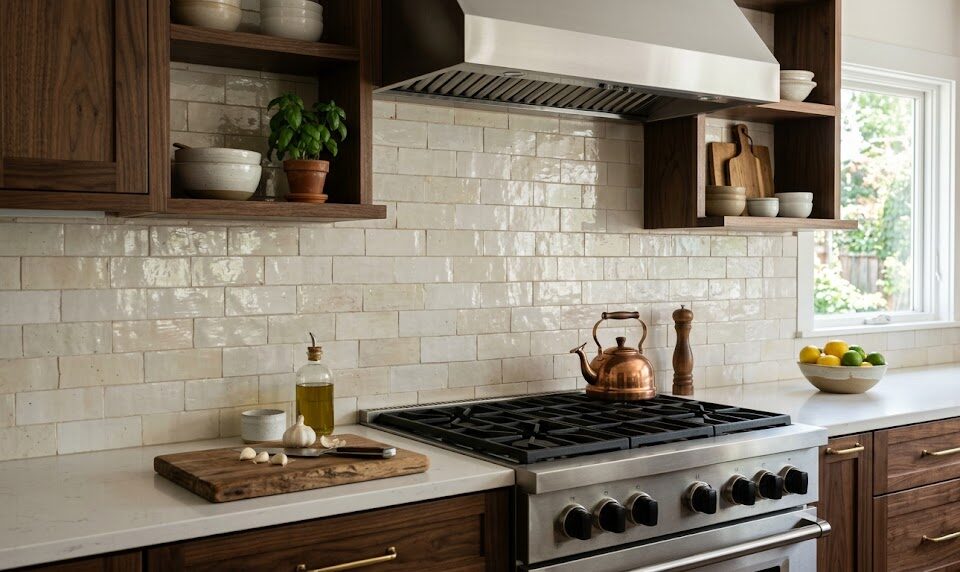
Tile remains one of the most common backsplash materials because it offers the most design flexibility. Homeowners can choose from a wide range of sizes, shapes, colors, finishes, patterns, and grout looks. That makes tile especially appealing in kitchens that want more texture, more color, or a backsplash that helps bridge the countertop and cabinetry in a visible way.
Where tile performs well
Tile is often a strong choice when the kitchen needs personality or when the homeowner wants a specific design style, whether that is modern, traditional, farmhouse, rustic, or transitional. It also offers a wide range of pricing options, which can help align the backsplash with the overall remodel budget.
Where tile asks for more maintenance realism
The tile itself may be easy to wipe down, but grout usually becomes the real maintenance factor. Even when the grout performs well, it still adds more joints, more visual segmentation, and more places for residue to collect compared with larger-format surfaces.
Tile installation details matter a lot
Alignment around outlets, how the tile terminates at the ends of runs, how it meets the counter, and what trim or edge details are used all influence whether the backsplash feels polished or just “installed.”
| Tile Advantage | Why Homeowners Like It |
|---|---|
| Design Variety | Tile offers the widest mix of colors, shapes, patterns, and finish options |
| Style Range | It can support traditional, modern, farmhouse, rustic, or highly custom looks |
| Budget Flexibility | There are usually more price-point options within tile than within full slab backsplash strategies |
| Feature Potential | Tile can create a stronger visual moment when the homeowner wants the backsplash to carry more personality |
- More grout usually means more cleaning attention and more visual movement
- Pattern-heavy tile can compete with busy counters or cabinetry if the kitchen already has a lot going on
- Trim and edge details affect the final result more than many homeowners expect
- Large-format tile can reduce grout lines, but outlet cuts and layout discipline still matter
- Grout color changes both the appearance and the long-term maintenance feel of the backsplash
Tile choices usually become easier when homeowners also compare related finish decisions such as countertop material performance, how small alignments affect polish in cabinet hardware placement, and whether the kitchen already has strong focal features such as waterfall island details.
Slab backsplashes: seamless, modern, and visually calm
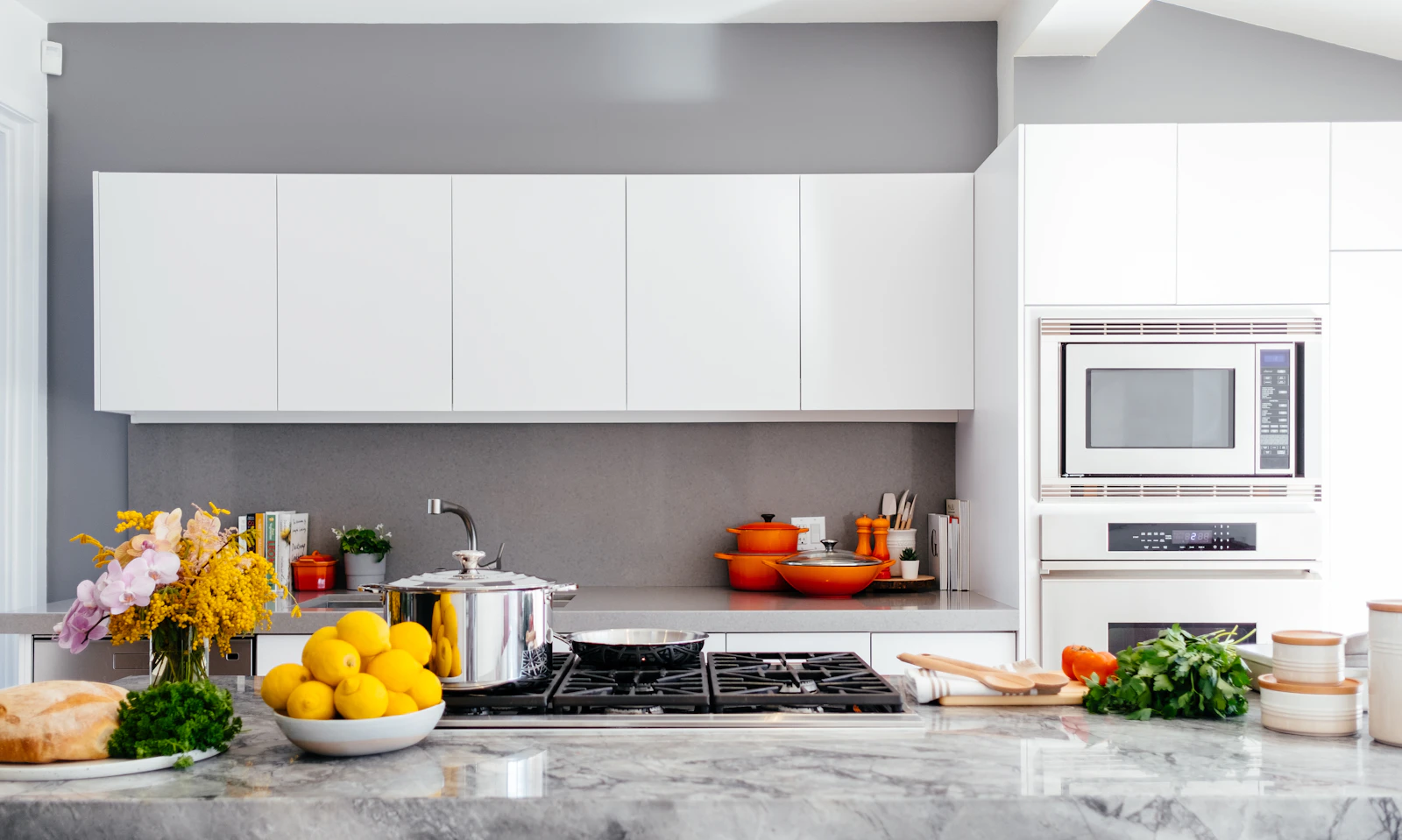
Slab backsplashes have become increasingly popular because they often create one of the cleanest and most elevated finishes in a kitchen. Instead of a field of repeating joints, the wall reads as a larger continuous surface. In many kitchens, that makes the room feel calmer, simpler, and more architectural.
Where slab backsplashes shine
They are often strongest in kitchens where homeowners want reduced visual interruption, fewer grout lines, and strong continuity between the countertop and the wall above it. This can be especially appealing in more modern kitchens or in kitchens where the counters already carry a beautiful material worth extending upward.
Where slab backsplashes need careful planning
Because the surface is large and continuous, outlet cuts, seam locations, edge details, and height terminations become highly visible decisions. A slab backsplash can feel exceptionally clean, but only when the planning and installation are equally precise.
Material balance matters
If the counter material has a lot of movement or dramatic veining, continuing it up the wall can either feel luxurious or feel visually heavy depending on the rest of the room. The kitchen still needs enough balance that the slab looks intentional rather than oversized for the design.
Minimal Visual Interruption
One of the main reasons homeowners choose slab is the calmer wall appearance compared with smaller repeating materials.
Easier Everyday Wipe-Down
Fewer joints often make daily cleaning feel more straightforward, especially near active cooking areas.
Stronger Continuity
When coordinated well with the counter, slab can make the whole kitchen feel more unified and design-forward.
Higher Detail Sensitivity
Because the wall reads as one larger surface, mistakes in seams, outlet cuts, or edges are often more noticeable.
If the kitchen would benefit more from calm, continuity, and easier cleaning than from added pattern or texture, slab often becomes a very strong backsplash contender.
Slab backsplash planning often pairs naturally with the counter discussion itself, especially when weighing quartz, granite, and porcelain performance and how the wall surface should coordinate with the broader cabinet and countertop strategy.
Panel backsplashes: streamlined coverage without the same feel as tile
Panels can appeal to homeowners who want a larger-format look and fewer interruptions than a traditional tile backsplash, but who are not necessarily following the same exact approach as a slab backsplash. In practical terms, panels often attract homeowners who want the wall to read more continuously while keeping the design relatively quiet.
Where panels can make sense
Panels can work well in kitchens that want a cleaner, more contemporary wall surface with less visual segmentation than tile. They can also be attractive when the backsplash is meant to support the kitchen quietly rather than act as the main decorative feature.
Where panels require care
Like slabs, panels tend to reward good planning. If edge conditions, seams, or transitions are handled weakly, the finished result can feel less resolved than homeowners hoped.
Panels are often about restraint
They usually work best when the kitchen does not need more pattern or busyness and the homeowner wants a smoother background behind the counters.
| Panel Advantage | Why It Appeals to Homeowners |
|---|---|
| Larger Surface Look | Panels often reduce visual busyness compared with smaller repeating tile layouts |
| Simpler Cleaning Feel | Fewer interruptions on the wall can make wipe-down cleaning feel easier in everyday use |
| Modern Restraint | Panels often support a quieter, more streamlined kitchen design direction |
| Supportive Background | They can let counters, cabinets, and other room features take the lead instead of competing visually |
Durability, cleaning, and maintenance: what actually changes day to day?
Most backsplash materials used in kitchen remodels can perform well when selected and installed properly. The bigger difference for homeowners is often not whether the material can survive occasional splashes. It is how easy the surface is to clean, how much maintenance the joints or seams require, and whether the wall still feels practical after the initial design excitement fades.
Tile usually performs well but adds more cleaning attention through grout
The tile itself may be durable, but grout often becomes the day-to-day maintenance variable, especially behind cooktops or near active prep zones.
Slabs and panels often simplify wipe-down cleaning
Because they usually reduce segmentation, they can feel easier to maintain visually in kitchens where regular cleanup is part of the daily rhythm.
Texture still changes the experience
Smooth surfaces generally feel easier to wipe down than heavily textured ones, even when the base material category is the same.
- Do you want minimal joints and simpler wipe-down cleaning?
- Are you comfortable cleaning grout if the design direction strongly favors tile?
- Will the backsplash sit behind an active cooktop where splatter is frequent?
- Do you value visual texture enough to accept a little more maintenance?
- Will the surface still feel practical once the kitchen is in daily use rather than just newly finished?
These questions often fit naturally beside related finish decisions like durable kitchen flooring and surfaces, because homeowners are often making broader durability decisions across the room at the same time.
Edges, heights, and transitions often determine how finished the backsplash feels
The material itself is only part of the story. Some of the strongest or weakest backsplash results come from edge conditions, how high the material runs, where it stops, how it handles windows or shelves, and how cleanly it meets the countertop below. These are the details that often separate a “nice material” from a backsplash that actually feels professionally resolved.
Height decisions change the visual finish
Some kitchens feel best with a more standard run between counter and uppers. Others benefit from a full-height wall treatment behind the hood or in a key focal zone. The important thing is that those choices feel deliberate and consistent with the rest of the room.
Terminations matter
Where the backsplash starts and stops affects how intentional the kitchen feels. Awkward stops can make even expensive materials feel like an afterthought.
Outlet and trim handling matter just as much
This is especially important with slabs and panels, where cuts are highly visible, but tile also depends on clean decisions around outlet placement, trims, and corner details.
Full-Height Areas
These can create strong focal moments, especially behind hood walls, when the material and room balance support them.
Standard Runs
These often feel cleaner when the stops and edge details are planned carefully rather than improvised during install.
Outlet Integration
Outlet cuts and cover placement influence how polished the backsplash feels once the wall is complete.
Countertop Junction
The line where the backsplash meets the counter should feel intentional and easy to keep clean.
Homeowners often focus on “Which material do I like?” but long-term satisfaction usually depends just as much on where the backsplash starts, where it stops, and how cleanly it meets everything around it.
Backsplash choices also affect outlets, lighting, and the working feel of the wall
Because the backsplash sits behind so many active work zones, it affects more than aesthetics. Outlet locations become more noticeable depending on the material. Under-cabinet lighting can either flatter the surface or reveal glare, texture, and unevenness. The wall behind the range may need different visual and practical treatment than the wall at the sink or beverage zone.
Outlets are part of the backsplash composition
On a tile backsplash, outlet layout affects symmetry and pattern interruption. On a slab or panel backsplash, outlet cuts can become even more visually prominent because the surface reads more continuously.
Lighting changes how the material behaves
Under-cabinet lighting, pendants, and natural light can all change how much texture, sheen, and movement the backsplash shows throughout the day.
Function zones should guide the surface strategy
An active range wall may call for different priorities than a quieter side wall. This is one reason the backsplash should be planned as part of the kitchen’s full working layout rather than as a single isolated style choice.
That is why backsplash planning often pairs well with discussions around kitchen lighting and electrical and practical finish support like under-cabinet lighting, since both influence how the finished wall is seen and used.
What to confirm before ordering backsplash materials
Once backsplash material is ordered and the room moves closer to installation, the kitchen becomes much less forgiving. That is why the most important decisions should be settled before the material is finalized. Homeowners do not always need every micro-detail resolved on day one, but the overall direction should be clear enough that the backsplash is working with the kitchen rather than fighting the rest of the plan.
Know what role the backsplash is supposed to play
Is it a quiet supporting surface, a focal statement, or a seamless continuation of the counter? The answer changes the best material choice immediately.
Coordinate with countertops and outlets
The wall surface should be chosen with outlet placement, countertop material, and trim strategy already in mind.
Think about maintenance honestly
It is better to choose a slightly calmer material that fits the household’s real cleaning habits than a more dramatic one that becomes frustrating after the remodel is complete.
- whether the backsplash should be a feature or a supporting surface
- how it will relate visually to the countertop and cabinet finishes
- where the material will start, stop, and transition at key walls
- how outlets and trim will be handled
- what level of cleaning and upkeep feels realistic for the household
If electrical changes, ventilation conditions, or other project-specific requirements affect the kitchen walls or surrounding systems, those details can vary by home and jurisdiction. Final construction details should always be confirmed with qualified professionals and local authorities where applicable.
Common backsplash mistakes homeowners regret later
Choosing the backsplash before the room is fully understood
A beautiful sample can still be the wrong answer if the counters, cabinets, and room balance were not considered first.
Underestimating grout and seam maintenance
Many backsplash regrets are really maintenance regrets that only become obvious after daily cleanup starts.
Ignoring where the backsplash starts and stops
Edge conditions and transitions affect the final result as much as the material choice itself.
Forgetting how outlets will interrupt the design
Outlet cuts and cover placement can change the visual experience of the wall dramatically once installation is complete.
Letting the backsplash compete with every other feature
If the room already has strong counters, cabinetry, or island details, the backsplash may need restraint more than extra personality.
How Fortress Builders would approach backsplash selection in a real kitchen remodel
A strong design-build process would not treat the backsplash as a late decorative add-on. It would place the backsplash inside the full kitchen strategy: the countertop material, cabinet finish, outlet layout, lighting plan, cleaning expectations, and the visual balance of the whole room. That is how the backsplash stops being a disconnected sample choice and starts feeling fully integrated into the kitchen.
In one kitchen, tile may be the right answer because the room needs a little more pattern or character. In another, slab may create the calmer, more seamless finish that the space wants. In another, panels may offer the right balance between visual simplicity and practical use. The right answer depends on the kitchen and the household living in it.
The biggest advantage comes from settling those decisions early enough that the wall surface, outlets, counters, and finish details can all be coordinated cleanly before demo and ordering move too far forward.