

Radon Before a Basement Remodel: When Homeowners Should Retest
Finishing a basement in Davis or Weber County? Here's when to test or retest for radon and how results shape your plan before walls go up.
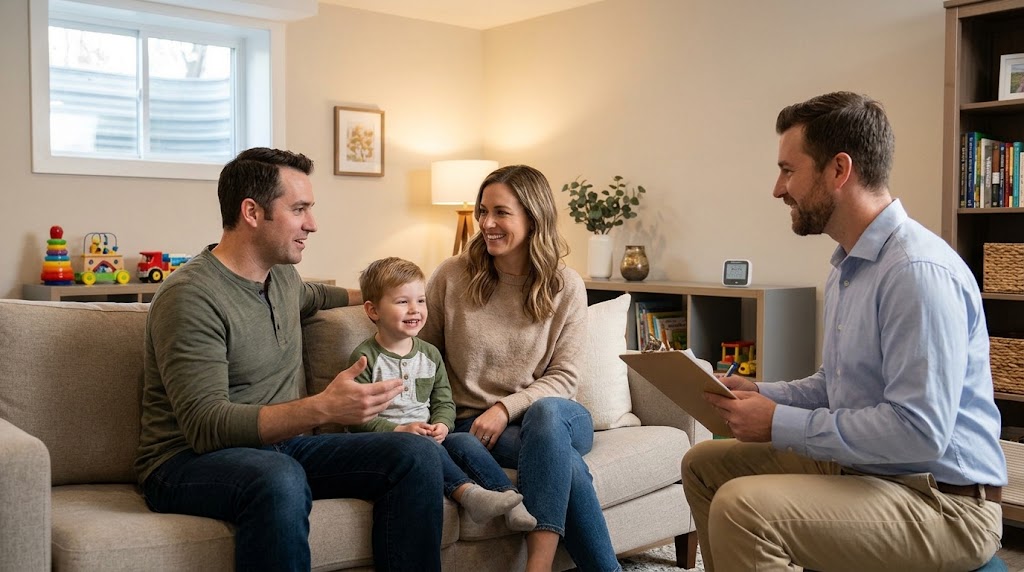
Yes, and the test should happen in the basement itself, before walls and finishes go in. The U.S. Environmental Protection Agency advises testing a basement before turning unfinished space into living space, and an older test from the main floor doesn’t answer that question. If the result comes back elevated, a qualified radon professional interprets it and recommends next steps while the space is still open. Once the basement is finished and you start using it, test again. For families in Davis and Weber Counties, that before-and-after sequence is ordinary due diligence, and it fits neatly into the planning stage of a basement remodel.
I’ve been finishing basements in this area since 1998. I’m not a radon tester or a mitigation specialist, and I won’t pretend to be one. My job is to make sure the test happens at the right point in your project, so nobody ends up framing walls before you have the answer.
- Any earlier radon test report: when it was done, which floor it was on, what kind of test it was and the result.
- A rough idea of how you’ll use the finished basement: bedroom, family room, office, guest space or play area.
- Whether the house already has a radon reduction system, and any paperwork that came with it.
- Notes on anything moisture-related you’ve seen downstairs: damp spots, musty smells or water after storms.
What People Commonly Get Wrong About Radon and Basement Remodels
Radon isn’t something to panic about, and it isn’t something to skip either. Most mix-ups I hear come from treating one old test as the final word, or from testing at the wrong moment. Here’s how the common beliefs line up against what Utah’s Department of Environmental Quality (DEQ) and the EPA actually say.
That test may have been on a different floor. EPA says a test on another level doesn’t substitute for testing the basement you plan to live in.
Check where that test was placed. If it wasn’t the basement, test the basement.
Utah DEQ tells residents to retest when they begin occupying a lower level, such as a basement. Finishing it is exactly that change.
Test before you finish, and plan on testing again once you’re using it.
Kits come with conditions they need to give a reliable result. Active construction, dust and open doors work against those conditions.
Test before work begins or after it’s done, following the kit’s directions.
A neighbor’s number, or a county map, can’t tell you what’s in your basement. Only a test in your home can.
Rely on your own test, placed where Utah DEQ’s instructions say.
A test result is information, not a diagnosis. Utah DEQ says to consider mitigation above its action level, and results should be reviewed with a qualified professional.
Talk to a qualified radon professional about what the result means for your plan.
EPA’s guidance advises testing again after major renovations, because changes to the home can affect radon levels.
Retest when the basement is complete and in use.
When Should You Test a Basement You Plan to Finish?
The best moment is early in planning, before demolition and before construction changes the conditions in the space. That gives you an answer while every option is still on the table.
EPA’s remodeling guidance is direct about this: test the basement before you turn unfinished space into living space. The reasoning is practical. If a radon professional recommends mitigation, it’s far easier to account for it while the walls are open, the floor is exposed and the layout is still a drawing. Once framing, insulation, drywall and flooring are in, the same work has to happen around finished surfaces.
Here’s how I’d fit it into the order of a basement project:
- Start planning. Talk through how you want to use the space and what’s down there now.
- Test the basement. Before demolition or construction begins, following Utah DEQ’s placement instructions and the kit’s directions.
- Review the result. If it’s elevated, bring in a qualified radon professional before the design is final.
- Design with the answer in hand. Rooms, closets and finishes get planned around anything the specialist recommends.
- Build. No official testing during dusty, open construction.
- Retest after completion. Once the basement is finished and you’re using it.
None of this needs to slow your project down if it’s planned from the start. It only causes trouble when someone remembers it halfway through framing.
What if you’re already using the basement?
Plenty of families start spending time downstairs before a remodel: a play area on the concrete, a home gym, a guest bed in the corner. Utah DEQ’s guidance to retest when you begin occupying a lower level applies there too. If that describes your home and the basement hasn’t been tested, test it now, before the remodel planning gets far along. You’ll have useful information either way, and it becomes the starting point for the project.
Does an Old Radon Test From Upstairs Still Count?
Usually not for this purpose. A test tells you about the level where the kit sat, at the time it was run. If your last test was on the main floor and you’re about to start living in the basement, that result doesn’t answer the question you’re asking now.
Both agencies point the same direction. EPA says an older test on another level doesn’t substitute for testing the basement before converting it to living space. Utah DEQ tells residents to retest if they begin occupying a lower level such as a basement. A basement finish turns a storage area into a place where people spend hours every day, which is exactly the change those instructions describe.
If you’re not sure where an old test was placed, look at the report. It often notes the location. If it doesn’t, or if you can’t find it, treat the basement as untested and run a new test before the project starts.
What if we tested the basement a while ago?
Bring that report to your planning conversation. Whether it’s still useful depends on when it was done, how it was run and what has changed since. Since you’re about to change the space significantly anyway, a fresh test before work begins gives you a clean starting point, and the retest afterward gives you a clean comparison.
Where Should the Kit Go, and What Can Throw Off the Test?
Placement and conditions matter as much as the kit itself. Utah DEQ publishes short-term testing instructions for Utah homeowners, and the kit you buy will have its own directions. Follow both.
- Put it on the lowest living level. For a basement you’re about to finish, that’s the basement, in the area you plan to use.
- Keep it away from drafts, moisture and heat. Utah DEQ’s instructions say to avoid those spots, and to keep the kit away from walls.
- Follow the kit’s protocol exactly. How long it runs, what conditions the house should be in and how to send it off are spelled out in the instructions.
- Leave it alone. A kit that gets moved, bumped into a corner or covered up isn’t measuring what it’s supposed to.
- Write down where and when. Note the room, the spot and the dates on the report or a sticky note, so the after-remodel test can go in a comparable place.
What works against a good result
A kit is designed to run under the conditions its directions describe. A few things common to remodel projects work against those conditions:
- Testing during demolition or framing, when dust is flying and doors are propped open for the crew.
- Placing the kit near a window, fan, dehumidifier or furnace, where drafts, moisture or heat are strongest.
- Ignoring the kit’s directions about how the house should be kept during the test.
The simplest rule I give homeowners: test before the project starts or after it’s finished, never in the middle. If you’d rather not run the test yourself, Utah DEQ points residents to directories of qualified radon professionals, and a measurement professional can handle it.
What Happens if Your Basement Test Comes Back Elevated?
First, take a breath. An elevated result doesn’t mean you have to stop your project, and it isn’t a medical finding about your family. It’s information that tells you a qualified professional should look at the situation before you finish the space.
Utah DEQ says homeowners should consider mitigation when results are above its action level, and that results need interpretation and possibly follow-up testing. For that, the state points residents to two national directories of radon professionals: the National Radon Proficiency Program (NRPP) and the National Radon Safety Board (NRSB). A professional from one of those lists is who should read your result and recommend what comes next.
Where I fit in
I don’t test for radon and I don’t design or install mitigation systems. Where I come in is coordination. If a radon professional recommends work, that recommendation becomes part of the basement plan before framing begins. Walls, closets, storage and finishes get designed with it in mind, so nothing we build ends up in its way, and nothing it needs ends up hidden.
That’s the main reason I want the test done early. A recommendation that arrives during design is a planning detail. One that arrives after drywall is a change order.
Questions to ask the radon professional
- What does this result mean for the space we’re planning to finish?
- Do you recommend follow-up testing, mitigation or both?
- If you recommend a system, what does it need from the space around it?
- Should anything be done before framing starts?
- What testing do you recommend once the basement is finished?
Bring their answers to me, and we’ll fold them into the plan.
Already Have a Radon Reduction System?
Some homes already have one, installed by a previous owner or after an earlier test. That’s useful to know before a remodel, and it should be part of the planning conversation, not something we discover behind a stud wall.
A basement finish changes the space around an existing system. Here’s what I’d want to talk through:
- Where it is. Show me the system and any paperwork during the walkthrough so the layout respects it.
- Who should review it. A qualified radon professional is the right person to check its condition and advise whether the remodel changes anything.
- What happens after construction. EPA’s guidance to retest after major renovations applies here too. Testing after the finish confirms how things look with the new space in use.
Don’t assume an existing system means you can skip testing. The remodel is a change to the home, and the retest afterward is how you find out what that change did.
How Do Radon and Moisture Checks Fit Ahead of Framing?
Radon is one of the checks that belongs before the walls go up. Moisture is another. EPA’s remodeling guidance advises investigating basement moisture problems before finishing, for the same reason it advises testing for radon: once the space is closed in, both are harder to address.
I think of the pre-framing stage as the last easy chance to see the basement as it really is. Concrete, foundation walls, penetrations, the sump area if there is one: it’s all visible. Here’s the order I’d work through before framing:
Look for moisture
Damp spots, staining, musty smells or water after storms. EPA says to investigate moisture problems before finishing.
Test for radon
A test in the basement itself, placed per Utah DEQ’s instructions, before construction begins.
Review both results
Moisture questions go to the right trade. Radon results go to a qualified radon professional if they warrant it.
Note existing features
Any existing radon system, the sump, utility penetrations and cracks are site-review topics for the people qualified to assess them.
Plan the layout
Rooms, storage and finishes are designed with every finding and recommendation in hand.
Then frame
Framing starts only once those questions have answers.
This order also helps in a practical way: each check can change the layout. It’s much better to learn that before a single stud goes in.
Where this guidance comes from: Utah’s Department of Environmental Quality, which publishes the state’s radon program information and home testing instructions; the U.S. Environmental Protection Agency’s guidance on remodeling and indoor air quality and its Home Buyer’s and Seller’s Guide to Radon; and Fortress Builders’ own basement planning approach. Testing decisions and results belong with you and a qualified radon professional. Fortress doesn’t perform radon testing or mitigation.
Why Should You Test Again After the Work Is Complete?
Because the remodel changed the house. EPA’s guidance advises testing again after major renovations, since changes to the home can affect radon levels. A finished basement is a real change: new walls, new floor assemblies, new rooms and people spending time in a space that used to be storage.
The second test is how you close the loop. It tells you how the finished space measures with everything in place and in normal use. If you tested before the project and noted where the kit sat, try to place the new kit in a comparable spot so the two results tell a clear story.
When to run it
- After construction is complete, not while finishing work is still happening.
- Once you’re using the space, because Utah DEQ’s guidance ties retesting to occupying the lower level.
- Following the kit’s directions for conditions and timing, just like the first test.
If you had mitigation done before the finish, ask the radon professional what follow-up testing they recommend. Their guidance for your specific system takes priority.
Who Does What: You, the Radon Professional and Me
Radon planning goes smoothly when everyone knows their part. Here’s how I’d divide it.
You, the homeowner
Run the test following Utah DEQ’s instructions and the kit’s directions, or hire a measurement professional to do it. Keep every report. Tell me how you plan to use the basement and whether a system already exists.
A qualified radon professional
Interprets an elevated result, recommends follow-up testing or mitigation and handles any mitigation work. Utah DEQ points to the NRPP and NRSB directories for finding one.
Me, as your remodeler
Puts testing at the right point in the schedule, makes sure results arrive before framing, and designs the basement around any recommendation so the finished space doesn’t get in its way.
Our crew
Builds to the agreed plan and protects anything the radon professional installed or flagged, so the finished basement works with it.
Keeping those roles clear protects you. Nobody should be guessing about a test result, and nobody on a framing crew should be making radon decisions.
What I Verify Before Framing Starts
Before we frame a single wall in a basement, I want these questions answered. Most are quick to confirm. Skipping any of them is how projects end up redoing finished work.
- Has the basement itself been tested, and do we have the report?
- Was the test placed on the lowest living level, following Utah DEQ’s instructions?
- If the result was elevated, has a qualified radon professional reviewed it?
- Is any recommended work done, scheduled or accounted for in the design?
- Is there an existing radon system, and has a professional looked at it in light of the remodel?
- Have moisture concerns been investigated, as EPA advises before finishing?
- Does the layout leave room for anything the specialist needs?
- Is a retest planned for after the basement is finished and in use?
Once those answers are in place, the rest of the basement design can focus on what you came for: the family room, the guest space, the office or the place the kids can finally spread out. You can see more about how we approach that work on the Fortress basement finishing page, which explains how we work with families finishing basements across Davis and Weber Counties, including Kaysville, Layton and Bountiful.
Frequently Asked Questions
Should I test an unfinished basement even if nobody sleeps there yet?
Yes, if you plan to finish it. EPA advises testing the basement before converting unfinished space to living space, so you have the answer while the space is still open.
I tested the main floor recently. Do I need a new basement test?
For a basement you’re about to use, yes. EPA says a test on another level doesn’t substitute, and Utah DEQ says to retest when you begin occupying a lower level.
Can I test while demolition or framing is underway?
It’s better not to. Test before work begins or after it’s finished, following the kit’s directions about conditions in the home.
Who should I call if my result is elevated?
A qualified radon professional. Utah DEQ points residents to the National Radon Proficiency Program and National Radon Safety Board directories.
I already have a radon reduction system. Does remodeling change anything?
It can. Have a qualified radon professional review it in light of the remodel, and test again after the work is done, as EPA advises after major renovations.
Does Fortress Builders test for radon or install systems?
No. I coordinate testing in the project schedule and design the basement around any professional recommendation, but testing and mitigation belong with qualified radon professionals.
Planning to finish your basement?
Ready to talk through scope and timeline? A design consult is the right first step. Bring any radon reports you have and your ideas for the space, and we’ll work out when testing, design and framing should happen in your Davis or Weber County basement.