

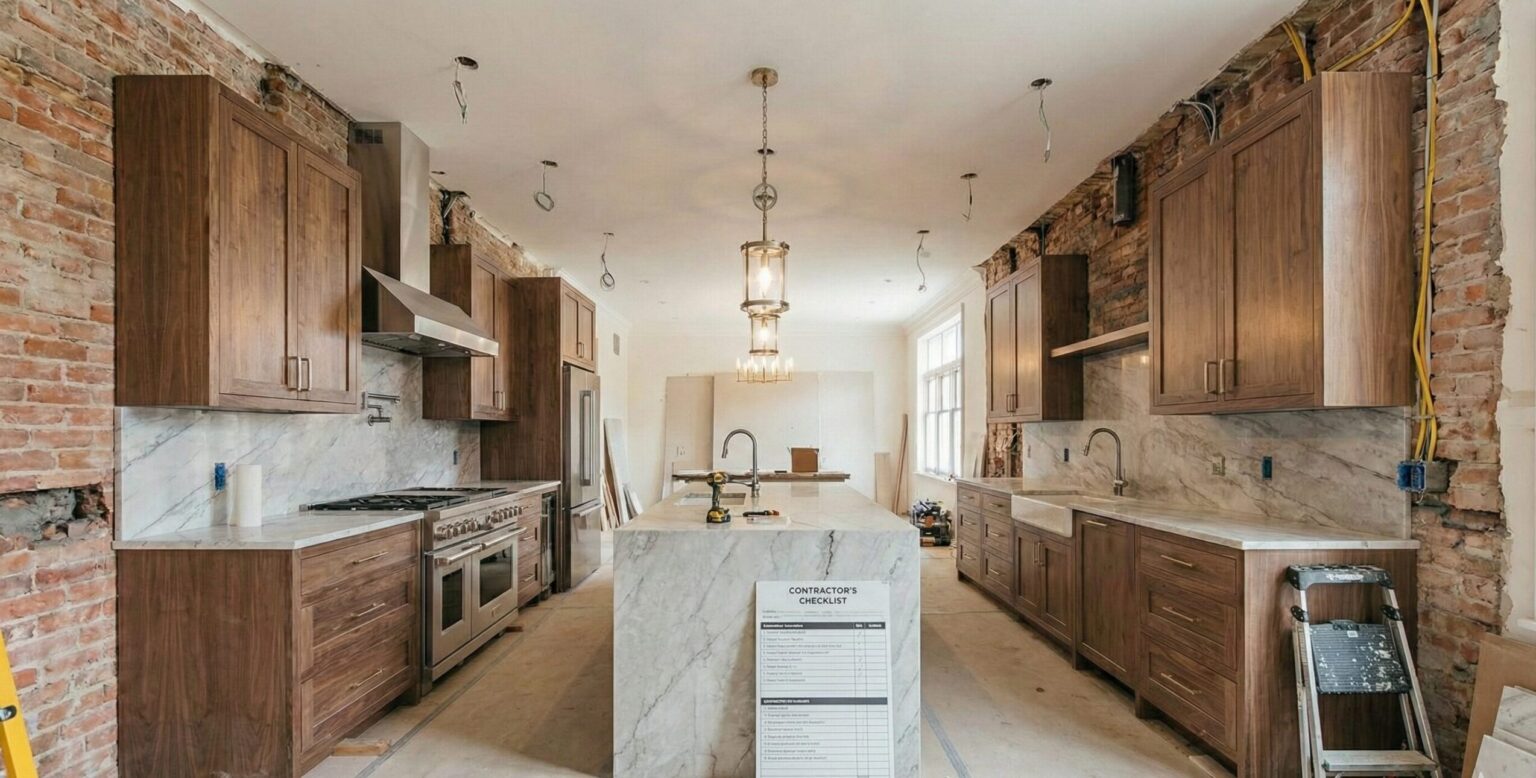
Kitchen Remodel Planning Checklist You Need
A kitchen remodel has a lot of moving parts—layout, cabinets, countertops, lighting, appliances, flooring, and (often) permits and inspections. The difference between a smooth project and a stressful one usually isn’t “luck.” It’s planning.
This checklist is designed to help Utah homeowners define scope, make key decisions early, and reduce change orders that can surprise your budget and timeline. If you want a clear, design-first path from concept to completion, explore Kitchen Remodeling in Utah: Built to Last and use this page as your planning companion.
Why a Kitchen Remodel Checklist Saves Money (and Stress)
Most budget overruns come from undefined scope and late decisions. When materials aren’t selected, appliance specs aren’t confirmed, or lighting plans are incomplete, contractors can’t price accurately—and schedules can’t be locked.
- Clear scope = clearer bids: fewer “allowances,” fewer surprises.
- Early selections = fewer delays: cabinets, appliances, and specialty items often have longer lead times.
- Planned rough-ins = less rework: electrical, plumbing, and ventilation are easiest to adjust before walls close up.
If you’re collecting proposals, start by writing your scope of work in plain English—then add specifics (finishes, fixtures, and features) as you decide.
Before you get bids, define your scope of work. The more specific your plan is, the more accurate pricing and scheduling can be.
Step-by-Step Kitchen Remodel Planning Checklist
Use the steps below in order. Each one reduces decision fatigue later—and helps you avoid mid-project changes.
- Write your goals (function first, style second)
Start with how you want the kitchen to work day-to-day, then add the look and feel.Quick prompts to clarify goals:
- Do you cook daily, entertain often, or both?
- Where does traffic flow get stuck (kids, pets, guests)?
- What storage problems drive you crazy right now?
- What do you want to keep the same (to control cost)?
For layout fundamentals, see Design and Layouts for Kitchens.
- Set a realistic budget range (with a contingency)
Even well-planned remodels can uncover hidden conditions behind walls (older wiring, plumbing, or framing). Many homeowners keep a contingency reserve for the unexpected.If you’re building your numbers, start with overall scope and priorities (must-haves vs nice-to-haves). For broader planning guidance beyond kitchens, the resources hub is a helpful starting point: Your Guide to a Seamless Remodel.
- Define your scope of work (your “what exactly are we doing?” list)
This is where you prevent change orders.Scope items to decide earlyLayout: keep the same footprint or move sink/range/walls?
Cabinetry: replace, reface, or modify; storage features (pull-outs, trash, pantry).
Countertops: material, edge profile, backsplash scope.
Flooring: replace or patch; transitions to adjacent rooms.
Lighting: layered plan (ambient, task, accent) + dimming.
Appliances: confirm sizes, venting, and power needs before cabinet order.Cabinets and counters are major scope drivers—review planning details here: Cabinets and Countertops.
- Measure your existing kitchen (and document what matters)
Accurate measurements help with layout decisions, cabinet planning, and avoiding “it looked fine on paper” surprises.Measurements to capture:
- Overall room dimensions and ceiling height
- Window and door locations (including swings)
- Locations of plumbing, gas, electrical, HVAC registers, and soffits
- Clearances around islands, walkways, and dining zones
- Confirm your layout strategy (workflow + seating + storage)
Good kitchens reduce steps and reduce clutter. Focus on work zones (prep, cook, clean, pantry) and make sure circulation doesn’t cut through the work area.Need help evaluating layout options? Start here: Design and Layouts for Kitchens.
- Choose appliances early (before cabinets are finalized)
Appliance specs drive cabinet sizes, clearances, ventilation, and electrical requirements. Ordering cabinets before confirming appliances is a common source of expensive changes.For appliance planning and code-conscious ventilation, see: Kitchen Appliances & Ventilation Upgrades.
Before you finalize your plan, run through the key questions that shape scope, timeline, and the design decisions that are hardest to change later.
- Plan rough-ins: plumbing, electrical, lighting, and ventilation
This is the “behind-the-walls” phase that determines how the kitchen functions for years.Lighting & ElectricalLayered lighting, outlet locations, dedicated circuits, and dimming all affect daily comfort and safety.
Appliances & VentilationHood selection, duct routing, make-up air considerations, and quiet performance are easier to plan than to fix later.
Flooring & SurfacesFloor height changes, transitions, and durable materials should be coordinated with cabinetry and appliances.
Important: Building code requirements (including electrical, ventilation, and make-up air rules) and inspection processes can vary by city and project conditions. Confirm details with qualified professionals and your local building department. A design–build team can coordinate plans and permitting so requirements are addressed early, not mid-project.
- Finalize your materials and selections (and track lead times)
Selections are where budgets often drift. Keep it organized, and confirm what’s included.Selections checklist:
- Cabinet door style, finish, and hardware
- Countertops, backsplash, and grout/edge details
- Sink, faucet, and garbage disposal
- Appliances (model numbers) and trim kits/panels
- Lighting fixtures, bulb temps, and dimmers
- Flooring material, pattern direction, and transitions
- Paint colors and trim details
Detail planning (like what goes in which drawers) helps you design storage intentionally—and can reveal smart places to keep what’s working to control costs.
- Build a realistic timeline (with decision deadlines)
Your timeline should include planning and ordering—not just construction.Timeline milestones to plan forDesign & scope: layout, selections, drawings, and pricing alignment.
Ordering: cabinets/appliances/fixtures with lead time tracking.
Permits (if required): submission, review, and scheduling inspections.
Construction: demo → rough-ins → inspections → drywall → finishes → install → punch list.
Closeout: final walkthrough, care instructions, and warranty details.Setting expectations early—budget, timeline, and communication—helps your remodel feel controlled instead of chaotic.
- Prepare for livability (how you’ll cook during the remodel)
Kitchens affect daily routines more than almost any other room. Plan temporary solutions.Temporary kitchen basics:
- Decide where small appliances will live (microwave, toaster oven, coffee)
- Plan dishwashing and food storage
- Protect adjacent rooms from dust and traffic
- Confirm daily cleanup expectations and jobsite boundaries
Final “Before You Start” Kitchen Remodel Checklist
Print This: The Decisions That Prevent Change Orders
- Your scope of work is written and specific (what’s in, what’s out).
- Layout decisions are finalized (including island size, seating, and clearances).
- Appliance models are confirmed (sizes, power needs, ventilation plan).
- Lighting plan is complete (fixture locations, dimmers, under-cabinet lighting).
- Flooring plan is complete (material, transitions, direction, thresholds).
- All selections are documented (cabinets, hardware, counters, backsplash, paint).
- Lead times are checked and ordered items are tracked.
- Permits/inspections are clarified (if applicable) and scheduled appropriately.
The goal isn’t perfection—it’s clarity. Clear decisions early create smoother builds, fewer surprises, and a finished kitchen that feels intentional.
If remodeling costs feel confusing, come back to scope. Price becomes clearer when “what’s included” is clearly defined.
Related Resources and Services (Helpful While You Plan)
If you’re still working through decisions, these pages can help you go deeper—without getting overwhelmed.
If your kitchen remodel connects to other upgrades
Many homeowners coordinate kitchens with adjacent spaces or system upgrades. If that’s you, these pages can help you plan holistically:
- Bathroom Fixtures & Lighting
- Bathroom Ventilation & Moisture Control
- Radiant Heated Bathroom Floors
- Tile & Waterproofing Systems
- Basement Bathrooms & Kitchenettes
- Basement Moisture Management
- Basement Lighting & Electrical
- Basement Home Theaters
- Basement In-Law Suites / Apartments
- Basement Game Rooms & Wet Bars
- Additions & Expansions
- Outdoor Living Spaces
- Home Office & Flex Spaces
- Custom Carpentry & Built-Ins
See Real Utah Remodels for Inspiration
If you’re deciding between styles or trying to visualize finishes, browsing real projects can help you narrow choices faster.
If you want a simple, step-by-step reset, this walkthrough reinforces the planning sequence that helps homeowners feel confident before construction starts.
Want a Pro to Sanity-Check Your Kitchen Remodel Plan?
The fastest way to reduce stress is to confirm your scope, selections, and timeline before you commit. The Fortress Builders is a design–build team built on one principle: strength through structure—clear plans, disciplined execution, and durable results.
Request a Design Consult Explore Remodeling Services
We’ll help you clarify decisions that protect your budget, align expectations, and keep your kitchen remodel moving forward with confidence.
Key Takeaways
- Scope first: define what’s included (and excluded) before bids and pricing.
- Decide early: appliances, lighting, and selections drive cabinets, rough-ins, and lead times.
- Plan rough-ins: electrical, ventilation, and plumbing are easiest to get right before walls close.
- Document everything: clear decisions reduce change orders and protect the schedule.
If you’d like help turning this checklist into a clear, buildable plan, start here: Contact The Fortress Builders.
The Fortress Builders is a Utah design–build company serving homeowners who want strong, lasting results without the uncertainty that often comes with renovation. With a detailed design blueprint, transparent project management, and craftsmanship built to hold up over time, we help families remodel with clarity and confidence.