

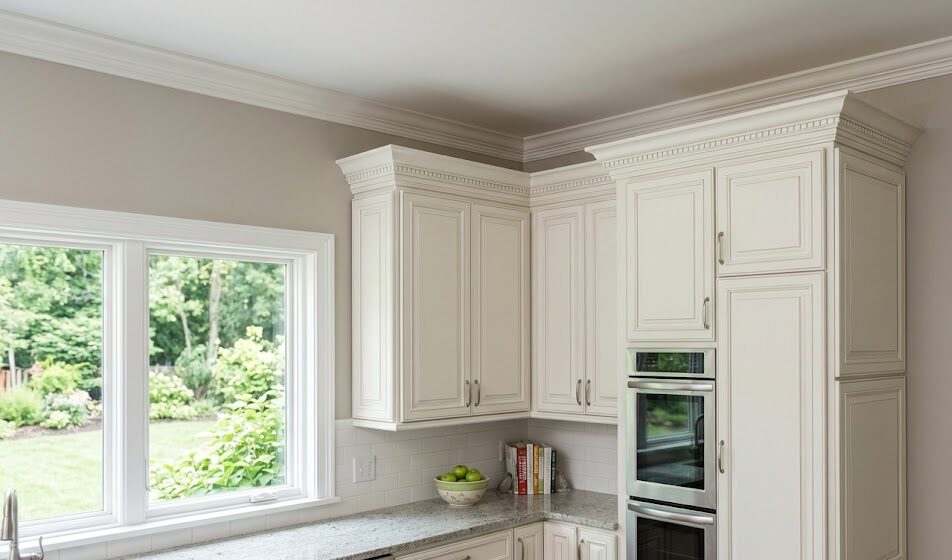

Cabinet Crown Molding vs. Clean Lines: When Each Look Works
A well-planned kitchen remodel saves time, money, and daily frustration—and cabinet finish details play a bigger role in that than many homeowners expect.
One of the most common style decisions in kitchen cabinet planning is whether upper cabinets should finish with crown molding or stop with clean, simple lines. On the surface, it sounds like a design preference only. In reality, the choice affects style direction, visual height, fillers and clearances, installation complexity, and even how polished the kitchen feels once countertops, backsplash, and lighting are in place.
This guide explains cabinet crown molding vs clean lines in plain English so homeowners can make the decision with more confidence. You will learn where each look works best, what construction and finish details matter, how to think about fillers, appliance clearances, countertop and sink coordination, and which common surprises are easier to avoid if the choice is made early.
The Fortress Builders approaches kitchen remodeling through one core principle: strength through structure. Every remodel starts with a clear design blueprint that aligns layout, storage, material choices, and installation sequencing before materials are ordered. That is especially helpful with cabinet decisions, because small finish details can influence the whole kitchen once the project is underway.
- How cabinet crown molding vs clean lines changes the feel of a kitchen
- What style, durability, storage, and finish considerations matter most
- How to plan fillers, appliance clearances, and top-of-cabinet transitions
- How cabinet decisions connect to countertop selection and sink planning
- What ordering and installation surprises homeowners should watch for
What cabinet crown molding vs. clean lines actually means in a kitchen remodel
At a basic level, cabinet crown molding is a finish detail added at the top of upper cabinetry to create a more completed and often more traditional or tailored look. Clean lines usually mean the cabinetry ends with a flatter, simpler top profile, often with a more modern, transitional, or minimalist feel.
But homeowners should think of this decision as more than trim versus no trim. It affects visual emphasis, the relationship between cabinets and ceiling, how much negative space is left above cabinetry, and what kind of overall kitchen character you are building toward.
Crown Molding
Adds a more finished transition at the top of cabinets and often supports a classic, tailored, or built-in look.
Clean Lines
Creates a simpler cabinet silhouette that often feels lighter, quieter, and more contemporary.
Ceiling Relationship
The choice changes how the eye reads the cabinet height, ceiling line, and empty space above upper cabinets.
Installation Logic
Top details affect fillers, scribe space, ceiling variation, and how exact the finished installation must be.
Style Direction
Even if the kitchen is not fully traditional or fully modern, this finish choice nudges the design in a clearer direction.
Whole-Kitchen Read
Countertops, backsplash, hood details, and hardware all feel slightly different depending on which cabinet top treatment you choose.
Define what matters most first: durability, storage, and style
Before choosing crown molding or a cleaner cabinet top, homeowners should get clear on the priorities for the kitchen overall. A cabinet finish decision makes more sense when it supports the real goals of the remodel instead of floating as a purely aesthetic opinion.
Style
If the kitchen is moving toward traditional, classic, layered, or elevated detailing, crown molding may support that direction naturally. If the kitchen is leaning more modern, transitional, Scandinavian, or simplified, clean lines may reinforce the design better.
Storage and cabinet height
In some kitchens, crown molding is part of making cabinetry feel taller and more built-in. In others, especially when cabinets already run close to the ceiling or use slab-style doors, crown may feel unnecessary or visually heavy.
Durability and maintenance
This decision usually does not change base cabinet durability, but it can affect cleaning, dust collection, and how top-of-cabinet transitions age visually. A cleaner, flatter finish may feel lower-maintenance in some households, while crown may help the cabinetry feel more complete where open gaps would otherwise collect visual mess.
If the kitchen’s style direction is still undefined, cabinet crown molding versus clean lines will feel harder to choose. Once the overall design language is clear, the right answer often becomes much easier to see.
| Priority | What to Ask |
|---|---|
| Style | Should the kitchen feel more tailored and finished, or more quiet and minimal? |
| Height | Do the cabinets need help visually reaching the ceiling, or is the cabinetry already strong enough on its own? |
| Maintenance | Will the household prefer fewer trim transitions and easier wipe-down surfaces, or is visual finish more important? |
| Cohesion | Which option better matches the countertop, backsplash, hood style, and overall kitchen remodel direction? |
When cabinet crown molding usually works best
Cabinet crown molding tends to work best when the kitchen benefits from more architectural finish or when the goal is to make cabinetry feel more integrated into the room. It can also be especially effective in kitchens where upper cabinets need more visual authority against taller walls or where traditional detailing is already present elsewhere in the home.
Traditional and classic kitchens
If the remodel includes shaker or raised-panel cabinet doors, more detailed trim, decorative hood elements, or a more timeless formal look, crown molding often feels like a natural fit.
Kitchens that need a stronger built-in appearance
Crown can help reduce the feeling that upper cabinets are simply hung on the wall. In the right kitchen, it makes the cabinetry feel more intentionally connected to the room architecture.
Ceiling transitions that benefit from finish detail
Where there is visible space above upper cabinets, crown can help visually resolve the top edge more elegantly than leaving the cabinetry to stop flat.
- the kitchen design is classic, traditional, or transitional with more detail
- the cabinets need more visual presence against the walls
- the goal is a more finished, furniture-like, or built-in cabinet look
- other trim details in the house already support a layered style language
- the top of the cabinetry would otherwise look visually abrupt
When clean cabinet lines usually make more sense
Clean lines often work best when the kitchen design is aiming for calm, simplicity, and a more contemporary expression. They can also be the better choice in kitchens where crown would introduce visual weight the room does not need.
Modern, minimal, or warm contemporary kitchens
Flat or slab-style doors, thinner profiles, quieter hardware, and simpler surfaces often work better when the cabinet silhouette stays crisp and uncomplicated.
Lower ceilings or visually busy kitchens
If the room already has a lot happening—bold veining, statement lighting, strong backsplash, exposed beams, or multiple finish changes—clean cabinet tops can help the room breathe.
Cabinet runs that already feel resolved
Sometimes the cabinetry reaches close enough to the ceiling, or the proportions are strong enough, that added crown would not improve the look. In those cases, clean lines may feel more intentional than “adding something because kitchens often have it.”
If the kitchen already has enough character through layout, materials, and proportion, clean lines may actually make the design feel more confident—not less finished.
Modern Cabinet Doors
Simpler top lines usually pair more naturally with slab or flatter door styles.
Quiet Visual Finish
Clean tops can help the room feel less busy when other materials already provide enough detail.
Less Top-Edge Complexity
Fewer trim transitions can simplify both the look and the installation logic.
Contemporary Balance
Clean lines often reinforce the kind of understated confidence homeowners want in newer kitchen styles.
Plan for fillers, clearances, and functional details before you commit
This is where cabinet crown molding vs clean lines stops being a mood-board question and becomes a real kitchen planning issue. Upper cabinet top treatments affect how cabinetry meets the wall, ceiling, adjacent trim, and appliances. That means homeowners should think about clearances, fillers, and installation tolerances before finalizing the choice.
Ceilings are not always perfectly straight
Crown molding can help manage some visual inconsistencies, but it also requires careful planning if the ceiling varies. Clean lines may expose ceiling irregularity differently depending on the cabinet height and the amount of reveal left above.
Fillers and side clearances matter
Top trim details can affect how upper cabinets terminate at walls, windows, tall cabinets, or appliance surrounds. This is especially important in kitchens with tight side conditions.
Range hoods, fridge panels, and tall cabinet relationships
Crown treatment should be considered with the rest of the vertical cabinetry story. If the kitchen includes a tall pantry, a built-in refrigerator surround, or a decorative hood, the top treatment needs to coordinate across those elements rather than be decided in isolation. Related service page: Design and Layouts for Kitchens.
- How much space is there above the uppers now?
- Are the ceilings level enough for a clean reveal or a trim detail to look intentional?
- Will the top detail need to align with a hood, tall cabinet, or fridge surround?
- Do wall conditions require fillers, scribe space, or extra trim logic?
- Will the final cabinet height still leave the kitchen feeling balanced?
Construction and installation differences homeowners should understand
From the homeowner perspective, crown molding often feels like a visual upgrade. From the construction side, it is also an installation decision. That does not mean homeowners need to master the technical details themselves, but it helps to understand why top trim choices deserve early coordination.
Crown adds finish complexity
Miters, returns, ceiling relationships, filler treatment, and alignment between cabinet runs all become more important. None of that is inherently a reason to avoid crown, but it is a reason not to treat it as a last-minute add-on.
Clean lines require precision too
Flat, simple tops can look very polished, but they do not hide proportion mistakes. If the cabinet height, reveal, or ceiling relationship feels wrong, simplicity can make that more noticeable.
Ordering decisions affect installation outcomes
Cabinet height, top rail options, crown profile selection, stacked cabinet possibilities, and appliance relationships all interact. This is why ordering before the design is fully coordinated can create surprises later.
| Installation Topic | Why It Matters |
|---|---|
| Cabinet Height | Changes whether crown feels necessary, proportional, or too heavy |
| Ceiling Variation | Affects reveals, trim fit, and how finished the top of the kitchen will feel |
| Tall Cabinet Coordination | Top details should align with pantry, fridge, and hood relationships |
| Ordering Accuracy | Small top-treatment choices can have ripple effects on filler sizes and finished appearance |
Match countertop and sink choices to how the kitchen is used daily
Top-of-cabinet decisions should not be made without considering the rest of the kitchen finish package. Countertop selection, backsplash style, sink use, and daily cleaning habits all influence whether crown molding or clean lines feels more at home in the final room.
Countertop selection affects visual weight
If the countertop is already visually rich—heavy veining, bold movement, darker tones, waterfall features, or statement edges—cleaner upper cabinetry may help balance the room. If the countertops are quieter, crown molding may help contribute some needed detail and finish.
Sink habits and daily routine still matter
Homeowners often focus on the visible style choices first, but a kitchen that works well daily still depends on practical relationships between sink zone, cabinet storage, and surrounding finishes. For example, if the household values easy wipe-downs and visual simplicity, that preference may also align more naturally with cleaner cabinet lines overall.
Backsplash and under-cabinet lighting can amplify the cabinet decision
Since uppers and top trim visually frame the backsplash zone, the cabinet-top choice influences how the whole wall reads once lighting and tile are installed. Related planning page: Kitchen Lighting & Electrical Designed for Real Life.
When you picture the countertop, backsplash, upper cabinets, and hood together as one composition, which top treatment makes the whole wall feel more settled?
Common ordering and installation surprises homeowners can avoid
Many cabinet issues do not begin with bad workmanship. They begin with decisions that were made too late or without seeing how one choice affects the next. Crown molding versus clean lines is exactly the kind of decision that can create frustration later if it is treated as purely decorative.
Choosing crown after cabinet heights are already locked
This can create awkward proportions, ceiling conflicts, or filler issues that would have been easier to solve earlier.
Assuming “modern” automatically means no top detail
Some kitchens still benefit from a subtle finish treatment even when the overall direction is contemporary.
Ignoring how tall cabinets and hood details relate
If those vertical elements are not coordinated together, the kitchen can feel visually fragmented.
Letting ceiling irregularities surprise the finish detail
Top-of-cabinet treatment should be informed by actual site conditions, not idealized assumptions about the room.
Choosing from inspiration photos without matching the rest of the kitchen
The best cabinet decision is the one that works with your exact layout, countertop, lighting, and style direction.
How Fortress Builders would approach this decision in a real kitchen remodel
A strong kitchen design-build process would not ask crown versus clean lines as a floating style question. It would place that decision inside the bigger kitchen plan: cabinet style, ceiling conditions, appliance layout, hood treatment, countertop selection, backsplash tone, and how formal or simple the finished room is supposed to feel.
That usually means clarifying the kitchen’s design direction first, then checking how the top-of-cabinet treatment interacts with storage, clearances, construction tolerances, and the overall visual composition. When that happens early enough, homeowners are much less likely to feel like they are guessing between two pictures they liked online.
That is also why getting a second set of eyes on the plan before ordering materials can be so valuable. Small finish decisions often influence much more than they seem to at first glance.