

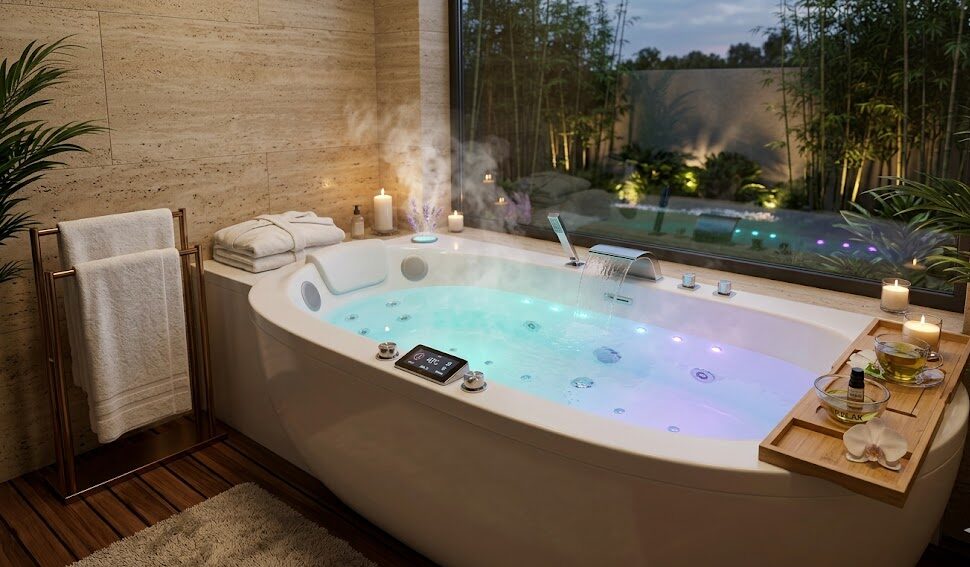
Bathtubs & Spa Upgrades: Built to Last
A bathtub should earn its footprint. In some bathrooms, a tub becomes the feature that makes the room feel restorative, luxurious, and complete. In others, it quietly takes up valuable space while the shower does all the daily work. That is why smart bathroom tub planning starts with a simple question: is the tub worth the space in your specific bathroom and your actual routine?
A great tub or spa-focused bathroom upgrade is never just about choosing a pretty soaking tub or adding a few luxury finishes. It is about layout, plumbing, maintenance, comfort, cleaning reality, how often the tub will truly be used, and whether the room still functions well as a whole once the tub is in place.
In this guide, you’ll learn:
- when a bathtub is worth including in a remodel and when it may not be,
- how to compare freestanding tubs, built-in tubs, and spa-style upgrades,
- what matters most in bathroom tub planning, from plumbing and floor space to cleaning and comfort,
- how to think about resale, daily use, and long-term satisfaction,
- and how to create bathtub remodel ideas that feel elevated without becoming impractical.
The Fortress Builders approaches bathroom remodeling through a design-build process built around one principle: strength through structure. That means tub and spa decisions are not treated as isolated wish-list items. They are planned alongside layout, waterproofing, ventilation, lighting, storage, and how the room is supposed to function for years to come.
Helpful Fortress Builders pages while you plan:
- Bathroom Remodeling in Utah: Built to Last
- Tub-to-Shower Conversion: Cost Drivers, Design Options, and Resale Value
- Spa Bathroom Upgrades That Feel Luxurious Without Going Overboard
- Curbless vs. Curb Shower: Which Walk-In Shower Is Right for You?
- Bathroom Waterproofing 101
- Bathroom Lighting Plan
- Water-Efficient Bathroom Fixtures
- Heated Bathroom Floors: Electric vs. Hydronic
- Request a Design Consult
Why tubs are a great choice in some bathrooms and the wrong choice in others
The idea of a spa-like tub is easy to love. The reality depends on the room and the household. Some homeowners use a soaking tub regularly and would miss it deeply if it were gone. Others like the idea of a freestanding tub more than they would ever use one. This is why good bathtub spa upgrades planning starts with honest use patterns, not inspiration photos alone.
When a tub usually makes strong sense
- The homeowners genuinely enjoy baths and use them regularly.
- The primary bathroom is large enough to support both a strong shower and a tub without compromise.
- The home would benefit from a more restorative, spa-like primary suite experience.
- The bathroom layout supports a tub as a feature rather than a space-eating obstacle.
- The household wants at least one bathing option in the home for children or personal preference.
When a tub may not be worth the space
- The tub is unlikely to be used more than a few times a year.
- The bathroom feels tight and a larger shower would improve daily life far more.
- The room needs better vanity space, storage, or circulation more than it needs a soaking feature.
- The current tub is mostly a visual placeholder rather than a functional part of the bathroom.
Homeowner takeaway: A tub is worth the space when it adds real value to how the room works and feels. If it forces too many compromises elsewhere, it can weaken the bathroom more than it elevates it.
Bathroom tub planning should start with the full room, not the tub itself
Homeowners often fall in love with a specific tub shape or spa feature and then try to make the room work around it. In most successful remodels, the better approach is the opposite: start with the room, then determine what kind of tub—if any—fits the bathroom without compromising the overall experience.
Think about balance between tub and shower
In many primary bathrooms, the shower is still the most-used bathing feature. That means the shower should not be weakened just to fit a tub. If the shower becomes cramped, awkward, or visually secondary in a way that hurts daily use, the layout may need to be reconsidered.
Think about circulation and visual calm
A tub can feel elegant when it has enough breathing room around it. When squeezed into the room too tightly, it can make the bathroom feel crowded and harder to clean. The best freestanding tub guide advice is often about restraint: the tub should feel placed, not forced.
Think about the entire bathroom routine
Do you need better vanity space? Better lighting? More storage? A stronger shower? A more comfortable entry sequence? A tub should support the room, not pull attention and budget away from the functions that matter most every day.
The 5-minute tub planning profile
- How often would you truly use a tub? Weekly, monthly, rarely, or almost never?
- What matters more daily? A stronger shower, more storage, better layout, or a soaking experience?
- Does the room have enough space for the tub to feel intentional?
- Would removing or downsizing the tub improve the bathroom more overall?
- Is this decision about your actual routine or the image of a dream bathroom?
Why this matters: These answers usually reveal whether the tub is a true priority or a nice-looking distraction from more important improvements.
Freestanding tubs vs. built-in tubs: which works better?
One of the biggest bathtub remodel ideas decisions is whether the room should use a freestanding tub or a more built-in tub configuration. Both can work beautifully. The strongest choice depends on cleaning reality, room size, visual goals, and the role the tub is expected to play in the bathroom.
Freestanding tubs
Freestanding tubs are often chosen because they make a strong visual statement. They can feel sculptural, calm, and spa-like. In the right room, they can become the centerpiece of the bathroom.
Why homeowners like them:
- They create a more elevated, boutique-hotel look.
- They feel lighter visually than many deck-mounted tubs.
- They work well when the bathroom has the space to let the tub breathe.
What to think about carefully:
- Cleaning around and behind the tub can be less convenient.
- Floor space around the tub matters more than homeowners expect.
- Filler location and plumbing coordination need to feel intentional.
- Some rooms simply do not have enough scale for a freestanding tub to look relaxed.
Built-in tubs
Built-in tubs can be easier to integrate into some layouts, sometimes provide more ledge space, and may feel more grounded in traditional or family-oriented bathrooms.
Why homeowners like them:
- They can feel practical and familiar.
- They sometimes work better where wall relationships or space limits are tighter.
- They may simplify cleaning around the exterior perimeter in certain designs.
What to think about carefully:
- Some built-in tub installations can feel bulkier if not proportioned well.
- The surround or deck can take visual space if the bathroom is already tight.
- The style direction needs to align with the rest of the room.
| Tub Type | Often Works Best When… |
|---|---|
| Freestanding tub | The room is large enough, the tub is meant to be a feature, and the homeowners value visual calm and a spa-like feel. |
| Built-in tub | The layout benefits from a more integrated solution, practical use matters most, or the room needs tighter perimeter planning. |
What makes a tub feel spa-like without making the room impractical
A spa bathroom does not come from a tub alone. The best spa bathroom upgrades are almost always a system of choices: light, quiet, warmth, proportion, visual calm, and comfort. A tub can anchor that experience, but it works best when the rest of the room supports the same feeling.
Lighting matters as much as the tub
Harsh lighting can undermine a beautiful soaking tub instantly. Layered lighting, softer evening lighting, and better vanity lighting all help the room feel more restorative. Related guide: Bathroom Lighting Plan.
Material calm matters
Many spa-like bathrooms rely on fewer, more coordinated materials rather than lots of competing feature moments. A strong tub often looks best when the rest of the palette supports it quietly.
Comfort underfoot matters too
Heated floors, or at least thoughtful floor material choices, can do more for a spa-like experience than homeowners expect. Related guide: Heated Bathroom Floors: Electric vs. Hydronic.
Simple rule: A spa-like bathroom usually feels luxurious because it is edited and comfortable, not because it contains every upgrade imaginable.
Plumbing and installation realities homeowners should not ignore
Bathtub spa upgrades are not just aesthetic decisions. Plumbing location, floor support, access, fixture placement, and how the tub is filled and drained all matter. These details may not drive the visual concept, but they strongly influence whether the final bathroom feels effortless or full of awkward compromises.
Filler and fixture placement matters
Freestanding tubs often require a faucet filler strategy that needs careful planning. It should feel convenient, proportionate, and visually aligned with the rest of the room rather than awkwardly added late.
Access and serviceability matter too
Even highly design-driven bathrooms should still consider how cleaning and future service will happen. A tub that looks dramatic but creates avoidable headaches is rarely the strongest long-term choice.
Requirements can vary
Plumbing rough-in locations, fixture needs, drainage details, and other technical considerations vary by project conditions and product selections. Final details should always be coordinated with qualified professionals and local authorities where applicable.
Important note: Plumbing, structural, drainage, electrical, and equipment requirements can vary by tub type, home conditions, and project scope. Final installation details should always be confirmed with qualified professionals and local authorities where applicable.
Cleaning reality: one of the least glamorous but most important decisions
A tub can photograph beautifully and still become a daily annoyance if it is difficult to clean around, behind, or underneath. This is especially true with freestanding tubs that are placed too tightly near walls or in corners without enough room for maintenance.
Freestanding tubs need breathing room
They look best when given enough surrounding space. That same breathing room also improves cleaning practicality. If a freestanding tub is pushed too close to surrounding walls to “make it fit,” the room often loses both elegance and convenience.
Built-in tubs can simplify some cleaning patterns
Depending on the layout, a built-in tub may reduce the awkward exterior cleaning zones that freestanding tubs can create. That does not make one universally better, but it is a real-world consideration worth acknowledging.
Material choices affect maintenance too
Tub finish, surrounding tile, ledge surfaces, and nearby fixture choices all influence how high-maintenance the tub zone feels over time.
Cleaning-reality checklist
- Can you easily access the area around the tub for cleaning?
- Does the tub placement create dead zones behind or beside it?
- Will the filler and surrounding fixtures collect water spots or dust in annoying ways?
- Does the surrounding tile or surface palette support easy upkeep?
- Will this still feel worth maintaining a year from now?
When a tub-to-shower conversion is the better long-term move
Sometimes the strongest bathtub remodel idea is actually to remove the tub. This is especially true in bathrooms where the tub is rarely used, the room feels crowded, or a larger walk-in shower would improve daily life significantly more.
Signs the tub may not be worth keeping
- The household does not use it.
- The bathroom feels cramped or hard to move through.
- The shower experience is weak and would benefit from more space.
- Storage, vanity, or circulation would improve without the tub footprint.
Signs the tub should probably stay
- The homeowners genuinely use baths.
- The home would benefit from at least one tub for household or resale reasons.
- The room is large enough to support both a good shower and a meaningful tub zone.
Related guide: Tub-to-Shower Conversion: Cost Drivers, Design Options, and Resale Value.
Comfort features that often feel worth it in a tub-focused bathroom
Some upgrades feel luxurious in theory but do not change the room much in practice. Others become daily favorites almost immediately. In tub-centered bathrooms, the most appreciated comfort upgrades are usually the ones that improve the whole environment, not just the bath itself.
Heated floors
Stepping onto a warm floor can elevate the room every day, especially in colder months. Related guide: Heated Bathroom Floors: Electric vs. Hydronic.
Better lighting scenes
A room that can shift from bright and practical to calm and lower-lit often feels more spa-like than a room with only one lighting mode. Related guide: Bathroom Lighting Plan.
Stronger shower alongside the tub
In many primary bathrooms, the shower still handles the bulk of daily bathing. That means spa upgrades should not come at the cost of a weaker shower experience. A truly successful bathroom supports both if both features are included.
Better fixture performance
Choosing fixtures that feel good to use matters. Related guide: Water-Efficient Bathroom Fixtures.
Practical truth: The best spa bathroom upgrades often improve the entire room’s comfort and mood rather than trying to make the tub carry all the luxury by itself.
How tubs affect resale, even when daily use is the bigger priority
Homeowners often ask whether including or removing a tub is the “right” move for resale. There is no universal answer. What matters is how the choice fits the home, the room, and the likely buyer expectations for that property type and price range.
In many cases, the strongest answer is not “always keep a tub” or “always remove it.” It is “make sure the bathroom feels balanced, useful, and intentional.” A home with one well-placed tub elsewhere may not need another in a tight primary bath. A family-focused home may benefit from preserving at least one practical tub in the overall house plan.
| If your bathroom priorities are… | You may want to focus on… |
|---|---|
| Daily relaxation and soaking | A meaningful tub zone with enough space, good lighting, and calm materials |
| Maximum everyday function | A stronger shower, better layout, and keeping only the features you truly use |
| Spa-like atmosphere | Layered lighting, comfort upgrades, materials restraint, and a balanced bathroom plan |
| Better resale balance | A decision based on the full home, room size, and likely buyer expectations rather than one fixed rule |
Common bathtub and spa upgrade mistakes homeowners regret
Mistake 1: Choosing the idea of a tub over the reality of use
A beautiful tub that never gets used may not be the best investment if it weakens the room elsewhere.
Mistake 2: Forcing a freestanding tub into a room that is too tight
This often hurts both the visual calm and the cleaning practicality that made the tub appealing in the first place.
Mistake 3: Spending on the tub while neglecting the room around it
A spa-like bath experience depends on the full environment: lighting, flooring, shower quality, and how the bathroom feels as a whole.
Mistake 4: Ignoring plumbing and rough-in implications
Tub choices affect more than appearance. Installation logistics should never be treated as an afterthought.
Mistake 5: Prioritizing “luxury” over balance
The strongest bathrooms are not the ones with the most upgrades. They are the ones where every upgrade belongs and supports the room.
How tub planning connects to the rest of the bathroom remodel
A tub should not be planned as a separate luxury object dropped into the room. It should relate to the vanity, shower, flooring, ventilation, lighting, and the overall sequence of how the bathroom is used.
- Lighting: A spa-like tub zone needs lighting that supports both practicality and relaxation.
- Flooring: Material and comfort underfoot matter more in a bath-focused bathroom than many homeowners expect.
- Shower: The shower still needs to function well daily if the bathroom includes both.
- Storage: The room should not lose too much practical storage just to gain a tub silhouette.
- Ventilation: Moisture control still matters across the whole room, not only the shower area.
Related pages: Bathroom Remodeling in Utah: Built to Last, Curbless vs. Curb Shower, Spa Bathroom Upgrades, and Bathroom Lighting Plan.
FAQ: Bathtubs and spa upgrades
Is a freestanding tub always the best spa-bathroom choice?
No. Freestanding tubs can look beautiful, but they are not automatically the best answer for every room. The stronger choice depends on space, cleaning practicality, layout, and how the tub will actually be used.
Are spa upgrades worth it in a bathroom remodel?
Often, yes, if the upgrades meaningfully improve daily comfort and the room still functions well overall. The most worthwhile spa upgrades usually support the whole bathroom, not just one feature moment.
How do I know if a tub is worth the space?
Ask how often it will truly be used, what it displaces in the room, and whether the bathroom becomes better overall with it included. If the tub hurts shower quality, storage, or circulation too much, it may not be worth it.
Should I keep a tub for resale?
Sometimes yes, sometimes no. The better question is whether the home has an appropriate tub elsewhere and whether the room functions better with or without one. Resale depends on the full home context, not a single universal rule.
What makes a bathroom feel spa-like without overspending?
Usually a combination of better lighting, a calm material palette, stronger shower and tub planning, comfort underfoot, and more thoughtful layout. Many of the most successful spa-feeling bathrooms are actually quite restrained.
Conclusion: the right tub upgrade is the one that strengthens the whole room
Bathtub spa upgrades can absolutely elevate a bathroom. But the best results come when the tub is chosen as part of a whole-room strategy, not as a stand-alone symbol of luxury. A tub is worth the space when it improves the way the bathroom feels, functions, and supports real routines over time.
That may mean a freestanding tub in a calm primary bath. It may mean a more practical built-in tub in a family bathroom. And in some cases, it may mean removing the tub entirely in favor of a better shower and a stronger layout. The point is not to chase one idealized image. It is to build a bathroom that feels right for your home and your life.
Thinking about a tub or spa upgrade in your bathroom remodel?
If you’re planning bathroom upgrades in Davis or Weber County, Fortress Builders can help you think through layout tradeoffs, freestanding tub choices, spa bathroom upgrades, plumbing realities, and whether a tub is truly the right move for your space.
Request a Design Consult Explore Bathroom Remodeling Read the Spa Upgrades Guide
Bring your inspiration images, your current bathroom frustrations, and your wish list. Fortress Builders can help you turn them into a bathroom plan that is balanced, comfortable, and built to last.