

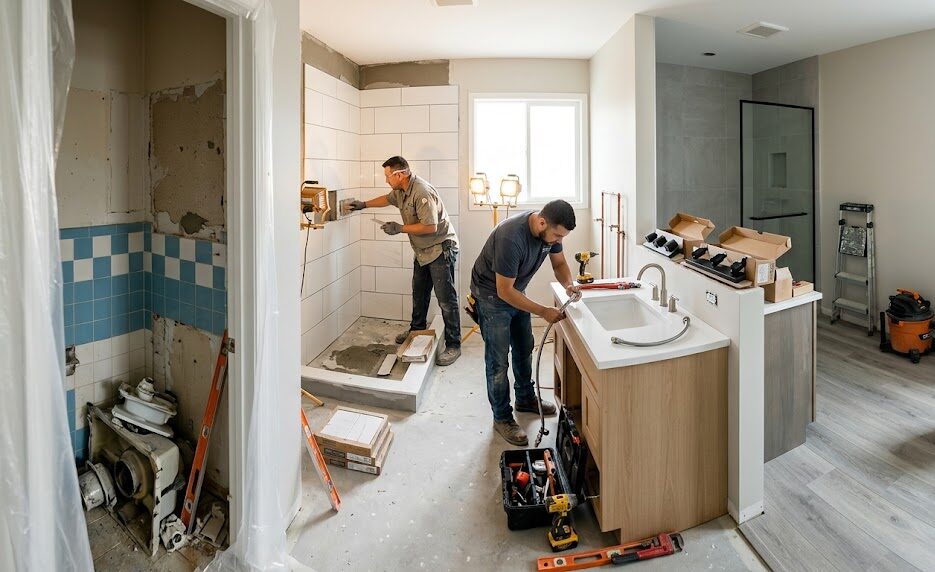
Bathroom Remodeling in Utah: Built to Last
A bathroom remodel should do more than look fresh for reveal day. It should work better every morning, feel more comfortable every night, and hold up to steam, water, cleaning, and daily routines for years to come.
That is why smart bathroom remodeling in Utah starts with more than tile colors and fixture finishes. A well-planned bathroom remodel considers layout, waterproofing, ventilation, lighting, storage, comfort, and how the room will actually be used by the people living in the home. When those decisions happen early, the finished bathroom feels calmer, performs better, and avoids the kind of hidden problems that lead to frustration later.
In this guide, you’ll learn:
- how to approach bathroom renovation planning with clarity,
- what to think through before choosing showers, tubs, vanities, tile, and fixtures,
- why ventilation, waterproofing, and lighting matter just as much as appearance,
- how to prioritize comfort-focused upgrades without losing function,
- and how a design-build process helps create a bathroom that is both beautiful and durable.
The Fortress Builders approaches bathroom remodeling through a design-build process rooted in one principle: strength through structure. That means each project starts with a thoughtful plan that aligns layout, budget, materials, and build sequence before construction begins. The result is a bathroom that is not only attractive, but intentionally designed to last.
Helpful Fortress Builders pages while you plan:
- Bathroom Remodeling in Utah: Built to Last
- Curbless vs. Curb Shower: Which Walk-In Shower Is Right for You?
- Shower Niches, Benches, and Shelves
- Bathroom Waterproofing 101
- Choosing Bathroom Tile: Slip Resistance, Grout Lines, and Maintenance
- Bathroom Vent Fan Sizing
- Humidity-Sensing Bathroom Fans
- Mold Prevention in a Bathroom Remodel
- Heated Bathroom Floors: Electric vs. Hydronic
- Small Bathroom Vanity Guide
- Bathroom Lighting Plan
- Water-Efficient Bathroom Fixtures
- Tub-to-Shower Conversion
- Spa Bathroom Upgrades
- Request a Design Consult
Why bathroom remodeling needs more planning than most homeowners expect
Bathrooms are compact rooms, but they are technically demanding. Water, humidity, drainage, ventilation, electrical, waterproofing, lighting, storage, and comfort all meet in one place. That is why bathroom renovation planning should never be reduced to simply choosing tile and a vanity.
A successful bathroom remodel usually balances five things:
- Layout: how the room flows and how each zone is used,
- Durability: how well the assembly holds up to water, steam, and cleaning,
- Comfort: how the room feels to use daily,
- Maintenance: how easy it is to keep clean over time,
- Style: how the bathroom looks and how well it fits the rest of the home.
Homeowner takeaway: A bathroom can look expensive and still underperform. The goal is not just a nicer-looking room. The goal is a bathroom design build approach that improves how the space works every single day.
Start with how the bathroom is actually used
Before choosing a shower style or tile pattern, step back and ask what the bathroom needs to do. A primary bath, guest bath, kids’ bath, and powder bath all have different priorities.
Primary bathrooms
These usually need a stronger balance of comfort, storage, lighting, shower performance, and daily routine support. The bathroom may need to handle two users at once, better vanity organization, upgraded shower features, and a calmer overall experience.
Guest bathrooms
These often benefit from durability, straightforward maintenance, and smart layout efficiency. The room may be small, but it still needs to feel welcoming and functional.
Kids’ or family bathrooms
These often need tougher surfaces, practical storage, easier cleaning, and good lighting. Slip resistance and cleaning reality usually matter more here than delicate finishes.
The 5-minute bathroom planning profile
- Who uses the room? One person, a couple, guests, or kids?
- What causes the biggest frustration now? Storage, shower size, poor lighting, maintenance, or layout?
- What matters most? Comfort, easy cleaning, resale balance, or a spa-like experience?
- How much moisture does the room handle? Frequent showers, kids, poor ventilation history?
- Which upgrades will you appreciate daily? Better lighting, bigger shower, heated floors, more usable vanity storage?
Why this matters: These answers usually reveal where your budget and design attention should go first.
Layout planning: the foundation of a bathroom that works
Bathroom layout affects everything that follows. It shapes how the room feels, how easy it is to clean, where storage can go, whether the shower feels cramped, and whether the room supports real routines or fights them.
Think about movement and clearance
A bathroom should feel easy to enter, easy to navigate, and easy to use without awkward door swings or tight pinch points. Even small improvements in layout can make the room feel much better without changing the footprint dramatically.
Think about zone relationships
Bathrooms usually include a vanity zone, toilet zone, bathing zone, and storage zone. The strongest layouts make those zones feel organized rather than crowded.
Think about what not to force
Trying to squeeze in every desired feature can weaken the whole room. Sometimes a simpler, better-proportioned shower or vanity creates a stronger result than overloading the space.
Best practice: A bathroom should feel intentional first. The right materials cannot fully fix a layout that feels awkward every day.
Showers: where comfort, waterproofing, and maintenance all meet
Showers are often the centerpiece of a bathroom remodel, especially in primary bathrooms. But great shower design is not just about size or tile style. It is about waterproofing, storage, cleaning reality, comfort, and how the shower fits the room.
Curbless vs. curb showers
Curbless showers can feel open, modern, and easier to access. Curbed showers can still be beautiful and may be simpler for some layouts. The right choice depends on the room, the design goals, and how the bathroom will be used. For a fuller comparison, see Curbless vs. Curb Shower.
Shower storage matters more than it looks
Niches, shelves, and benches should be planned early so they feel integrated rather than improvised. They also need to be waterproofed correctly. Related guide: Shower Niches, Benches, and Shelves.
Waterproofing is the real system behind the finish
Tile is what you see. Waterproofing is what protects the shower behind it. This is one of the most important durability topics in any bathroom remodel. Related guide: Bathroom Waterproofing 101.
Tubs, tub-to-shower conversions, and deciding what belongs in the room
Some bathrooms benefit from keeping a tub. Others function much better after converting unused tub space into a stronger shower layout. This decision should be driven by household needs, room size, and resale balance—not just trends.
When a tub still makes sense
- The household uses soaking tubs regularly.
- The room is a primary bath where a tub is part of the experience the owners truly want.
- The bathroom serves children and a tub is practical for that stage of life.
When a tub-to-shower conversion may be smarter
- The tub is rarely used.
- The bathroom feels cramped or hard to use.
- A larger, more functional shower would add more daily value.
Related reading: Tub-to-Shower Conversion: Cost Drivers, Design Options, and Resale Value and Spa Bathroom Upgrades.
Practical truth: The best bathroom is not the one with the longest feature list. It is the one with the right features for the people actually using it.
Tile and surface choices: durability, slip resistance, and cleaning reality
Bathroom tile and surfaces have to perform in wet conditions, stand up to cleaning, and still look good over time. That is why material choice should always be evaluated through the lens of maintenance and safety, not just appearance.
Floor tile should feel safe underfoot
Slip resistance matters, especially in bathrooms that see wet feet, kids, or older adults. Surface texture, tile size, and grout joint strategy all influence how the floor feels and performs. Related guide: Choosing Bathroom Tile: Slip Resistance, Grout Lines, and Maintenance.
Shower tile needs to support the waterproofing plan
Some tile decisions are purely visual. Others affect cleaning and how well the shower works long term. The right selection balances aesthetics with maintenance expectations.
Grout matters too
Many homeowners focus on the tile and barely think about the grout. But grout color, maintenance expectations, and joint pattern often influence long-term bathroom satisfaction. Related guide: Low-Maintenance Grout Choices.
| Bathroom Surface Area | What Matters Most |
|---|---|
| Bathroom floor | Slip resistance, easy cleaning, comfort, and visual fit with the room |
| Shower floor | Grip, drainage support, waterproofing compatibility, cleaning reality |
| Shower walls | Water durability, maintenance, visual calm or statement value |
| Vanity top | Daily durability, cleaning ease, stain resistance, and style coordination |
Vanities, storage, and why daily convenience matters
Vanities do more than hold sinks. They shape counter space, morning routines, storage convenience, and how clean or cluttered the room feels. Even a beautiful vanity can disappoint if it does not support the household’s real habits.
Think about storage type, not just storage volume
Drawers often function differently than cabinet doors. Open storage looks different than closed storage. Shared primary bathrooms may need more thoughtful compartmentalization than a smaller guest bath.
Counter space still matters
Even small bathrooms benefit from usable surface space. The balance between sink size, faucet location, and countertop area should support real routines.
Smaller bathrooms benefit from smarter vanity planning
Compact bathrooms often need more deliberate choices to feel bigger and function better. Related guide: Small Bathroom Vanity Guide.
Vanity planning questions
- Do you need one sink or two?
- Is storage better handled in drawers, towers, or nearby linen space?
- How much counter space do you actually use daily?
- Will the vanity feel crowded once faucets, mirrors, and lighting are in place?
- Does the vanity improve organization or just look better than the current one?
Ventilation: one of the most important and most overlooked bathroom decisions
Bathrooms produce humidity constantly. Showers, baths, and routine use can leave moisture lingering in the room and inside assemblies if ventilation is weak. That is why ventilation is not just a comfort issue. It is a durability issue too.
Why ventilation matters
- It helps reduce lingering humidity.
- It supports the life of finishes and paint.
- It reduces the conditions that can lead to mold and mildew issues.
- It improves overall comfort after showers.
Fan sizing and controls matter
A louder fan is not always a better fan. Placement, ducting, sizing, and controls all affect real performance. For a deeper look, see Bathroom Vent Fan Sizing and Humidity-Sensing Bathroom Fans.
Mold prevention starts in design
Bathrooms that stay healthy over time are not relying on luck. They are designed with waterproofing, ventilation, and material choices that support each other. Related guide: Mold Prevention in a Bathroom Remodel.
Important note: Ventilation design, fan sizing, duct routing, and related requirements can vary by room conditions, equipment, and local rules. Final details should be confirmed with qualified professionals and local authorities where applicable.
Lighting: the difference between a usable bathroom and a flattering one
Bathroom lighting has to do more than brighten the room. It needs to support grooming, nighttime use, cleaning, and a comfortable overall atmosphere.
Vanity lighting should reduce shadows
One of the most common bathroom frustrations is lighting that creates harsh or unflattering shadows at the mirror. Layered planning usually works better than relying on a single overhead light.
Ambient and task lighting both matter
The bathroom needs general light for movement and task light for real use. In larger bathrooms, shower lighting and accent lighting may also matter more than homeowners expect.
Nighttime comfort counts too
A bright morning bathroom and a softer nighttime bathroom do not need to be mutually exclusive. This is where thoughtful controls and layered lighting become valuable. Related guide: Bathroom Lighting Plan.
Bathroom lighting checklist
- Is the vanity light supportive for real grooming tasks?
- Does the room feel evenly lit without being harsh?
- Will the shower or tub zone feel safe and usable?
- Is there a softer lighting option for nighttime use?
- Do mirrors, finishes, and fixture choices all work together visually?
Comfort-focused upgrades that often feel worth it
Some bathroom upgrades look nice in a product catalog but do not change daily life much. Others may seem subtle but become daily favorites. Comfort upgrades often fall into the second category when they fit the household and the room.
Heated floors
Radiant floor heat can be one of the most appreciated bathroom upgrades in colder months. Related guide: Heated Bathroom Floors: Electric vs. Hydronic.
Better shower storage and function
Well-placed niches, benches, shelves, and better shower layout often improve comfort more than purely decorative upgrades.
Water-efficient fixtures that still feel good to use
Fixture selection is not just about appearance. Performance matters too. Related guide: Water-Efficient Bathroom Fixtures.
Spa-style upgrades
Not every luxury upgrade needs to be extravagant. Sometimes the right combination of lighting, tile restraint, comfort underfoot, and better shower function delivers the spa feeling more effectively than adding features for their own sake. Related guide: Spa Bathroom Upgrades That Feel Luxurious Without Going Overboard.
Simple rule: The best comfort upgrades are the ones you notice repeatedly, not just the ones that sound impressive during selection meetings.
Common bathroom remodeling mistakes homeowners regret later
Mistake 1: Prioritizing style over waterproofing and ventilation
Beautiful finishes do not make up for poor moisture management. A bathroom built to last has to perform behind the walls as well as in front of them.
Mistake 2: Trying to fit too much into the room
Overloading a bathroom with features can make it feel tighter, harder to clean, and less elegant. A more edited plan often feels more premium.
Mistake 3: Choosing maintenance-heavy finishes without acknowledging the upkeep
Some material choices are absolutely worth it. But they should be selected with honest expectations about cleaning and long-term care.
Mistake 4: Underestimating storage
Bathrooms quickly feel cluttered when storage planning is weak, even if the finishes are beautiful.
Mistake 5: Making too many decisions too late
Bathroom design build projects work best when the key layout, material, and system decisions are made before rough-in and finish work start. Late changes usually cost more and create more stress.
How a design-build process helps bathrooms come together more cleanly
Bathrooms involve a lot of coordination in a small footprint. Plumbing, waterproofing, ventilation, tile layout, vanity sizing, lighting, and storage all have to work together. That is one reason a design-build approach can be so valuable.
Instead of treating each decision as a separate shopping exercise, the room can be planned as one system. That helps homeowners make better tradeoffs, avoid conflicting choices, and reduce mid-project surprises.
The Fortress Builders uses that process to help homeowners think through:
- how the room should function first,
- which upgrades are worth prioritizing,
- how materials should work together visually and practically,
- and how the finished bathroom should support the way the household actually lives.
Bathroom remodeling in Utah: making choices that fit your home and climate
Bathroom remodeling Utah homeowners choose should reflect not only style and personal taste, but also the realities of local living. Seasonal comfort, moisture management, and long-term durability all matter. That does not mean every bathroom needs every upgrade. It means the room should be planned thoughtfully for the home it belongs to and the people using it every day.
| If your bathroom priorities are… | You may want to focus on… |
|---|---|
| Daily comfort and routine support | Layout, vanity function, better lighting, and shower usability |
| Long-term durability | Waterproofing, tile strategy, ventilation, and low-maintenance surfaces |
| Smaller-space efficiency | Storage planning, vanity sizing, edited fixture choices, and shower layout |
| Spa-like primary bath feel | Lighting layers, comfort upgrades, better shower experience, and visual calm |
| Guest-bath practicality | Simple durable materials, clear layout, easy cleaning, and balanced style |
FAQ: Bathroom remodeling in Utah
What is the most important part of a bathroom remodel?
There is no single answer for every home, but layout, waterproofing, ventilation, and daily functionality usually matter most. Beautiful finishes are important, but the room has to perform well first.
Should I keep a tub or convert it to a shower?
That depends on how the bathroom is used, whether there are other tubs in the home, and whether a larger shower would improve daily life more. The right answer varies by household and room type.
What makes a bathroom remodel “built to last”?
A durable bathroom usually combines good layout decisions, strong waterproofing, ventilation that manages humidity well, finish materials suited to the room, and a construction process that coordinates those systems carefully.
Are heated floors worth it?
For many homeowners, especially in colder seasons, heated bathroom floors are one of the most appreciated comfort upgrades. Whether they are worth it depends on the room, budget, and how much you value that type of daily comfort.
When should I make material and layout decisions during a bathroom remodel?
As early in the planning process as possible. The earlier the layout, waterproofing, fixture, and finish decisions are coordinated, the easier it is to avoid expensive changes and design compromises later.
Conclusion: build a bathroom that feels better and performs better
A successful bathroom remodel is not just about upgrading what you see. It is about improving how the room works, how it feels, and how well it holds up to real life. Layout, waterproofing, ventilation, lighting, tile, fixtures, and comfort all matter. When those pieces are coordinated thoughtfully, the finished bathroom feels easier to use and stronger over time.
That is what built to last really means. Not just a nice-looking room, but a bathroom designed with structure, clarity, and daily life in mind.
Want help planning a bathroom remodel that is both beautiful and built to last?
If you’re considering bathroom remodeling in Utah, Fortress Builders can help you think through layout, showers, tubs, tile, ventilation, lighting, storage, and comfort upgrades before construction begins.
Request a Design Consult Explore Bathroom Remodeling Read the Waterproofing Guide
Bring your inspiration images, wish list, and the biggest frustrations with your current bathroom. Fortress Builders can help you turn them into a plan that feels clear, durable, and right for your home.