

Basement In-Law Suite Planning: Privacy Zones, Storage, and Comfort
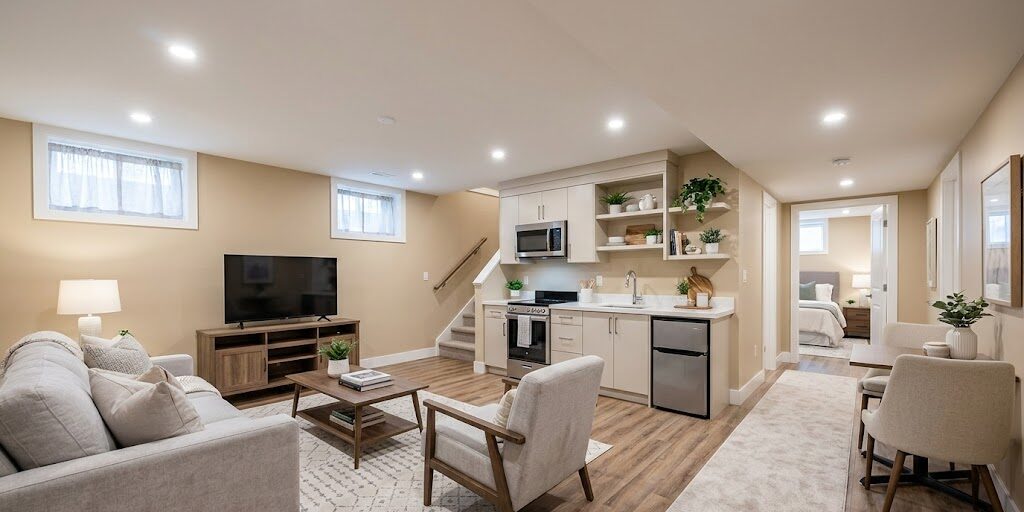
Basement In-Law Suite Planning: Privacy Zones, Storage, and Comfort
A great in-law suite feels like a small home—private, comfortable, and easy to live in day after day. A “finished basement” can look beautiful and still feel awkward if the suite layout ignores privacy, noise, lighting, or storage.
This planning guide focuses on basement in law suite planning that supports real long-term living: basement apartment privacy zones, practical basement suite storage ideas, and the behind-the-walls choices that improve sound control in law suite and basement suite comfort planning.
In this guide, you’ll learn:
- how to design an entry and “buffer” zone so the suite feels independent,
- how to separate sleeping and living areas for privacy and daily rhythm,
- storage + laundry strategies that make the space livable (not cluttered),
- sound, lighting, and HVAC choices that reduce “basement feel,”
- durable finishes that hold up to real use,
- and safety/code-aware planning (with reminders to verify locally).
The Fortress Builders is a Utah design–build company built on “strength through structure.” Every project starts with a clear design blueprint that aligns vision, budget, and timeline—then coordinates permitting, project management, and craftsmanship so the finished suite is as functional as it is beautiful.
Helpful pages while you plan:
- Basement Finishing in Utah: Space, Comfort & Value
- Basement In-Law Suites & Apartments Designed for Comfort
- Space Planning for Basement Finishing
- Basement Layout Planning: Zones That Make the Space Feel Bigger
- Basement Soundproofing Strategies: What Works (and What Doesn’t)
- Basement Lighting for Low Ceilings
- Request a Design Consult
A good suite feels like a home—not a basement
Most in-law suites are created for a real-life reason: a parent needs to live close by, an adult child returns home, you want a guest suite that works for longer stays, or you’re planning flexible space for the future. That means the suite needs more than “nice finishes.” It needs a layout that supports daily routines and dignity—sleeping, relaxing, cooking, storing essentials, and maintaining privacy.
The most successful suites follow the same planning sequence every time:
- Define the living pattern (full-time, part-time, guest-only, future rental),
- Design privacy zones (entry buffer, living zone, sleep zone),
- Plan storage + laundry (so the suite stays calm),
- Coordinate comfort systems (sound, lighting, HVAC, moisture),
- Confirm code and safety constraints before framing and rough-ins.
Core principle: A suite becomes “livable” when it has privacy, predictable storage, and comfort systems—designed into the plan early.
Step 1: Define the suite’s purpose (so you don’t overbuild or underbuild)
Start by clarifying what the suite needs to do most of the time. That single answer helps you prioritize space and budget.
Common in-law suite use cases
- Full-time living: needs real kitchen capability (or kitchenette + clear routine support), real storage, laundry access, and stronger sound/privacy planning.
- Extended guest stays: often succeeds with a kitchenette, comfortable living zone, and a bedroom + bath with hotel-level storage.
- Future flexibility: a layout that can shift (office → bedroom, lounge → caregiver area) without major reconstruction.
- Income suite (where applicable): can trigger additional safety and permitting requirements; plan early and confirm locally.
Decision prompt: What is the one thing that would make this suite feel “easy” for the person living there?
- Privacy (separate entry, sound control)
- Comfort (warmth, daylight feel, lighting)
- Independence (kitchenette, laundry, storage)
- Accessibility (safe steps, simple circulation)
Step 2: Entry and privacy buffer (the #1 “feels like a home” feature)
In basement apartment privacy zones, the most important zone is the transition from “shared house” to “private suite.” Without that buffer, even a beautiful suite can feel exposed.
What a good privacy buffer can look like
- Dedicated entry (ideal where feasible): even a simple exterior stair entry can make the suite feel independent.
- Interior entry vestibule: a short hall, small landing, or door-separated transition.
- Visual buffer: avoid opening the suite directly into the bedroom or bathroom door.
- Sound buffer: closets, storage rooms, or a laundry/mechanical corridor can separate the suite from upstairs noise.
How you can create this buffer depends on your existing basement constraints (stairs, utilities, window locations). This is where a layout-first approach matters: see Space Planning for Basement Finishing and Basement Layout Planning.
Step 3: Sleeping vs. living zones (privacy, rhythm, and real comfort)
A basement suite feels more “home-like” when the bedroom isn’t part of the living room. Even in compact suites, separating these zones improves daily life—especially for long-term stays.
Planning the living zone
The living zone is where the suite “breathes.” It should be the easiest place to enter, relax, and host a visitor without feeling like you’re in someone’s bedroom.
- Keep the living zone near the entry buffer so guests don’t pass through private spaces.
- Protect sightlines so seating faces a calm wall (not a hallway of doors).
- Plan lighting zones so the suite can feel bright in the day and soft at night.
Planning the sleeping zone
The sleeping zone needs quiet, stable temperature, and privacy. If the suite is for a parent, comfort often matters more than maximum square footage.
- Place the bedroom away from noisy zones (stairs, theater, bar, mechanical room).
- Prioritize closet storage so the room stays uncluttered.
- Consider sound control assemblies if upstairs living areas are loud.
If the plan includes a bedroom, egress and safety considerations can shape layout. See Basement Egress Basics and confirm requirements with your local building department and qualified professionals.
Layout win: A short hallway (even a few feet) between living and sleeping zones can dramatically improve privacy and comfort.
Step 4: Kitchenette or kitchen planning (independence without surprises)
Food prep is one of the biggest “independence” drivers in a suite. But kitchen decisions quickly affect plumbing, electrical, ventilation, and permitting. Choose the level that matches real use.
Three practical options
- Beverage + snack zone: undercounter fridge, microwave, storage, optional bar sink.
- True kitchenette: sink, fridge, better prep space, more outlets, more storage.
- Apartment-ready kitchen: cooking appliance, stronger ventilation planning, more code-sensitive details.
For a detailed planning path, use Basement Kitchenette Planning: Power, Plumbing, and Layout Tips.
Ventilation and “legal suite” considerations
If you plan to include cooking appliances, ventilation and electrical requirements may change. Requirements vary by jurisdiction and project scope, so confirm with qualified professionals and local authorities before finalizing the plan.
Step 5: Bathroom placement (and why rough-ins matter)
Bathrooms are shaped by plumbing reality. If your basement already has rough-ins, great—verify their locations support a comfortable layout. If not, planning drainage and vent routes early avoids expensive rework later.
Start with Basement Bathroom Rough-In Guide: Plumbing, Venting, and Smart Placement, then reference bathroom durability and moisture resources:
- Bathroom Waterproofing 101: What’s Behind Great Tile Work
- Bathroom Vent Fan Sizing: How to Control Humidity and Odors
- Tile & Waterproofing Systems Built for Longevity
- Curbless vs. Curb Shower
Step 6: Storage and laundry (the difference between “pretty” and “livable”)
Storage is where many suites fall apart. The space looks great on day one, then everyday items have nowhere to go. Strong basement suite storage ideas are simple: put storage where daily routines create clutter.
Storage zones that make suites easier
- Entry drop zone: hooks, a bench, and a small cabinet prevent shoes/coats from spreading.
- Kitchenette pantry zone: tall cabinet or drawer pantry so counters stay clear.
- Linen zone: towels, bedding, toilet paper—planned near bath or laundry.
- Bedroom closet: real hanging + shelves; avoid “one rod and a dream.”
- Owner storage: if the suite is sometimes a guest suite, plan a locked owner closet.
Laundry: in-suite, shared, or nearby
Laundry access changes long-term livability. In-suite laundry can be ideal, but it requires plumbing, venting (if applicable), power, and space. A shared laundry zone can work well if it’s planned for privacy and convenience.
If you plan laundry or additional plumbing, confirm requirements with qualified professionals and local authorities.
Simple rule: If a person will live here full-time, plan storage like a small apartment—not like a guest room.
Step 7: Sound control in law suite planning (what actually works)
If the suite is under a busy main floor, sound control in law suite planning becomes essential—especially for sleep. The goal is realistic: reduce voices and footsteps enough that the suite feels calm.
Start with the right target: ceilings, doors, and gaps
- Ceiling assemblies help reduce noise between floors.
- Door quality and sealing can make or break bedroom privacy.
- Air leaks (around penetrations, ducts, can lights) can carry sound.
Use this as your foundation resource: Basement Soundproofing Strategies: What Works (and What Doesn’t).
Set a sound goal early:
- “Take the edge off” (improve comfort)
- “Quiet enough for sleep” (stronger ceiling + door strategy)
- “Theater-level isolation” (full-system approach)
Step 8: Lighting that removes the “basement feel”
Lighting is one of the fastest ways to make a suite feel like a main-floor space—especially if ceilings are low or windows are limited.
Layered lighting wins in suites
- Ambient: even base light so the space never feels dim.
- Task: reading lights, vanity lighting, under-cabinet lighting in kitchenette zones.
- Accent: wall lighting, shelf lighting, or soffit lighting to add depth.
For low-ceiling specific tips, use Basement Lighting for Low Ceilings and the service guide Basement Lighting & Electrical That Brightens Every Space.
Step 9: Basement suite comfort planning (temperature, air, and moisture)
Basement suite comfort planning is where design-build coordination really matters. Basements can run cooler, feel more humid, and experience bigger temperature swings. Comfort is created through insulation strategy, balanced airflow, and moisture management.
Comfort basics to plan early
- Consistent temperatures: ensure supply/return airflow supports the suite zones.
- Humidity control: moisture strategy before finishes go in.
- Quiet comfort: avoid loud grilles or mechanical noise near bedrooms.
Use these related internal resources:
- Basement Insulation Basics for Comfort and Sound Control
- Basement Moisture Management & Protection Systems
- Basement Moisture Checklist
- Radon and Basement Finishing: When to Test and How to Plan Mitigation
- Basement HVAC & Ventilation Planning
Step 10: Durable finishes (built for real living)
A suite isn’t a display room. It’s a daily-use space. That means durability matters in floors, trim, cabinetry, and wet zones.
Practical durability priorities
- Flooring: choose a surface that tolerates basement conditions and everyday traffic.
- Bath finishes: prioritize waterproofing systems behind tile and good ventilation.
- Kitchenette surfaces: choose countertops and cabinets that handle spills and cleaning.
- Storage built-ins: durable doors, hinges, and pull-outs that won’t feel flimsy over time.
If your suite includes meaningful kitchen work, these kitchen planning resources can support smarter selections:
- Kitchen Remodel Planning Checklist
- Quartz vs. Granite vs. Porcelain Countertops
- Semi-Custom vs. Custom Cabinets
- Under-Cabinet Lighting Done Right
Safety and code-aware planning (confirm locally)
In-law suite requirements can vary depending on whether the space is purely for family use, a guest suite, or something that may be considered a separate dwelling unit in your jurisdiction. The details below are widely discussed planning considerations, but you should confirm requirements with qualified professionals and your local building department.
Common safety topics to review early
- Egress: bedroom egress requirements can affect window size, placement, and cost. Start with Basement Egress Basics.
- Permits and inspections: many basement finish projects require permits depending on scope. See Permits and Inspections for Basement Finishing.
- Ventilation and moisture control: bathrooms and kitchenettes need proper ventilation strategies.
- Electrical: outlets, circuits, and smoke/CO devices (as applicable) should be planned and inspected per local requirements.
Planning win: Confirm feasibility (egress + plumbing + electrical + HVAC routes) before framing. It protects your budget and prevents layout compromises later.
Suite plan review checklist (use this before you approve framing and rough-ins)
Bring this checklist to your design review:
- Purpose defined: full-time living, extended guest, future flexibility, or income suite (where applicable).
- Privacy buffer designed: entry vestibule/hall/buffer so the suite doesn’t open into private rooms.
- Zones separated: living zone and sleeping zone aren’t the same space.
- Kitchenette level chosen: snack zone vs. true kitchenette vs. apartment-ready kitchen.
- Bathroom feasibility confirmed: drain/vent routes and rough-in locations reviewed.
- Storage planned: drop zone, pantry, linen, closet, owner storage (if needed).
- Laundry decision made: in-suite, shared, or adjacent access—utilities confirmed.
- Sound goal chosen: take the edge off vs. quiet-for-sleep vs. high-performance.
- Lighting plan layered: ambient + task + accent with zone controls.
- Comfort systems planned: moisture management + balanced HVAC + quiet grilles where needed.
- Safety topics reviewed: egress, permits/inspections, and any jurisdiction-specific requirements.
Conclusion: review the plan before you build—so the suite doesn’t feel awkward later
The best in-law suites succeed because they’re planned like small homes: privacy buffers, separate living and sleeping zones, real storage, and comfort systems designed into the structure. When you coordinate sound control, lighting, moisture management, and layout early, the basement stops feeling like “downstairs” and starts feeling like a real place to live.
If you’re considering an in-law suite, the smartest next step is a layout-first review before rough-ins and framing lock in decisions.
Planning a basement in-law suite in Davis or Weber County?
The Fortress Builders can help you design a suite that feels independent, comfortable, and built to last—coordinating layout, plumbing feasibility, sound control, lighting, and moisture management into one clear plan.
Request a Design Consult Explore Basement Finishing In-Law Suites & Apartments
Bring your basement dimensions and your “must-have” list (privacy, kitchenette, laundry, storage). We’ll help you build a plan that feels right before walls go up.