

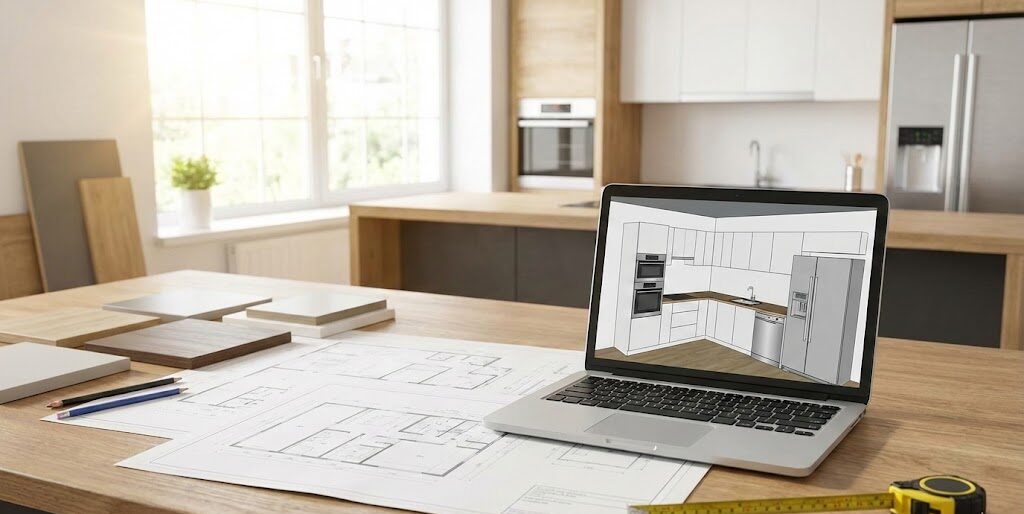
Built-In Appliances: Layout Tips for Fridges, Wall Ovens, and Microwaves
Built-in and “built-to-look-built-in” appliances are where kitchen design meets real-life function. When they’re planned well, your kitchen feels seamless, intentional, and easy to use. When they’re planned late, you can end up with expensive cabinet changes, awkward door swings, poor ventilation, or outlets and plumbing in the wrong places.
This planning guide walks you through the decisions that prevent the most common appliance layout problems—especially for refrigerators, wall ovens, and microwave options. The goal is simple: help you choose a layout that fits your space and the specific appliance models you plan to install.
If you’re mapping a full kitchen remodel, start with the bigger picture: Kitchen Remodel Planning Checklist for Utah Homeowners. And if you want a pro to review your kitchen plan before cabinets are ordered, you can always request a design consult.
The #1 Rule: Design From the Appliances Out (Not the Other Way Around)
Appliances are not “plug-and-play” once cabinets are installed. They come with:
- Exact cutout requirements (width, height, depth) that vary by model.
- Clearance rules for doors, drawers, and adjacent walls.
- Ventilation and electrical needs that affect cabinetry, ducting, and circuits.
- Panel-ready details (thicker doors, hinge requirements, ventilation gaps) that change how everything fits.
That’s why the best time to “lock in” appliances is earlier than most people expect—often before final cabinet drawings and long before cabinets are ordered.
What “Built-In” Actually Means (And Why It Changes Planning)
Homeowners often use “built-in” to describe a few different setups. They look similar, but the planning details can be very different.
|
Three common “built-in” approaches
True built-in: Appliances designed to be installed flush with cabinetry using manufacturer-specific cutouts (often wall ovens, built-in refrigerators, microwave drawers).
Panel-ready / integrated: Appliances that accept custom cabinet panels (common for dishwashers and some refrigerators) so the kitchen looks seamless. Counter-depth + trim solutions: Standard appliances paired with deeper cabinets, side panels, fillers, and trim to create a built-in look. |
No matter which approach you choose, the planning priorities are similar: confirm the exact model, map door swings and clearances, coordinate power/venting, and make sure cabinetry proportions still feel intentional.
Step 1: Gather the Right Specs (So Your Plan Is Based on Reality)
Before you debate “where should the microwave go?” you need the appliance information that drives the design. This is where expensive mistakes are prevented.
Appliance spec sheet checklist (print this)
- Model number (not just brand and “size”).
- Overall dimensions (W x H x D) and cutout dimensions if built-in.
- Door swing and handle depth (how far it sticks out matters).
- Required clearances (sides, top, rear, ventilation gaps).
- Electrical requirements (voltage, amperage, dedicated circuit needs).
- Plumbing needs (ice maker water line, any drain requirements).
- Ventilation requirements (for ranges/hoods and some built-in units).
- Installation notes (anti-tip brackets, trim kits, panel thickness rules, etc.).
If your remodel also includes lighting and circuit changes, coordinate appliance decisions with your electrical plan early. Fortress Builders covers this as part of a full kitchen system approach in Kitchen Lighting & Electrical Designed for Real Life.
Refrigerator Planning: Depth, Door Swing, and “The Corner Trap”
Refrigerators are the most common appliance to cause layout regret—because they’re large, frequently used, and sensitive to both door swing and depth. A fridge that technically “fits” can still feel awkward if the doors collide with an island, wall, pantry door, or adjacent cabinet pullout.
Start with the right fridge type for your layout
More interior space for the price, but typically sticks out past cabinets. Often needs side panels or deeper cabinet strategies if you want a built-in look.
Designed to sit closer to cabinet depth for a cleaner line. Still usually protrudes a bit (handles and doors matter), but looks more intentional in many kitchens.
Most seamless look and often the most precise installation requirements. Planning cabinet depth, ventilation gaps, and panel thickness is critical.
Fridge clearance: what you actually need to check
Clearance is not just “space for the box.” It’s space for doors to open far enough that you can comfortably use the appliance.
Fridge clearance quick checks
- Door swing: Can the fridge open wide enough to remove drawers and shelves (this varies by model)?
- Handle interference: Do handles hit a wall, pantry trim, or adjacent cabinet?
- Island distance: Can someone open the fridge while another person walks behind them?
- Corner placement: Does the fridge door hit a wall before it opens fully? (This is the “corner trap.”)
- Adjacent pullouts: Will a pantry pullout or cabinet door conflict with the fridge door swing?
Avoiding the “corner trap”
Placing a refrigerator near a wall or tall pantry cabinet is common—and it can be totally fine. The problem happens when the hinge side is too close to a wall, so the door can’t open wide enough. That can make it hard to pull out crispers, remove shelves, or even access the back of the fridge.
Solutions often include:
- Adding a filler panel between the fridge and the wall (so the door clears).
- Switching hinge orientation (left swing vs right swing) to open away from the wall.
- Choosing a different fridge style (some hinge designs are more forgiving than others).
- Planning a full-depth side panel for a more built-in look and better clearance behavior.
If your kitchen layout is still in flux, it helps to look at workflow and circulation first. Fortress Builders approaches this in Design and Layouts for Kitchens and the planning sequence in the Kitchen Remodel Planning Checklist.
Panel-ready and integrated fridges: the “hidden complexity”
Integrated fridges can look incredible, but they’re less forgiving than standard installs. The cabinet box depth, door panel thickness, and ventilation gaps all matter—and they vary by manufacturer and model.
If you’re going panel-ready/integrated, confirm these early
- Required cabinet depth (many integrated setups need more depth than people assume).
- Required top and side ventilation gaps (and how they’re hidden with trim).
- Allowed panel thickness and whether the manufacturer requires a specific panel weight limit.
- Whether you need a matching toe-kick or manufacturer toe-kick piece.
- Exact location of the water line and electrical outlet (often specified).
Wall Ovens: Ergonomics, Landing Space, and Safe Door Clearances
Wall ovens are one of the best “quality of life” upgrades in many kitchens—especially when they’re placed at a comfortable height. But they can also create awkward moments if the door swings into a traffic path or there’s nowhere safe to set down a hot pan.
How to think about wall oven placement
Instead of asking “what height is standard?” ask: who uses the oven most, and what’s the safest, most comfortable reach? The best placement balances accessibility with function and safety.
Wall oven placement priorities
- Comfortable access: You should be able to see into the oven without crouching, and lift heavy dishes without strain.
- Door clearance: The open door should not block a main walkway or collide with an island.
- Landing zone: Plan counter space nearby for setting down hot cookware.
- Heat protection: Adjacent materials and cabinet finishes should be appropriate for heat exposure (follow manufacturer instructions).
Single oven, double oven, or oven + speed oven?
Many homeowners love the flexibility of two oven cavities, but “double oven” can mean different things:
- True double wall oven: Two full cavities stacked—great for frequent baking or entertaining.
- Single oven + microwave/speed oven above: Saves space and can be a strong everyday solution.
- Range with a wall microwave: Common in many kitchens, but the microwave placement matters (more on that below).
Whatever you choose, confirm the cutout requirements and electrical needs early. Wall ovens often require dedicated circuits and specific wiring—details that should be coordinated as part of your kitchen electrical plan. If your remodel is changing appliances and ventilation, Fortress Builders covers that full-picture coordination in Kitchen Appliances & Ventilation Upgrades.
Door swing and traffic flow: don’t block the kitchen
One of the biggest layout mistakes is placing a wall oven where the open door blocks the natural path through the kitchen—especially in a busy household. Think about what happens during real use:
- Someone opens the oven.
- Someone else walks behind them.
- A child or pet comes through.
If the oven is on a narrow pass-through, it becomes a daily friction point. In design, we aim to keep “high heat” zones out of the main traffic line when possible.
Microwave Placement: The Best Option Depends on Your Kitchen (And Your Habits)
Microwaves are a small appliance with a surprisingly big impact on layout—because they’re used often and they’re sensitive to reach height and clearance.
Four common microwave placement options
|
Option 1: Microwave drawer (base cabinet)
A popular choice for many remodels. It keeps the microwave out of the upper zone and can be more accessible. You’ll want to confirm where it lands in relation to prep space and kids’ access (depending on your preferences). |
|
Option 2: Built-in microwave (wall cabinet or tall unit)
Creates a clean look and keeps counters clear. Best when the height is comfortable and the door swing doesn’t interfere with a main walkway. |
|
Option 3: Over-the-range microwave
Common in many homes, but it can be a compromise. It places the microwave high and can limit ventilation performance compared to a dedicated range hood. If you cook often, you may prefer a true hood solution. |
|
Option 4: Pantry/appliance garage zone
Keeps the microwave visually hidden. Works best when the pantry zone is easy to access and has proper outlets and ventilation clearance as needed. |
If you’re serious about cooking performance (especially with gas or high-heat cooking), it’s worth reading these related kitchen ventilation resources:
- Range Hood CFM Sizing: How to Choose Ventilation That Works
- Make-Up Air in a Kitchen Remodel: What It Is and When You Need It
The “landing space” rule for microwaves
Microwave placement shouldn’t force you to carry a hot bowl across the kitchen. Ideally, there’s a clear nearby surface where you can set something down immediately after removing it.
Practical microwave landing zone tips
- Plan at least some counter space close by (even a small section helps).
- Avoid placing the microwave where the door opens into a narrow aisle.
- If kids will use it, consider whether the height and door style is safe and comfortable for them.
Power, Plumbing, and Ventilation: The “Behind the Walls” Decisions That Save You Money
Appliance placement affects more than cabinets. It affects what happens behind the drywall—wiring, outlets, circuits, ducting, and plumbing. If those details are planned late, you can end up paying for rework or making compromises you don’t love.
Electrical basics to plan early
Most modern kitchens have more electrical demand than older kitchens were designed for. Even if you’re not changing the layout drastically, swapping appliances can change what power is required.
Electrical planning checklist for built-in appliances
- Confirm which appliances need dedicated circuits (often wall ovens and some microwaves).
- Confirm voltage requirements (some appliances use 240V vs standard 120V).
- Map outlet locations to match manufacturer recommended placement (especially for built-ins and integrated fridges).
- Plan for future-proofing where reasonable (for example, leaving options if you may switch cooking types later).
- Coordinate lighting and outlet placement together so the kitchen feels intentional (see Kitchen Lighting & Electrical).
Plumbing: it’s not just the sink
Refrigerators with ice makers and water dispensers need a water line, and that line needs to be accessible and placed correctly. In some layouts, you might also be coordinating a pot filler, beverage fridge, or secondary sink—each with its own rough-in planning.
Tip: if your refrigerator is integrated or sits in a tight enclosure, confirm where the shutoff will be located and how service access works. This is one of those “small” details that matters later.
Ventilation coordination (especially if you cook often)
Ventilation isn’t only about comfort—it helps manage grease, odors, and moisture. If you’re changing cooktop/range type or moving the cooking zone, ventilation planning should happen early so the duct route and hood selection are aligned.
For deeper guidance, see:
Note: Requirements for ventilation, make-up air, electrical upgrades, and permitting can vary by jurisdiction and project scope. Confirm specifics with qualified professionals and your local building authority, and ensure your remodel plan accounts for inspections and code-compliant installation.
Cabinetry Details That Make Built-Ins Feel Seamless
When people say they want a “high-end” built-in look, they’re usually reacting to the cabinetry details around appliances—how flush the faces are, whether gaps look intentional, and whether proportions feel balanced.
Key cabinet elements to plan around appliances
Panels help standard appliances look built-in and protect adjacent cabinetry from wear. They also help solve clearance issues near walls.
Small fillers can prevent door-handle collisions and give appliances room to breathe. They’re often the difference between “tight” and “usable.”
Consistent toe-kicks and clean trim transitions make appliance zones look integrated instead of “stuck in.”
Panel-ready appliances: plan for thickness and alignment
Panel-ready appliances typically require:
- Correct panel thickness and mounting method (per manufacturer guidance).
- Hardware alignment decisions (to match your cabinet hardware style).
- Clearance for door swing and hinge behavior (panel weight can matter).
If you’re still choosing cabinets and finishes, it helps to coordinate appliance decisions with cabinet selection. See Cabinets and Countertops and the related cabinet decision resource Semi-Custom vs. Custom Cabinets.
Ergonomic Placement: Make the Kitchen Comfortable for Real People
One of the biggest benefits of a remodel is that you get to tailor the kitchen to your household. Ergonomics isn’t about perfection—it’s about removing daily friction.
Simple ergonomic questions that improve appliance placement
- Who cooks most often? Place key appliances where that person can use them comfortably.
- Do you cook alone or together? Wider clearance and better circulation matters for multi-cook households.
- Do kids use the microwave daily? Height and safety considerations change the best location.
- Do you entertain? Consider traffic flow around the fridge and beverage areas.
High-impact comfort tip: Put frequently used appliances where you won’t constantly bend, reach overhead, or block a main walkway. A kitchen can look beautiful and still feel annoying if placement fights daily routines.
Layout Scenarios: Where Appliances Commonly Go (And What to Watch For)
There isn’t one “correct” layout for all kitchens. The best layout depends on your footprint, your cooking style, and the traffic patterns in your home. But there are common scenarios—and common pitfalls to avoid.
Scenario A: Fridge near the pantry
This is a popular and practical setup: groceries enter, pantry stores, fridge lands nearby. The key is making sure doors don’t conflict and the fridge isn’t trapped in a corner.
- Check pantry door swing vs fridge door swing.
- Use filler panels if the fridge is near a wall.
- Confirm there’s space for two people to pass when the fridge is open.
Scenario B: Wall oven in a tall cabinet bank
Ovens in a tall unit can look clean and feel comfortable—especially when paired with a nearby counter landing zone. Watch for:
- Door swing into a tight aisle.
- Not enough adjacent counter space for hot dishes.
- Cutout requirements that reduce storage more than expected.
Scenario C: Microwave drawer in the island
Microwave drawers in islands can be convenient, but they need careful placement so the open drawer doesn’t conflict with seating or walkways.
- Plan aisle width so someone can pass behind when the microwave is open.
- Keep it away from the primary seating “knees zone” if possible.
- Ensure power is planned correctly inside the cabinet.
Scenario D: Over-the-range microwave (with ventilation considerations)
Over-the-range microwaves can work, but many homeowners eventually prefer a dedicated hood—especially if cooking performance and quieter ventilation matter to them. If you’re weighing options, compare:
- Ventilation performance and noise levels.
- Microwave reach height and comfort.
- Whether you’ll want stronger ventilation later (it’s easier to plan now than retrofit later).
For cooking decisions that affect ventilation and electrical planning, see Induction vs. Gas Cooking.
Common Appliance Planning Mistakes (And How to Catch Them Before Cabinets Are Ordered)
Most appliance issues aren’t caused by “bad choices.” They’re caused by good choices made too late in the process. Here are the most common mistakes we see—and how to avoid them.
|
Mistake #1: Choosing appliances after cabinet design is “final”
Even small differences in appliance dimensions can force cabinet changes. Confirm models early so cabinet drawings are based on reality. |
|
Mistake #2: Not planning door swings and daily traffic
A fridge that blocks an aisle or an oven door that interrupts traffic becomes a daily frustration. Map real movement through the kitchen, not just “fit.” |
|
Mistake #3: Underestimating integrated/panel-ready requirements
Panel thickness, ventilation gaps, and cabinet depth can be non-negotiable. Treat manufacturer specs as design constraints, not suggestions. |
|
Mistake #4: Forgetting the “landing zone”
Ovens and microwaves need a safe nearby surface. If you have to carry hot items across the kitchen, the layout isn’t serving you. |
|
Mistake #5: Power and ventilation planned as an afterthought
Appliances drive circuits and ducting. Late changes can mean patching walls, redesigning cabinets, or compromising your preferred layout. |
The “Pre-Order” Appliance Layout Review Checklist
If you do nothing else, do this before cabinets are ordered. This is where you protect your budget and avoid last-minute layout compromises.
Print This: Built-In Appliance Pre-Order Checklist
- Appliance model numbers are selected (or narrowed to exact cutout-equivalent options).
- Spec sheets are saved and shared with your designer/cabinet provider.
- Fridge location is checked for door swing, corner clearance, and aisle space.
- Wall oven location is checked for door swing and a nearby landing zone.
- Microwave location is chosen based on reach height and landing space.
- Integrated/panel-ready appliances have confirmed cabinet depth, panel rules, and ventilation gaps.
- Electrical plan confirms circuits, voltage, and outlet placement.
- Plumbing plan confirms refrigerator water line location and shutoff access.
- Ventilation plan is aligned with cooking choice and duct routing (as applicable).
How Appliance Planning Fits Into a Stress-Free Remodel Process
The Fortress Builders approach is “strength through structure”—and appliance planning is a perfect example of why. When the sequence is disciplined, you avoid chaos and rework.
- Concept + priorities: Clarify what matters most (function, storage, cooking, entertaining, accessibility).
- Layout and zones: Establish the kitchen’s workflow (prep, cook, clean, storage, traffic flow).
- Appliance selections: Confirm models that match your priorities and budget.
- Cabinet + electrical coordination: Lock cabinet drawings and behind-the-walls plans based on actual specs.
- Order and schedule: Plan lead times so appliances and cabinets arrive in the right sequence.
If you want help structuring the rest of your kitchen choices (beyond appliances), these related resources are designed to work together:
FAQs: Built-In Appliance Planning
Do I have to choose exact appliance models before designing cabinets?
For true built-ins and panel-ready appliances, choosing exact models (or at least models with identical cutout specs) is one of the best ways to avoid redesigns. For standard appliances, you may have more flexibility—but confirming dimensions early still helps prevent clearance and power/plumbing surprises.
Is counter-depth the same as “flush with cabinets”?
Not always. Many counter-depth refrigerators are designed to sit closer to cabinet depth, but doors and handles can still protrude. The best way to know is to check the spec sheet depth measurements and consider how the doors swing in your layout.
Where should a wall oven go?
The best location is one that’s comfortable for the primary cook, has safe nearby landing space, and doesn’t block a main walkway when the door is open. The “right” height can vary—comfort and safety are more important than copying a generic standard.
Are microwave drawers worth it?
They can be a great choice when you want a cleaner look and more accessible reach height. The key is placement: make sure the open drawer won’t block a main aisle or conflict with island seating.
Will appliance changes affect permits or inspections?
They can. Electrical changes, ventilation modifications, and some plumbing work may trigger permit and inspection requirements depending on your location and project scope. Requirements vary—confirm specifics with qualified professionals and local authorities.
Want a Pre-Order Layout Review Before Cabinets Are Ordered?
Appliance planning is one of the easiest places to prevent expensive change orders. The Fortress Builders helps homeowners make confident decisions with a clear design–build process—so your kitchen is functional, beautiful, and built to last.
Request a Design Consult Explore Kitchen Remodeling
If you already have a draft layout or cabinet plan, we can help you pressure-test appliance clearances, door swings, panel-ready details, and power/ventilation coordination—before anything becomes permanent.