

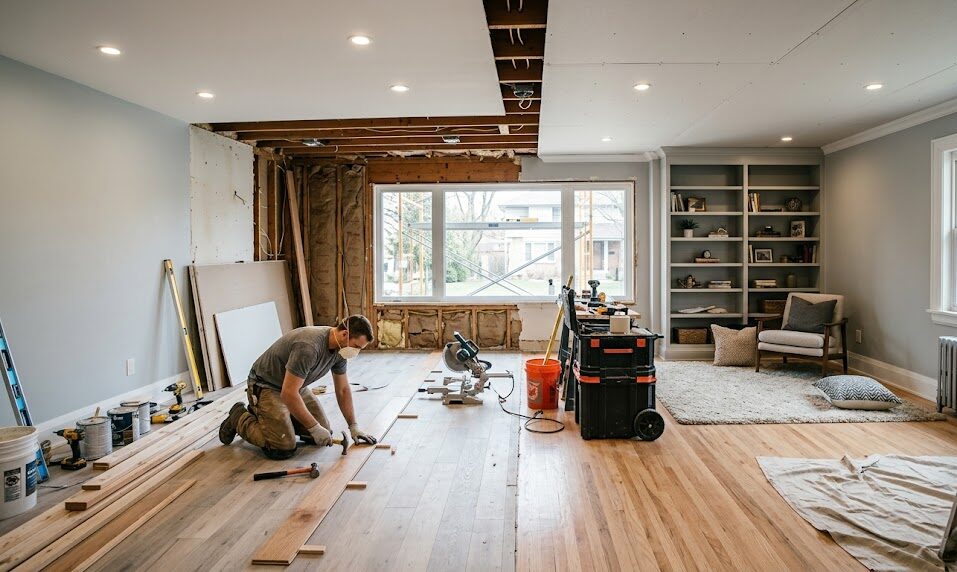
Whole-Home Remodels: Transforming Your Space, Inside and Out
A whole-home remodel is not just a bigger renovation. It is a different kind of project entirely.
When homeowners move beyond one-room updates and start thinking about how the entire house flows, functions, and feels, the planning needs to shift too. A whole-home remodel touches circulation, finishes, storage, lighting, structural priorities, construction sequencing, and how the family will live through the work. That is why whole home remodel planning matters so much more than most people expect at the start.
This guide walks through how to approach a whole-house remodel with clarity. You will learn how to define scope, understand home renovation phases, think through remodel sequencing, coordinate finishes, prepare for disruption, and set realistic expectations for design-build project management from concept to completion.
The Fortress Builders approaches whole-home remodeling through one core principle: strength through structure. Every strong remodel starts with a clear design blueprint that aligns vision, budget, and build sequence before demolition begins. That process helps homeowners avoid reactive decision-making and move through complex renovation work with more confidence and less chaos.
- How to know when a whole-home remodel makes more sense than room-by-room updates
- What whole home design build planning should include before construction begins
- How to think about remodel sequencing, disruption, and home renovation phases
- How to coordinate finishes, cabinetry, trim, lighting, and flow across the house
- What to expect from project management on a larger remodeling scope
Why homeowners choose whole-home remodels instead of piecemeal updates
Many families begin by thinking they need a kitchen remodel, a better bathroom, or a more usable mudroom. But after living in the house a little longer, a bigger pattern often becomes obvious. The home may have multiple outdated spaces at once. Storage may be inconsistent. The layout may create daily friction. The design language may feel disconnected from room to room. In those cases, one isolated remodel can improve part of the problem without solving the larger issue.
A whole-home remodel often becomes the right move when the house needs more than cosmetic change. It may need stronger circulation, better room relationships, improved functionality, a more consistent design direction, and a better long-term fit for how the family actually lives now.
Layout Problems
If the house flows awkwardly, room-by-room updates may leave the underlying frustration untouched.
Multiple Outdated Areas
When several major spaces need attention, coordinating them through one plan often creates a better overall result.
Inconsistent Design
One larger remodel can unify materials, trim, cabinetry, lighting, and style so the house feels cohesive.
Storage Gaps
Whole-home planning helps solve scattered storage issues so the house feels calmer and more functional day to day.
Better Daily Flow
When kitchens, entries, living zones, and private spaces work together better, the house becomes easier to live in.
Long-Term Efficiency
One organized process can sometimes reduce repeated disruption compared with several unrelated renovation phases.
How to define scope before the remodel starts
One of the most important parts of whole home remodel planning is defining the scope honestly. Homeowners often know what they dislike, but they have not always translated that into a structured project definition yet. The earlier that happens, the stronger the design-build process becomes.
Start with how the house is failing daily life
Scope becomes clearer when you focus on friction instead of finishes. Where does the home break down every day? Is it storage? Family traffic flow? Lack of workspace? Poor connection between kitchen and living space? Not enough privacy? Weak primary suite function? Those answers matter more than initial material preferences.
Separate must-fixes from wish-list items
Every whole-home remodel includes priorities and nice-to-haves. Structural or layout issues, water-damaged areas, poor function, and serious underperformance should usually rise to the top. Decorative add-ons that do not solve larger problems should be evaluated more carefully.
Understand the difference between broad scope and vague scope
A whole-home remodel can absolutely be a broad project. But it should not be a vague one. Good scope definition does not limit creativity. It gives the project direction.
If you cannot clearly explain what the remodel is supposed to improve in daily life, the scope probably needs more work before the construction budget is finalized.
| Scope Category | Questions to Answer Early |
|---|---|
| Layout & Flow | Which room relationships are broken? What movement patterns feel awkward or frustrating? |
| Function | What daily routines need better support? Cooking, storage, work, bathing, entry, entertaining? |
| Design Consistency | What visual elements need to be unified so the house feels cohesive rather than patched together? |
| Construction Needs | What structural, mechanical, or code-related items need to be integrated into the plan? |
Whole home design build works best when planning starts before product shopping
One of the easiest ways for a whole-house remodel to lose clarity is to start shopping for materials before the design structure is in place. Cabinets, tile, flooring, plumbing fixtures, and lighting all matter, but they only matter in the right context. A design-build process helps place those decisions in the right order.
That order usually starts with understanding the house, defining priorities, shaping layout decisions, and establishing a design direction. Only then do material and finish decisions begin to carry real meaning. When homeowners shop too early, they often collect beautiful things without a clear framework for how those things will work together.
This is also where internal sequencing resources become useful. If you want to understand how broader remodel logic unfolds, the Fortress Builders guide on whole-home remodel sequencing can help clarify why major renovation work should be phased intentionally rather than reactively.
- Clarify how the house needs to improve
- Define project scope and budget priorities
- Resolve layout and design direction
- Sequence major construction decisions
- Coordinate finishes once the framework is stable
Remodel sequencing: why the order of work matters so much
In a whole-home remodel, sequencing is not a backend contractor detail. It is one of the biggest factors in whether the project feels controlled or chaotic. The order of work affects disruption, cost efficiency, finish protection, timeline clarity, and how confidently homeowners can make decisions.
Demolition is not the beginning of the “real” project
Many homeowners emotionally feel like the project begins once walls come down. In reality, sequencing decisions made before demolition are what allow demolition to happen intelligently. Without that planning, work can stall or be re-done unnecessarily.
Structural and systems work usually comes before refined finish work
Layout changes, framing, mechanical revisions, plumbing updates, electrical planning, insulation, and code-related conditions typically have to be resolved before the project moves into cabinetry, trim, paint, tile, or final hardware.
Finishes should be protected by the sequence, not endangered by it
Good remodel sequencing helps reduce situations where later construction damages earlier finished work or forces avoidable change orders.
Preconstruction clarity
Define scope, layout, selections path, and budget priorities before the house is opened up.
Demolition and opening the work zones
Remove what needs to go only after the project direction is established clearly enough to avoid unnecessary churn.
Structural and systems work
Handle framing, mechanical changes, plumbing, electrical, and related infrastructure before finish work begins.
Interior build-out
Move into wall finishes, cabinetry, tile, trim, paint, flooring, and feature details once the bones are right.
Final installation and refinement
Complete punch items, hardware, lighting, appliances, and final adjustments that make the home feel finished.
Living disruption: what homeowners should expect during a whole-house renovation
One of the most important questions in any whole-house renovation guide is simple: what will daily life feel like during the work? The answer depends on the project scope, whether the work is phased, and how much of the home will be affected at once. But in almost every whole-home remodel, disruption deserves honest planning.
Disruption is not only noise and dust
It is also routine disruption. Bathrooms may be offline. Kitchens may be partially or fully unavailable. Daily entry patterns can change. Children, pets, and work-from-home life may all feel the impact differently.
Phasing can reduce stress when appropriate
Some whole-home remodels benefit from carefully phased work, while others are more efficient when larger portions of the home are tackled together. The right strategy depends on the scope and the household.
Living in the house during construction is possible in some projects—but not always ideal
Homeowners should talk honestly about tolerance for noise, access, cleanliness, safety, and routine disruption. The Fortress Builders resource on living at home during a remodel is useful here because it helps families think more practically about what staying in the house really requires.
Will you remain in the home throughout the project, move out temporarily, or phase the renovation around the most critical living zones? The earlier that answer becomes clear, the easier it is to build a realistic plan around it.
Finish coordination is what makes the house feel transformed instead of patched together
One of the most rewarding parts of a whole-home remodel is seeing the house come back together with consistency. That consistency does not happen automatically. It comes from strong finish coordination across rooms, transitions, trim details, lighting, flooring, cabinetry, and the visual rhythm of the home.
Materials should relate, not repeat mechanically
A cohesive house does not require every room to be identical. It does require enough relationship between spaces that the home feels intentional. The kitchen, baths, entry, living zones, and bedrooms can each have their own identity while still sharing a common design language.
Transitions matter more than homeowners expect
Flooring changes, trim conditions, ceiling shifts, door styles, and lighting tone all affect whether the home feels calm or disjointed after renovation.
Too many standalone decisions can weaken the final result
Whole-home projects benefit from centralized finish thinking because one beautiful room does not guarantee a coherent house.
- How flooring moves through the house
- How trim and casing details support consistency
- How cabinet finishes and tones relate room to room
- How lighting style and warmth affect the mood of the full home
- How statement moments are balanced with quieter background materials
Budget clarity improves when homeowners think in phases and priorities
Whole-home remodel budgets are often harder for homeowners to think about because the project is broad and interconnected. The most helpful approach is usually not to think only in terms of total number first, but to think in terms of priorities, phases, and tradeoffs.
Not every part of the house needs the same investment intensity
Some zones carry the highest functional and visual impact. Others can remain simpler while still benefiting from the overall remodel. Budget strategy should follow those priorities.
Some choices protect the project more than they decorate it
Structural resolution, good sequencing, coordinated project management, and smart systems work are not always the most visible parts of the remodel, but they often protect the outcome more than decorative upgrades do.
A broader scope still needs disciplined decisions
Whole-home remodeling is not permission to decide everything later. It actually increases the value of early clarity.
| Budget Priority Type | Why It Matters |
|---|---|
| Functional Priorities | Kitchen flow, bathroom performance, storage, and circulation often deserve stronger investment than purely decorative moments. |
| Structural / Systems Work | These decisions support safety, durability, and the success of everything that comes later. |
| Finish Priorities | Some materials have bigger visual reach and should be selected carefully for house-wide effect. |
| Future Flexibility | In some cases, planning for future phases or later expansion adds more value than maximizing every room immediately. |
What homeowners should expect from project management in a whole-home remodel
Project management becomes much more important as remodeling scope expands. On a whole-home project, homeowners are not just hiring craftsmanship. They are relying on a process that coordinates design intent, scope control, sequencing, communication, and day-to-day decisions.
Communication should reduce uncertainty
Whole-home remodeling always involves moving parts. Good project management does not eliminate complexity, but it helps homeowners understand what is happening, what decisions are coming next, and how changes are being handled.
Coordination matters just as much as craft
Even excellent finish work can feel frustrating if the project itself was disorganized. Design-build management helps keep the moving pieces aligned.
Expect the process to be active, not passive
Homeowners should still expect to make decisions, review progress, and stay engaged. The benefit of a strong design-build system is that those decisions happen in a clearer framework.
Clear next steps, realistic construction logic, transparent communication about changes, and a process that keeps design, budget, and execution connected instead of drifting apart.
If additions or structural modifications become part of the whole-home scope, the Fortress Builders resource on room addition design mistakes can also help homeowners understand how scope expansion should still stay disciplined and well integrated.
Common mistakes homeowners make on whole-home remodels
Starting with finishes instead of function
Beautiful selections cannot solve a weak layout, unclear scope, or missing house-wide priorities.
Underestimating sequencing
When the order of work is unclear, delays, frustration, and rework become much more likely.
Assuming the project will “figure itself out” during construction
Whole-home remodels reward early clarity. Too many open questions during demolition can create avoidable stress.
Ignoring living disruption until the last minute
Families need a real plan for kitchens, bathrooms, sleep, pets, children, and remote work before the house is under construction.
Making too many isolated decisions room by room
That approach often weakens house-wide finish coordination and makes the final result feel less cohesive than it could have.
How Fortress Builders approaches whole-home remodels
A strong whole home design build process begins by understanding the house as it really is today and the way the family needs it to perform in the future. That means looking beyond product decisions and asking better questions about function, layout, sequencing, disruption, and long-term value.
From there, the project is shaped into a clear strategy. Scope is defined. Priorities are ranked. Construction phases are planned. Finish direction is coordinated. Communication expectations are established. That structure is what allows creative design and precision craftsmanship to work together instead of competing with each other.
For homeowners, that usually means the project feels less like a series of stressful surprises and more like a guided transformation with logic behind every major step.
FAQ: Whole-home remodel planning and execution
When does a whole-home remodel make more sense than room-by-room renovation?
What is the most important part of whole home remodel planning?
Can we live in the home during a whole-house renovation?
Why does remodel sequencing matter so much?
What should be coordinated across the whole house?
Curated Whole-Home Remodel Resources
Understand why the order of work matters and how better sequencing protects both your budget and finished results.
Prepare for the daily realities of construction so your family can make smarter decisions about phasing, access, and disruption.
Explore real whole-home projects to see how integrated design-build remodeling transforms the entire house, not just one room.
Explore More Fortress Builders Pages
Thinking about a whole-home remodel?
Bring your frustrations, your priorities, and the way you want the house to function better. Fortress Builders can help turn that into a clear design-build plan that protects your vision from concept to completion.
This content is informed by the experience of Troy Lybbert, Founder of Fortress Builders. As a licensed general contractor since 1998, Troy brings over two decades of hands-on residential construction experience in remodeling and custom home building throughout Northern Utah.
Related Articles
How to Choose a Remodel Style Without Locking Yourself Into a Trend
Plan remodel design style Utah with Fortress Builders: scope, selections, code-aware checks, and durable design-build decisions for Utah homes.
Read more →Warm Modern Remodeling: Clean Lines Without a Cold, Empty Feel
Plan modern remodel Utah with Fortress Builders: scope, selections, code-aware checks, and durable design-build decisions for Utah homes.
Read more →Additional Remodeling Services in Utah
Additional Remodeling Services in Utah Some of the most valuable remodeling projects are the ones that do not fit neatly...
Read more →