

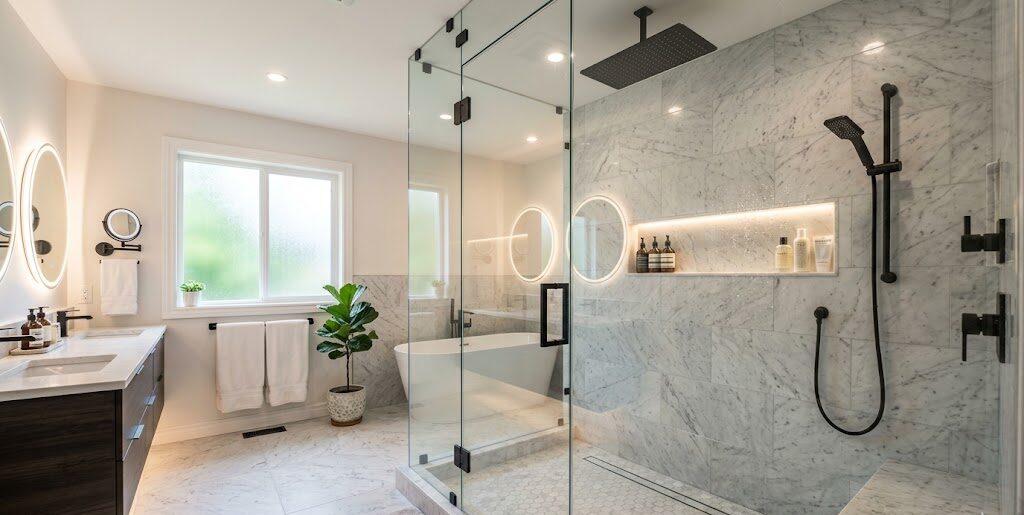
Why Walk-In Showers Are Taking Over Home Remodeling
Walk-in showers have moved from “nice upgrade” to one of the most requested bathroom remodeling features for a reason: they can make a bathroom feel larger, cleaner, calmer, and easier to use every day.
But a successful walk in shower remodel is not just about removing a tub and adding glass. The best results come from careful planning around layout, waterproofing, drainage, storage, cleaning reality, and how the shower will function for the people using it now and in the years ahead.
In this homeowner-friendly guide, you’ll learn:
- why walk-in showers have become such a strong remodeling priority,
- how to think through walk in shower planning before demolition starts,
- what matters most in shower layout, waterproofing, glass, benches, niches, and drainage,
- how accessibility and comfort considerations affect design decisions,
- and how to create a bathroom shower remodel that feels open, durable, and built to last.
The Fortress Builders approaches bathroom remodeling through a design-build process rooted in one core principle: strength through structure. That matters with showers because what makes them successful is not just the tile you see. It is the hidden planning, waterproofing, slope, framing, and layout coordination underneath the finish work.
Helpful Fortress Builders pages while you plan:
- Bathroom Remodeling in Utah: Built to Last
- Curbless vs. Curb Shower: Which Walk-In Shower Is Right for You?
- Shower Niches, Benches, and Shelves: Storage That Doesn’t Leak
- Bathroom Waterproofing 101: What’s Behind Great Tile Work
- Choosing Bathroom Tile: Slip Resistance, Grout Lines, and Maintenance
- Mold Prevention in a Bathroom Remodel
- Bathroom Vent Fan Sizing
- Tub-to-Shower Conversion: Cost Drivers, Design Options, and Resale Value
- Spa Bathroom Upgrades That Feel Luxurious Without Going Overboard
- Request a Design Consult
Why homeowners are choosing walk-in showers more often
Walk-in showers continue to gain momentum because they solve several common bathroom frustrations at once. They can open up the room visually, improve everyday usability, support a cleaner and more modern design direction, and often make better use of square footage than older tub-shower combinations.
Homeowners are often drawn to walk in shower design for a few recurring reasons:
- They make bathrooms feel more open. Removing a bulky tub surround or heavy enclosure can change how the whole room reads.
- They often improve daily convenience. For many households, showers are used far more often than tubs.
- They support cleaner, calmer design. Glass, larger-format surfaces, and more streamlined layouts help the bathroom feel less visually crowded.
- They can support future usability. Walk-in concepts often align well with aging-in-place or lower-threshold goals, depending on the final design.
- They create room for better function. Storage niches, benches, improved lighting, and better spray placement often become easier to plan thoughtfully.
Homeowner takeaway: Walk-in showers are not taking over because they are trendy. They are becoming more common because, in many bathrooms, they are simply a better match for how people actually live now.
What a walk-in shower remodel needs to solve first
Before thinking about glass style or tile pattern, it helps to define what the shower needs to accomplish. A strong shower layout guide always starts with function.
Think about who uses the shower
A primary bath shower used daily by two adults has different needs than a guest bath or a family bathroom. Shower size, storage, controls, accessibility, and glass strategy should all reflect the people actually using the space.
Think about current frustrations
Many homeowners are not remodeling just because they want a more modern shower. They are trying to solve real problems:
- the shower feels cramped,
- storage is awkward,
- the room feels dark,
- cleaning is frustrating,
- the tub is rarely used,
- the whole bathroom feels boxed in.
Think about the full bathroom, not only the shower
A walk in shower remodel affects the room beyond the shower footprint. It changes circulation, visual openness, vanity relationships, lighting, and how the bathroom feels as a whole. That is why shower design belongs inside a broader bathroom remodel plan, not as a stand-alone swap.
The 5-minute walk-in shower planning profile
- Who uses the bathroom? One person, a couple, guests, or kids?
- What is the main goal? More openness, easier access, better cleaning, better storage, or a more elevated look?
- What is not working now? Tub, darkness, poor layout, clutter, or maintenance issues?
- Is future accessibility important? Maybe not today, but would lower-threshold entry or better maneuverability matter later?
- How much daily comfort matters? Bench, handheld, better lighting, heated floor, quieter fan?
Why this matters: These answers shape the right shower layout far more effectively than starting with finish samples.
Walk in shower planning starts with layout, not tile
One of the biggest mistakes in bathroom remodeling is treating the shower as a decorative element first and a performance element second. In reality, walk in shower planning should begin with dimensions, entry path, spray direction, drainage, storage, and how the shower fits into the room.
Entry and circulation matter
A walk-in shower should feel easy to enter and use without awkward turning, crowding, or constant water escape. The entry location, showerhead placement, and glass coverage all need to work together.
Water containment is part of layout
The “open” feeling of a walk-in shower only works when the shower still manages water effectively. This is one reason layout and glass planning matter so much. Too little containment can create daily frustration. Too much enclosure can defeat the openness you were trying to create.
Storage should be integrated early
Niches, shelves, and benches are much easier to design well when they are planned from the start. Trying to force them in later often leads to awkward sizing or placement.
Best practice: A great walk-in shower looks calm because the layout is calm. When entry, drainage, glass, and storage all make sense together, the room feels easy rather than overdesigned.
Curbless vs. curb walk-in showers
One of the most common walk in shower design questions is whether the shower should have a curb or transition flush into the bathroom floor. Both can work. The right answer depends on room conditions, layout goals, waterproofing strategy, and how important accessibility is to the project.
Why curbless showers appeal to homeowners
- They feel open and modern.
- They can support easier entry.
- They visually simplify the room and make smaller bathrooms feel larger.
Why curbed showers still make sense in many projects
- They can be easier to contain water with certain layouts.
- They may suit the room’s structure and drain conditions better.
- They still support beautiful, durable results when designed well.
For a deeper breakdown, see Curbless vs. Curb Shower: Which Walk-In Shower Is Right for You?.
Waterproofing is the real backbone of a shower built to last
If there is one topic homeowners should never treat as a finish-level detail, it is waterproofing. A shower can look beautiful and still fail if the assembly behind the tile or wall finish is not built correctly.
Tile is not the waterproofing
This is one of the most important concepts in any bathroom shower remodel. Tile, grout, and stone are the visible finish. The true protection comes from the waterproofing system beneath them.
Transitions and penetrations matter
Shower corners, benches, niches, plumbing penetrations, and drain transitions all require careful execution. These are exactly the areas where sloppy work tends to create long-term problems.
Walk-in showers increase the importance of hidden detail
Because walk-in showers often emphasize openness and simplified visual lines, the hidden performance work becomes even more important. The cleaner the finish looks, the less room there is for the construction beneath it to be careless.
For the deeper homeowner explanation, see Bathroom Waterproofing 101: What’s Behind Great Tile Work.
Homeowner takeaway: If you want a shower that lasts, waterproofing deserves as much attention as the tile you fall in love with. In many cases, it deserves more.
Glass planning: openness, cleaning, and containment
Glass is one of the defining features of many walk-in showers, but it should never be chosen only by appearance. Glass affects how open the room feels, how much spray is contained, how easy the shower is to clean, and whether the whole design feels balanced.
Frameless glass supports visual openness
Many homeowners prefer frameless or minimally framed glass because it helps the bathroom feel cleaner and larger. It also lets tile and shower details carry more of the design weight.
Not every shower needs maximum glass
Some layouts work well with partial panels. Others need more enclosure for better water control. The strongest choice is the one that supports the layout, not the one that follows a trend blindly.
Cleaning reality still matters
Large glass expanses can look beautiful, but they should be chosen with honest expectations about water spots and routine maintenance. A good design-build team helps balance that reality with the desired aesthetic.
Before finalizing shower glass, ask:
- How much water control does the layout need?
- Will the bathroom feel more open with one panel, a full enclosure, or a simpler arrangement?
- How much glass do you realistically want to keep spotless?
- Does the door swing or fixed panel arrangement support daily use?
- How does the glass work with lighting, tile, and the overall room size?
Niches, benches, and built-in shower storage
Shower storage is one of those details homeowners notice every single day. A walk-in shower without thoughtful storage may look beautiful on day one and feel annoying by month two. Shampoo bottles on the floor, awkward corner caddies, and dripping clutter can quickly cheapen the experience.
Niches should be sized and placed intentionally
A niche should align with tile planning, feel reachable, and avoid obvious splash problems where possible. It should look like part of the design, not an afterthought cut into the wall.
Benches can improve comfort and function
Benches can support comfort, shaving, accessibility, or simply provide a place to set items. But they also require good waterproofing and proportion. A poorly planned bench can make the shower feel smaller or create awkward cleaning zones.
Shelves and alternate storage can be smarter in some layouts
Not every shower needs a bench or large niche. Sometimes a more restrained storage solution works better for the size and shape of the space.
For a more detailed guide, see Shower Niches, Benches, and Shelves: Storage That Doesn’t Leak.
Drainage and slope: the hidden details that affect daily performance
Drain location and floor slope are not glamorous topics, but they have a major effect on how a shower works. A walk-in shower should not only look sleek. It should shed water predictably and dry out in a way that supports long-term durability.
Drain type affects layout possibilities
Depending on the design, the drain may influence tile layout, floor slope, and how clean or minimal the shower floor looks. Different drain approaches can support different visual outcomes and construction methods.
Slope needs to support both drainage and comfort
The floor should direct water effectively without feeling awkward underfoot. That is especially important in walk-in designs where visual continuity is a big part of the appeal.
This is a construction detail worth respecting
Requirements and best approaches vary by project conditions, materials, and design goals. Final drainage and slope decisions should always be coordinated with qualified professionals and local authorities where applicable.
Best practice: The most beautiful walk-in shower still fails the test if water does not behave the way the room needs it to. Performance always has to match the visual promise.
Tile selection: slip resistance, scale, and maintenance
Walk-in showers often feature strong tile statements, but good shower tile decisions are about more than appearance. Scale, grout strategy, slip feel, and cleaning reality all influence how successful the finished shower will feel.
Large-format tile can reduce visual noise
Many homeowners like larger tile because it can create a calmer, more open feel with fewer grout lines. That often works well in walk-in showers, especially when the goal is a more modern or spa-like look.
Shower floor tile needs a different mindset
What works on the shower wall may not be the best choice for the floor. The floor needs to support grip, slope, and cleaning practicalities. That is why wall and floor tile should be selected as a coordinated system, not as one uniform surface.
Maintenance expectations should stay realistic
Some tile and grout combinations are easier to live with than others. The best bathroom shower remodel choices look good and fit the homeowner’s willingness to maintain them over time.
For a deeper homeowner guide, see Choosing Bathroom Tile: Slip Resistance, Grout Lines, and Maintenance.
| Walk-In Shower Element | What Matters Most |
|---|---|
| Shower walls | Visual calm, water durability, maintenance level, and tile layout coordination |
| Shower floor | Grip, slope, drainage support, and easy cleaning |
| Niches and benches | Waterproofing, proportion, usability, and visual integration |
| Glass and entry | Water containment, openness, and daily convenience |
Accessibility and future-proofing
One reason walk-in showers are taking over home remodeling is that they often align naturally with long-term usability. Even when a homeowner is not specifically designing for aging in place, a more comfortable, easier-entry shower can still be a smart choice.
Lower-threshold entry can support future flexibility
A shower that is easier to step into can be helpful now and even more valuable later. This does not mean every project needs a fully barrier-free wet room. It means accessibility should at least be part of the planning conversation.
Benches, handhelds, and grab-support planning can matter
Comfort and accessibility often overlap. A bench, a well-placed handheld, or thoughtful support planning can make the shower more usable without changing the aesthetic direction dramatically.
Future-proofing is not only about age
It is also about making the bathroom easier for recovery periods, growing families, changing routines, and long-term convenience.
Future-friendly planning prompts
- Would easier entry improve the shower now, not just later?
- Would a bench or handheld make daily use more comfortable?
- Does the layout leave enough room to move comfortably?
- Can the shower feel open without sacrificing safety or practicality?
- Will this still feel like the right shower design five or ten years from now?
Ventilation and moisture control still matter, even with a beautiful shower
Walk-in showers may make a bathroom feel more open, but they do not reduce the need for strong moisture management. In fact, larger open showers can make humidity control even more important in some bathrooms.
Ventilation supports the whole room, not just the shower
A bathroom that stays humid too long after showering is harder on paint, trim, mirrors, and the overall bathroom environment. Ventilation planning should be treated as part of the remodel system.
Mold prevention starts with design choices
Waterproofing, tile strategy, shower openness, and fan performance all contribute to how well the bathroom handles moisture over time.
Related guides: Bathroom Vent Fan Sizing and Mold Prevention in a Bathroom Remodel.
Important note: Shower waterproofing, drainage design, ventilation details, and related requirements can vary by room conditions, materials, and local codes. Final technical decisions should always be confirmed with qualified professionals and local authorities.
Common walk-in shower remodel mistakes homeowners regret later
Mistake 1: Prioritizing openness without respecting water control
An ultra-open shower can look beautiful but feel frustrating if water escapes constantly. Layout and glass planning have to work with how the shower is used.
Mistake 2: Underestimating waterproofing complexity
Walk-in showers often look simple, but the hidden work behind them is highly important. Waterproofing mistakes are rarely visible until the damage is expensive.
Mistake 3: Adding storage too late
Niches, shelves, and benches need early planning. Late decisions often lead to awkward sizing or misplaced storage.
Mistake 4: Choosing materials only by appearance
Wall tile, floor tile, grout, and glass should all be chosen with cleaning, slip resistance, and daily maintenance in mind.
Mistake 5: Forgetting that the shower has to fit the whole bathroom
A bigger or more dramatic shower is not automatically better if it weakens circulation, vanity function, or the overall balance of the room.
How walk-in showers connect to the rest of the bathroom remodel
A walk-in shower should not be designed as a disconnected feature. It changes how the whole bathroom reads and functions. That means it should be planned alongside vanity sizing, storage, lighting, flooring, ventilation, and comfort upgrades.
- Vanity planning: A more open shower may free visual space for a better vanity layout or storage strategy.
- Lighting: Glass, tile, and openness affect how light moves through the room.
- Ventilation: The shower’s size and openness influence moisture behavior and comfort.
- Bathroom identity: A walk-in shower often sets the tone for whether the bathroom feels classic, modern, spa-like, or highly functional.
Helpful related reads include Small Bathroom Vanity Guide, Bathroom Lighting Plan, and Spa Bathroom Upgrades.
FAQ: Walk-in shower remodel planning
Are walk-in showers better than tubs?
Not automatically. They are often a better fit for households that use the shower daily and rarely use the tub. The stronger choice depends on how the bathroom is used, whether other tubs exist in the home, and what daily improvements matter most.
Do walk-in showers make small bathrooms feel bigger?
In many cases, yes. Cleaner sightlines, more open layouts, and better glass planning can make a smaller bathroom feel less crowded. That said, the effect depends on the specific layout and how well the shower is integrated into the room.
What matters most in a walk-in shower?
Layout, waterproofing, drainage, and daily usability matter most. Tile and glass are important, but the hidden performance details usually determine whether the shower truly feels successful long-term.
Should I choose a curbless shower?
Curbless showers are appealing for openness and accessibility, but they are not automatically right for every bathroom. The best option depends on room conditions, water containment needs, and the overall remodel goals.
How early should I plan niches, benches, and glass?
As early as possible. These details affect waterproofing, framing, tile layout, and daily function. They should be planned during design, not added casually once the shower is already being built.
Conclusion: the best walk-in showers feel easy because they were planned well
Walk-in showers are taking over home remodeling because they often make bathrooms more functional, more open, and more aligned with how people live now. But the most successful walk in shower remodels are not just stylish. They are carefully planned around layout, water management, comfort, maintenance, and long-term performance.
That is what makes a walk-in shower feel truly elevated. Not just the glass. Not just the tile. But the confidence that the room works the way it should every day and is built to hold up over time.
Thinking about a walk-in shower for your bathroom remodel?
If you’re planning a bathroom shower remodel in Davis or Weber County, Fortress Builders can help you think through shower layout, waterproofing, glass, niches, benches, drainage, accessibility, and the other decisions that make a walk-in shower feel truly complete.
Request a Design Consult Explore Bathroom Remodeling Read the Curbless Shower Guide
Bring your inspiration images, current bathroom frustrations, and your wish list for the new space. Fortress Builders can help you turn that into a walk-in shower plan that is beautiful, functional, and built to last.