

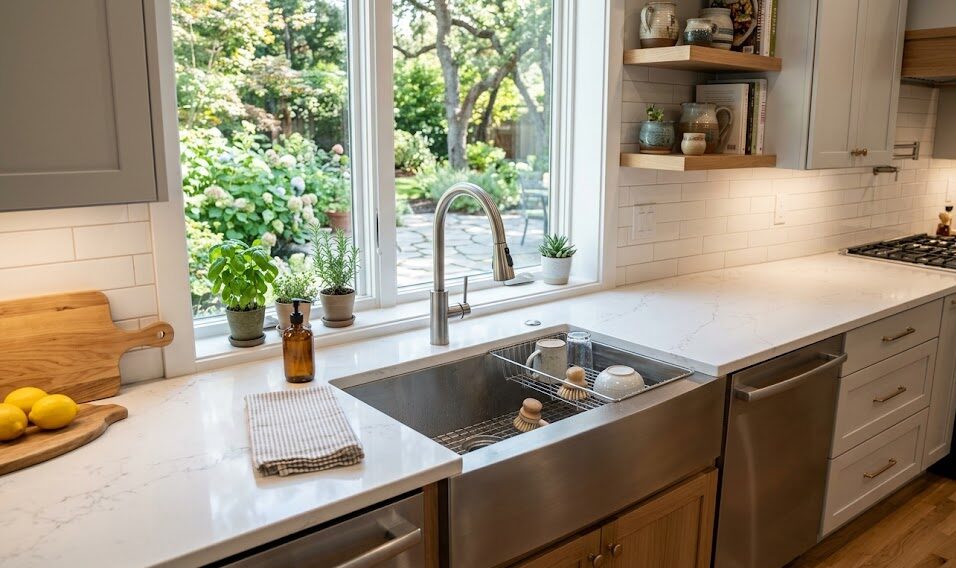
Best Kitchen Sink Materials: Stainless, Fireclay, Composite, and Cast Iron
Your kitchen sink is one of the only “fixtures” you use dozens of times a day. That’s why sink material matters more than most homeowners expect. The wrong material can turn into a daily annoyance: scratches you can’t ignore, stains that won’t budge, chips from one dropped pan, or a sink that’s too loud when the dishwasher is running and the house is busy.
This guide is written for homeowners planning a kitchen remodel and choosing between stainless steel, fireclay, composite (granite/quartz), and cast iron. It’s designed to help you match your sink to how your household actually lives—without getting lost in showroom hype. :contentReference[oaicite:0]{index=0}
In this homeowner-friendly sink material comparison, you’ll learn:
- what each sink material does well (and where it disappoints),
- how to think about durability: chips, scratches, stains, and heat,
- how sink material affects noise, cleaning effort, and long-term appearance,
- what to plan for during a remodel: cabinet support, cutout style, and faucet compatibility,
- a short selection checklist you can use before ordering.
The Fortress Builders is a Utah design–build company built on “strength through structure.” We help homeowners lock critical decisions early—like sink selection—so cabinets, countertops, plumbing rough-ins, and installation details line up cleanly.
Helpful internal pages while you plan:
Start with the real question: “What do we need this sink to survive?”
A sink isn’t just a design feature. It’s a work surface that takes daily impact: heavy pots, hot pans, sharp utensils, cleaning chemicals, and constant water exposure.
Before comparing materials, answer these two questions:
- How hard do we use the sink? (Big cookware, frequent entertaining, kids, home cooking, messy hobbies.)
- What kind of “wear” will bother us? (Visible scratches, small chips, water spots, staining, noise.)
Homeowner takeaway: The “best” sink material is the one that looks good after five years of your normal routine, not the one that looks best in a showroom.
The four materials most homeowners compare
There are many sink options on the market, but most kitchen remodel decisions come down to these four:
- Stainless steel (workhorse, forgiving, can be noisy and scratch-prone)
- Fireclay (classic look, smooth and bright, can chip if abused)
- Composite (granite/quartz composites; durable, quieter than stainless, color options)
- Cast iron (heavy, enamel-coated, classic; can chip, requires support)
Quick comparison: what each sink material is best at
| Material | Best for | Watch-outs |
|---|---|---|
| Stainless steel | Busy kitchens, easy upkeep, fewer “catastrophic” failures | Scratches, water spots, noise (especially thinner gauges) |
| Fireclay | Bright, classic look; easy wipe-down; statement sinks (farmhouse) | Chipping risk from heavy impact; replacement is not “cheap” |
| Composite | Durability + quiet; hides water spotting; modern neutral colors | Can show light scuffs; extreme heat exposure can damage some products |
| Cast iron | Traditional kitchens; strong enamel surface; long-lived when treated well | Very heavy; enamel can chip; needs careful installation + cabinet support |
Stainless steel sinks: the “forgiving workhorse”
Stainless steel remains popular because it’s practical. It’s resilient, fits most styles, and when it gets worn, it usually looks like “normal wear” rather than “damage.”
What stainless does well
- Impact resistance: dropping a pot rarely creates a permanent chip.
- Heat tolerance: generally handles hot cookware better than many coated surfaces.
- Availability: many shapes, depths, and price points.
- Compatibility: works with most countertop materials and undermount/top-mount installs.
Where stainless can frustrate homeowners
- Scratches: they’re normal—especially on the bottom surface.
- Noise: thinner sinks can amplify water and dish clatter.
- Spotting: water minerals and soap residue can show more than you expect.
Practical stainless tips (what to look for):
- Choose a thicker gauge when possible (thicker typically feels sturdier and sounds quieter).
- Look for sound-deadening pads/coating to reduce “tinny” noise.
- Consider a textured/brushed finish that hides wear better than mirror finishes.
- Plan a sink grid if you’re hard on the sink (it reduces bottom scratching).
Fireclay sinks: beautiful, bright, and not indestructible
Fireclay sinks are known for their crisp, clean look—often in white—and are common in farmhouse or classic kitchens. They can be a great choice if you want a strong visual anchor and you’re comfortable treating the sink with a little care.
What fireclay does well
- Appearance: a clean, timeless look that pairs well with many countertop styles.
- Easy cleaning: smooth surface can wipe clean quickly.
- Color stability: quality products tend to keep their look well with normal use.
Where fireclay can disappoint
- Chipping: a dropped cast iron pan can chip the surface.
- Weight + install sensitivity: often heavier than stainless; needs proper support.
- Fit: farmhouse/apron-front options require cabinet planning.
Homeowner reality check: If your household is rough on sinks (kids, heavy cookware, frequent dish pileups), fireclay can still work—but you should plan protection (sink grid, mindful handling) and accept the risk of chips over time.
Composite sinks: quiet durability with modern practicality
Composite sinks (often granite or quartz composite) are popular because they combine durability with a quieter feel than stainless. They also tend to hide water spotting better, especially in mid-tone colors.
What composite does well
- Noise control: absorbs sound better than stainless.
- Scratch resistance: often resists light scratching better than stainless.
- Color options: can match modern kitchen palettes (charcoal, gray, sand, etc.).
Composite watch-outs
- Heat exposure: some composites can be damaged by extreme heat—use a trivet/rack.
- Cleaning habits: lighter colors can show stains if not cleaned routinely.
- Hard water reality: mineral buildup can still happen; it may just look different than stainless.
If you want “quiet + durable,” composite is often the sweet spot—especially for family kitchens.
- Ask about recommended cleaners (avoid harsh abrasives if not advised).
- Plan a grid/rack if you want to preserve the bottom surface.
- Confirm heat guidance and make it part of daily habits.
Cast iron sinks: classic weight, classic durability—plus enamel risk
Cast iron sinks are typically coated with enamel and known for a substantial, traditional feel. They can last a long time when treated well, but the enamel surface can chip if hit hard.
What cast iron does well
- Solid feel: heavy and stable, often quieter than stainless.
- Classic look: fits traditional and timeless kitchen designs.
- Long service life: when installed properly and cared for.
Where cast iron can create planning issues
- Weight: can require cabinet reinforcement and careful handling during install.
- Enamel chipping: dropping heavy cookware can chip the coating.
- Maintenance mindset: you’ll want to avoid harsh impacts and overly abrasive cleaners.
Sink material isn’t a standalone decision: it affects your entire kitchen plan
A sink choice touches more than aesthetics. It impacts cabinet design, countertop fabrication, plumbing rough-ins, and even daily workflow.
1) Installation type: undermount vs top-mount vs apron-front
Many homeowners choose undermount sinks for a clean counter wipe-down, but not every material and countertop combination behaves the same. If you’re already deciding countertops, review how surfaces perform in real life: Quartz vs. Granite vs. Porcelain Countertops.
2) Cabinet support and sink base planning
Heavier sinks (especially cast iron and some farmhouse options) can require additional support. This is one reason we push homeowners to lock selections early: your cabinet plan needs to match reality, not assumptions. If you’re still in the “big picture” phase, start with: Kitchen Remodel Planning Checklist.
3) Faucet + accessory compatibility
Some sink materials and styles work better with specific faucet types, filtered water setups, soap dispensers, air switches, or built-in accessories (cutting boards, colanders, racks). When you choose a sink, decide whether you want the sink to be a “workstation” or just a basin.
Decision factors that actually matter (and how to test them)
Factor 1: Scratch tolerance vs chip tolerance
Different households react differently to wear:
- If fine scratches will drive you crazy, stainless may bother you (even though it’s practical).
- If a small chip would feel unacceptable, fireclay/cast iron may make you anxious.
- If you want “stable appearance” over time, composite often feels calmer.
Simple test: Think about your current sink. Which annoys you more—visible scratches or a permanent chip? Pick the material that fails in the way you can live with.
Factor 2: Noise and household rhythm
In open kitchens, noise travels. If your kitchen opens to a family room, stainless can feel louder (especially when someone is loading dishes while others are watching TV or working). Composites and heavier sinks often feel quieter.
Factor 3: Cleaning reality (not cleaning fantasy)
Most sinks are “easy” if you clean them daily. The real question is: what happens when life gets busy?
- Stainless: forgiving but can show spotting.
- Fireclay: can look great but may show stains if neglected (depends on product and habits).
- Composite: hides some mess but can show scuffs depending on finish/color.
- Cast iron: enamel is cleanable but can be damaged by harsh abrasion.
Factor 4: Heat and impact habits
If you routinely set hot pans in the sink, or dump boiling water, or rinse heavy cookware aggressively, be mindful of heat guidance for composites and of impact risk for fireclay/cast iron. A sink grid and a “rack habit” often solves 80% of wear issues.
Material-by-material: what homeowners should know before ordering
Stainless steel: gauge, depth, and daily ergonomics
Beyond “stainless,” consider:
- Depth: deeper can hide dishes but can be harder on backs for shorter users.
- Bowl configuration: single bowl vs divided depends on cooking style and dishwashing routine.
- Accessories: grids and workstation ledges can reduce wear and add function.
Fireclay: cabinet fit + edge exposure
Fireclay is often chosen for its look—especially in apron-front sinks. That means you must plan the cabinet and countertop details around it, not “make it fit later.” If your kitchen is still being designed, see how layout decisions influence all selections: Design and Layouts for Kitchens.
Composite: color choice is a maintenance choice
Color affects what you notice. Darker composites may show mineral residue. Lighter composites may show some staining if neglected. Neutral mid-tones often balance both.
Cast iron: support planning is non-negotiable
For cast iron, weight is part of the equation. A good install matters. If you’re coordinating multiple trades and trying to keep the project smooth, the process matters as much as the sink: Timeline and What to Expect.
How sink material connects to countertops and cabinet decisions
Sinks and countertops are a matched system. Your countertop material affects:
- which sink install types are practical,
- how edges look around an undermount cutout,
- how forgiving the surface is if water sits near the sink.
If your kitchen is still in the decision stage, pair this article with:
- Cabinets and Countertops: Planning the Right Choices
- Quartz vs. Granite vs. Porcelain Countertops
- Countertop Edge Profiles Guide
Planning mantra: Don’t choose a sink “in isolation.” Choose a sink that matches your countertop material, cabinet plan, faucet setup, and cleaning habits.
Practical checklist: choose the right kitchen sink material (before you order)
Use this quick checklist before you finalize your sink:
- Daily load: Are you hard on sinks (big cookware, kids, frequent dishes)?
- Wear tolerance: Would you rather see scratches (stainless) or risk chips (fireclay/cast iron)?
- Noise sensitivity: Does your kitchen open to living space (do you want quieter materials)?
- Cleaning reality: What happens on a busy week—will spotting/staining bother you?
- Heat habits: Do you set hot pans in the sink? (Plan protection and confirm material guidance.)
- Install type: Undermount vs top-mount vs apron-front—does it match your countertop and cabinet plan?
- Support needs: Is the sink heavy enough to require cabinet reinforcement?
- Accessories: Do you want a workstation sink, grids, racks, or integrated cutting boards?
- Lead times: Have you confirmed availability so it doesn’t delay countertops/cabinets?
Common sink selection mistakes (and how to avoid them)
Mistake 1: Choosing based on looks only
A sink is a tool. If you pick a material that doesn’t match your household routine, you’ll feel it daily.
Mistake 2: Forgetting that heavy sinks affect cabinet planning
Fireclay farmhouse sinks and cast iron sinks can require support planning. If the cabinet plan is already set, “making it work” can add cost and complexity.
Mistake 3: Not planning faucet + accessories at the same time
Faucet holes, soap dispensers, filtration taps, air switches—these decisions are easier (and cleaner) when planned early.
Mistake 4: Ignoring how sink choice affects countertop decisions
Countertop cutouts, edge treatments, and undermount details should be planned together—especially if you care about a clean, finished look.
How Fortress Builders helps homeowners avoid sink regrets
Sink selection sounds small—until you realize it touches cabinets, countertops, and plumbing. Our design–build approach is built to prevent last-minute changes by aligning:
- layout and workflow planning,
- cabinet and countertop specification,
- plumbing and electrical coordination,
- and installation details that make the finished kitchen feel intentional.
If you want to see how we plan kitchens for real life (traffic flow, storage zones, and practical details), explore: Design and Layouts for Kitchens.
Want a second set of eyes on your sink + countertop plan before you order?
If you’re remodeling a kitchen in Davis or Weber County, Fortress Builders can help you choose a sink material that matches your household’s routine—and ensure the cabinet and countertop details are planned correctly before anything gets ordered.
Request a Design Consult Explore Kitchen Remodeling Cabinets & Countertops Planning
Bring your rough layout, cabinet plan (if you have one), and a shortlist of sink options you’re considering. We’ll help you pressure-test the decision so it works in real life—not just on a product page.