

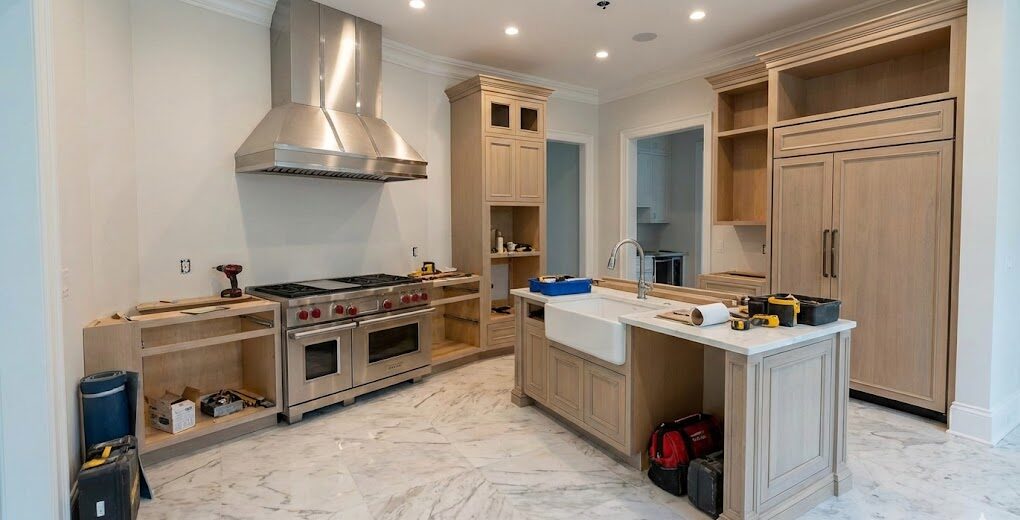
Work Triangle vs. Work Zones
Your kitchen layout is the difference between a space that “looks great” and a space that feels great every single day. If you’ve ever dodged traffic while carrying hot food, opened a dishwasher into a walkway, or felt like two cooks can’t function at the same time—those are layout problems, not appliance problems.
This guide breaks down the classic kitchen work triangle and the more modern approach of kitchen work zones, so you can choose a layout strategy that matches your household, traffic flow, and storage needs—before cabinets are ordered. For deeper planning support, start with Design and Layouts for Kitchens and explore Kitchen Remodeling in Utah: Built to Last.
The Real Goal: A Kitchen That Works Under Pressure
Both the triangle and zones are trying to solve the same problem: reduce friction. Friction shows up as wasted steps, tight clearances, awkward door swings, and congestion during peak times (breakfast, weeknight dinners, holidays).
- Triangle thinking prioritizes efficient movement between key stations.
- Zone thinking prioritizes how tasks cluster—especially with multiple people in the kitchen.
Most successful layouts use a little of both: keep key distances reasonable, while designing zones that match how your household actually lives.
What Is the Kitchen Work Triangle?
The kitchen work triangle is a classic planning concept that focuses on the relationship between three primary stations:
- Sink (cleaning + prep)
- Cooktop/range (cooking)
- Refrigerator (food storage)
The idea is simple: when these three points are positioned efficiently, you reduce unnecessary steps and make cooking feel easier.
Where the work triangle still works really well
Triangle-friendly kitchens often include:
- Smaller or mid-size kitchens where you want efficiency without long walks
- Single-cook households (or one primary cook most of the time)
- Simple traffic patterns where people aren’t constantly cutting through the cooking area
- Older homes where layout flexibility may be limited by structure
If you’re keeping a similar footprint, a well-placed triangle can deliver a surprisingly “new” feel without a full layout overhaul.
What Are Kitchen Work Zones?
Kitchen work zones organize the kitchen around tasks rather than just movement between three points. Instead of one triangle serving every activity, zones let different people do different things at the same time—without colliding.
|
Common Kitchen Zones
Prep zone: counter space + knives, cutting boards, trash, and prep sink (if included).
Cooking zone: cooktop/range + pots, pans, spices, utensils, and ventilation. Cleaning zone: sink + dishwasher + dish storage + drying space. Storage zone: pantry + fridge + everyday food and snack access. Serving/hosting zone: island seating, beverage station, or “drop” space for meals and gatherings. |
Why zones often win in modern kitchens
Many Utah households use the kitchen as a gathering space—kids doing homework, guests chatting, multiple people cooking. Zones help the kitchen work like a small system instead of a single-person workstation.
- Multiple cooks can prep and cook without stepping on each other.
- Traffic flow can be routed around work areas instead of through them.
- Storage zones can be designed around how you actually use items (daily vs occasional).
If your kitchen is also your “home base,” zone planning is usually worth it.
Work Triangle vs. Work Zones: A Practical Comparison
Here’s a homeowner-friendly way to compare the two approaches. This is not about design “rules”—it’s about how you live.
|
Best For
Work Triangle: single cook, compact kitchen, simple routines.
Work Zones: multiple cooks, frequent hosting, busy traffic, larger kitchens. |
|
Traffic Flow
Work Triangle: can break down if walkways cut through the triangle.
Work Zones: can route traffic around cooking/prep zones more intentionally. |
|
Storage Planning
Work Triangle: storage may be more general unless planned carefully.
Work Zones: storage is typically grouped by task (prep tools near prep, pans near cooktop, etc.). |
|
Cabinet/Counter Decisions
Work Triangle: often simpler cabinet planning.
Work Zones: can improve function but may require more detailed cabinet + counter coordination. |
How to Plan Kitchen Zones (Without Overcomplicating It)
You don’t need a perfect blueprint to start. You need clarity on tasks, traffic, and where things should “live.”
-
Map your daily routines
Who cooks? Who makes breakfast? Where do backpacks, mail, and snacks land? These habits matter more than design trends. -
Identify your “high-traffic path”
Where do people walk from the garage or hallway to the fridge, pantry, or seating? Try to keep that path outside the cooking and prep zones when possible. -
Group storage by task
Keep pans near the cooktop, prep tools near prep space, and dishes near the dishwasher. This reduces walking and keeps the kitchen feeling calmer.For cabinetry and storage planning, see Cabinets and Countertops.
-
Plan the “utility” pieces early
Appliance specs influence cabinets, clearances, and ventilation routing. Lighting and outlets influence how counters and islands function.Appliances and Ventilation and Lighting and Electrical are the two pages most homeowners wish they’d read earlier.
Common Kitchen Layout Mistakes (Triangle or Zones)
Most layout regrets come from a few predictable issues. Catch these early and your kitchen will feel better for years.
Red flags to watch for:
- Dishwasher door blocks a walkway: you can’t load/unload without traffic jams.
- Prep space is far from the sink or trash: meal prep takes more steps than it should.
- Fridge is in the cooking lane: snack traffic collides with hot pans.
- Island is oversized for the room: it looks impressive but chokes circulation and seating.
- Ventilation is treated as an afterthought: duct routing and hood sizing should be planned early.
- Lighting is “one layer” only: a single overhead light can create glare and shadows on work surfaces.
For flooring and surface decisions that affect comfort and durability, see Flooring and Surfaces.
A Quick Decision Checklist: Triangle or Zones?
If you’re torn, use this simple checklist. The “right” answer is the one that matches your household.
|
You’ll likely prefer the work triangle if…
|
|
You’ll likely prefer work zones if…
|
Before You Order Cabinets, Do This One Thing
Cabinets lock in your layout. Before anything is ordered, confirm:
- Appliance sizes and door swings (fridge, ovens, dishwasher)
- Ventilation plan and duct routing (especially if changes are needed)
- Outlet locations, lighting layers, and island requirements
- Where everyday items will live (dishes, pans, spices, trash, snacks)
If you want a structured planning sequence, bookmark: Kitchen Remodel Planning Checklist for Utah Homeowners.
See Real Kitchen Layouts in Real Utah Homes
If you’re trying to visualize how these ideas look in the real world, browsing completed projects can help you decide faster.
Want a Layout Review Before You Commit?
A great kitchen isn’t just pretty—it’s designed around how you move, cook, store, and gather. The Fortress Builders’ design–build process starts with a detailed blueprint so your layout, budget, and build timeline align before construction begins.
Request a Design Consult Explore Kitchen Remodeling
We’ll help you choose the right strategy—triangle, zones, or a hybrid—so your kitchen works beautifully for daily life in Utah.
Key Takeaways
Choose the Layout That Matches Your Household
- The work triangle can be excellent for compact kitchens and single-cook routines.
- Work zones often perform better for busy homes, multiple cooks, and hosting.
- The best kitchens frequently use a hybrid: triangle efficiency inside well-planned zones.
- Confirm appliances, ventilation, lighting, and storage zones before cabinets are ordered.