

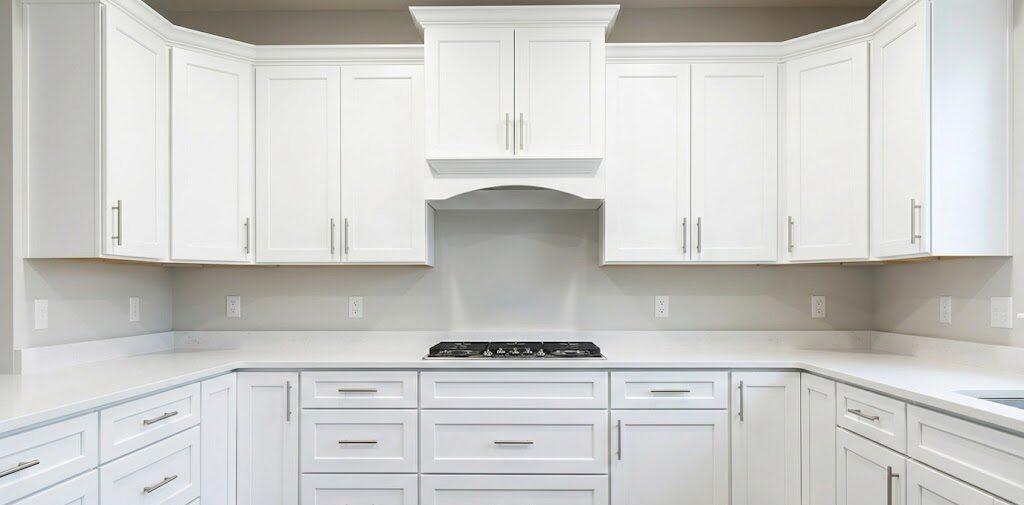
Cabinet Hardware Placement: Heights, Spacing, and Pro-Level Consistency
Cabinet hardware placement is one of those “small details” that instantly changes how a kitchen feels. When it’s done well, everything looks clean, aligned, and intentional. When it’s done inconsistently, even expensive cabinets can look slightly off—and once holes are drilled, fixing it is rarely simple.
This guide explains the most common placement conventions for knobs and pulls, how to keep alignment consistent across doors and drawers, and how pros avoid the classic mistakes. The goal is simple: you should feel confident about placement before drilling starts.
If you’re still choosing cabinets and layouts, start with Cabinets and Countertops and the broader planning sequence in Kitchen Remodel Planning Checklist for Utah Homeowners.
Why Hardware Placement Matters More Than People Expect
Hardware does two things at once:
- Function: it makes doors and drawers easier to open (especially with full-overlay doors and modern finishes).
- Visual alignment: it creates repeating lines across your cabinetry—like trim, grout lines, or tile pattern.
The eye notices inconsistency fast. A few pulls set 1/4-inch off can make a whole run of cabinetry feel “crooked,” even if the cabinets are perfectly installed.
Step 1: Choose a “System” Before You Measure Anything
Hardware placement isn’t one universal rule—it’s a set of common conventions. The most important decision is to pick one system and apply it consistently.
|
Two Common Placement Systems
System A (Modern/Minimal): Align pulls consistently near the top of drawers and bottom of upper doors (clean lines).
System B (Classic/Traditional): Place knobs/pulls centered on rails/stiles, often emphasizing symmetry and door framing. |
Either system can look great. The difference is style preference—and whether your cabinet door style supports it.
Cabinet Door Hardware Placement: The Common Conventions
Door placement is usually based on whether the door is upper or lower, and whether you’re using knobs or pulls.
Upper cabinet doors (typical approach)
- Knobs: commonly placed near the bottom corner of the door, aligned consistently across the run.
- Pulls: commonly placed vertically, close to the door edge, centered for comfort and line consistency.
Lower cabinet doors (typical approach)
- Knobs: commonly placed near the top corner of the door.
- Pulls: commonly placed vertically, close to the door edge, aligned with drawer pulls above if possible.
Goal for doors: create a consistent “grip line” so hardware feels predictable and looks aligned across adjacent doors and drawers.
Drawer Pull Placement: The Biggest Visual Impact
Drawers are where the eye notices alignment most. Because drawers stack vertically, inconsistent pull placement creates a wavy look.
Most common drawer placement methods
- Centered on the drawer face: simple and traditional, works well with knobs or short pulls.
- Aligned near the top rail (for Shaker-style): creates a crisp horizontal line across drawer stacks.
- Long pulls centered vertically: used for larger drawer fronts to keep the hardware proportionate.
Pro tip: For Shaker drawers, many installers align pulls consistently to the top portion of the drawer face (rather than “center of the whole drawer”), which creates a cleaner, more professional look—especially in tall drawer stacks.
Knobs vs. Pulls: What Works Best Where?
This is partly style, partly ergonomics. In many kitchens, homeowners mix knobs and pulls (for example, knobs on doors and pulls on drawers).
Often used on doors. Lower cost and flexible placement, but can feel small on heavy drawers.
Great for drawers and larger doors. Easier grip, and creates a stronger “line” across cabinets.
Common approach: knobs on doors + pulls on drawers for balance of style and function.
Consistency Rules: How Pros Keep Everything Aligned
Pros don’t eyeball hardware placement. They create repeatable references so every pull lands exactly where intended.
Pro-level consistency checklist:
- Pick one placement system for doors and one for drawers (and write it down).
- Use the same measurement reference point every time (top rail, stile center, etc.).
- Confirm left/right symmetry on double doors.
- Dry-fit hardware on a few sample doors/drawers before drilling everything.
- Use a jig/template so holes repeat perfectly.
Templates and Jigs: The Best Way to Avoid Mistakes
If you’re installing or swapping hardware, a jig is the most reliable way to keep spacing consistent. It reduces measuring errors and speeds up installation.
Common Mistakes (and How to Catch Them Before Drilling)
|
Mistake #1: Mixing placement styles
Example: some drawers centered, others aligned high. Pick one system and apply it everywhere. |
|
Mistake #2: Choosing hardware late
If the pull is oversized or the knob is too small, you may not notice until after holes are drilled. |
|
Mistake #3: Eyeballing instead of templating
Small measurement errors multiply across a kitchen. Use a jig or template. |
|
Mistake #4: Ignoring ergonomics
Hardware should be easy to grab without scraping knuckles or feeling awkward at tall uppers. |
A Simple “Before You Drill” Checklist
Print This: Confirm Placement Before It’s Permanent
- Hardware style and size are final (knobs vs pulls, lengths, finishes).
- Door placement and drawer placement systems are chosen and documented.
- A sample door and sample drawer have been tested visually and ergonomically.
- A jig or template is ready for repeatable hole placement.
- Double-check left/right symmetry and alignment across stacks.
Related Kitchen Planning Resources
Hardware is the finishing layer. These pages help you plan the cabinet system and layout that hardware will complete.
FAQs: Cabinet Hardware Placement
Should cabinet pulls be centered on drawers?
They can be, especially for traditional looks. In many modern kitchens (and Shaker cabinetry), pulls are often aligned consistently near the top of drawer faces to create a clean horizontal line across stacks. The best choice is the one you can apply consistently.
Is it okay to use knobs on drawers?
Yes, especially for smaller drawers. For wide or heavy drawers, pulls are often more comfortable and reduce twisting force over time.
Do I need a jig to install cabinet hardware?
If you’re installing hardware across multiple doors and drawers, a jig is one of the best ways to avoid inconsistent placement. It reduces measuring errors and speeds up the job.
What’s the biggest mistake homeowners make?
Choosing hardware late or changing their mind mid-installation. If your cabinet style, hardware size, and placement system aren’t final before drilling, mistakes are more likely.
Want a Pro to Confirm Hardware Placement Before Drilling?
Hardware placement is small—but it’s permanent. The Fortress Builders helps homeowners make confident, design-forward decisions with a clear process and detail-level execution.
Request a Design Consult Explore Kitchen Remodeling
We’ll help you align hardware placement with cabinet style, drawer stacks, and overall kitchen design—so the final result looks intentional and built to last.