

Porcelain vs. Ceramic Tile: Which Holds Up Better in a Bathroom?
The honest answer from 26+ years remodeling Northern Utah bathrooms — where each tile makes sense, and what to lock down before you order.
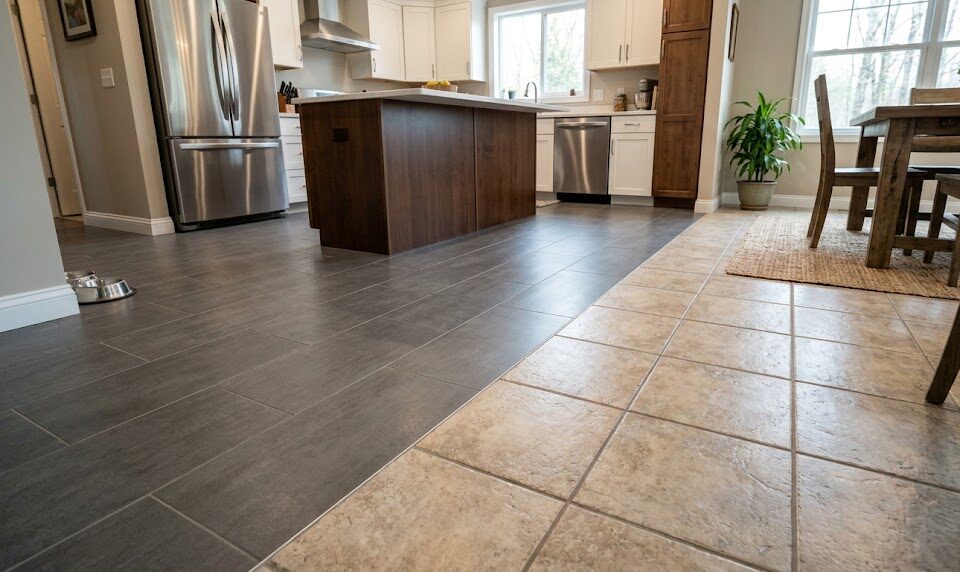
Trying to choose between porcelain and ceramic tile for your bathroom — and wondering what actually holds up best?
The honest answer is that porcelain usually wins when moisture exposure, durability, and long-term performance are doing the heavy lifting. Ceramic still earns its place in the right parts of the bathroom, especially when budget matters and the tile is not being pushed hard by water, traffic, or wear.
I’ve been remodeling homes in Davis County and Weber County since 1998, and here’s what I’d tell you at the kitchen table: the wrong tile rarely fails because it looked bad in the showroom. It fails because it was chosen without enough thought about water, layout, and how the room actually gets used.
What this means for you is simple. If the tile is going in a shower, on a bathroom floor, or anywhere that sees real moisture, porcelain usually gives more margin for error. If the tile is on a lower-stress wall and the budget needs relief, ceramic deserves a fair look. Below is the practical version — what each material does well, where each makes sense, and what to lock down before you order tile or start demo.
Why the porcelain-vs.-ceramic choice matters more than homeowners expect
When you first compare tile, it usually starts with color, pattern, and price. That makes sense. But bathrooms are not forgiving rooms. Water, steam, repeated cleaning, foot traffic, and daily routine all work the space harder than most homeowners realize. That’s why I like to frame this comparison around performance, not appearance.
In real Northern Utah homes — Kaysville, Layton, Farmington, Bountiful — the bathroom tile question usually comes down to this: where do you need more durability, and where can you afford to be more flexible? A shower surround or a high-use bathroom floor asks more from the material. A decorative wall outside the wet zone does not. Once you look at it that way, the decision tends to get clearer.
Bathrooms Are Wet Rooms
Even when two tiles look similar in the showroom, moisture exposure changes what counts as the smarter long-term choice.
Traffic Matters
Floor tile has a different job than a decorative wall tile, and the material should reflect that difference.
Maintenance Is Real
The easiest bathroom to live with is usually the one where tile, grout, and waterproofing were chosen as one system.
Budget Still Matters
The best answer is not always the most expensive tile. It’s the one that fits the room and the way you actually use it.
A beautiful tile in the wrong place is still the wrong tile. Pick the material to match the work the room is asking it to do — not the other way around.
Understand the waterproofing system behind the tile first
Before comparing porcelain and ceramic too hard, here’s something I want to be direct about: tile is the finish, not the waterproofing system. Homeowners sometimes assume the “more water resistant” tile can rescue a weak shower build. It cannot.
In a bathroom remodel, the system behind the tile is what protects the house. That includes the waterproofing membrane, drain integration, slope, corners, niches, benches, transitions, and the install sequence. Porcelain may be denser than ceramic, but that does not make the shower safe if the waterproofing behind it was rushed.
This is why I want homeowners in Davis and Weber Counties to understand the shower as a full assembly before locking in materials. Older framing, prior remodel work, and unusual layouts make the system approach matter more than brand labels. Connect this to tile and waterproofing systems before you finalize anything.
- If someone is talking porcelain vs. ceramic without explaining the waterproofing plan, the tile comparison is not the biggest issue — the system is.
- Membrane, slope, drain integration, and corner detailing matter before tile selection.
- Even the best tile cannot make up for a rushed or inconsistent waterproofing build.
- Treat the shower as a full assembly, not a stack of separate decisions.
This waterproofing comparison belongs here because the best tile choice only makes sense once the system underneath it is settled.
Porcelain: where it earns its reputation
Porcelain has the reputation it has for a reason. In bathrooms, it’s often the safer bet when the tile will see moisture, repeated use, and wear. It’s generally denser, less absorbent, and better suited to tougher conditions. That doesn’t make it the automatic answer everywhere — but there’s a reason it keeps showing up in high-performance bathrooms.
Why homeowners lean toward porcelain
Homeowners usually like porcelain because it feels like a more durable, low-regret option. That instinct is often right. If you’re building a shower, tiling a bathroom floor, or trying to reduce material-related disappointment later, porcelain gives you more confidence.
Where I especially like it
I generally like porcelain for shower walls, shower floors when the specific tile is appropriate for traction, and bathroom floors that see daily use. In family homes across Kaysville, Layton, and Farmington, that extra durability is not theoretical. It matters.
| Porcelain strength | Why it matters in bathrooms |
|---|---|
| Low water absorption | Especially attractive in showers and wet zones where repeated moisture is part of daily life. |
| Strong durability | Tends to hold up well in high-use bathrooms where wear and cleaning are constant parts of the routine. |
| Floor + wall versatility | Porcelain is flexible enough to work in many parts of a bathroom when the specific tile is chosen wisely. |
| Confidence factor | For many homeowners, porcelain offers more margin for error in a room that does not forgive much. |
Ceramic: where it still makes good sense
Ceramic should not be written off. I’ve seen homeowners assume ceramic means “cheap” and porcelain means “good.” That’s too simplistic. Ceramic can absolutely deliver a smart, attractive, durable-enough finish when it’s used in the right places and the homeowner understands its role.
Why ceramic still gets chosen
Ceramic can be easier on the budget, and for some bathroom walls or lower-stress surfaces, that matters. It also offers a wide range of looks and can deliver a beautiful finished bathroom.
Where I’m more selective with it
I tend to be more comfortable with ceramic in bathroom wall applications outside the most demanding wet-floor and heavy-use scenarios. That doesn’t mean it can never go on a shower wall — it means I want the full context to support that choice, and I don’t want homeowners assuming it behaves the same as porcelain in every condition.
Ceramic isn’t a downgrade. It’s a different tool. Used in the right place, it can be the smarter call. Used in the wrong place, it tells on itself within a year or two.
Where each tile usually works best in a real bathroom remodel
If I’m helping a homeowner simplify the comparison, I break it down by location. That clears up most of the confusion fast.
| Bathroom area | What I’d usually recommend | Why |
|---|---|---|
| Shower walls | Porcelain (first look) | The environment is demanding. Extra moisture resistance lines up with what the shower asks from the material. |
| Shower floors | Porcelain — with traction confirmed | Traction, grout volume, and maintenance all matter. The tile must be appropriate for a wet sloped floor. |
| Bathroom floors | Porcelain (usually) | Daily traffic and moisture together. Durability under repeated wear is doing real work. |
| Accent + decorative walls | Ceramic can stay in play | Outside the wet zone, ceramic offers design flexibility and budget relief without sacrificing performance. |
How I’d walk through the decision step by step
Here’s the order I’d use if you were sitting across from me with cabinet drawings and a tile sample in your hand. Don’t skip ahead. Each step shapes the next one.
Confirm the waterproofing system first
Before we talk tile, we settle the membrane, slope, drain integration, and corner detailing. The shower works as one assembly.
Identify the highest-stress zones
Shower walls, shower floor, main bathroom floor — these usually drive material choice. Lower-stress walls have more flexibility.
Match material to the zone
Porcelain in the demanding zones. Ceramic in lower-stress or decorative zones when budget or design wants it.
Lock in grout, size, and finish together
Tile size, grout color, grout type, and surface finish affect maintenance more than the material label alone.
Plan niches, benches, and edges in advance
Detail areas expose weak planning faster than field tile does. Coordinate them before order, not during install.
Confirm ventilation
Good airflow protects the finish over time. A bathroom that moves moisture out stays cleaner-looking longer.
This reel is about sheet-membrane waterproofing, but it belongs here because maintenance starts behind the tile too.
Install red flags to watch for
The tile choice is only as good as the way it fits the shower details. A beautiful porcelain still looks awkward if the niche layout is weak. A ceramic accent can look excellent if the edges and transitions were planned cleanly. Pay attention to the details, not just the field tile.
The tile was chosen before the waterproofing plan was clear
That usually means the room is being solved in the wrong order. Tile follows system, not the other way around.
No one can explain where each material belongs
If porcelain and ceramic are treated as interchangeable without context, the planning may be too shallow.
Grout is being treated like a throwaway choice
Grout affects maintenance, appearance, and how the tile reads in real life. It belongs in the conversation early.
Shower details are being finalized too late
Niches, benches, trim, and glass lines all affect whether the tile choice still feels smart once installed.
The installer cannot explain the system behind the tile
The tile comparison only matters if the waterproofing, slope, and detailing underneath it are being handled correctly.
Frequently asked questions
Is porcelain better than ceramic for a shower?
In most cases, yes. Porcelain is often the safer long-term choice in showers because of its lower water absorption and stronger durability. That said, the shower still depends on the waterproofing system behind the tile being done right.
Can ceramic tile still work in a bathroom?
Absolutely. Ceramic can still be a smart choice in lower-stress wall applications and some decorative uses. The key is putting it in the right place and understanding what the room is asking from it.
Which tile is more durable for bathroom floors?
Porcelain usually gets the first look for bathroom floors because it tends to handle moisture and wear more confidently. The specific tile still needs to be appropriate for traction and real-life use.
Is porcelain always worth the extra cost?
Not always everywhere. It’s often worth it where the room demands more performance. In lower-stress areas, ceramic may still offer a good visual result and better budget balance.
When should the tile material be finalized during a remodel?
After the waterproofing plan, shower layout, grout strategy, and major bathroom details are clear. If permits, inspections, or project-specific requirements come into play, confirm those with qualified professionals and local authorities.
Ready to talk through scope and timeline?
If you’re planning a bathroom remodel and want a second set of eyes on tile selection, waterproofing, grout, and layout before anyone starts guessing — a design consult is the right first step. No pressure. Just a clear plan.