Comfort & Sound: A Basement That Feels Truly Finished
A great basement doesn’t just look finished—it feels finished. Warm underfoot. No echo. No “mechanical room hum” bleeding into movie night. When we design for comfort and sound from day one, your basement lives like a true extension of the main floor.
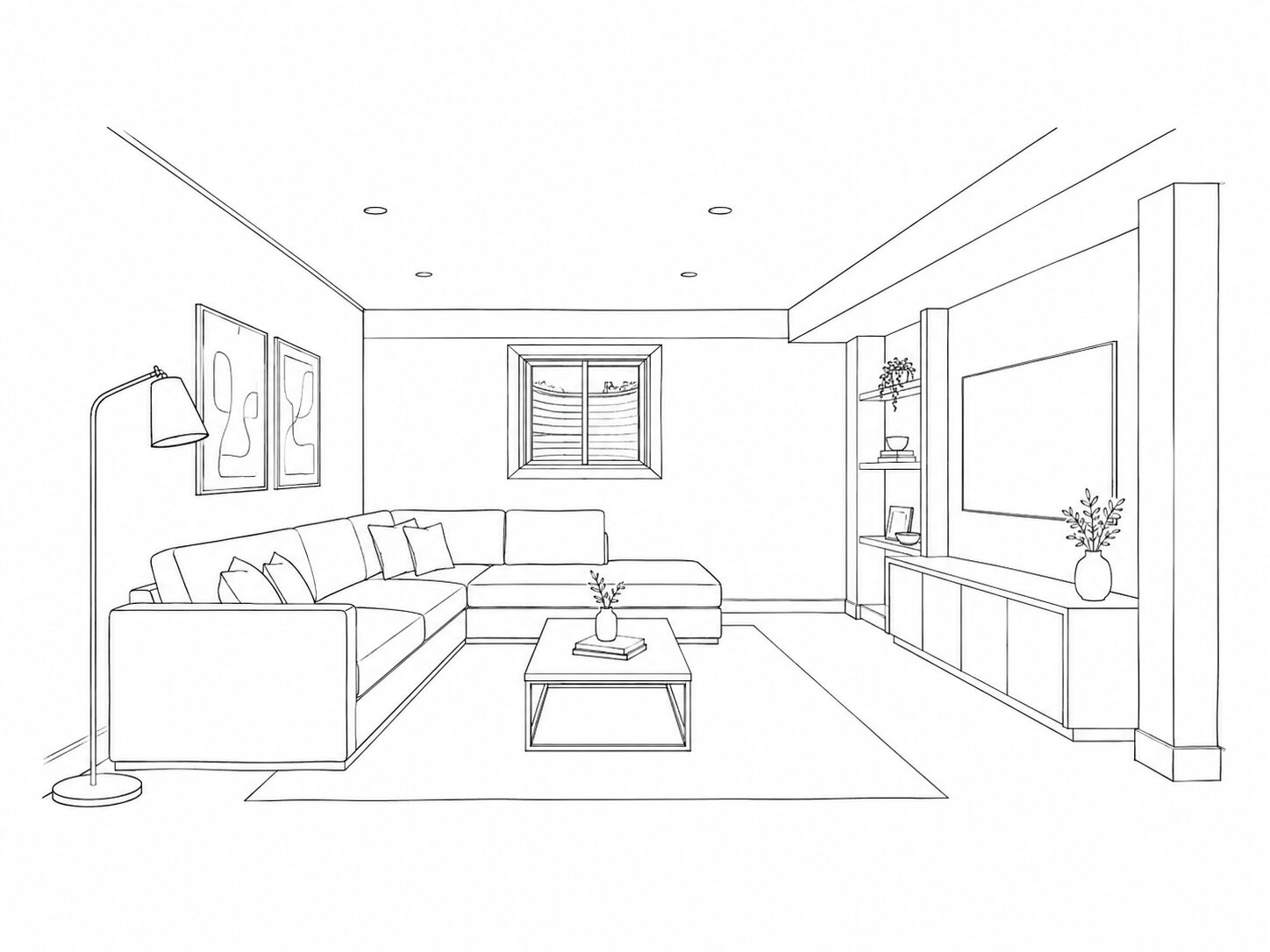
Designed for how families actually live.
In Davis & Weber County, we’re seeing basements move from “extra space” to purpose-built zones—rooms designed around how families actually live. With thoughtful comfort and sound planning, you’ll enjoy the journey as much as the finished space.
WHAT'S HOT IN UTAH BASEMENTS RIGHT NOW
Home Theaters
Media rooms with better acoustics and lighting control.
Home Gyms
Impact-friendly flooring—quieter upstairs, easier on joints.
Guest Suites
Where sleep isn’t ruined by noise above.
Flex Family Rooms
Built to handle kids, games, and everyday hangouts.
The common theme: homeowners want cozy + quiet—not just “finished.”
COMFORT COMES FIRST
Build the Right Layers
If you want a basement that stays comfortable year-round, think in layers—not single products.
1.
Air Sealing & Insulation
Basements can feel chilly even when heated—usually because of gaps and drafts. The goal is consistent coverage so the space holds temperature and feels stable.
Common choices: fiberglass batts (great value when installed without gaps), mineral wool (denser, better for sound), and strategic spray foam (for air-sealing details, not automatically the best for sound).
Best practice: prioritize the assembly—how it’s built—over the brand name.
2.
Underfoot Warmth
One of the biggest comfort upgrades is how you build the floor system on top of the slab.
Two common approaches:
- Moisture-aware underlayment + basement-friendly flooring (simple, cost-effective)
- Subfloor systems (often warmer, slightly softer, and better for comfort)
If your goal is “main-floor cozy,” don’t skip this decision.
3.
HVAC That Feels Good
Basements often need tweaks so they don’t run colder or stuffier than the rest of the home. Comfort improves fast when supply and return air is planned correctly—and noisy airflow is avoided near bedrooms and theaters.
Sound: Two Goals, Two Strategies
Most people say “soundproofing” when they actually mean one of these two things. Most basements benefit from a blend of both—just in different amounts depending on the rooms.
GOAL A
Keep Sound from Traveling
This is about reducing noise between rooms and between floors—like upstairs footsteps, a TV that carries, or a theater that shakes the house.
What matters most:
- Sealing gaps and penetrations (sound leaks through cracks)
- Mass (heavier surfaces block more sound)
- Separation (details that reduce vibration transfer)
- Insulation (helpful, but not the whole solution)
GOAL B
Make the Room Sound Better
This is about reducing echo and harshness inside the room—especially in open basements with hard floors and lots of flat drywall.
Simple fixes that work:
- Carpet or large rugs in the right zones
- Upholstered furniture and soft finishes
- Built-ins, shelving, and (when needed) acoustic panels in theaters
MATERIAL CHOICES
Where the Biggest Differences Show Up
Walls + Ceilings
If you want a quiet office, bedroom, or theater, don’t treat every wall the same. We typically plan “quiet” assemblies only where needed—so you get results without overspending.
Insulation helps, but performance usually comes from the full wall/ceiling build-up plus good detailing around outlets, lights, vents, and ducts.
Doors & the “Small” Details
If you need quiet rooms, plan for:
- Solid-core doors
- Better sealing at doors (where appropriate)
- Smart layout buffers (a hall + door beats an open doorway every time)
Flooring Quick Guide
Pick flooring based on how the basement will be used most days.
Carpet + pad
Warmest and quietest—great for theaters and cozy lounges.
LVP (Luxury Vinyl Plank)
Durable and basement-friendly—comfort depends on underlayment/subfloor choice.
Rubber flooring
Best for gyms and impact noise.
Tile
Ideal for bathrooms and wet areas, but harder and louder underfoot.
How to Decide What Fits Your Basement
Use these questions to keep selections simple:
-
Warning: Undefined array key "circle-check" in /nas/content/live/fortressbuildr/wp-content/plugins/elementor/core/page-assets/data-managers/font-icon-svg/font-awesome.php on line 45
Warning: Trying to access array offset on null in /nas/content/live/fortressbuildr/wp-content/plugins/elementor/core/page-assets/data-managers/font-icon-svg/font-awesome.php on line 48
Warning: Trying to access array offset on null in /nas/content/live/fortressbuildr/wp-content/plugins/elementor/core/page-assets/data-managers/font-icon-svg/font-awesome.php on line 49
Warning: Trying to access array offset on null in /nas/content/live/fortressbuildr/wp-content/plugins/elementor/core/page-assets/data-managers/font-icon-svg/font-awesome.php on line 50
What will you use the basement for most—theater, guests, gym, office, or family room? - Where do you need quiet most—upstairs, bedrooms, office, or theater?
- Do you want to block sound, improve room acoustics, or both?
- How important is warmth underfoot in winter?
- Do you want the space to stay flexible for the next 5–10 years?
A SIMPLE WAY TO SCOPE IT
Three Levels (Without the Overwhelm)
Everyday Comfortable
Warm floors, solid insulation, reduced echo—perfect for most family basements.
Quiet Zones
Targeted sound control for offices and bedrooms, plus better doors and sealing.
Theater-Ready
A full plan for sound control and acoustic comfort—so it sounds great and stays contained.
A Utah-Basement Essential: Test for Radon
Because basements are the lowest level of the home, radon is a practical part of finishing conversations in Utah. A quick test gives you clarity—and if mitigation is needed, it’s best handled before the basement becomes fully finished.
WHY CHOOSE FORTRESS
BUILT TO LAST
Integrity, function, and craftsmanship—start to finish.
A PROCESS YOU CAN TRUST
Communication and transparency at every step.
MODERN, APPROACHABLE DESIGN
Quality results with a warm, contemporary feel.
WHERE WE WORK
LAYTON · FARMINGTON · BOUNTIFUL · GREATER DAVIS & WEBER COUNTIES · KAYSVILLE · LAYTON
IF YOU’RE NEARBY, THERE’S A GOOD CHANCE WE CAN HELP.
Comfort and Sound faqs
True 100% soundproofing is rarely practical in a home. What is very achievable is meaningful sound control—reducing noise between rooms and floors so the space feels quiet and comfortable. We plan stronger assemblies only where they matter (theaters, bedrooms, offices) so you get real results without overbuilding the entire basement.
Blocking sound (Goal A) is about keeping noise from traveling between rooms or floors—think footsteps overhead or a theater bleeding into a guest room. Improving acoustics (Goal B) is about how the room itself sounds—reducing echo and harshness with carpet, soft furniture, built-ins, and acoustic panels where needed. Most basements benefit from a blend of both.
Strategic spray foam is excellent for air-sealing details around rim joists and penetrations, which improves comfort. But for sound, denser materials like mineral wool combined with the right wall assembly typically perform better. The build-up matters more than any single product.
It depends on your comfort priorities and how the basement will be used. A moisture-aware underlayment with basement-friendly flooring is simple and cost-effective. A subfloor system is often warmer, slightly softer underfoot, and better for everyday comfort—closer to that “main-floor cozy” feel. We’ll talk through the trade-offs during your consult.
Carpet with a good pad is typically the warmest and quietest choice for theaters and cozy lounges. It absorbs sound inside the room and softens impact noise. For mixed-use family rooms, LVP over a quality subfloor is a strong all-around option.
Yes. Because basements are the lowest level of the home, radon is a practical part of finishing conversations in Utah. A quick test gives you clarity, and if mitigation is needed, it’s much easier to address before walls, ceilings, and flooring go in.
Ready for a basement that feels warm, quiet, and truly finished?
We’ll help you plan the layout, then select materials that support comfort and sound—without overbuilding or overspending.