

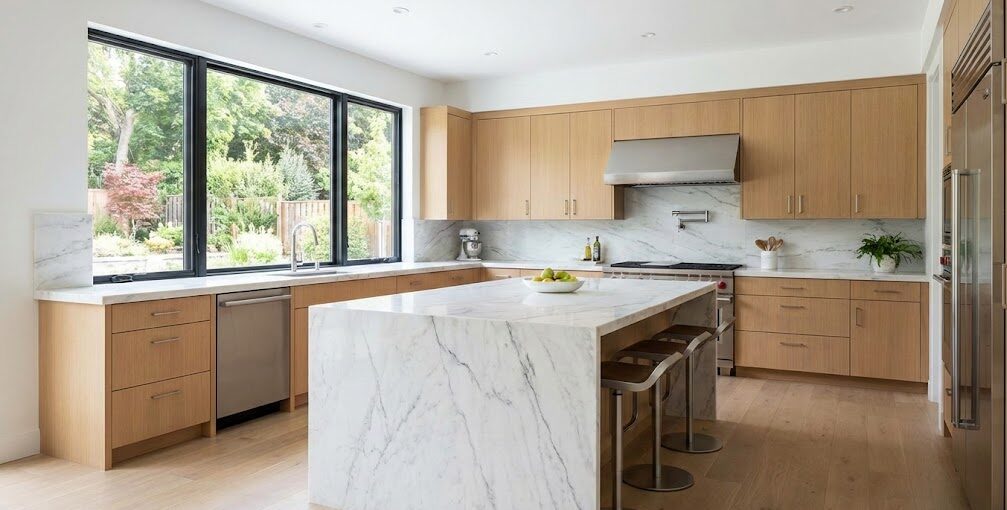
Waterfall Islands: Pros, Cons, and When They Make Sense
Waterfall islands are one of the most recognizable kitchen design features of the last decade. When done well, they feel architectural, intentional, and undeniably high-end. When done poorly, they can feel expensive, bulky, or out of place.
This guide breaks down what a waterfall island actually is, the real pros and cons beyond the photos, and—most importantly—when it makes sense for your kitchen layout, budget, and lifestyle.
If you’re still in early planning, this pairs well with the Kitchen Island Size Guide and the broader Kitchen Remodel Planning Checklist.
What Is a Waterfall Island, Exactly?
A waterfall island uses the same countertop material on the top surface and continues it vertically down one or both sides of the island—often all the way to the floor. Instead of stopping at a standard edge, the material “falls” over the sides.
Key characteristics of a waterfall island:
- Continuous slab material from top to side
- Often uses mitered edges for a thick, monolithic look
- Creates a furniture-like, architectural presence
- Most common with stone, quartz, or porcelain slabs
Why Homeowners Love Waterfall Islands
There’s a reason waterfall islands keep showing up in high-end kitchens—they deliver impact in a way few other details can.
Pro #1: Strong visual statement
A waterfall island instantly anchors the kitchen. It reads as a single sculptural element instead of a collection of cabinets and counters.
Pro #2: Clean, modern aesthetic
The uninterrupted surface creates crisp lines that work especially well in modern, transitional, and contemporary kitchens.
Pro #3: Protects cabinetry
The stone or slab sides shield cabinet ends from scuffs, kicks, and wear—especially in busy households or homes with kids.
Pro #4: Perceived value and resale appeal
In the right market and layout, waterfall islands signal “custom” and “designer,” which can positively influence buyer perception.
The Real Downsides (What Photos Don’t Show)
Waterfall islands aren’t automatically “better.” They come with real tradeoffs that matter once you live with them.
Con #1: Higher cost
Waterfall islands require additional slab material, precise fabrication, and more labor. The cost increase isn’t just the stone—it’s the detailing.
Con #2: Reduced seating flexibility
The vertical slab can limit knee clearance or seating options on that side of the island.
Con #3: Can feel heavy in small kitchens
In tight spaces, waterfall sides can visually and physically crowd the room, making the island feel oversized.
Con #4: Fabrication quality matters more
Mitered edges, book-matched veining, and slab alignment require skill. Poor execution is very noticeable.
Bottom line: A waterfall island magnifies both good and bad decisions. Layout, scale, and craftsmanship matter more than ever.
When a Waterfall Island Makes Sense
Waterfall islands work best in specific scenarios. Here’s when they tend to shine.
|
Open floor plans
The island is visible from multiple angles, so the finished sides matter visually. |
|
Large or well-proportioned kitchens
There’s enough space for the island to feel intentional, not bulky. |
|
Design-forward priorities
You value architectural impact as much as storage efficiency. |
|
Durable slab materials
Quartz, granite, or porcelain are already part of the plan. |
When a Waterfall Island Is Probably Not Worth It
Sometimes restraint leads to a better outcome.
- Small kitchens where every inch of clearance matters
- Budgets better spent on cabinetry, storage, or appliances
- Layouts that prioritize seating on all sides
- Traditional kitchens where the look may feel forced
Important: A waterfall island should never compromise circulation, seating comfort, or storage just to chase a trend.
Cost Reality: What Drives the Price Up
Homeowners often ask, “How much more is a waterfall island?” The answer depends on several factors.
- Additional slab material
- Mitered edge fabrication
- Vein matching or book-matching
- Labor and installation complexity
Because costs vary by material and fabricator, it’s best to evaluate waterfall islands during design—not after pricing is set.
High-End Alternatives to Full Waterfall Islands
If you love the look but not the tradeoffs, there are strong alternatives.
Protects the most visible side without limiting seating everywhere.
Creates a bold, substantial look without full vertical slabs.
Finished cabinetry panels that match the kitchen for a cohesive look.
Quick Decision Checklist
- Does the island have enough space to feel balanced with waterfall sides?
- Will the waterfall interfere with seating or circulation?
- Is the material and fabricator appropriate for mitered edges?
- Does the design still work if trends shift?
See Waterfall Islands in Real Utah Kitchens
Context matters. Seeing waterfall islands in real homes—not just showroom photos—helps set expectations.
Related Kitchen Planning Resources
Not Sure If a Waterfall Island Is Worth It?
A waterfall island should earn its place in your kitchen—not just look good in photos. The Fortress Builders helps homeowners evaluate layout, cost, and long-term value before committing to design features.
Request a Design Consult Explore Kitchen Remodeling
We’ll help you determine whether a waterfall island makes sense for your space—or recommend alternatives that deliver the same level of polish with fewer compromises.