

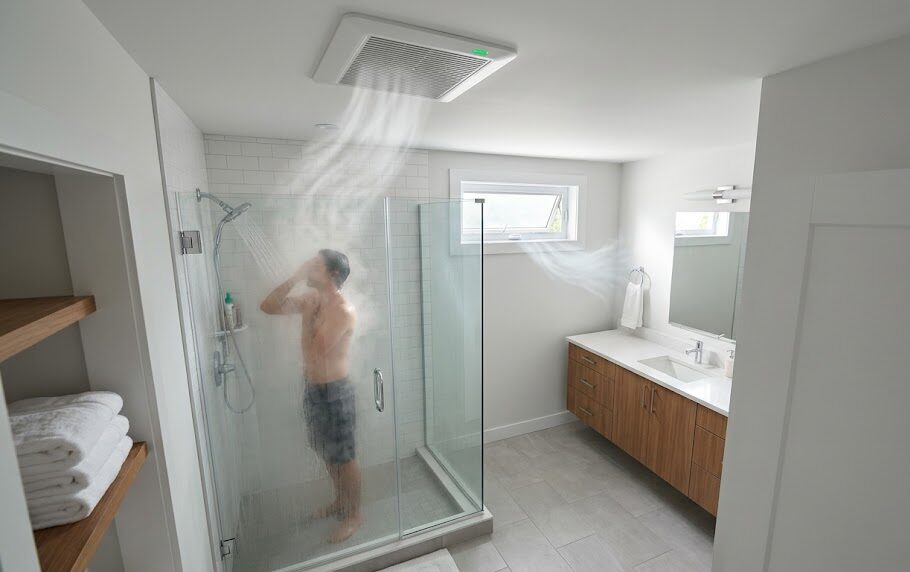
Bathroom Ventilation & Moisture Control Done Right
A bathroom can look beautifully remodeled and still quietly fail if moisture is not managed well. Steam from showers, humidity from baths, everyday sink use, and poor air movement can all work against the long-term health of the room. Paint starts to struggle, mirrors stay fogged, odors linger, and over time, the wrong moisture conditions can contribute to mold, mildew, and finish deterioration.
That is why bathroom ventilation moisture control should never be treated as a minor technical detail. It is one of the biggest factors in whether a bathroom actually feels comfortable and stays durable after a remodel is complete.
In this guide, you’ll learn:
- why bath fan planning matters more than many homeowners realize,
- how bathroom humidity control supports comfort and durability,
- what to think about when evaluating fan sizing, controls, and ducting,
- how mold prevention bathroom planning starts long before visible problems show up,
- and how to build a bathroom exhaust fan guide mindset into your remodel decisions from the beginning.
The Fortress Builders approaches bathroom remodeling with a design-build mindset rooted in one principle: strength through structure. That means ventilation planning is considered part of the room’s real performance, alongside waterproofing, fixtures, lighting, tile, and layout. The goal is not just a bathroom that looks finished. It is a bathroom that works properly and holds up over time.
Helpful Fortress Builders pages while you plan:
- Bathroom Remodeling in Utah: Built to Last
- Bathroom Vent Fan Sizing: How to Control Humidity and Odors
- Humidity-Sensing Bathroom Fans: Worth It or Just a Gadget?
- Mold Prevention in a Bathroom Remodel: Design + Ventilation Basics
- Bathroom Waterproofing 101: What’s Behind Great Tile Work
- Bathroom Lighting Plan: Vanity Sconces, Mirrors, and Overhead Lighting
- Water-Efficient Bathroom Fixtures
- Request a Design Consult
Why bathroom ventilation matters so much
Many homeowners think of a bathroom fan as something that removes odors. It can do that, but the more important job is moisture control. Showers and baths introduce warm, damp air into a compact room very quickly. If that moisture is not removed efficiently, the bathroom can stay humid longer than it should.
That ongoing humidity can affect more than comfort. It can affect:
- paint and drywall: surfaces may age faster in the wrong conditions,
- caulk and grout: damp conditions can contribute to mildew and more cleaning frustration,
- mirrors and metal finishes: longer moisture exposure can make the room feel foggy and less durable,
- air quality and general comfort: a bathroom that never seems to dry out fully can feel stale and unpleasant.
Homeowner takeaway: A bathroom exhaust fan is not just a convenience feature. It is part of the bathroom’s durability system. When ventilation is planned well, the whole room performs better.
Bathroom humidity control starts with understanding how moisture behaves
Bathrooms create repeated bursts of humidity. Hot showers, baths, and even routine sink use can raise moisture levels quickly, especially in smaller rooms or bathrooms used back-to-back by multiple people. If that moisture lingers, it starts affecting how the room feels and how materials perform.
Steam is not the only issue
Many people only notice the obvious steam after a shower. But even after the mirror clears, the room may still hold excess moisture. That hidden humidity is exactly why bathroom ventilation moisture control needs to be designed into the room rather than treated as an afterthought.
Warm, damp air needs a way out
The bathroom needs a reliable system for moving moisture out rather than allowing it to settle into surfaces or linger in corners. This is where fan sizing, run time, controls, and ducting all matter.
Windows are not always enough
Some homeowners assume an open window solves the issue. In certain conditions it may help somewhat, but window-only strategies are not the same as a well-designed ventilation plan. In some situations, they can also create comfort or condensation problems depending on climate and how the room interacts with conditioned air.
The 5-minute bathroom humidity profile
- How often is the room used for showers? Light guest use or multiple daily showers?
- Does the mirror stay fogged for a long time? That can be a clue that moisture lingers longer than it should.
- Do you notice mildew or musty smells? Those are warning signs worth taking seriously.
- Is the bathroom large, small, or enclosed? Smaller enclosed bathrooms often need especially thoughtful fan planning.
- Do multiple users shower back-to-back? That increases the moisture load quickly.
Why this matters: These answers help reveal whether the current ventilation strategy is likely strong enough for how the room is actually used.
Bath fan planning: why the fan itself is only part of the story
When homeowners think about bathroom ventilation, they often focus only on the fan unit. But effective bath fan planning is broader than that. The fan matters, of course, but so do placement, controls, ducting, run time, and how the fan relates to the room’s size and use pattern.
The right fan needs the right context
A better fan alone does not guarantee better performance if the ducting is poor, the control strategy is weak, or the room is generating more humidity than the system was designed to handle comfortably.
Quiet matters because people actually use quiet fans
Some homeowners avoid using loud bath fans consistently. That is a practical issue, not a minor preference. A fan that performs well at a tolerable sound level is often more valuable than one that seems powerful on paper but rarely gets used the way it should.
Controls matter just as much as hardware
Timers, humidity sensors, and sensible switch planning can all influence whether the fan actually helps remove moisture the way it should after showers and baths.
Best practice: Do not treat fan selection as an isolated product choice. Good bath fan planning is about the full system: room size, moisture load, controls, ducting, and real-world use.
Signs your bathroom ventilation may be underperforming
Not every moisture issue shows up dramatically. In many bathrooms, the clues are subtle at first. A bathroom that dries slowly, smells stale, or repeatedly needs mildew cleanup may be telling you that the ventilation strategy is not keeping up.
Common signs to watch for
- mirror fog that lingers long after showers,
- musty smells or stale air,
- mildew showing up around caulk, grout, or corners,
- walls or ceilings that seem to stay damp longer than expected,
- paint or finish wear in moisture-heavy spots,
- a fan that sounds active but does not seem to improve the room much.
Performance issues are not always visible immediately
That is one reason moisture control should be treated proactively. The goal is not just to fix obvious damage. It is to prevent bathroom conditions that gradually push the room toward problems.
How fan size and room use affect bathroom humidity control
A bathroom used once a day by one person does not place the same demand on ventilation as a primary bathroom used for multiple hot showers back-to-back. That is why bathroom humidity control should reflect both the size of the room and the way the room is actually used.
Larger or more complex bathrooms may need more planning
Bathrooms with bigger showers, enclosed toilet rooms, heavy steam use, or more open layouts often need more thoughtful ventilation planning than a simple powder bath or lightly used guest bath.
Use patterns matter as much as room dimensions
A modestly sized bathroom that handles several showers in a row can still have heavy moisture demand. The room’s daily routine should influence the ventilation plan.
Primary bathrooms should not be treated like low-use spaces
In many homes, the primary bath is where ventilation performance matters most because it sees the most heat, humidity, and repeated moisture exposure.
For a deeper Fortress Builders article on this topic, see Bathroom Vent Fan Sizing: How to Control Humidity and Odors.
Questions to ask during bath fan planning
- How many people use this bathroom regularly?
- How often are hot showers taken here?
- Does the room have enclosed or semi-enclosed shower zones?
- Is the bathroom small and tight, or more open and spacious?
- Should the fan strategy prioritize quiet continuous use, automatic response, or both?
Ducting matters: a fan is only as useful as the path it vents through
One of the least visible but most important parts of a bathroom exhaust fan guide is the duct path. A fan cannot perform well if the route it uses to move moist air is poorly planned or terminated in the wrong place.
Moist air needs to be vented properly
The goal is to move humid bathroom air out of the bathroom environment effectively. That is one reason ducting and termination details matter so much during remodeling.
Poor duct strategy can weaken a good fan
Even a strong fan can underperform if the duct run is poorly executed, awkwardly routed, or otherwise not supporting good airflow in practice.
This is a planning detail, not a last-minute one
Bathrooms are easier to ventilate well when the ducting approach is considered during the design and rough-in stages, not after finishes are already closing up the room.
Important note: Duct routing, terminations, equipment requirements, and installation details can vary by project, home structure, equipment selection, and local rules. Final technical decisions should be confirmed with qualified professionals and local authorities where applicable.
Humidity sensors, timers, and smarter control options
Some of the most useful ventilation upgrades are not about the fan motor itself. They are about control. A well-placed timer or humidity-sensing control can improve how consistently the fan helps the room, especially in busy households where people may forget to run it long enough.
Humidity sensors can reduce guesswork
A humidity-sensing control can respond when moisture rises, which may help the bathroom stay more consistently managed without relying on perfect user habits every time.
Timers can support better post-shower drying
Bathrooms often need continued fan run time after the shower ends. Timers can help the fan keep working long enough to remove lingering moisture.
Control strategy should match household behavior
Some households do well with manual control. Others benefit from automation. The right answer depends on routines, user habits, and how moisture-heavy the bathroom really is.
Related guide: Humidity-Sensing Bathroom Fans: Worth It or Just a Gadget?.
Mold prevention bathroom planning starts before mold appears
Mold prevention bathroom strategy is not just about cleaning products or reacting to visible growth. The stronger approach is to reduce the conditions that allow moisture to linger in the first place.
Ventilation is one part of the system
Ventilation helps remove humid air. But it works best when combined with strong shower waterproofing, appropriate surface choices, sensible bathroom use habits, and a room layout that supports drying rather than trapping moisture.
Waterproofing and ventilation support each other
A bathroom with excellent tile but weak moisture control still faces avoidable risk. A bathroom with a decent fan but poorly built wet areas also underperforms. The strongest rooms treat both as essential.
Moisture-prone details deserve respect
Caulk lines, grout joints, shower corners, and poorly ventilated niches or enclosed areas often tell the story first when the bathroom’s moisture balance is off.
Related guides: Mold Prevention in a Bathroom Remodel: Design + Ventilation Basics and Bathroom Waterproofing 101: What’s Behind Great Tile Work.
Best practice: Mold prevention starts with design and system decisions, not just with cleaning after the fact. The goal is to help the room dry out well every time it is used.
How ventilation supports comfort, not just durability
Homeowners often first think of ventilation in terms of mold prevention or moisture damage, but comfort is a major part of the story too. A bathroom that clears steam efficiently, feels fresher sooner, and returns to a comfortable condition after showers is simply a better room to live with.
Clear mirrors and faster recovery matter
A bathroom that stays steamy and fogged long after a shower is less convenient for the next user and often feels stuffier overall.
Air movement changes how the room feels
Bathrooms with better humidity control often feel cleaner, lighter, and more usable throughout the day, especially in shared households.
Comfort helps support the whole remodel investment
When a bathroom is being upgraded with better tile, fixtures, lighting, and finishes, it makes sense for the air quality and moisture control to match that same level of thoughtfulness.
Ventilation planning should be coordinated with the full bathroom remodel
Bathroom ventilation should never be treated as a separate mechanical box to check at the end. It should be planned alongside the shower design, waterproofing strategy, lighting layout, fixture selection, and how the bathroom is actually going to be used.
Showers drive moisture load
The size, openness, and use pattern of the shower directly influence how much humidity the room needs to handle.
Lighting and mirror planning affect how humidity is experienced
Fogged mirrors, damp-feeling surfaces, and rooms that do not recover well after use make even a beautiful bathroom feel less polished in daily life.
Finish materials deserve proper support
Tile, paint, trim, mirrors, fixtures, and lighting all benefit when the room is drying out properly and not staying overly humid.
Helpful related resources include Bathroom Lighting Plan, Bathroom Waterproofing 101, and Bathroom Remodeling in Utah: Built to Last.
| If your bathroom issues are… | Your ventilation focus may need to be… |
|---|---|
| Lingering mirror fog and post-shower dampness | Fan performance, run time, and humidity-response strategy |
| Mildew around grout, caulk, or corners | Moisture control, fan use habits, and full mold-prevention planning |
| A stuffy or stale-feeling bathroom | Air movement, fan effectiveness, and how the room recovers after use |
| A new remodel that needs long-term durability | Planning ventilation as part of the room’s core performance system |
Common bathroom ventilation mistakes homeowners regret later
Mistake 1: Assuming any fan is good enough
A fan can exist in the ceiling and still underperform badly for the room’s real moisture load.
Mistake 2: Treating the fan as only an odor-control tool
This leads homeowners to underestimate how important it is for protecting finishes and supporting room durability.
Mistake 3: Ignoring run time
Bathrooms often need ventilation support after the shower ends, not just during it.
Mistake 4: Overlooking ducting and vent path quality
Good equipment still needs a good path to do its job properly.
Mistake 5: Waiting until problems are obvious
By the time moisture issues are visible, the bathroom may have been underperforming for a while. Better planning is usually the less stressful path.
Practical truth: A bathroom that dries out well is easier to clean, easier to use, and easier to protect long term. Ventilation is one of those behind-the-scenes decisions that changes the whole experience of the room.
FAQ: Bathroom ventilation and moisture control
What is the real purpose of a bathroom fan?
The fan’s main purpose is moisture removal and humidity control. It can help with odors too, but its most important job is helping the bathroom dry out properly and reducing conditions that support mold and finish damage.
How do I know if my current fan is too weak?
Lingering fog on mirrors, damp-feeling air, mildew growth, musty smells, and surfaces that seem to stay wet too long can all be signs that the current setup is underperforming.
Are humidity-sensing fan controls worth it?
In many bathrooms, they can be helpful because they reduce the need to rely on perfect user habits. Whether they are worth it depends on the room, the household, and how heavy the moisture load is.
Is opening a bathroom window enough?
Not usually as a full replacement for planned mechanical ventilation. Windows may help in some situations, but proper bathroom moisture control is more consistent and reliable when ventilation is designed intentionally.
When should ventilation planning happen in a remodel?
As early as possible. Ventilation strategy should be coordinated during the design and rough-in stages so the room’s layout, finishes, shower design, and mechanical details all support each other properly.
Conclusion: good ventilation protects both the bathroom and the daily experience of using it
Bathroom ventilation moisture control is one of the least flashy parts of a remodel, but it has an outsized effect on comfort, durability, and long-term satisfaction. A bathroom that dries out well feels better, stays cleaner, and gives the rest of the remodel a better chance to age gracefully.
That is what makes bath fan planning worth taking seriously. The right strategy is not just about adding a fan. It is about helping the whole bathroom perform the way it should every single day.
Want help planning bathroom ventilation and moisture control the right way?
If you’re remodeling a bathroom in Davis or Weber County, Fortress Builders can help you think through fan planning, humidity control, waterproofing coordination, and the hidden performance details that make the finished bathroom more comfortable and more durable.
Request a Design Consult Explore Bathroom Remodeling Read the Vent Fan Sizing Guide
Bring your questions, your current bathroom frustrations, and any plans for the new room. Fortress Builders can help turn that into a bathroom strategy that is beautiful, comfortable, and built to last.