

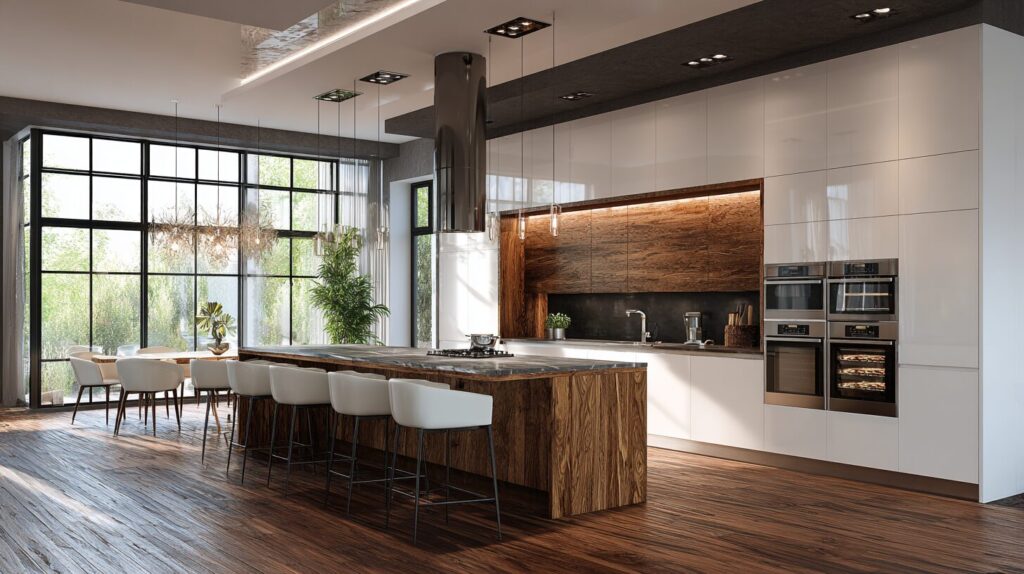
Kitchen Lighting & Electrical Designed for Real Life
A kitchen remodel can look finished and still feel “off” if the lighting is harsh, the outlets are in the wrong spots, or the island becomes a shadowy workspace at night.
Fortress Builders helps homeowners in Davis and Weber Counties plan kitchen lighting and electrical as a coordinated system—so your kitchen is easier to cook in, safer to use, and more comfortable every day.
Why kitchen lighting and electrical shouldn’t be an afterthought
Lighting and electrical are where most remodel stress shows up late—usually because they were treated like “final details” instead of planned decisions.
In a kitchen, lighting and electrical affect:
How comfortable the room feels in the morning and at night
How well you can prep, cook, and clean (without shadows)
Whether your outlets land where you actually use small appliances
How future-proof the kitchen is (EVEN if you don’t go “smart home” today)
How smoothly your project runs (fewer last-minute changes after cabinets go in)
The goal: A kitchen that works—and still looks great.
What Fortress Builders includes in kitchen lighting & electrical planning
Lighting and electrical are intertwined with cabinetry, appliances, and surfaces. We plan them together so everything aligns.
Layered lighting that supports real use
We design a plan that balances:
Task lighting (prep areas, sink, cooktop)
Ambient lighting (overall brightness and comfort)
Accent lighting (visual warmth and “finished” feel)
This often includes a combination of recessed lighting, pendants, under-cabinet lighting, and thoughtfully placed fixtures—based on your layout and how you use the kitchen.
Under-cabinet + island fixture planning
These are two of the highest-impact lighting upgrades in a kitchen—when they’re done intentionally.
We help plan:
Under-cabinet lighting placement and coverage
Island pendant sizing, spacing, and alignment with the island and seating
Lighting that avoids glare on countertops and reflective surfaces
Outlet, switch, and circuit planning
A kitchen should feel intuitive—no extension cords, no awkward switch runs, no power “dead zones.”
We coordinate:
Outlet placement by work zone (prep / coffee / cooking / charging)
Island outlet planning (practical, code-aware, and discreet)
Switch locations and control logic (what turns on what)
Dedicated circuits where needed for appliances and loads
Code- and safety-aware execution
Kitchens are one of the most safety-sensitive rooms in the home.
We build with code and safety in mind—especially around:
GFCI protection (as applicable)
Proper circuit capacity and appliance loads
Safe, clean electrical rough-ins coordinated with the overall build
Smart lighting options (only if you want them)
“Smart” doesn’t have to mean complicated.
If it fits your goals, we can plan:
Dimmers and scenes (Cooking / Dining / Evening / Nightlight)
Smart switches that keep a normal “manual” feel
Future-ready wiring considerations (where it makes sense)
The kitchen lighting decisions that matter most
If you want to avoid decision fatigue, focus on these few items—they create most of the end result.
1) How you want the kitchen to feel at night
A kitchen can be bright and still feel warm—if the plan is coordinated.
We’ll help you avoid:
Stark “operating room” brightness
Shadowy counters
Glare on stone, tile, and glossy finishes
2) Where task lighting is truly needed
Task lighting is less about “more lights” and more about placing the right light in the right spot.
We plan around:
Prep zones (the #1 shadow problem in most kitchens)
Sink and cleanup zones
Cooktop/range zones
Pantry and storage zones
3) Under-cabinet lighting (and doing it cleanly)
Under-cabinet lighting is one of the easiest ways to make a kitchen feel premium—when it’s planned early.
We coordinate:
Coverage (no dark sections)
Concealment (so you don’t see hotspots)
Switch/dimmer controls that feel natural
4) Outlet placement based on how you actually live
This is where kitchens often miss.
We plan for:
Coffee and small appliance stations
Charging zones
Appliance garages (if included)
Island use (without cords across the counter)
5) Switch placement and control logic
A kitchen should not require a “training session” for guests.
We design controls so:
The most used lights are easy to reach
Scenes make sense (not overly complicated)
Dimmers are where they add comfort (not everywhere just because)
How Fortress Builders delivers this as part of your remodel
Fortress Builders approaches remodeling like a coordinated system—not a collection of trades. Lighting and electrical are planned alongside layout, cabinetry, appliances, and finishes so the build stays smooth.
Step 1: Design consult and lifestyle-based planning
We start with your routine:
When you use the kitchen most (early mornings, evenings, entertaining)
What frustrates you about your current lighting/outlets
What “better” looks like for you (comfort, brightness, simplicity, scenes)
Step 2: Layout + lighting plan alignment
We align lighting with:
Cabinet layout and ceiling conditions
Island location and seating
Sink, cooktop, and prep zones
Appliance placement and power needs
Step 3: Electrical rough-in coordination
Before cabinets and finishes go in, we confirm:
Outlet and switch locations
Dedicated circuit needs
Lighting zones and controls
Any special needs (pantry lighting, toe-kick lighting, etc.)
Step 4: Trim-out + “real-life” testing
After installation, we verify the kitchen at different times of day:
Are counters evenly lit?
Do switches and scenes feel intuitive?
Does the kitchen feel comfortable at night?
Who this is for
Kitchen lighting and electrical planning is a great fit if you:
Are remodeling a kitchen and want it to feel bright, warm, and functional
Want better lighting without overcomplicating the design
Are tired of outlets that never land where you need them
Want a kitchen that feels finished, not just “new”
Prefer a remodel process that reduces last-minute changes and surprises
Common questions homeowners ask
Do I need under-cabinet lighting?
If you prep food regularly, under-cabinet lighting is one of the best ROI upgrades for everyday comfort. It solves counter shadows and makes the kitchen feel higher-end.
How do I avoid a kitchen that feels too bright or too harsh?
It’s all about a layered plan (task + ambient + accent) and controls that let you set the mood. We plan for both function and comfort.
Where should outlets go in a remodeled kitchen?
They should follow how you use your kitchen—coffee station, prep zones, charging areas, island use, and any specialty appliances. We plan outlet placement around your routines.
Can we add smart lighting without making it complicated?
Yes. We can keep everything manual-friendly while adding scenes/dimming where it helps—so the kitchen feels more comfortable without becoming techy.
When should lighting and electrical decisions be made?
Earlier is better—because it affects cabinetry, ceiling work, and finish coordination. Planning early prevents expensive changes later.
Related pages to explore
If you’re planning a complete kitchen remodel, these pages typically pair with lighting and electrical:
Appliances and Ventilation (hood planning, ducting, make-up air, appliance coordination)
Flooring and Surfaces (floors, countertops, backsplash planning)
Kitchen Portfolio (see completed kitchens and design directions)
FAQs / What to Expect (process clarity and common homeowner questions)
Ready for a kitchen that feels better every day?
If you’re remodeling your kitchen and want lighting and electrical planned with clarity—so the space is comfortable, functional, and built to last—the next step is a design consult. Share your goals, timeline, and what’s not working in your current kitchen. We’ll help you map a plan that reduces uncertainty and leads to a kitchen you’ll enjoy using for years.
Ready to elevate your kitchen?
Start with a design consult and a clear plan.