

Durable Kitchen Flooring for Utah Homes: Tile, LVP, Hardwood, and More
Kitchen floors take daily abuse: spills, grit, chair movement, dropped dishes, pet nails, and constant foot traffic. In a busy home, the “wrong” floor can feel worn out fast—while the right one can look great for years with reasonable upkeep.
This guide compares the most common Utah kitchen flooring options—porcelain and ceramic tile, luxury vinyl plank (LVP), hardwood and engineered hardwood, plus a few other materials—using the criteria that matter most for real life: durability, water resistance, comfort, and maintenance.
It’s written for homeowners (not contractors) and focuses on practical decision-making so you can choose a floor that fits your household, your layout, and your long-term expectations.
If you’re planning a kitchen remodel, it helps to align flooring decisions with the rest of the design (cabinet heights, transitions, appliance clearances, and lighting). For the bigger picture, explore:
Your kitchen floor’s real job: survive real life (and still look intentional)
It’s easy to pick flooring based on a photo. It’s harder (and more important) to pick flooring based on how your home actually functions on a random Tuesday.
When homeowners say “I want durable kitchen flooring,” they usually mean:
- Scratch and dent resistance for chairs, pets, and dropped items
- Water resistance for spills, wet boots, sink splashes, and mopping
- Comfort for standing and cooking (hardness, warmth, and foot fatigue)
- Easy upkeep without special routines or constant anxiety
- Long-term repairability (what happens if one plank/tile gets damaged?)
- Design fit with cabinets, countertops, and the rest of the home
Different materials do these jobs differently. The “best” floor is the one that matches your priorities—without creating new problems in installation or daily use.
Start with decision criteria (not the material): a homeowner’s framework
Before we compare tile vs LVP in the kitchen or weigh hardwood kitchen pros and cons, it helps to define what matters most to you. Flooring is a tradeoff: you can optimize for durability, water resistance, comfort, appearance, or cost—but it’s rare to get the “best” of everything at once.
1) Water exposure: spills are normal—damage shouldn’t be
In kitchens, water problems usually come from small, frequent events:
- drips at the sink
- dishwasher leaks or steam
- mopping and wet cleaning
- kids and pets tracking in moisture
It’s helpful to separate marketing terms from real-world performance:
- Water-resistant kitchen flooring can handle surface moisture and brief spills when cleaned up promptly.
- Waterproof claims vary by product. Some materials resist water on the surface very well, but water can still seep into seams, edges, or underneath if a leak goes unnoticed.
2) Impact and wear: what happens when life gets clumsy?
In a kitchen, durability isn’t just about “can it handle footsteps?” It’s also about dropped objects, dragged chairs, and everyday abrasion. Consider:
- Do you have heavy cookware that could fall?
- Do stools or dining chairs slide frequently?
- Do pets run and turn quickly in the kitchen?
- Do you wear shoes indoors?
3) Comfort: hard floors feel different—especially during long cooking sessions
Some floors are harder underfoot (tile, stone), while others feel slightly more forgiving (certain LVP constructions, cork). Comfort also includes temperature: a floor can be durable and water-resistant but still feel cold without rugs or radiant heat.
4) Maintenance: the “easy to clean” reality check
Every floor needs cleaning. The difference is how forgiving it is when you miss a spot. Ask yourself:
- Do you want simple sweeping and mopping?
- Are you okay with periodic sealing (often associated with certain grout or stone products)?
- Do you prefer fewer grout lines?
5) Repair and replacement: what if something gets damaged?
A truly durable floor isn’t just hard to damage—it’s also manageable to repair. For example:
- Some floors allow single-plank replacement more easily than others.
- Some tile repairs are clean and invisible if you have matching spare tile; others can be tricky if the tile is discontinued.
- Some finishes can be refinished; others cannot.
6) Design continuity: should the kitchen floor match the rest of the home?
Especially in open-concept layouts, the kitchen floor affects the entire visual flow. Matching the main floor can make the space feel larger and calmer. Switching flooring can help define zones and add contrast. We’ll talk more about this later—along with transition details that make either option look intentional.
Two-minute self-assessment (write down your answers)
- What’s your top priority: water resistance, durability, comfort, or style?
- How often do spills happen in your kitchen (daily, weekly, rarely)?
- Do you have pets or kids who are tough on floors?
- Do you prefer “low maintenance” or “natural and worth the upkeep”?
- Are you remodeling the whole main level (transitions matter more) or just the kitchen?
Keep these answers nearby as you read. They’ll make the comparisons clearer—and help you avoid a floor that looks right but lives wrong.
Porcelain and ceramic tile: the durability benchmark (with a few comfort tradeoffs)
Tile is a go-to choice for homeowners who want long-term durability and strong water resistance. It’s also one of the most style-flexible options—tile can look like stone, concrete, wood, or classic patterns, and it works in everything from modern kitchens to traditional spaces.
Porcelain vs. ceramic: what’s the difference?
Both porcelain and ceramic are types of tile, but porcelain is generally denser and less absorbent than ceramic. In practical homeowner terms:
- Porcelain tile is often chosen for durability and moisture performance.
- Ceramic tile can still work well in kitchens, but product quality varies, and it may be more prone to chipping depending on the specific tile and installation.
Within each category, there’s a wide range of quality and finish types—so it’s worth reading the product specs and seeing samples in person.
|
Tile in the kitchen — best at
|
|
Tile in the kitchen — watch-outs
|
Grout lines and maintenance: the part you’ll live with every day
Tile itself is often easy to clean. Grout is usually where the long-term maintenance conversation happens. A few practical considerations:
- More grout lines can mean more scrubbing over time (especially in high-traffic areas).
- Larger format tile can reduce grout lines, which many homeowners prefer for easier maintenance and a more seamless look.
- Grout color affects how quickly the floor “shows” dirt. Light grout can look crisp but may show stains more readily; darker grout can hide everyday mess better but changes the overall look.
Different grout products have different performance characteristics. Your tile installer can recommend grout options that fit your kitchen use (and your tolerance for maintenance).
Slip resistance: a kitchen should be safe when wet
Kitchens see water on the floor—especially near the sink and dishwasher. Many tile finishes are slip-resistant, but some glossy finishes can be slick when wet. When selecting tile, confirm that the tile is rated for floor use and review the manufacturer’s specs for slip resistance.
Tile installation: durability depends on the structure underneath
Tile is rigid. That’s good for wear—but it also means the subfloor and underlayment matter. If the floor assembly flexes too much, tile and grout are more likely to crack. Proper installation typically involves:
- a suitable subfloor thickness and structure
- a flat surface
- an appropriate underlayment or membrane
- movement joints where required
Details vary by home structure and the specific tile system being used. Confirm your installation approach with qualified flooring professionals and follow manufacturer instructions.
Radiant heat and tile: a natural pairing (when planned correctly)
Tile is commonly used with radiant floor heating because it conducts heat well. If you’re considering heated floors (electric or hydronic), the system design, insulation, and controls should be coordinated with your remodel plan. Electrical and plumbing requirements can vary—confirm details with qualified professionals and local authorities.
Luxury Vinyl Plank (LVP): comfortable, forgiving, and popular—when you choose the right product
LVP has become a common choice for homeowners who want a wood-look floor with strong water resistance and a softer feel than tile. It can be a great fit in many kitchens—especially in busy households—because it’s generally easy to clean and more forgiving when something drops.
That said, not all LVP is the same. If you’re comparing tile vs LVP in the kitchen, the conversation should include product construction, subfloor requirements, and what “waterproof” really means in real homes.
What LVP does well
- Comfort: Typically warmer and slightly softer underfoot than tile.
- Water resistance: Many products handle everyday spills well when cleaned promptly.
- Style flexibility: Wood looks, stone looks, modern neutrals, and a wide range of plank widths.
- Quieter feel: Often less “clicky” than some hard surfaces, depending on underlayment and installation.
What to watch for with LVP
LVP is durable, but it’s not invincible—and certain weaknesses show up in kitchens if you ignore them:
- Scratch risk: Some products show scratches more easily, especially with pets or grit under shoes.
- Heat and sunlight: Some vinyl products can be sensitive to direct sunlight and heat exposure (check product guidance for large windows and intense sun).
- Subfloor flatness: LVP often requires a very flat substrate. If the subfloor is wavy, you can feel it—and click-lock joints can be stressed over time.
- Heavy appliances: Rolling refrigerators or dishwashers across floating floors can be tricky. Installers often plan the sequence carefully to avoid damaging joints.
“Waterproof” vs “water-resistant”: a homeowner-friendly explanation
This is one of the biggest sources of confusion. Many LVP products are marketed as waterproof because the material itself doesn’t absorb water the way wood does. However, water can still cause problems if it:
- gets under the planks and stays there
- seeps into seams, edges, or transitions
- reaches the subfloor and causes swelling (depending on subfloor type)
In other words: LVP can be an excellent water resistant kitchen flooring choice for everyday life, but it’s not a substitute for fixing leaks or controlling moisture. If a dishwasher leaks overnight, any floor type can have issues—just in different ways.
|
LVP in the kitchen — best at
|
|
LVP in the kitchen — watch-outs
|
Comfort and sound: why homeowners often choose LVP
If you cook often, stand at the sink for long periods, or simply prefer a warmer, less rigid feel, LVP is commonly appealing. In many homes, it’s a sweet spot: durable enough for busy life while feeling more forgiving than tile.
Subfloor prep: the hidden factor that makes LVP feel “high-end” or “cheap”
If you’ve ever walked on LVP and thought “this feels bouncy” or “I can feel ridges,” the issue is often subfloor prep. Many floating floors need a flat surface to feel solid. This is one of the biggest differences between an LVP floor that feels premium and one that feels like a quick flip.
Hardwood in the kitchen: timeless, but not “set it and forget it”
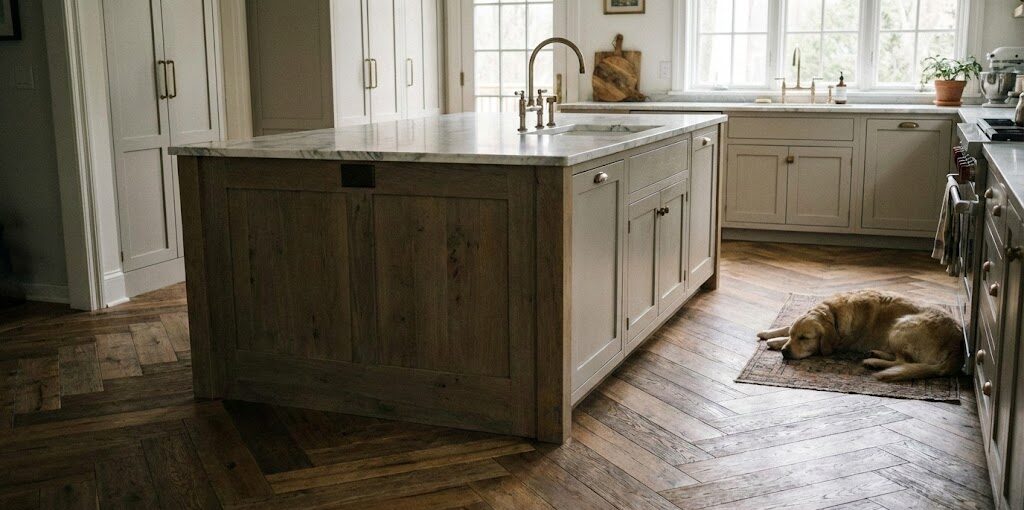
Hardwood floors in the kitchen can be beautiful. Many homeowners love the warmth and natural variation of wood—especially in open-concept homes where the kitchen connects directly to living spaces.
However, hardwood in a kitchen is a “know what you’re signing up for” choice. The main issue isn’t that hardwood is fragile—it’s that wood and water don’t mix well over time, and kitchens are full of water events.
Hardwood kitchen pros and cons (the real-life version)
|
Hardwood in the kitchen — pros
|
|
Hardwood in the kitchen — cons
|
Solid vs engineered hardwood: what changes?
Engineered hardwood is real wood on top with a layered core designed for better stability than solid wood. In many homes, engineered hardwood is chosen because it can handle normal seasonal movement a bit better than solid wood—especially over certain subfloors.
But it’s important to be clear: engineered hardwood is not the same as waterproof flooring. It can still be damaged by prolonged moisture or leaks. If water resistance is a top priority, you may prefer tile or certain resilient flooring options.
Best practices if you want hardwood in a kitchen
- Plan for mats: A well-placed washable mat near the sink can reduce water exposure.
- Stay on top of spills: Small leaks and drips are what cause long-term issues.
- Use floor protectors: Chair and stool feet can wear finishes fast without protection.
- Confirm finish recommendations: Follow manufacturer guidance for cleaning and care products.
If your kitchen remodel includes new cabinets and counters, it’s worth thinking about how your floor choice supports the overall look and maintenance level you want. Related planning: Cabinets and Countertops and Quartz vs. Granite vs. Porcelain Countertops.
Other kitchen flooring options: laminate, sheet vinyl, linoleum, stone, and concrete
Tile, LVP, and hardwood get most of the attention, but they’re not the only options. Depending on your priorities, one of these materials may be a strong fit—or a good fit in a secondary area like a pantry, mudroom transition, or basement kitchenette.
Laminate
Laminate has evolved over the years and can offer a convincing look at a lower cost than hardwood. However, traditional laminate can be sensitive to moisture at seams and edges. If you’re considering laminate in a kitchen, pay close attention to manufacturer guidance about water exposure and cleaning routines.
Sheet vinyl
Sheet vinyl is a resilient flooring option with fewer seams than plank flooring. In some situations, it can be very practical because it’s easy to clean and handles spills well. Design options vary widely, and quality matters.
Linoleum
Linoleum is a resilient floor material known for comfort underfoot. Like any material, performance depends on the product and installation. Confirm recommended use areas, maintenance requirements, and finish details before choosing it for a kitchen.
Natural stone (slate, limestone, marble, etc.)
Stone floors can be stunning, but they often come with maintenance expectations (including sealing and more careful cleaning products). Some stones are softer or more porous than porcelain tile. If you love the look of stone, discuss long-term upkeep and suitability with your tile professional.
Concrete
Concrete floors (polished, stained, or coated) can work well in some modern designs, especially on slab foundations. Comfort, sound, and temperature are the usual tradeoffs. Many homeowners use rugs strategically to soften high-use standing zones.
Utah kitchen flooring realities: grit, tracked-in moisture, and seasonal comfort
Every region has its quirks. In Utah and other four-season climates, kitchens commonly deal with a mix of:
- Grit and dust (which can act like sandpaper under shoes and pet paws)
- Snowmelt or wet boots near entries and mudroom-to-kitchen paths
- Seasonal indoor comfort changes (some floors feel colder in winter without rugs or radiant heat)
Simple habits that protect almost any floor
- Use high-quality entry mats to trap grit before it reaches the kitchen.
- Protect chairs and stools with felt or appropriate floor protectors (and replace them when worn).
- Wipe spills promptly—especially around sinks and dishwashers.
- Choose cleaners approved for your specific flooring type (and avoid harsh abrasives unless the manufacturer recommends them).
These habits matter regardless of whether your floor is tile, LVP, hardwood, or another option.
Match or mix? Designing the kitchen floor with the rest of the home
One of the most common design questions is whether the kitchen floor should match adjacent living spaces. There isn’t one right answer—there’s just a “best answer” for your layout and style goals.
When matching makes sense
- You have an open-concept main level and want the space to feel continuous.
- You want a calm, minimal look without visual breaks.
- You’re using a wood-look floor (like hardwood or LVP) throughout.
When mixing makes sense
- You want the kitchen to feel distinct (like a “room within a room”).
- You want a higher-durability surface in the kitchen but a different surface elsewhere.
- You’re designing a specific style statement (patterned tile, stone look, or contrast).
If you do mix materials, the transition details matter. The goal is to make it look intentional—not like a patchwork of different renovations.
Subfloor, leveling, and transitions: the part nobody sees but everyone feels
If flooring fails early, it’s often not because the material was “bad”—it’s because the subfloor wasn’t prepared properly or transitions weren’t planned. This is especially important in kitchens, where you have heavy appliances, cabinets, and lots of traffic.
Why subfloor prep matters
Different flooring materials have different needs:
- Tile needs a stable, rigid floor assembly to reduce the risk of cracked grout or tile.
- LVP often needs a very flat surface for a solid feel and long-term joint performance.
- Hardwood/engineered wood typically needs moisture control and appropriate acclimation and installation methods.
Subfloor requirements depend on product specs and the existing conditions in your home. A qualified flooring installer can evaluate flatness, moisture conditions, and structure before recommending an installation approach.
Floor height affects more than you think (appliances and doors included)
Floor thickness isn’t just a design detail—it affects how the kitchen works. For example:
- Dishwasher clearance: Changing floor height can make installation tighter if the opening wasn’t planned for it.
- Appliance alignment: Range height and toe-kick alignment can be affected by floor thickness.
- Door swing and thresholds: Transitions at exterior doors or nearby rooms may need adjustment.
This is one reason flooring decisions are best made before cabinets and appliances are finalized. Related planning: Built-In Appliances: Layout Tips for Fridges, Wall Ovens, and Microwaves.
Transitions: how to avoid the “awkward strip” look
When one floor meets another (tile to wood, LVP to carpet, etc.), transitions should be:
- Safe: No tripping edges, especially in high-traffic paths.
- Durable: Able to handle movement and wear.
- Visually intentional: Sized and placed so it looks designed, not improvised.
In remodels, transitions can also be a chance to “clean up” old floor mismatches and make the main level feel more cohesive.
Moisture testing and slab considerations
If your kitchen is on a slab (or you’re installing over concrete), moisture conditions matter for many flooring systems. Installers often use product-specific guidelines to determine appropriate underlayments, adhesives, or moisture mitigation steps. Because these details vary by material and home conditions, confirm the right approach with qualified professionals.
Kid- and pet-friendly kitchen flooring: how to pick what survives your household
Families often want “the floor that can handle anything.” In practice, it helps to decide what kinds of stress your floor will face most.
If you have pets
- Grit control matters: Dirt and small stones tracked in from outside cause many scratches, regardless of material.
- Scratch visibility varies: Some colors and textures hide wear better than others.
- Slip matters: Very slick surfaces can be hard for pets to grip.
If you have kids
- Impact resistance matters: Dropped dishes and toys are common. Some floors handle impacts better than others.
- Cleanability matters: Sticky spills and frequent mopping should be realistic with your routine.
- Comfort matters: Kids spend time on the floor—playing, sitting, and moving through the kitchen.
|
Practical “busy home” suggestions
|
Selection strategy: narrow down to 2 finalists, then test samples at home
A flooring decision gets much easier when you stop trying to choose from 50 options and start choosing between 2 or 3 finalists. The trick is to eliminate choices quickly based on your decision criteria, then evaluate samples in your home’s lighting.
Step 1: Choose your “must-haves”
Examples of must-haves:
- High water resistance
- No grout lines (or minimal grout lines)
- Warmer underfoot than tile
- Natural wood look
- Low maintenance
Step 2: Choose your “can’t-stand” list
Examples of deal-breakers:
- Shows every crumb and footprint
- Feels too hard or cold
- Needs special cleaners or frequent resealing
- Too slippery when wet
Step 3: Sample in real lighting (day and night)
Flooring samples can look dramatically different depending on lighting temperature, window exposure, and cabinet color. If possible:
- view samples next to your cabinet and countertop selections
- look at them in daylight and in evening lighting
- check how they look from standing height (not just close-up)
Large format tile, fewer grout lines, and why sampling matters
If tile is on your shortlist, pay attention to tile size and grout strategy. Many homeowners prefer large format tile because it reduces grout lines and creates a cleaner, more continuous look. It can also make cleaning easier (less grout to scrub), but it requires careful installation on a flat surface.
There’s also a design component: grout color, tile texture, and pattern scale all affect how the kitchen feels. A tile that looks subtle in a showroom can look busy in a smaller kitchen, and a tile that looks “warm” under showroom lighting can look cool at home.
Print this: a durable kitchen flooring checklist for remodel planning
Material selection
- List your top 3 priorities (durability, water resistance, comfort, maintenance, design).
- Choose 2–3 finalist materials (tile, LVP, hardwood/engineered, etc.).
- Confirm the product is rated for floor use and kitchen conditions.
Performance and upkeep
- Ask how the material handles spills and frequent mopping.
- Confirm scratch and wear expectations for your household (pets, chairs, shoes).
- Understand the maintenance routine (cleaners, sealing, grout care, refinishing potential).
Subfloor and installation planning
- Confirm subfloor condition and flatness (especially important for LVP and large format tile).
- Plan transitions to adjacent rooms (height changes, reducers, thresholds).
- Consider floor height impacts (dishwasher clearance, appliance alignment, door swings).
Design coordination
- Compare samples next to cabinets, countertops, and wall paint.
- View samples in daylight and at night.
- Decide if you want the floor to match the main level or define the kitchen as a distinct zone.
Practical final steps
- Order enough material (including extra for future repairs, when possible).
- Confirm lead times and availability (discontinued products can complicate repairs later).
- Follow manufacturer installation instructions and warranty requirements.
How flooring fits into a kitchen remodel (and why timing matters)
In a full kitchen remodel, flooring isn’t just a finish—it’s part of the construction sequence. The order of operations affects how clean the final result looks, how transitions work, and how your appliances fit.
A design–build process helps because it coordinates choices early:
- Floor thickness is aligned with cabinet toe kicks and appliance clearances.
- Transitions are planned instead of improvised.
- Electrical and plumbing work are sequenced to avoid rework.
If you want to see how Fortress approaches durable, real-life kitchens, explore:
Flooring & Surfaces Kitchen Remodeling Kitchen Portfolio Remodel Timeline Tips
FAQs: durable kitchen flooring in real homes
What’s the most durable kitchen flooring?
“Most durable” depends on what kind of durability you mean. For long-term wear and water resistance, many homeowners look at porcelain tile as a top contender. For a balance of water resistance and comfort, many consider high-quality LVP. The best choice depends on your priorities (water, scratches, comfort, maintenance) and how you live day to day.
Is LVP a good kitchen floor?
LVP can be a very practical kitchen floor when you choose a quality product and install it correctly on a flat subfloor. It’s often appreciated for comfort and easy cleaning. It’s still important to understand its limitations: scratch potential varies, and “waterproof” marketing doesn’t mean leaks can be ignored.
Can hardwood work in a kitchen?
Yes, hardwood can work in kitchens—especially when homeowners are comfortable with the maintenance expectations. The biggest risk is moisture. If you choose hardwood, plan for habits that protect the floor (wiping spills quickly, using mats, and following recommended cleaning methods).
What’s the best flooring if I have pets and kids?
Many busy households prioritize water resistance, easy cleaning, and scratch tolerance—often leading them to compare tile and LVP closely. Beyond material choice, everyday habits (entry mats, chair protectors, quick spill cleanup) make a big difference for long-term performance.
Do I need permits or inspections for kitchen flooring?
Flooring replacement by itself may not require permits in many situations, but projects that include structural changes, electrical updates (like radiant floor heat), or plumbing modifications can. Requirements vary by location and scope—confirm details with qualified professionals and local authorities.
Conclusion: choose the floor that matches your priorities—and test it like you’ll live on it
Kitchen floors take a beating. The goal isn’t to find a “perfect” material—it’s to choose a floor that matches your household and your expectations:
- Tile is often a durability and water-resistance leader, with comfort tradeoffs.
- LVP can be a great balance of comfort, style, and water resistance when chosen and installed correctly.
- Hardwood/engineered hardwood offers warmth and timeless appeal, but it rewards consistent care—especially around moisture.
Whichever option you lean toward, sampling in your home (in real lighting) is one of the smartest final steps. It’s the easiest way to avoid regret and choose a floor that looks right with your cabinets, counters, and wall colors—day and night.
Want help choosing durable kitchen flooring without guesswork?
The Fortress Builders helps Utah homeowners plan kitchens with a clear design–build process—so flooring, cabinetry, appliances, and transitions are coordinated before decisions become expensive to change.
Request a Design Consult Explore Kitchen Remodeling
If you already have a few flooring samples or a shortlist, we can help you pressure-test them against your layout, traffic flow, maintenance expectations, and finish selections—so your final choice is built to last.