

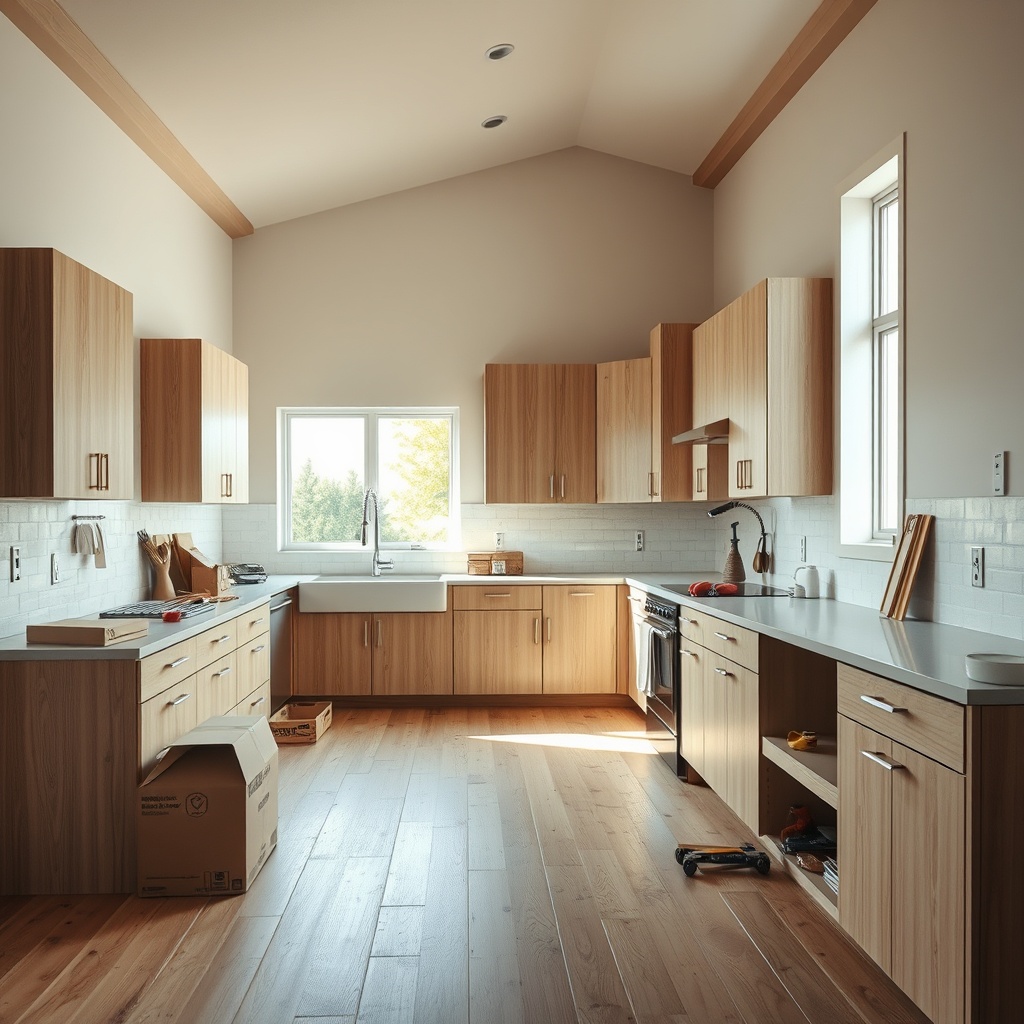
What begins as a tactical move to cut costs through ready-to-assemble cabinets or budget countertops increasingly morphs into a months-long disruption, with cost-savings claims undermined by mounting complexity, packaging waste, and unforeseen quality traps. Homeowners chase affordability in cabinetry and surfaces yet find themselves entangled in process and detail—discovering, sometimes too late, that the arithmetic of a kitchen upgrade rarely adds up so cleanly. The reality: Kitchen remodels present layered, compounding choices, where attempts to economize ignite new logistical and execution risks. The result? A new kind of kitchen project calculus, shaped less by price tags than by hidden opportunity costs and trade-offs.
This briefing parses the patterns behind these choices, focusing on cabinetry and countertop planning. It examines how shifts away from traditional models—”pay more, get more”—are forging a market in which each cost-saving shortcut carries its own penalties and ripple effects. For analysts, remodelers, and homeowners, the core challenge isn’t simply price management, but anticipating disruption within the very infrastructure of the kitchen space.
1. Market Signals Shaping This Topic
Kitchen remodelers are opting for ready-to-assemble (RTA) cabinets and value-driven countertop packages at record levels, seeking to contain costs as quoted averages climb ($14,000–$40,000 typical, $26,268 “average” spend). Cabinets now command 29% of remodel budgets, with work-per-dollar questionable: A week’s worth of self-assembly is common, and learning curves drive up stress and error potential. Simultaneously, less visible kitchen structures (subfloors, insulation) surface late as silent cost drivers; the need for replacement or fix-up adds unpredictable time and expense, eroding simplistic cost plans. Cardboard and packaging waste balloon with every component sourced online or boxed for DIY.
2. Why These Patterns Are Emerging
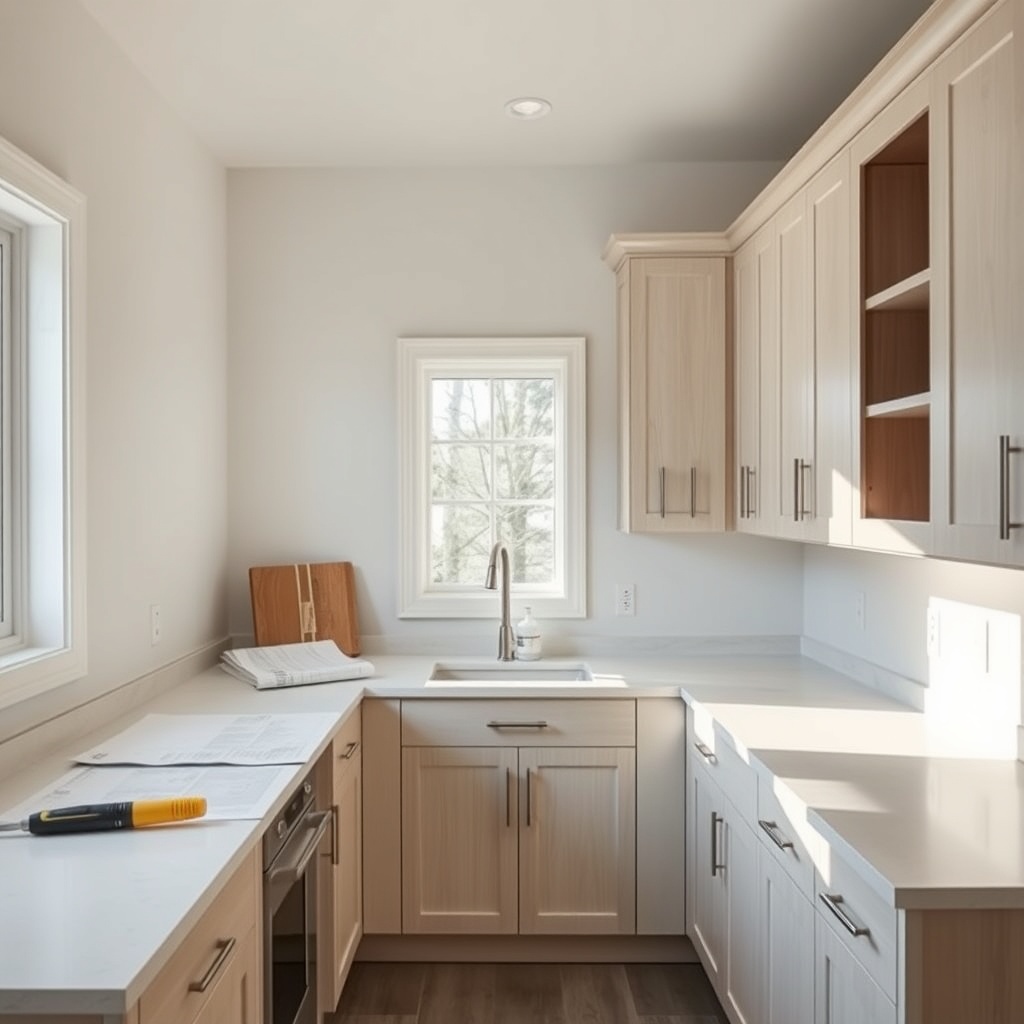
What compels homeowners to accept these trade-offs? It’s not just sticker shock—it’s a widespread skepticism about ROI on premium contracting. With high labor costs and limited faith that design premiums translate to resale value, the prevailing behavior is to tackle what seems manageable (cabinet assembly, basic countertop swaps) while outsourcing specialist work (plumbing, some electrical). Yet, this piecemeal approach destabilizes timelines: Accurate product measurement, permit compliance, and the surprise of zero insulation reveal the limits of DIY cost-saving, often expanding project scope after the fact.
The biggest miscalculation in kitchen remodels isn’t the price of materials or labor—it’s the scope creep triggered by invisible, interconnected issues, which surface only after cabinets and countertops are torn out. Each effort to minimize cost or complexity exposes new, sometimes more expensive, structural gaps.
3. Traditional vs Emerging Approaches
Historically, kitchen remodels were contained events—hire a contractor, select finishes from a catalog, and await the transformation. Now, buyers engage with flat-packed solutions, manage installations themselves, and juggle design decisions with hands-on logistics. Below, a comparison table exposes the operational and experiential fault lines:

| Shift | Legacy | Emerging | Impact |
|---|---|---|---|
| Cabinet procurement & assembly | Pre-assembled, installed by pros | RTA, homeowner-assembled | Longer timelines, higher error rates, cost control possible but not guaranteed |
| Surface replacement | Full-service countertop selection/fabrication | Off-the-shelf or measured-to-fit post-install | Measurement risks, disconnect with sink/plumbing interfaces |
| Budget planning | Lump sum contract, fixed contingency | Componentized (cabinets, surfaces, electrical) | More choices, more risk for missed costs |
| Space/staging logistics | All handled by crew, removed daily | Homeowners manage packaging, clutter | Disruption of living space, increased project fatigue |
| Compliance & inspection | Permits plus pro knowledge | Owner must learn, adapt on the fly | Reinspection, rewiring, increased regulatory anxiety |
4. Homeowner Response Patterns
The lived reality is stark: Homeowners enter kitchen projects with optimism, then recalibrate as unexpected technical burdens emerge. Eating habits deteriorate as old kitchens are gutted but new ones linger unfinished—many wish they’d created functional temporary kitchens or budgeted for more off-site meals. Increasingly, they recognize the hidden infrastructure that underpins cabinetry: faulty subfloors and invisible insulation lapses force mid-project pivots. Some admit they’d have spent more upfront to avoid the cascade of micro-decisions and stopgap fixes. Others double down, adapting by creating packaging staging zones or building “wiggle room” into wiring plans.
5. Strategy Shifts in Design/Remodeling
Price-driven strategy is giving way to systems thinking. Homeowners are moving beyond surface-level swaps (paint, new hardware) to a more forensic evaluation: What’s behind the walls and beneath the floors? The emergence of soundproofing insulation and service loops in electrical work are not simply upgrades, but risk-management tactics—hedges against future disruption. The decision matrix is expanding: A smooth, cabinet-ready subfloor reduces cumulative error, while the selection of modular cabinets or adjustable electrical boxes provides insurance as plans shift. Some homeowners explicitly involve designers (design and layout experts) for budget advice, not just style input.
6. Short-Form Trend Signals
The growing influence of social media condenses lessons and warnings into rapid-fire content: TikTok and Instagram clips highlight packaging overwhelm, reveal measurement fails, and document day-by-day lived disruption—real lives among the sawdust, not showroom-perfect transformations. “Unboxing” is no longer just for gadgets; it’s a reminder of hidden friction in any DIY approach. The most-watched reels aren’t design showcases—they’re cautionary, demonstrating how quickly organizing space and managing debris become full-time jobs as kitchens remain out of action far longer than anyone expected.
7. Key Questions Homeowners Are Asking
- Should I prioritize cabinet quality or installation speed when forced to choose?
- Is cutting costs upfront really worth the additional time and hassle to assemble and install?
- How do I anticipate infrastructure surprises hidden under my existing cabinetry?
- Which emerging cabinet and countertop options minimize disruption but retain value at resale?
8. Future Outlook
The category signals a pivot: As more homeowners tire of false economies and hidden disruption, the value proposition for kitchen cabinets and countertops is recalibrating. Price sensitivity remains high, but appetite is growing for systems and services that offer not just materials, but disruption management—smarter project phasing, hybrid models (DIY assembly with pro check-ins), and explicit planning for underlying infrastructure risk (cabinet and countertop integration, whole-kitchen remodeling, and space planning consultations). As buyers document—and broadcast—their missteps, cabinetry and surface product manufacturers, installers, and design consultants will face growing pressure to internalize these friction costs, not just pass them downstream. For now, the category remains a landscape of contradiction: Low-cost cabinetry can unlock a remodel for modest budgets, but only if owners are prepared to navigate—and absorb—the hidden chaos that comes with subtracting expertise from the equation. Integration of technical consulting, flexible service packages, and logistical support will likely define the category’s next phase, transforming the very definition of what “affordable” kitchen remodeling means.
For specialized scenarios (e.g., complex layouts, added ventilation or moisture-control needs) homeowners are seeking layered solutions, often blending DIY with focused contracting (ventilation and moisture control). Meanwhile, streamlined surface offerings and smarter infrastructure integration will likely determine not just budget, but livability during and after the project. The question for the industry will be whether service models can keep pace with consumer learning curves—and whether the arithmetic of cost-saving can evolve to incorporate the true complexity of a disrupted home environment.
More intensive cabinet systems and phase-based kitchen plans demand rigorous layout and design inputs—underscored by a move to connect lighting and electrical choices at the planning stage. In sum, the future of kitchen cabinetry and countertop remodeling will be less about products, more about the process—and how well disruption is anticipated, managed, and ultimately, minimized.