

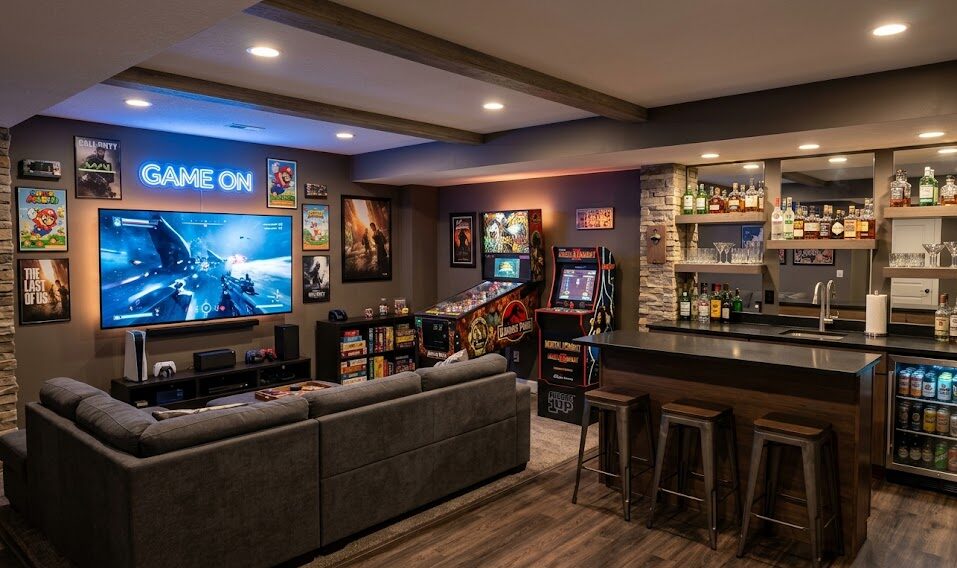
Basement Game Rooms & Wet Bars Built for Gathering
A great basement game room or wet bar is not just about adding fun features. It is about creating a lower-level space that naturally draws people in, supports real gathering, and still feels practical after the excitement of the remodel wears off. The best entertaining basements work because layout, seating, storage, lighting, appliance planning, and finish durability all come together as one system.
That is why smart basement game room wet bar planning starts long before you pick bar stools or choose a mini-fridge. Homeowners need to think through circulation, spill-friendly surfaces, power needs, sink placement, noise, cleanup, and how the basement will actually be used on weeknights, weekends, and special gatherings.
In this guide, you’ll learn:
- how to approach basement bar planning with the right level of scope,
- how to design a game room layout basement plan that supports both movement and gathering,
- what matters most in wet bar design, including sink placement, appliance planning, and seating,
- how to choose entertaining-friendly finishes that can handle real life,
- and how to create a basement gathering space that feels elevated, useful, and built to last.
The Fortress Builders approaches basement remodeling through a design-build process built on one principle: strength through structure. That means a basement bar or game room is not treated like a few fun features added to empty square footage. It is planned as a real living environment with comfort, flow, durability, and long-term use in mind.
Helpful Fortress Builders pages while you plan:
Why game rooms and wet bars work so well in basements
Basements are often the best place in the house for gathering spaces because they can absorb noise, activity, and longer social use more naturally than many main-floor rooms. A good basement game room wet bar setup can turn the lower level into a place where people actually want to spend time—not because it is separate from the home, but because it offers a different kind of experience.
- It supports entertaining: guests can gather without crowding the kitchen or formal living spaces upstairs.
- It supports family use: movie nights, game nights, sports watching, and casual hanging out all become easier.
- It supports flexibility: the basement can shift between everyday use and event-style use more easily.
- It adds lifestyle value: the lower level becomes an active part of the home, not just extra finished square footage.
Homeowner takeaway: The best entertaining basements feel inviting because they are designed around people moving, gathering, sitting, eating, watching, and relaxing—not just around the idea of a bar or a game table.
Start with the kind of gathering the basement needs to support
Not every basement game room or wet bar needs the same design approach. The strongest plans begin by identifying what kind of gathering the space is meant to support most often.
Sports and TV gathering spaces
These often need strong sightlines, lounge seating, convenient drink access, and an electrical plan that supports screens and devices without clutter.
Game-focused basements
These may need open floor area, flexible seating, durable finishes, and enough circulation around tables, arcade zones, or card/game setups.
Bar-forward social basements
These need more thoughtful wet bar design, including sink placement, counter strategy, appliance scope, and a layout that allows people to gather without bottlenecking.
Hybrid entertaining spaces
Many homeowners want all of the above in some combination. That is where zoning becomes especially important.
The 5-minute entertaining profile
- What happens here most often? Watching sports, hosting friends, family game nights, or casual lounging?
- Will people gather around the bar, around the TV, or around a game area first?
- How many people should the space support comfortably?
- Does the basement need active zones, quiet lounge zones, or both?
- Will cleanup and drink service be frequent enough that a true wet bar makes sense?
Why this matters: These answers reveal how much square footage should go to seating, circulation, game space, and wet bar support.
Game room layout basement planning should begin with flow
A great game room is not defined only by what it contains. It is defined by how easy it is to move through. If the room feels cramped, blocked, or overfilled, even expensive features can lose their appeal quickly. Game room layout basement planning should always start with flow.
People need room to move around activity zones
Pool tables, card tables, arcade machines, gaming setups, and open social seating all need circulation space around them. This is one reason basement gathering spaces often work better when they are zoned rather than packed wall-to-wall with features.
Do not let one feature dominate the whole room unless that is the clear priority
A pool table, for example, may be worth it—but only if the room truly supports it without making the rest of the basement feel squeezed.
Keep the room flexible
Entertainment preferences change. A layout that allows for reconfiguration often delivers more value over time than one built too tightly around a single current obsession.
Best practice: The strongest game rooms feel open enough that people can gather comfortably even when everything is in use—not just when the room is empty.
Wet bar design starts with deciding what the bar should actually do
One of the biggest mistakes in basement bar planning is designing a bar that looks impressive but does not actually support how the family entertains. A wet bar design should begin with function, not only appearance.
Beverage-only support
Some basements only need refrigeration, glass storage, counter space, and maybe a sink. This can be enough for sports watching, casual hosting, and family movie nights.
Entertaining-focused bar
This often benefits from stronger sink placement, better storage, bar-top seating, and appliance scope that supports actual use during gatherings.
More complete lower-level serving zone
Some homeowners want the wet bar to act almost like a mini-service station for larger gatherings, which may justify more cabinetry, prep area, and coordinated lighting.
| Wet Bar Goal | What Often Belongs in the Plan |
|---|---|
| Simple beverage bar | Counter space, refrigeration, open or closed storage, possible sink |
| Social entertaining bar | Sink, serving surface, better storage, stronger seating logic, lighting layers |
| Feature bar with stronger hosting role | More complete cabinetry, appliance coordination, display/storage balance, durable finishes |
Sink placement is one of the most important wet bar decisions
If the wet bar includes a sink, that choice affects far more than plumbing. It changes workflow, cleanup ease, counter usability, and how the bar feels during actual hosting. This is one reason sink placement should be planned alongside the full bar layout rather than simply inserted where plumbing seems easiest.
A sink can make the bar much more functional
It supports rinsing, quick cleanup, drink prep, and more practical hosting, especially during longer gatherings.
But a sink can also consume premium work space
If placed poorly, it can interrupt the serving surface or make the bar feel smaller than it needs to.
The right sink placement depends on the bar’s real role
A beverage-focused bar may treat the sink as secondary. A hosting-focused bar may rely on it much more heavily. Related resource: Wet Bar Design 101.
Questions to ask about sink placement
- Will the bar be used mainly for serving drinks or for broader hosting support?
- How important is easy cleanup at the bar itself?
- Does the sink location preserve enough uninterrupted prep and serving surface?
- Will the sink feel integrated into the layout instead of dropped into the middle of the best counter zone?
Appliance scope should match how the basement really entertains
Appliances often make or break a basement bar because they directly affect convenience, clutter, and how self-sufficient the lower level becomes during gatherings. But appliance planning only works when it matches real use patterns.
Refrigeration is often the first priority
A beverage fridge or undercounter refrigerator may be one of the most valuable bar additions because it reduces constant trips upstairs.
Do not overbuild just because the bar “can” hold more
The basement can start to feel crowded or overcomplicated if the appliance list grows faster than the real need for it.
Think about maintenance and cleanup too
Every appliance adds function, but it also adds planning, storage pressure, and cleanup expectations.
Simple rule: The best appliance plan is the one that solves the hosting problems you actually have, not the one that tries to imitate a full upstairs kitchen.
Seating should support conversation, not fight it
Whether the basement includes bar stools, lounge seating, game chairs, or sectional seating near the TV, the room needs to support conversation and movement naturally. Basement bar planning is not only about cabinetry. It is also about where people will actually sit and how they will interact.
Bar seating is not always the main seating
Some homeowners assume the bar will become the social center. Sometimes it does. But often the room works better when the bar supports the gathering while a nearby lounge zone carries the longer stay experience.
Keep sightlines in mind
If the basement includes a main TV or screen, seating should support both conversation and viewing where possible.
Do not let stools or chairs choke circulation
Seating needs should be balanced with how people pass through the room during actual events, not only how the room looks in staged photos.
| Seating Type | Best Use in a Basement Gathering Space |
|---|---|
| Bar stools | Shorter gathering, casual conversation, serving-edge interaction |
| Lounge seating | Longer stays, sports watching, movies, larger social comfort |
| Game-table seating | Focused activity zones like cards, board games, or table games |
| Flexible movable seating | Adaptable entertaining layouts that may shift over time |
Spill-resistant finishes matter more in basement gathering spaces
Basement bars and game rooms are not delicate rooms. Drinks spill. Ice melts. Plates land on counters. Chairs move. Shoes and traffic increase during gatherings. That is why finishes should be chosen for real entertaining behavior, not only for how dramatic they look in samples.
Countertops should be chosen with cleanup in mind
A beautiful counter is useful only if it can stand up to actual use in a hosting environment.
Flooring should support movement and mishaps
The basement bar and game room floor may need to handle stool movement, spills, foot traffic, and equipment relocation more than a quieter guest room or office would.
Wall and shelf details should still feel durable
Open shelving, accent walls, and feature lighting can be excellent additions, but they should be balanced with the room’s real wear patterns.
Best practice: The most successful entertaining basement ideas usually combine warmth and style with materials that can handle use gracefully rather than demanding constant caution.
Lighting can turn a basic basement bar into a true gathering zone
Lighting is one of the fastest ways to move a basement from “finished” to “memorable.” In game rooms and bars especially, lighting sets tone. It can make the room feel moody, energetic, relaxed, or premium depending on how it is layered.
Bar lighting should support both function and atmosphere
People need enough light to use the bar comfortably, but the room should not feel overexposed or flat during evening gatherings.
Accent lighting often helps the room feel custom
Shelf lighting, backsplash lighting, under-shelf or under-cabinet illumination, and controlled ambient light can all add depth.
Lighting should match the basement’s role
A sports-and-games basement may want a slightly brighter energy than a lounge-forward, moody entertaining space.
Lighting questions worth asking
- Should the basement feel lively and energetic or more lounge-like and moody?
- Does the wet bar need task light, accent light, or both?
- Will the room host sports viewing, card games, movie nights, or mixed use?
- Can the lighting shift between active and more relaxed entertaining modes?
Electrical and plumbing planning deserve early coordination
Wet bars and entertainment zones involve more behind-the-scenes coordination than many homeowners expect. Sinks, refrigeration, lighting features, media walls, chargers, game equipment, and bar appliances all affect how the lower level should be planned before the finish work closes everything in.
Bar planning is not just cabinetry
Appliance support, outlet placement, and lighting zones all shape how usable the bar will feel.
Game rooms often need more power logic than expected
TVs, consoles, table lighting, charging areas, and feature lighting can create a surprisingly device-heavy environment.
Requirements vary by scope
Plumbing, electrical, appliance, ventilation, permitting, inspection, and related code details can vary by home, room use, and local requirements. Final technical decisions should always be confirmed with qualified professionals and local authorities where applicable.
Important note: Plumbing, electrical, appliance support, permits, inspections, and other technical requirements can vary by project scope and local jurisdiction. Confirm final bar and game room planning details with qualified professionals and local authorities where applicable.
Common basement bar and game room mistakes homeowners regret
Mistake 1: Overloading the room with too many features
A basement can only support so much comfortably. Too many “must-haves” can make the room feel smaller and less usable.
Mistake 2: Prioritizing the bar look over the bar function
A beautiful bar that does not support cleanup, appliance use, or actual hosting quickly becomes less impressive in real life.
Mistake 3: Forgetting circulation around game zones
People need room to gather around the fun, not squeeze past it awkwardly.
Mistake 4: Choosing delicate finishes for heavy-use spaces
Entertaining rooms age better when their materials are chosen for real use.
Mistake 5: Underplanning lighting and mood
A game room or wet bar can feel flat if the room has no lighting personality or no ability to shift with the occasion.
Practical truth: The basement gathering space people use most is rarely the one with the most features. It is usually the one with the best balance of flow, comfort, durability, and atmosphere.
How Fortress Builders would approach basement game rooms and wet bars
A strong design-build process starts by asking what kind of gathering the basement should support most often. From there, the room can be planned around the right mix of bar function, lounge comfort, game-space flow, storage, appliance support, and durable finishes.
That usually means:
- giving the room enough open circulation to stay comfortable during gatherings,
- scoping the wet bar to match real entertaining needs,
- planning sink, appliance, and lighting locations early enough to keep the design clean,
- choosing finishes that support real use rather than staged use,
- and making sure the basement still feels coherent as one lower-level environment.
When those decisions are made early, the finished basement feels less like a collection of features and more like a gathering place people want to return to again and again.
FAQ: Basement game rooms and wet bars
What should a basement wet bar include?
That depends on how you entertain, but common priorities include serving surface, storage, refrigeration, lighting, and sometimes a sink. The best wet bar includes what you will truly use, not just what fills a cabinet run.
How much space do I need for a basement game room?
The answer depends on what activities the room needs to support. The important point is not just fitting features in, but allowing enough circulation around them so the room still works comfortably.
Is a sink worth it in a basement wet bar?
In many cases, yes—especially if the bar will be used regularly for entertaining and cleanup. But the sink should be placed thoughtfully so it helps workflow instead of taking away the best counter space.
What are the best finishes for a basement bar or game room?
Usually the best finishes are the ones that balance style with durability: surfaces that handle spills, traffic, movement, and cleanup without making the room feel delicate.
When should I plan the bar and electrical details?
As early as possible. Bar layout, sink placement, appliance support, lighting zones, and outlet logic all work best when they are coordinated before framing and finish choices are fully locked in.
Conclusion: the best basement gathering spaces are built for real use
Basement game rooms and wet bars add the most value when they are built around real gathering behavior. The room should support movement, conversation, comfort, cleanup, and flexible entertaining—not just look good in a reveal photo.
That is what makes a basement bar or game room worth the investment. A smart layout, the right wet bar design, durable finishes, and thoughtful lighting can turn the lower level into one of the most used and most enjoyable spaces in the home.
Thinking about building a basement game room or wet bar that people actually want to use?
If you’re planning a basement remodel in Davis or Weber County, Fortress Builders can help you think through game room layout, wet bar design, appliance scope, seating, lighting, and the construction decisions that make entertaining feel easier and more natural.
Request a Design Consult Explore Basement Finishing Read the Wet Bar Design Guide
Bring your entertaining goals, your basement layout ideas, and the kind of gatherings you want the lower level to support. Fortress Builders can help turn that into a basement plan that is social, durable, and built to last.