

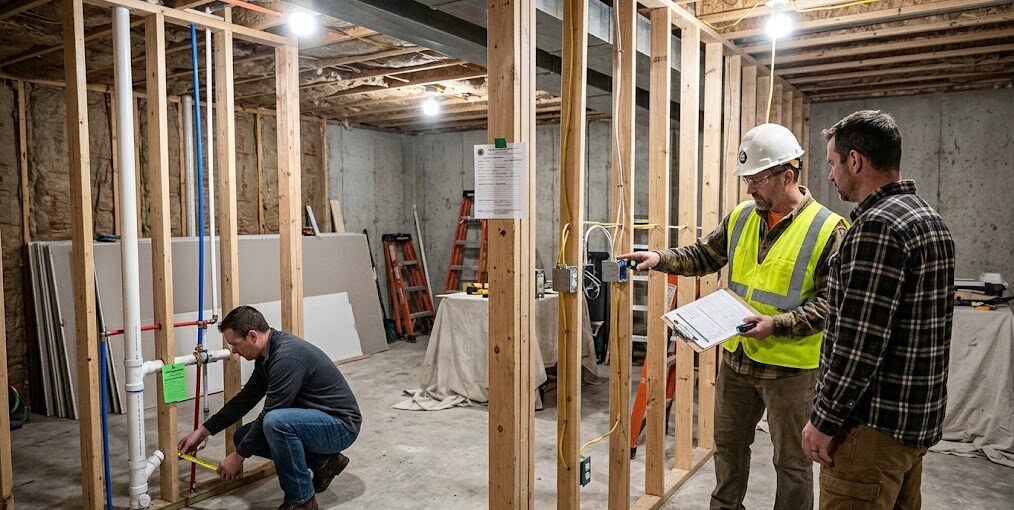
Basement finishing permits Utah: inspections, timeline stages, and what homeowners should expect
Basement finishing can feel like a “simple interior project” until you run into the parts that matter most: electrical, plumbing, mechanical ventilation, egress, and safety requirements. That’s where permits and inspections come in.
This guide is written for homeowners who want clarity—without getting buried in code language. You’ll learn how basement finishing permits Utah typically work, what inspections for basement finishing often look like, and how to plan a realistic basement finishing timeline inspections sequence so you don’t lose weeks to scheduling surprises.
In this guide, you’ll get:
- when permits typically apply (and when they often do not),
- the most common inspection stages during a basement finish,
- scheduling tips that help you avoid idle time,
- documents and plans that usually make approvals smoother,
- how to work productively with your local building department,
- and a practical checklist to build permit planning into your schedule.
The Fortress Builders is a Utah-based design–build firm built on one principle: strength through structure. That means the work behind the walls—planning, permitting, inspections, moisture control, and systems coordination—gets handled early, so your finished basement is safe, compliant, and built to last.
Helpful pages while you plan:
Permits protect you and your investment—especially when you finish below grade
Permits are easy to frame as “paperwork,” but the real purpose is protection. A finished basement adds livable space, electrical load, plumbing lines, HVAC changes, and often bedrooms. Those are safety-related systems. Inspections exist to verify the work is installed correctly and is consistent with the approved plan.
If you ever sell your home, a permitted and inspected basement can also reduce headaches. Unpermitted work can create appraisal issues, buyer concerns, insurance questions, and expensive “undo and redo” surprises.
Practical mindset: Permits and inspections are a project management tool. They keep critical work visible, verifiable, and coordinated—before finishes hide everything.
When do permits typically apply to basement finishing?
In general, permits are most commonly required when you’re changing something that affects building safety, structural elements, or regulated systems. Basement finishing often touches several of these at once.
Common triggers for a basement finishing permit
- New walls / new rooms: adding bedrooms, offices, bathrooms, or altering layouts can trigger review for egress, smoke/CO alarms, and safety requirements.
- Electrical work: new circuits, outlets, lighting, panels, or significant electrical changes typically require permits and inspections.
- Plumbing additions: adding a basement bathroom, kitchenette, wet bar, laundry, or new drains typically triggers plumbing permits/inspections.
- Mechanical changes: adding or altering HVAC supply/returns, bathroom exhaust fans, or ventilation strategies can require mechanical permits/inspections.
- Egress changes: adding a bedroom often requires egress compliance. Start here: Basement Egress Basics.
- Structural changes: modifying beams, posts, or load-bearing elements nearly always requires engineered review and permits.
What may not require a permit (often, but not always)
Minor cosmetic changes—like paint, flooring, trim replacement, or swapping fixtures without relocating plumbing—may not require permits in many areas. But the exact line is local. Always confirm with your local building department before assuming.
Homeowner rule of thumb: If the work goes behind drywall (wiring, pipes, vents, framing) or changes how a space is used (new bedroom/bath), assume permits and inspections may apply—then confirm locally.
How the Utah basement permit process usually fits into a real remodel
Most homeowners don’t need a technical breakdown—they need a timeline that makes sense. The permit process typically weaves into a basement finish like this:
- Design and scope: determine rooms, fixtures, and intended use (bedroom, theater, in-law suite, storage).
- Plan set preparation: basic drawings that show layout, electrical plan, plumbing fixtures (if any), and mechanical ventilation approach.
- Application and review: submit to local building department; revise if requested.
- Permit issuance: once approved, work can proceed under the permit.
- Inspections at key milestones: rough-in stages, then final.
Some jurisdictions also require separate permits (or separate inspections) for electrical, plumbing, and mechanical work. It’s common for these trades to be inspected at different points in the build.
Common inspection stages for basement finishing
Inspection sequences vary by city/county and by scope, but basement finishing often follows a predictable pattern. Think of inspections as “gates” that verify the invisible work before you cover it up.
1) Framing inspection (or framing review)
If you’re framing new walls or altering rooms, an inspector may verify the framing is consistent with the plan (wall placement, room use, basic safety considerations). This stage can also intersect with soffit planning around ducts and beams.
If your basement has heavy ductwork constraints, coordinating early helps preserve ceiling height and avoids awkward visual compromises. Related: Basement Lighting for Low Ceilings.
2) Rough electrical inspection
Electrical rough-in is typically inspected before insulation and drywall. Inspectors often look for proper routing, box placement, circuit planning, and safe installation practices. The goal is to verify safety before wires are hidden.
If your basement includes special zones (theater, kitchenette, in-law suite), electrical planning should coordinate with your layout and future furniture plans. Examples of “systems coordination” thinking can be seen in kitchen and bath planning content like Under-Cabinet Lighting Done Right and Bathroom Lighting Plan.
3) Rough plumbing inspection (if applicable)
If you’re adding a basement bathroom, wet bar, or kitchenette, plumbing rough-in is typically inspected before walls are closed. Inspectors may verify drain routing, venting approach, and supply line installation (the exact requirements vary widely).
Basement plumbing is shaped by “plumbing reality”—drain slope, vent routes, and tie-ins. If you’re planning a bathroom, review: Basement Bathroom Rough-In Guide. If you’re planning a wet bar or kitchenette, see: Wet Bar Design 101 and Basement Kitchenette Planning.
4) Rough mechanical inspection (HVAC / ventilation)
Basement comfort problems often trace back to mechanical planning—especially return air and humidity control. Mechanical inspections may evaluate duct changes, ventilation routes, and equipment-related details.
Related: Basement HVAC & Ventilation Planning and Bathroom Vent Fan Sizing.
5) Insulation inspection (where required)
If insulation is part of the scope (common in basement finishing), this stage verifies insulation is installed as intended before drywall goes up. Basements are sensitive environments, so insulation strategy should also align with moisture control and air sealing best practices.
Related: Basement Insulation Basics for Comfort and Sound Control and Basement Moisture Management.
6) Final inspections
Final inspections typically occur once finishes are in and systems are operational. Depending on scope, finals may include building, electrical, plumbing, and mechanical finals. Inspectors may verify:
- safe egress and room use compliance (especially for bedrooms),
- functioning outlets/switches/fixtures,
- plumbing fixture function and safe installation,
- ventilation fan operation and duct terminations,
- basic life safety items (often smoke/CO alarms, depending on local rules and scope).
Why this matters for scheduling: Most delays happen when an inspection is needed but the project wasn’t staged properly (work not complete, access blocked, missing documents, or trades out of sequence).
Basement finishing timeline inspections: how to avoid schedule slowdowns
Permits and inspections don’t have to slow your project—unless they’re treated as an afterthought. Most basement finishing timelines get stretched when inspection needs collide with material orders, trade scheduling, or incomplete prep.
Scheduling tips that usually reduce delays
- Build inspection windows into the timeline: don’t schedule drywall the day after rough-in without a realistic inspection buffer.
- Stage the basement for access: keep mechanical rooms, panels, and key framing areas accessible.
- Keep plan documents handy: a printed plan set on site (or accessible digitally) helps everyone align quickly.
- Sequence trades intentionally: electrical/plumbing/mechanical rough-ins should be coordinated so they don’t block each other.
- Confirm “what’s inspected” early: some jurisdictions want separate finals for each trade; some bundle.
Homeowner decision tip: If your basement scope includes bedrooms, bathrooms, or an in-law suite, plan extra time for coordination. More systems = more inspection touchpoints.
Documents and information that typically help approvals go smoother
Every building department has its own requirements, but most permit processes move faster when submissions are clear, complete, and consistent.
Common items that help during permit review (general guidance)
- Floor plan: showing room layout, use, and basic dimensions.
- Electrical plan: outlets, switches, lighting zones, and any special circuits.
- Plumbing fixture plan (if applicable): bathroom/kitchenette/wet bar locations and rough-in concepts.
- Mechanical/ventilation notes: bathroom fan strategy, HVAC supply/return approach if changed.
- Egress details (if adding a bedroom): concept-level compliance documentation, often with window well details where applicable.
If you’re still shaping your basement layout, start with: Basement Layout Planning: Zones That Make the Space Feel Bigger.
Working with your local building department (without the stress)
Most homeowners want to “avoid mistakes.” A better goal is: make the process predictable. That happens when you treat the building department as a project stakeholder, not an obstacle.
What helps the relationship stay smooth
- Ask early: confirm permit triggers before demolition or rough-ins begin.
- Submit clear scope: if you’re adding a bedroom, say so. If it’s storage only, say so.
- Be consistent: plan set, trade scope, and construction reality should match.
- Schedule proactively: if inspections book out, plan your sequencing around that reality.
- Document changes: if scope changes mid-project, ask what documentation is needed rather than guessing.
Basement remodel inspections: what inspectors typically want to see on site
Inspections go smoother when the site is prepared. The inspector’s job is to verify compliance and safety—not to hunt through clutter to find critical work.
Inspection day preparation checklist
- Access: panels, mechanical rooms, and work areas are clear and reachable.
- Lighting: temporary lighting is adequate to see rough-in work.
- Plans on site: printed or digital plans available for quick reference.
- Work complete for that stage: don’t schedule inspection for “almost done.”
- Trade accountability: if questions come up, the responsible trade can respond quickly.
- Notes on changes: document any plan deviations and be ready to explain rationale.
Permit planning belongs in your design phase—not after demo
The easiest way to avoid permit stress is simple: integrate it into planning. If you wait until demolition starts, you create avoidable urgency. That urgency leads to rushed decisions—especially around HVAC, plumbing rough-ins, or egress planning.
If you’re in the early stage, review these planning-first resources:
- Space Planning for Basement Finishing
- Basement Moisture Checklist
- Basement HVAC & Ventilation
- Basement Egress Basics
Conclusion: plan for permits early so your basement schedule stays predictable
Permits and inspections are not a nuisance—they’re part of building a safe, durable finished space that holds its value. When you treat the Utah basement permit process as a planning input (not a last-minute task), your project becomes simpler: trade work stays in sequence, inspections happen on time, and you avoid the costly delays that occur when walls need to be reopened.
If you want the end result to feel seamless, the behind-the-scenes process needs to be disciplined—and that’s exactly what permits and inspections help enforce.
Finishing a basement in Davis or Weber County?
The Fortress Builders can help you plan a basement finish that’s designed, permitted, and built with clarity—so you know what to expect at each inspection stage and your schedule stays on track.
Request a Design Consult Explore Basement Finishing View Basement Portfolio
Bring your goals (bedroom, bath, theater, office, storage) and any existing basement info you have. We’ll help map scope, permitting needs, and an inspection-ready sequence before construction begins.