

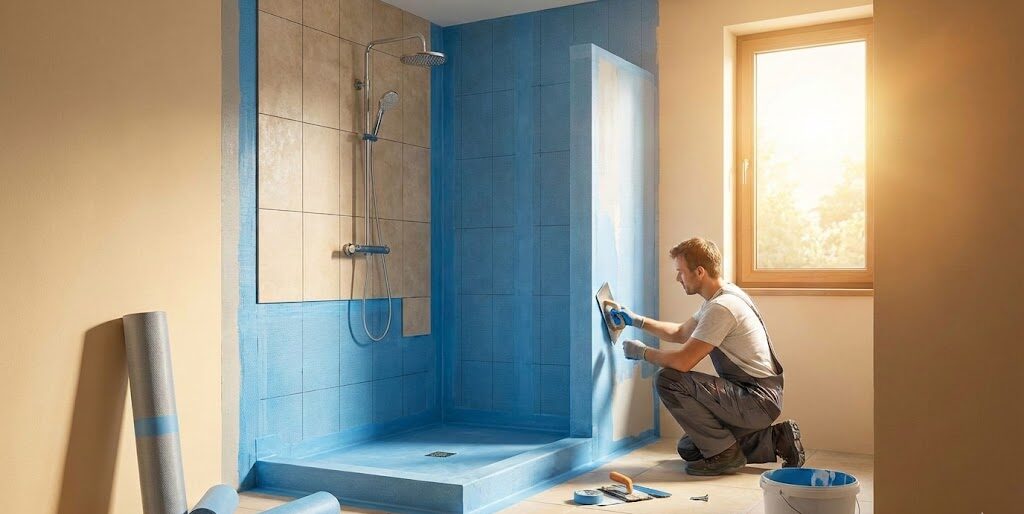
Bathroom Waterproofing 101: What’s Behind Great Tile Work
Tile can be flawless, trendy, and expertly installed—and a shower can still fail if the waterproofing behind it isn’t done right.
That’s the part most homeowners never see. Waterproofing lives behind the tile, under the mortar, around the drain, and in the corners. When it’s done correctly, your shower quietly performs for years. When it’s done poorly, the “warning signs” often show up late (staining, loose tile, musty smells, or—worst case—water damage in the room below).
This plain-English guide explains the layers that keep showers watertight long-term, what “a shower waterproofing system” actually means, and how to spot red flags before you sign a contract.
It’s written for homeowners planning a remodel—especially in high-use family bathrooms—so you can ask smarter questions and avoid expensive rework.
Helpful related pages while you plan:
- Bathroom Remodeling in Utah: Built to Last
- Tile & Waterproofing Systems Built for Longevity
- Why Walk-In Showers Are Taking Over Home Remodeling
The Fortress Builders is a design–build company serving Davis & Weber Counties in Utah. Their process starts with a detailed design blueprint that aligns your vision, budget, and timeline—then carries through permitting, project management, and construction with clear communication. That “strength through structure” mindset is exactly what great waterproofing is about: the finished tile gets the compliments, but the system behind it does the heavy lifting.
Tile gets the glory. Waterproofing does the work.
If you’re reading this, you’re already ahead of most homeowners: you’re paying attention to what’s behind the pretty finishes.
A shower is a wet environment by design. Water hits the walls daily. Steam fills the space. Shampoo, soap, and hard-water minerals build up. And every one of those conditions makes it more important that your shower is built as a waterproof membrane tile shower system—not just “tile stuck to a wall.”
Bathroom waterproofing 101 in one sentence: tile and grout are the finish you see, but the waterproofing system is what protects your home.
- Myth: “Grout is waterproof.”
- Reality: Grout is not waterproof. It can absorb moisture, and it can discolor or crack over time.
- Myth: “Sealer makes everything leak-proof.”
- Reality: Sealers can help with staining, but they are not a substitute for a real shower waterproofing system.
- Myth: “If the tile looks good, the shower is built well.”
- Reality: A shower can look perfect on day one and still have hidden system issues that show up later.
If you want a shower that lasts, your focus should be: prevent shower leaks by demanding a complete system with proven details at seams, corners, and drains.
How water really behaves in a shower (and why “pretty tile” isn’t enough)
Most people picture a leak like a dramatic stream of water. In real bathrooms, the most common problems are slower and sneakier. Moisture can move in several ways:
- Surface water: water runs down walls and sits on shelves, corners, benches, and the shower floor.
- Splash + overspray: water hits places you don’t expect—especially around valves, shower doors, and corners.
- Vapor: hot showers create steam that condenses on cooler surfaces, including corners and ceilings.
- Capillary action: moisture can wick into tiny gaps and porous materials (including many types of grout and some stones).
That’s why waterproofing is less about “one magic product” and more about building an assembly where each layer supports the next.
The “weak points” where showers fail most often
When waterproofing problems happen, they usually start in predictable places:
- Corners and transitions (wall-to-wall and wall-to-floor)
- Seams between boards or membrane overlaps
- Penetrations (mixing valves, shower heads, body sprays)
- Shower pan and drain connection (the heart of shower pan waterproofing)
- Curbs, benches, and niches (anything with extra edges and horizontal surfaces)
The good news: if a contractor has a repeatable system for these weak points—and follows it every time—you dramatically reduce the risk of issues.
The layers behind great tile work (a homeowner-friendly breakdown)
There are multiple correct ways to build a shower, but the fundamentals stay consistent: you need a stable structure, a suitable substrate, a continuous waterproof layer, and a drain/pan strategy that moves water where it belongs.
|
1) Structure & Framing
Studs, blocking, and framing that support backer board, glass, niches, and grab bars.
|
|
2) Substrate (Backer Board)
The panel material tile is installed onto (cement board, foam board, fiber-cement board, or other approved substrates depending on the system).
|
|
3) Waterproofing Layer
This is the “shower waterproofing system” layer—commonly a sheet membrane, a liquid-applied membrane, or an integrated waterproof backer system with sealed seams.
|
|
4) Shower Pan & Drain Assembly
Shower pan waterproofing is the most critical part of the system. Water must slope to the drain, and the drain connection must match the waterproofing method.
|
|
5) Mortar/Thinset + Tile + Grout
This is the visible finish: tile installation, grout, and movement joints.
|
Not every shower uses the same exact products, but every durable shower respects this sequence. A contractor who talks about waterproofing as a “system” (not a single step) is usually starting from a stronger place.
Substrates: what can go behind tile (and why the choice matters)
In plain terms, the substrate is the “wall” your tile sticks to. It needs to be dimensionally stable, approved for wet areas (when part of the chosen system), and installed correctly.
Common substrate categories you’ll hear about
|
Cement board / fiber-cement board
What it is: A rigid board commonly used in wet areas. It is not waterproof by itself, but it can be used behind a waterproof membrane.
|
|
Foam backer board systems
What it is: Lightweight boards often designed as part of a complete waterproofing system when seams and penetrations are sealed correctly.
|
|
Drywall (only in specific approved systems)
What it is: Standard drywall is not typically suitable for wet areas on its own. However, some sheet membrane systems are designed to be installed over drywall in certain applications when installed per manufacturer guidance.
|
Homeowner takeaway: The “best” substrate is the one that matches the waterproofing system being used—and is installed correctly. Mixing and matching products without a system plan is where trouble starts.
If your contractor can clearly explain the substrate choice (and how it works with their membrane, drain, and pan method), that’s a good sign.
Waterproof membrane tile showers: the main approaches (sheet vs liquid vs integrated systems)
When people say “we waterproofed the shower,” they’re usually referring to a membrane. That membrane is the layer that keeps water from reaching the framing and subfloor.
1) Sheet membranes
What it is: A sheet material applied to walls and sometimes pans, with overlaps and seam treatment that create a continuous waterproof layer.
- Strengths: Consistent thickness (you’re not guessing how thick it is), seams can be verified visually, often part of a full system including drains and corners.
- Key detail: Overlaps, corners, and banding must be installed correctly. A missed seam is a missed system.
2) Liquid-applied membranes
What it is: A roll-on or trowel-on waterproof membrane applied in coats to achieve the correct thickness.
- Strengths: Can be great for complex shapes and transitions; often used for niches, benches, and details.
- Key detail: Thickness matters. Too thin and it can fail; too thick in the wrong way can cause issues. It must be applied per manufacturer instructions and allowed to cure properly.
3) Integrated waterproof backer systems
What it is: Systems where the board itself is waterproof, and the waterproof “continuity” comes from sealing seams, corners, and penetrations with approved components.
- Strengths: Often clean and efficient when installed correctly; can reduce steps.
- Key detail: The seams are everything. The board might be waterproof, but the system is only waterproof if the seams are treated correctly.
Simple rule for homeowners: Ask “What system are you using, and how do all the components work together?”
- If the answer is clear and repeatable, that’s good.
- If the answer sounds like “we just paint on RedGuard and tile it,” push for details (corners, thickness, pan, drain connection, cure time, etc.).
- If they say “we’ve always done it this way,” ask if it aligns with manufacturer instructions and recognized industry standards.
Seams and penetrations: where “prevent shower leaks” becomes real
If you only remember one section from this article, make it this one.
A shower waterproofing system fails most often where the waterproofing layer is interrupted: seams, corners, and penetrations. These are the details that separate a “looks good” shower from a “holds up” shower.
Seams: how panels and membranes connect
Every system has a method for seams. The specific materials vary, but the goal is the same: create a continuous waterproof layer from floor to ceiling.
- Backer board seams: need the correct treatment (tape, sealant, membrane overlap, etc.) depending on the system.
- Membrane seams: need proper overlap or approved seam banding.
- Inside corners: need special attention because multiple planes meet and movement happens.
Penetrations: valves, shower heads, and anything that pierces the system
Common penetrations include:
- mixing valve and trim plate,
- shower head arm,
- body sprays,
- handheld shower connections,
- and sometimes fasteners for glass or accessories.
These penetrations must be sealed with system-approved methods. A “bead of caulk” is not automatically a waterproofing strategy—especially behind tile where you can’t see it later.
Homeowner reality check: A shower can be perfectly waterproofed on the flat wall areas…and still leak because one penetration wasn’t sealed correctly.
If your remodel includes niches, benches, or shelves, pay extra attention here too: those features add more seams, corners, and edges. For storage-specific planning, see: Shower Niches, Benches, and Shelves: Storage That Doesn’t Leak.
Shower pan waterproofing: the floor is the most important part of the system
Walls get the attention. The shower floor does the hard work.
A shower pan must do two things at once:
- Collect water from daily use, and
- Move it to the drain reliably, every time.
The non-negotiable concept: slope to drain
Showers must be sloped so water drains. A flat shower floor encourages pooling, stains, and long-term issues. Industry best practice commonly targets about 1/4 inch per foot of slope toward the drain (exact requirements and acceptable methods can vary by system and local code).
This is where design decisions matter. Larger format tile on shower floors can look amazing, but it must still follow slope requirements. Many showers use smaller tile or mosaics on the floor because they conform to slope more easily and can improve traction.
For tile selection considerations, see: Choosing Bathroom Tile: Slip Resistance, Grout Lines, and Maintenance.
Two broad shower pan approaches you’ll hear about
|
Traditional liner + mortar bed (and clamping drain)
Basic idea: A liner is installed under a mortar bed, and water travels through the mortar to the drain’s weep holes.
|
|
Surface-applied waterproof pan (often bonded to drain flange)
Basic idea: Waterproofing is applied at the surface level, so water is directed to the drain before it saturates the mortar bed.
|
Curbs, curbless, and why floor waterproofing gets more complex
Curbs and curbless entries both can be built well. The difference is complexity.
- Curb showers: The curb helps contain water and gives the pan a clear “edge.” The curb still must be waterproofed correctly—especially at the corners and top surface.
- Curbless showers: These can look sleek and feel more accessible, but they require more careful planning: subfloor recessing or ramping, slope coordination, and water containment strategy (often with glass placement and drain choices).
If you’re weighing those options, this companion guide is helpful: Curbless vs. Curb Shower: Which Walk-In Shower Is Right for You?.
The drain connection: a tiny detail with huge consequences
The drain is not just “a hole in the floor.” In a properly built shower, the drain is part of the waterproofing assembly.
Why drains matter in waterproofing
- The drain must match the pan system. Some pans use a clamping-style drain designed for liners. Others use a bonding flange designed to integrate with surface membranes.
- Transitions must be watertight. Where membrane meets drain is not a place for guesswork.
- Maintenance matters. Hair and soap buildup can create slow drains and standing water, which increases staining and mildew risk even in a well-built shower.
Simple homeowner test: Ask your contractor to describe how the waterproofing connects to the drain.
If the answer is vague (“we just do it like always”), push for clarity. This is one of the most important parts of shower pan waterproofing.
Quality checks that reduce risk (and what to ask for as a homeowner)
You don’t need to hover over trades to protect your investment. But you can ask for quality checks that are widely accepted best practices in many shower builds.
1) A watertight shower before tile
The goal is simple: the waterproofing should be complete and continuous before tile goes up. Tile is not the waterproofing layer; it’s the decorative finish layer.
2) Flood testing (when appropriate)
Many shower pans can be flood-tested to confirm the pan holds water without leaks before tile is installed. Whether a flood test is appropriate can depend on the system, the project conditions, and local inspection requirements.
Ask your contractor:
- Do you flood test shower pans?
- At what stage (before tile)?
- For how long?
- How do you document the result?
Note: Some jurisdictions may have specific testing or inspection expectations. Always confirm permit/inspection requirements with local authorities and qualified professionals.
3) Photo documentation (simple and valuable)
Photos of the waterproofing stage are helpful. They provide a record of seam treatment, corners, niche waterproofing, and drain integration—details that disappear once tile is installed.
4) Manufacturer instructions (not “optional reading”)
A reliable shower waterproofing system depends on installing components as designed. Ask if your contractor follows the manufacturer’s installation instructions for the full assembly—especially for seams, corners, and penetrations.
Red flags: how homeowners can spot risky waterproofing habits
You don’t need to be a builder to identify patterns that often lead to problems. Here are homeowner-friendly red flags worth paying attention to:
|
Red Flag: “Grout and sealer are enough.”
They aren’t. Grout and sealer do not replace a waterproof membrane tile shower system. |
|
Red Flag: No clear system described
If the contractor can’t name the approach (substrate + membrane + pan + drain integration) and how it works, you’re relying on “hope” instead of process. |
|
Red Flag: Vague answers about corners and penetrations
Corners and penetrations are where most failures start. “We just caulk it” is not a complete answer. |
|
Red Flag: No plan for niches/benches/shelves
These features add complexity and must be planned. If they treat them like an afterthought, that’s risky. (See: storage that doesn’t leak.) |
|
Red Flag: Rush timing and no cure time
Some waterproofing materials require cure times between coats or before flood testing. A “tile tomorrow no matter what” schedule can be a problem if it ignores product requirements. |
|
Red Flag: No discussion of ventilation
Even the best waterproofing benefits from good moisture control. If your bathroom fan is undersized or poorly ducted, humidity and mildew issues become more likely. Consider: ventilation & moisture control. |
Questions to ask contractors about their waterproofing process
If you’re interviewing remodelers, these questions help you quickly determine whether you’re dealing with a repeatable system—or improvisation.
Waterproofing interview checklist (copy/paste into your notes)
- What shower waterproofing system do you use? (Ask them to describe the substrate + membrane + pan + drain connection.)
- How do you waterproof seams and inside corners? (Listen for a specific method, not a vague “we seal it.”)
- How do you seal penetrations like the mixing valve and shower head?
- What’s your shower pan waterproofing method? (Traditional liner vs surface-applied, and why.)
- How do you ensure proper slope to drain?
- Do you flood test shower pans? If yes, when and for how long?
- How do you handle niches/benches/shelves? (These require intentional detailing.)
- Who does the waterproofing work? (Dedicated team vs whoever is available.)
- How do you coordinate waterproofing with tile layout? (This affects seams, shelf slope, and finished look.)
- How will ventilation be handled? (Fan sizing/ducting matters for long-term comfort.)
Tip: A strong contractor will welcome these questions. Waterproofing is not the place for “trust me.” It’s the place for process.
If you want broader guidance on evaluating a remodeler, visit: How to Choose a Remodeler.
How design choices affect waterproofing (yes, your tile selection matters)
Waterproofing isn’t isolated from design. Your choices can make a shower easier (or harder) to build and maintain.
Tile size, grout lines, and maintenance
- More grout lines often means more maintenance (not necessarily failure—just more cleaning attention).
- Some tile surfaces show soap scum or mineral deposits more quickly.
- Grout choice can impact staining and upkeep. For a practical guide, see: Low-Maintenance Grout Choices.
Niches, benches, and shelves add complexity
These features can be absolutely worth it—but they require more waterproofing detail. If you’re adding them, plan early (before tile is selected and before framing is closed):
Curbless showers and accessibility planning
Curbless showers can improve accessibility and create a sleek look, but they increase the importance of drain selection, slope planning, and containment strategy. For a deeper comparison, see:
Ventilation: your “quiet partner” in a durable bathroom
Even a perfectly waterproofed shower benefits from good moisture control. If humidity hangs in the room, you’re more likely to deal with mildew and lingering odors, and your finishes can age faster.
Helpful reads:
- Bathroom Vent Fan Sizing: How to Control Humidity and Odors
- Bathroom Ventilation & Moisture Control Done Right
What you can do after the remodel to protect your shower
Waterproofing is behind the tile, but your day-to-day habits can still make the shower easier to keep clean and reduce surface issues.
Simple routines that help
- Run the fan during and after showers long enough to clear humidity.
- Squeegee glass (and sometimes tile) if you want to minimize mineral buildup.
- Keep drains clear so water doesn’t pool on the floor.
- Maintain caulk joints as needed—especially where different planes meet.
What not to rely on
- Do not rely on grout sealer as your waterproofing strategy.
- Do not assume a quick touch-up caulk job fixes deeper waterproofing problems.
- Do not ignore persistent musty smells or recurring staining; investigate early.
See waterproofing-quality bathrooms in real Utah homes
Waterproofing is hard to “see” in photos—but the finished results still tell a story: clean tile lines, thoughtful layouts, niches that look intentional, and showers that function beautifully for daily life.
Bathroom Portfolio Bathroom Remodeling Services Remodeling Resources
Want a shower that lasts? Start with the system, not just the tile.
Beautiful finishes matter—but durability comes from what’s behind them. The Fortress Builders design–build process starts with a detailed plan so the shower waterproofing system, layout, tile selection, and long-term maintenance expectations are aligned before construction begins.
Request a Design Consult Tile & Waterproofing Systems Read FAQs
Bring your questions about membranes, shower pans, curbless options, niches, and ventilation—we’ll help you plan the details that prevent shower leaks and protect your home for the long run.