

Walk-In vs. Cabinet Pantry vs. Butler’s Pantry
The “right” pantry isn’t about trends—it’s about how your household actually lives. Some families need grab-and-go snack access. Others want bulk storage, hidden appliances, or a place to keep mess out of sight when guests arrive.
This guide compares the three most common pantry types—walk-in pantries, cabinet pantries, and butler’s pantries—so you can choose a solution that fits your kitchen footprint, grocery habits, and daily routines before your layout is locked.
The Big Idea: The Best Pantry Is the One You’ll Actually Use
Pantries fail when they’re designed for appearances instead of behavior. A massive walk-in pantry doesn’t help if you forget what’s inside. A cabinet pantry won’t work if you buy in bulk and can’t see what you own.
- How often do you grocery shop?
- Do kids access snacks daily?
- Do you entertain and want clutter hidden?
- Do you store appliances, or only food?
Answering these questions early prevents wasted space and constant reorganization later.
What Is a Cabinet Pantry?
A cabinet pantry is built directly into your kitchen cabinetry—typically a tall cabinet with adjustable shelves, pull-outs, or drawers.
Best uses for cabinet pantries
- Smaller kitchens with limited square footage
- Households that shop weekly (not bulk)
- Families who want food visible and accessible
- Kitchens where traffic flow matters more than storage volume
|
Cabinet Pantry – Pros
|
|
Cabinet Pantry – Cons
|
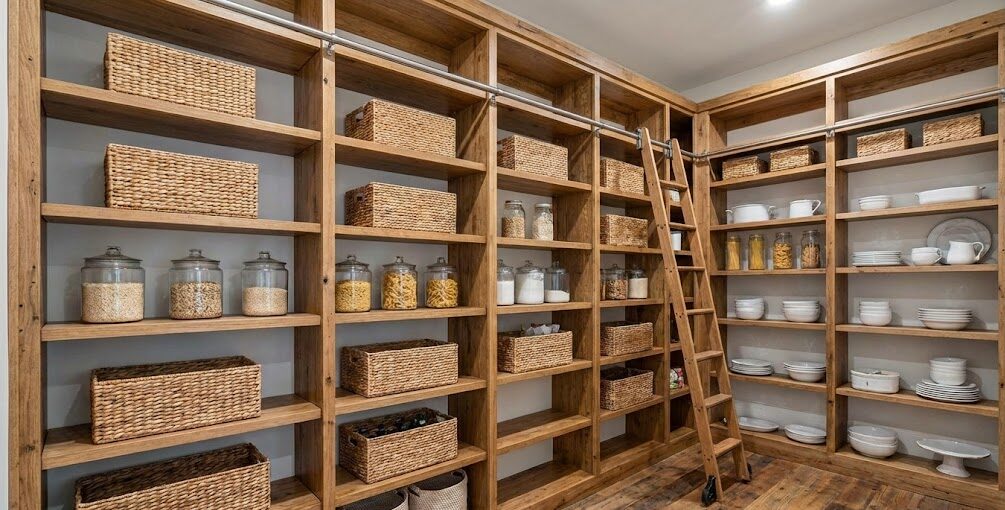
What Is a Walk-In Pantry?
A walk-in pantry is a dedicated room or closet connected to the kitchen. It offers more volume, more shelving options, and flexibility for food, appliances, and overflow storage.
When a walk-in pantry makes sense
- You buy in bulk or warehouse shop
- You want space for small appliances
- You have enough square footage to spare
- You want to keep the kitchen visually clean
|
Walk-In Pantry – Pros
|
|
Walk-In Pantry – Cons
|
What Is a Butler’s Pantry?
A butler’s pantry sits between the kitchen and dining space and often includes counter space, cabinetry, beverage storage, and sometimes a sink or dishwasher.
Best fit for a butler’s pantry
- Homes that entertain frequently
- Households that want mess hidden during hosting
- Kitchens with open floor plans
- People who want beverage or coffee stations
|
Butler’s Pantry – Pros
|
|
Butler’s Pantry – Cons
|
Pantry Layout and Flow: Where Placement Matters
Regardless of type, pantry placement affects how smoothly your kitchen functions.
- Near prep zones: reduces back-and-forth while cooking
- Away from major traffic paths: prevents bottlenecks
- Visible vs hidden: affects how often items are used
For broader kitchen flow planning, see Design and Layouts for Kitchens.
Shelving, Lighting, and Outlets: The Details That Matter
Smart pantry details to plan early:
- Adjustable shelving depths for cans vs bulk items
- Solid lighting (overhead or LED strips)
- Outlets for appliances or charging stations
- Durable flooring for spills and traffic
Electrical requirements and outlet placement vary by project and jurisdiction. Confirm details with qualified professionals and local authorities.
Decision Checklist: Which Pantry Is Right for You?
- Choose a cabinet pantry if: space is tight and you want simplicity
- Choose a walk-in pantry if: you need volume and bulk storage
- Choose a butler’s pantry if: you entertain often and want prep hidden
Many kitchens combine approaches—for example, a cabinet pantry for daily use plus a butler’s pantry for hosting.
See Pantry Ideas in Real Utah Kitchens
Plan Your Pantry Before the Layout Is Locked
Pantry decisions affect cabinet layout, traffic flow, lighting, and budget. The Fortress Builders’ design–build process starts with a detailed blueprint so storage, workflow, and daily use are aligned from the beginning.