

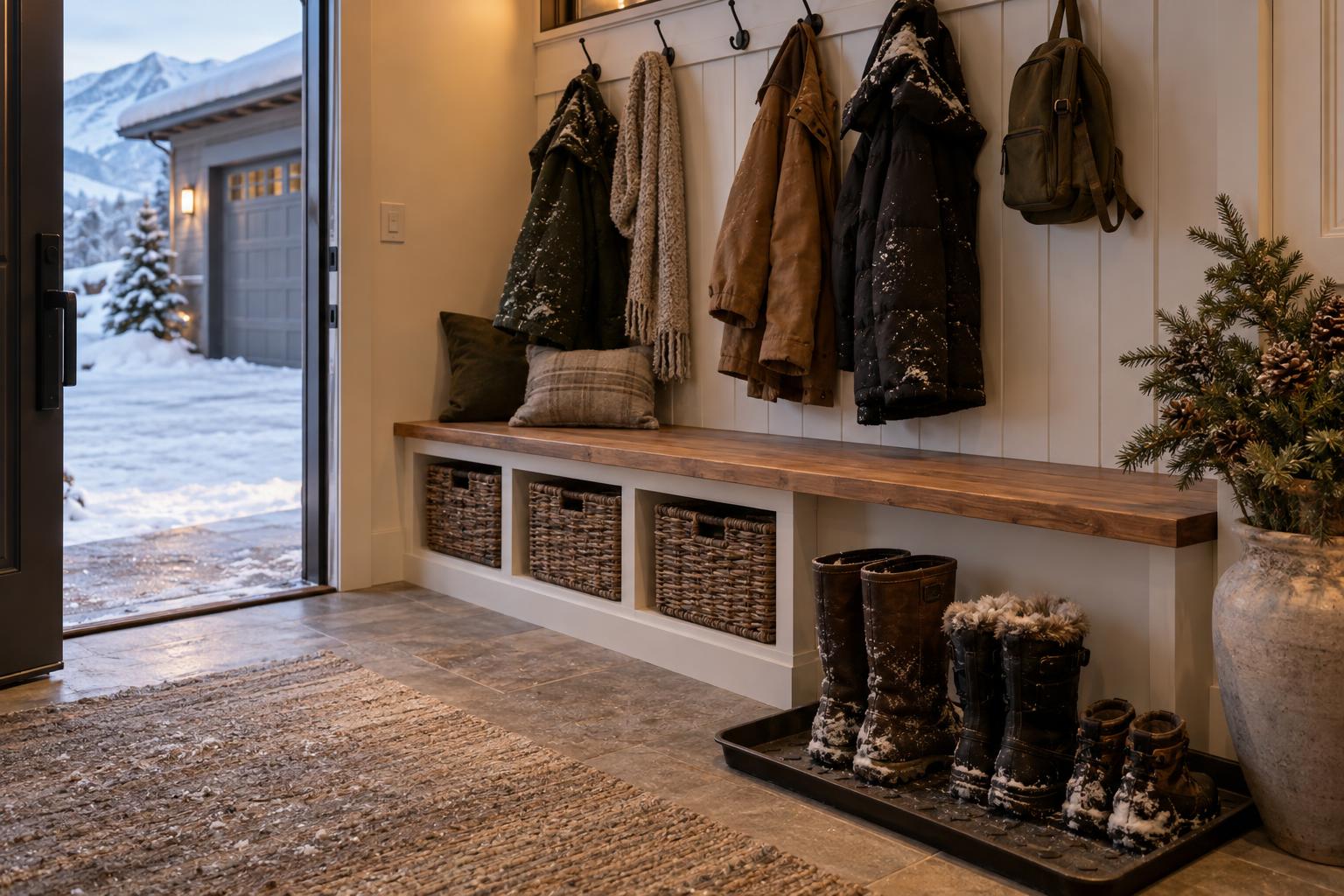
Snow Boots, Backpacks, and Wet Coats: Planning a Mudroom Drop Zone That Works
Winter gear piling up at the door? Here is how to plan a mudroom or drop zone that handles snow, coats, and backpacks without taking over the house.
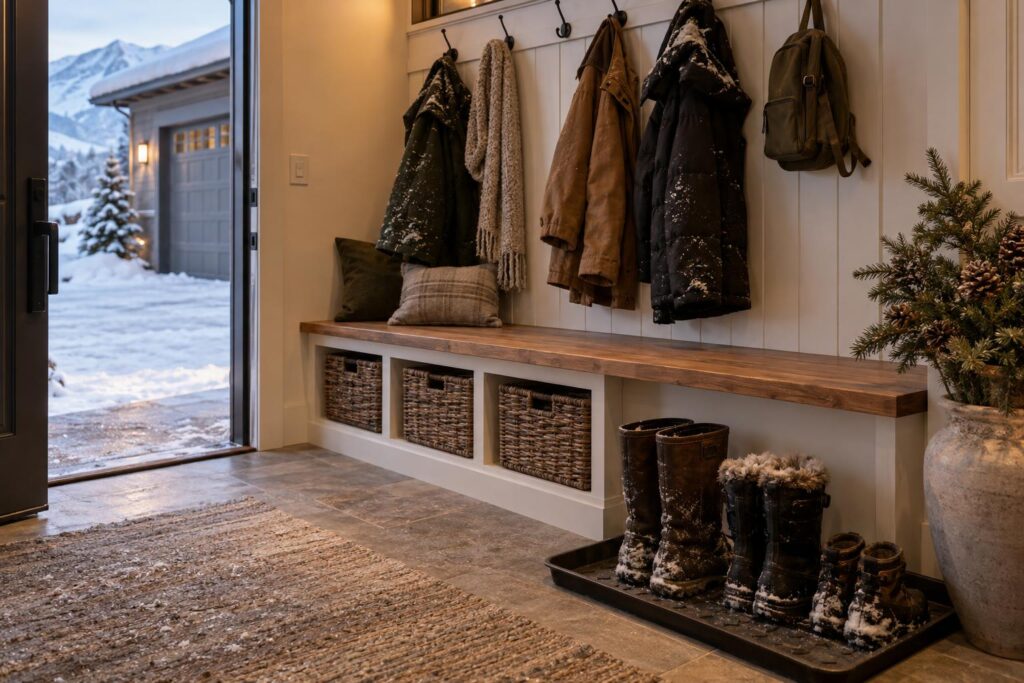
Wet boots, a backpack, a coat, and keys need different places. Giving them all one bench usually leaves the bench buried.
Before choosing mudroom cabinets, watch an ordinary arrival at your house. Which door does your family actually use? What comes off first? What gets carried farther into the house because there is no convenient place to put it down?
For a Davis or Weber County household, winter makes these questions especially visible. Damp outerwear and footwear need a plan, but the room also has to work when someone is carrying groceries, a school bag, or work equipment. A good drop zone supports that sequence without narrowing the route everyone needs.
You may not need a separate room. You do need a clear job for each part of the available space. The goal is to make the next action obvious: sit here, place wet footwear here, hang this coat here, and keep the walking path open.
Start with the door you use, not the room you wish you had
A beautiful entry near the front door may do little for a family that arrives through the garage. Map the actual route from the usual entrance to the kitchen, stairs, or living area. Notice the door swing and the places where people stop while others are still trying to enter.
Do not assume a built-in should fill every available wall. A cabinet, bench, or row of hooks changes how the space is used when doors are open and coats are hanging. The useful plan accounts for those objects in use, not just the clean outline of the furniture.
If the entry is also a passage to another room, preserve its function as a passage. The design should be reviewed with the household’s mobility needs and the actual building conditions in mind. A narrow-looking sketch is not something to solve later by asking everyone to be more careful.
Separate wet arrivals from dry storage
The belongings coming through the door do not all need the same treatment. Wet boots should not be placed where they dampen a school bag. A coat that needs to dry may be awkward in a tightly packed cabinet. Papers and electronics deserve a location away from the wet landing area.
This does not require elaborate cabinetry. It requires deciding which zone handles moisture, which zone holds items temporarily, and which zone stores things that should remain dry. Then check whether the surfaces and products selected can be maintained according to their own care instructions.
Give it a defined place that can be emptied and cleaned without moving every other belonging.
Keep the route past the door clear.
Choose hanging storage that works for the people reaching it and the volume of outerwear.
Allow the actual garments to occupy space.
Provide a dry landing place separate from the footwear area.
Decide what stays here and what goes to another room.
Use a consistent, visible location that does not become another general-purpose pile.
Keep items that need adult control appropriately secured.
Design the bench around the person using it
A bench has a simple purpose: provide a place to sit while dealing with footwear or belongings. If bags occupy it every afternoon, it is no longer available for that purpose. Give the bags their own destination before assuming a larger bench will solve the problem.
Think about who will sit there and how they will get up. A decorative bench that suits one adult may not suit a child or someone with limited mobility. Discuss the user’s needs with the designer rather than selecting a universal dimension from an inspiration photo.
Storage below the seat can be useful, but test the daily action it requires. Will a person need to move a boot tray before opening a drawer? Will a cabinet door occupy the place someone stands? If a lid must lift, what happens to the things resting on top? Those small interactions determine whether the storage remains convenient.
Choose open and closed storage for different jobs
Open hooks and cubbies make frequently used belongings easy to see. Closed storage can keep less-used items out of the visual field. Neither is inherently better. The choice depends on what you are storing, how often it is used, and whether the household will complete the action needed to put it away.
For a Kaysville family with children coming home together, reachable open storage might be helpful for daily coats. Seasonal items could belong elsewhere rather than making the everyday area crowded. In a different Weber County home, the main concern might be a work bag and outdoor gear rather than school belongings.
Avoid designing each person’s space around today’s smallest belongings. Look at the actual bags and coats, and discuss how needs may change. That does not mean building endless storage for every possible future item. It means avoiding a highly specific compartment that becomes impractical as soon as the routine changes.
Make cleanup part of the layout
The entry will need ordinary maintenance. Consider how you will remove footwear trays, reach corners, and clean the floor beneath or around the furniture. A visually tidy arrangement can still be awkward if every cleanup requires unloading the entire bench.
Flooring and mat choices need to suit the selected products. Manufacturer guidance may call for prompt spill cleanup and compatible protective mats. A surface marketed for moisture resistance does not turn the room into a waterproof assembly or make standing water harmless to every adjacent material.
Ask about the transitions where flooring, trim, cabinetry, and wall finishes meet. Those are part of the design discussion, especially near the wet landing area. Do not choose the floor in isolation and assume the rest of the room will manage moisture automatically.
Keep a guest landing place
Visitors will not know an elaborate family sorting system. Decide where a guest can put a coat or bag without occupying the seat or blocking the route. That small allowance can keep a carefully organized entry usable when the household is not following its usual routine.
What people get wrong about mudroom storage
“Every family member needs a matching locker.”
Matching compartments can look orderly, but people may have very different belongings and reach needs. Start with the items and routines. A shared footwear area plus individual bag storage may suit your household better than identical vertical sections.
“Closed doors will solve the clutter.”
Doors conceal contents when the contents fit and people use the storage. They do not decide where wet coats belong or make a crowded cabinet convenient. If the action is awkward, belongings may continue landing on the nearest open surface.
“A tougher floor means we can ignore wet boots.”
Care requirements still apply, and moisture can affect materials beyond the visible floor. Plan containment and cleanup along with the finish selection. Ask for the instructions for the actual flooring and mats you intend to use.
Test the arrival sequence before approving built-ins
Use the existing space to rehearse the proposed arrangement without obstructing an exit or creating a trip hazard. Describe where the seated person would be, where the next person would stand, and where bags would land. You can do this with a sketch and the actual belongings rather than installing temporary furniture in a tight passage.
Then add the less convenient arrivals: someone carrying groceries, two people entering together, or a visitor who does not know the system. A plan that only works when everyone arrives alone and follows a precise routine deserves another look.
I’m Troy Lybbert, and I’ve been remodeling since 1998. I would rather understand those everyday interactions before deciding what to build. The homeowner tips collection can help you organize the room’s priorities alongside the rest of your remodeling plans.
Give the space a reset rule
Decide which belongings may remain in the drop zone overnight and which should move elsewhere. This is a household choice, not a cabinet feature. Without it, a useful arrival area can gradually become permanent storage for items that are rarely used.
Keep the rule simple enough to follow. Daily coats and bags may stay; unrelated packages and seasonal gear may need another destination. If the proposed design relies on an elaborate sorting routine, reconsider whether it fits the way your family actually lives.
Can a hallway work as a drop zone?
Possibly, but its circulation, doors, and household access needs come first. Have the available space assessed before adding furniture or built-ins that could interfere with the route.
Should the mudroom store all our seasonal gear?
Not necessarily. Keeping only frequently used items near the entrance can make the daily routine easier. Decide where off-season belongings will live before sizing the everyday storage.
Make coming home easier to manage.
Bring photos of the entrance you use and a list of what lands there. We can discuss a drop zone organized around your household’s real arrival routine.