

How to Compare Remodeling Bids Without Comparing the Wrong Scope
Two bids, two different scopes? Here's how to line up allowances, exclusions, permits, and change orders before you compare price in Davis County.
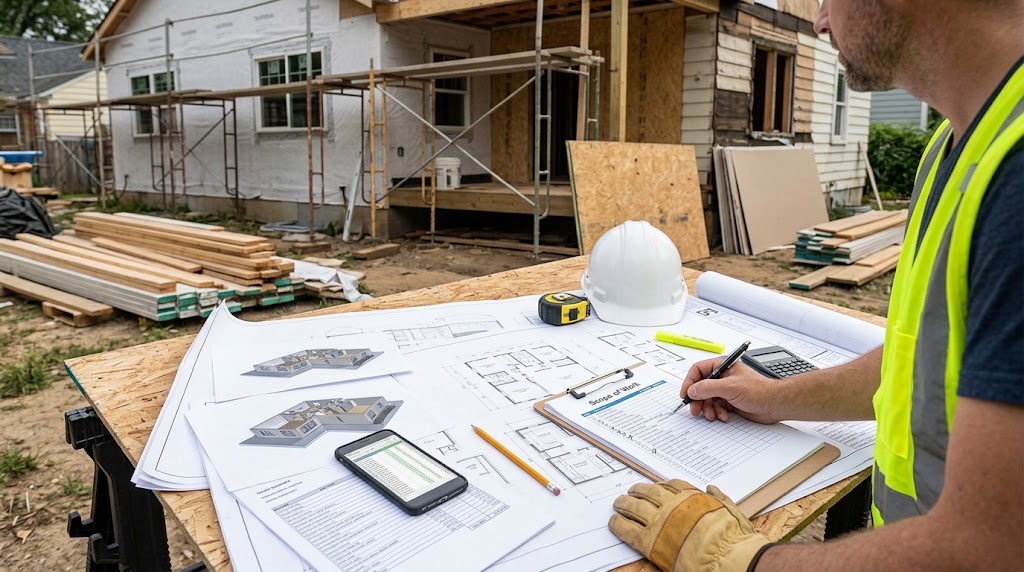
They probably don’t. Before you compare totals, line the bids up item by item: what work is included, what’s left as an allowance, what’s excluded, who pulls the permit, how your home is protected and cleaned, who supervises, what schedule each bid assumes and how changes get priced. Once every bid describes the same scope, the price comparison finally means something. That’s true for a kitchen in Kaysville, a basement in Layton or a bathroom anywhere in Davis County.
I’ve been remodeling homes in Davis and Weber Counties since 1998, and I read a lot of bids, including ones other contractors wrote. This isn’t about who’s honest and who isn’t. Most bids that don’t line up were written by good people working from different ideas of your project. Here’s how to sort that out, step by step.
- Put every bid on the table at once. Comparing from memory is how differences slip through.
- Grab a highlighter for each bid and mark every line that says “allowance,” “by owner,” “not included,” “excludes” or “TBD.”
- Fold the last page under so you can’t see the totals yet. Seriously. The number pulls your attention away from everything that explains it.
What People Commonly Get Wrong When Comparing Remodeling Bids
Most homeowners do the reasonable-sounding thing: find the lowest number, then ask whether the other bids are worth the difference. That works when you’re comparing identical products. A remodel isn’t an identical product. Each bid is a contractor’s interpretation of what you described, and the interpretations can be far apart.
Mistake 1: Treating the total as the comparison
A total is the last line of a long story. If one bid includes permits, daily cleanup and a tile allowance that matches what you actually picked, and another leaves all three out, the totals aren’t comparable at all. The gap between them may be scope, not markup.
Mistake 2: Reading an allowance as a price
An allowance is a placeholder for something you haven’t chosen yet: tile, fixtures, cabinets, counters. If you choose something that costs more than the allowance, you pay the difference. Utah’s optional Residential Construction Agreement, published by the Division of Professional Licensing (DOPL), spells that out in its Selections clause. So a bid can look lower simply because it assumes you’ll pick less than you plan to.
Mistake 3: Assuming silence means “included”
If a bid doesn’t mention permits, debris haul-off or protecting your floors, don’t assume they’re in there. Sometimes they are and the contractor simply didn’t list them. Sometimes they aren’t. You only find out by asking, and the time to ask is before you sign.
Mistake 4: Skipping the license check because the contractor seemed great
A friendly walkthrough isn’t a license. DOPL’s own consumer guide puts license verification right after gathering bids, before anything is signed. It takes a few minutes and costs nothing.
Mistake 5: Thinking a higher bid means you’re being overcharged
Sometimes it does. Often it means one contractor priced what you’ll actually end up building and another priced the bare minimum. The honest answer is that you can’t tell which until the scopes match.
Why Two Bids Rarely Describe the Same Project
DOPL’s consumer guide, Home Construction Projects: A Consumer’s Guide, lists seven steps for a home improvement project. The very first one is preparing plans, typically with an architect or interior designer, before you ever ask for bids. Here’s why that order matters.
Without a shared plan, each contractor walks through your home, listens to you describe what you want, and then fills in the blanks from their own experience. One assumes you’re keeping the existing layout. Another assumes you’ll move the sink to the island because you mentioned it once. A third prices mid-range tile because you didn’t say otherwise. None of them is wrong. They just didn’t bid on the same kitchen.
What this means for you: the bigger the gap between bids, the more likely it is that scope, not honesty, is the reason. The fix isn’t to throw out the high bid or trust the low one. The fix is to write down one scope and send it back to everyone.
If you don’t have formal plans, you can still do a lot of this yourself. The Fortress planning tools include a Project Scope & Timeline Planner and a Budget & Priority Worksheet that break the project into pieces you can describe the same way to every bidder.
How to Line Up the Scope, Item by Item
This is the core of the whole exercise. Make a simple sheet with your scope items down the left side and one column for each bid. Then go through each bid and note what it says about each item, using the bid’s own words wherever you can.
- List the rooms and surfaces. Every wall, floor, ceiling and fixture the project touches. If you’re remodeling a bathroom, that’s the shower or tub, vanity, toilet, floor, lighting, fan and anything behind the walls.
- Mark what’s being removed, moved or kept. “New vanity” and “new vanity in a new location” are very different jobs, because the second one moves plumbing.
- Note the labor each bid covers. DOPL’s agreement describes the contractor’s work as furnishing the material, labor, equipment, tools and supervision to finish the project. Check each bid against all five of those words.
- Flag every gap. Any row where one bid says something and another says nothing gets a question mark.
- Send the same questions to everyone. Same wording, same list. You’ll learn as much from how quickly and clearly each contractor answers as from the answers themselves.
Here’s why I’d recommend sending identical questions: it keeps the comparison fair, and it shows each contractor exactly what you’re comparing. A good contractor will appreciate the clear scope, because it protects them from surprises too.
The Bid Lines That Change the Total Most
Some line items swing the real cost of a project more than others. Use this as a checklist when you’re reading bids side by side. Every row comes back to the same question: does each bid handle this the same way?
Does the bid describe the actual work, room by room, or just say “remodel kitchen”? DOPL’s agreement ties scope to attached plans and specifications.
Ask: “What plans or drawings is this bid based on?”
Which items are allowances, and how much is each one? If your selection costs more, you pay the difference.
Ask: “What did you assume I’d pick for tile, fixtures, counters and cabinets?”
What does the bid specifically say it doesn’t cover? Exclusions are often on the last page.
Ask: “If an excluded item turns out to be needed, who pays for it and how is it priced?”
Anything you’re buying yourself, like a light fixture or an appliance.
Ask: “Who orders it, receives it, checks it for damage and installs it?”
DOPL says the written contract should cover permit procurement. Which bids include pulling the permit, and is the fee in the price?
Ask: “Will you pull the permit, and will it be posted on the job site?”
Floor protection, dust control, daily cleanup and debris haul-off.
Ask: “What does my home look like at the end of each workday?”
Who is responsible on site, and who do you call with a question?
Ask: “Who runs the job day to day?”
DOPL’s agreement calls for a written estimated schedule including subcontractor activity, material deliveries and deadlines for your decisions.
Ask: “What decisions do I need to make, and by when?”
How changes get described, priced and approved before work continues.
Ask: “Will every change be written and priced before you do it?”
DOPL says licensed contractors must hold liability coverage and the contract should guarantee it.
Ask for the license number and proof of insurance up front.
Allowances, Exclusions and Owner-Supplied Items
These three lines are where I see the biggest gaps between bids, so they’re worth slowing down on.
Allowances: the most misunderstood line on a bid
An allowance is not a quote. It’s a budget placeholder for a choice you haven’t made. Say a bid lists an allowance for bathroom tile. If the tile you fall in love with costs more than that allowance, the difference is yours. Under DOPL’s sample agreement, the contractor doesn’t even need a change order to bill it, because the selection clause already covers it.
Allowances aren’t bad. They’re often the only practical way to price a project before every finish is chosen. The problem is when one bid sets realistic allowances and another sets them low. Here’s what I’d recommend:
- List every allowance from every bid side by side.
- Ask each contractor what product or quality level the allowance assumes.
- If you’ve already picked a finish, ask each bidder to price your actual pick instead of an allowance.
Exclusions: read the last page first
Exclusions are the things a contractor is telling you, in writing, that they aren’t doing. Common categories include work behind walls they can’t see yet, items you’re expected to supply and anything outside the rooms they walked. An exclusion isn’t a red flag. Hiding one in fine print is.
For every exclusion, ask one question: if this turns out to be needed, how will it be handled and priced? A clear answer protects you. A vague one is worth noting.
Owner-supplied items
Buying your own light fixtures or appliances can make sense. Just make sure each bid says who orders the item, who receives and inspects it on delivery and who installs it. When something arrives damaged or late, you want to know whose problem it is before it happens, not after.
Permits, Protection, Cleanup and Supervision
These lines rarely make it onto the Pinterest board, but they shape what living through a remodel actually feels like.
Permits in Davis County
Permit rules come from your city, not from the contractor. Two local examples:
- The Kaysville Building Department lists remodels and repairs as permit work, along with basement finishes and any electrical, mechanical or plumbing work.
- The Layton Building Division takes applications through an online permit portal and publishes handouts and checklists for basement finish and remodel projects.
DOPL notes that a licensed contractor can pull permits an unlicensed contractor can’t, and recommends confirming the permits were actually obtained. They should be provided to you or displayed on the job site. If one bid includes the permit and another is silent, that’s a scope difference, not a price difference. In any other city, call the building department with your scope before you compare bids. Permit fees and review times come from them, not from a blog post.
Protection and cleanup
This is where the day-to-day experience of your remodel lives. Does the bid include protecting floors and walkways, containing dust and cleaning up daily? Who hauls off debris, and is a dumpster or trailer included? My team keeps the job site clean and organized because you’re living in the house while we work. Whoever you hire, the bid should say how they’ll handle it.
Supervision
Supervision is one of the five things DOPL’s sample agreement lists in the contractor’s job description. Ask who is on site, who coordinates the subcontractors and who answers your texts. Two bids with the same scope can still deliver very different experiences if one has a clear point person and the other doesn’t.
Change Orders and Schedule Assumptions
Almost every remodel has a change somewhere. You pick a different faucet. My team opens a wall and finds something that has to be addressed. What matters is how the change gets handled before work continues.
DOPL’s Residential Construction Agreement lays out a clear process worth using as your yardstick:
- Whoever wants the change describes it in writing.
- Before proceeding, unless there’s an emergency involving safety or property damage, the contractor gives you a written estimate of the cost and the time impact.
- If you both agree, you sign a Change Order that records the change, any added cost and any change to the completion date.
Compare each bid’s change process against that. A bid that says “changes billed at cost plus” with no mention of written approval leaves a lot open.
The schedule each bid assumes
The same agreement calls for a written estimated schedule that includes subcontractor activity, milestones for material deliveries and deadlines for the owner’s decisions. That last piece matters more than people expect. If a schedule assumes you’ll pick tile in a week and you take a month, the schedule moves, and that’s on the selection, not the contractor.
I’m not going to quote typical project durations here. They depend on your scope, your selections and your jurisdiction. What I’d recommend is asking every bidder the same three questions: When do you need my decisions? What has to arrive before work can start? What happens to the schedule if something is delayed?
Licensing and Contract Checks From Utah DOPL
This section is educational, not legal advice. For questions about a specific contract, lien or dispute, talk to an attorney.
Where these checks come from: Utah’s Division of Professional Licensing publishes a consumer guide for home construction projects and an optional Residential Construction Agreement (dated May 29, 2025), both linked from DOPL’s Contracting Resources page. DOPL describes the agreement as a generic form, not legal advice. Permit details come from the Kaysville and Layton building departments.
Check the license
Utah gives you two free tools. The DOPL license verification search lets you look up any licensee. The Utah Construction Business Registry lets you search contractors by classification, such as B100 General Building, R100 Residential & Small Commercial, or R101 Residential/Small Commercial Non-Structural Remodel/Repair, as well as by name, license number or city. One caveat: the registry only shows active licensees who have opted in. If a contractor doesn’t appear there, check the license verification search before you draw conclusions.
Get it in writing
DOPL’s guide says that no matter the size of the project, put it in a written contract that covers the exact work, the contract price, beginning and ending dates, permit procurement and a guarantee of liability coverage. If a bid is going to become your contract, it needs to carry all of that, or the contract built from it does.
DOPL’s sample Residential Construction Agreement is a useful reference even if you never use it. It’s optional and both parties can change it. It includes exhibits for the plans, change orders and proof of licensure and insurance. That last exhibit records the license number, expiration date, qualifiers and current insurance policies, which is exactly the information to request from every bidder.
Watch the payments
- Be cautious with large down payments. DOPL advises paying as work is completed.
- Never pay in cash.
- Before the final payment, get signed lien releases from all suppliers and subcontractors. You can see filings on your property through Utah’s State Construction Registry.
Check references
DOPL suggests getting bids from two or three contractors and checking at least three references for each before you choose. If you’re holding three bids, you’re right where the state recommends you be.
How I’d Read Your Bids Side by Side
When a homeowner brings me bids from other contractors, I’m not looking for someone to criticize. I’m looking for the places where the scopes split apart, because that’s where your decision actually lives. Here’s the order I’d go in:
1. Scope first, totals last
I start with what each bid says it’s building. If the scope descriptions don’t match, I write down the differences before I look at a single number.
2. Allowances against your real picks
I compare each allowance to what you’ve actually chosen or are leaning toward. A low allowance on something you care about is a cost you’ll see later.
3. The exclusions page
I read every exclusion and ask how each one would be handled if it turned out to be needed. That conversation tells you a lot about a bid.
4. Permits and protection
Who pulls the permit, and how your home is protected and cleaned each day. These lines change both the price and what living through the project feels like.
5. The change process
Is every change written and priced before work continues? If the bid doesn’t say, that’s the first question I’d ask.
6. Then the number
Only after the scopes line up do I compare totals. At that point the difference usually makes sense, one way or the other.
That’s the same approach I use with my own bids. A design consult is where we map scope, timeline and budget before you commit, so there are no surprises later. Clear scope up front is what makes a remodel built to last, and it’s what makes it fair for everyone involved.
For more planning advice, the Fortress homeowner tips cover choosing a remodeler and setting priorities. You can see the kinds of projects we take on, from kitchens and bathrooms to basements, on the services page.
Frequently Asked Questions
Should I just pick the lowest bid if the totals are close?
Not until the scopes match. Close totals can hide very different allowances, exclusions and permit handling. Line them up first, then compare.
How many bids should I get?
Utah DOPL’s consumer guide suggests getting bids from two or three contractors and checking at least three references for each.
What’s the difference between an allowance and a fixed price?
A fixed price covers a defined item. An allowance is a placeholder for something you haven’t chosen yet. If your pick costs more, you pay the difference.
How do I check a contractor’s license in Utah?
Use DOPL’s free license verification search. The Construction Business Registry also lists contractors, but only active licensees who have opted in.
Can I ask a contractor to rebid using another bid’s scope?
Yes. Sending the same written scope to every bidder is the fairest way to compare. Share the scope list, not another contractor’s pricing.
What should a change order look like?
DOPL’s sample agreement uses a written description, a written estimate of the cost and time impact, and a signed change order before work proceeds.
Holding bids that don’t line up?
Ready to talk through scope and timeline? A design consult is the right first step for homeowners in Davis and Weber Counties. Bring your bids, and I’ll walk through the scope with you line by line. No pressure, just a clear picture of what each one covers.