

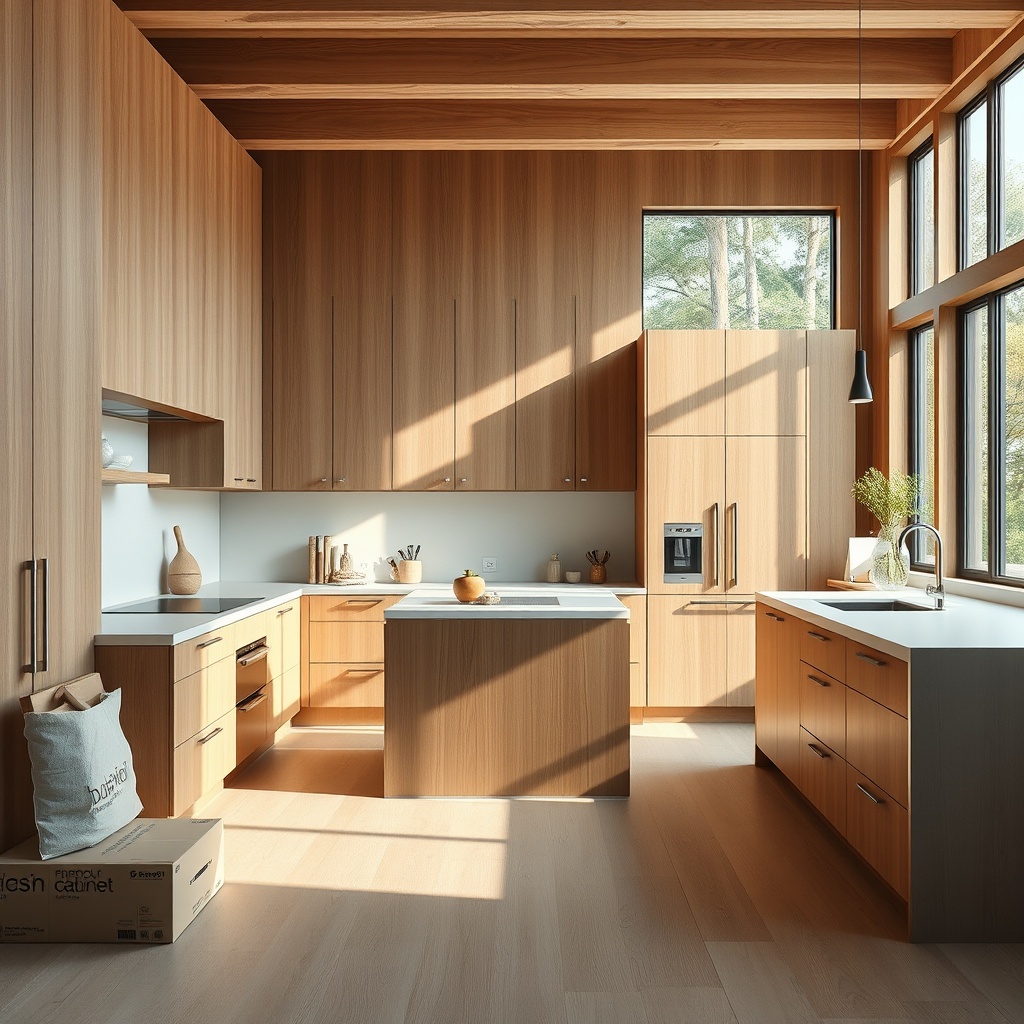
The urge to avoid the price tag of custom kitchen remodeling drives many homeowners to the DIY route, particularly with cabinets and countertops. Yet most are unprepared for the hidden intricacies and accumulation of secondary costs. The challenge isn’t skill alone; it’s the sheer density of interconnected decisions—structural, logistical, and psychological. Savings in dollars are paid for in time, uncertainty, and disruption to everyday life. Beneath the enthusiasm for self-managed renovations lurks a reality: every shortcut or miscalculation, from subfloor condition to the shape of a packaging pile, carries outsized downstream effects that ripple through health, relationships, and the final aesthetic.
For industry analysts and category specialists, this isn’t a story about the “rise of DIY” or “customization.” It’s a study in how the illusion of control collides with the physical realities of construction sequencing, supplier limitations, and personal endurance—and how these frictions are steadily reframing what homeowners now accept as the real cost of a “budget” cabinet or countertop renovation. This new calculus isn’t discussed at the showroom, but it’s redefining both demand and the service models of kitchen remodel firms.
1. Market Signals Shaping This Topic
DIY kitchen projects, especially those focused on cabinetry and countertops, have redefined what “value” means in this category. Homeowners are now acutely aware that their savings are transactional, exchanged for time, stress, and makeshift living conditions. What was once framed as an empowering, cost-saving act now registers as a prolonged disruption that invades health, social life, and eating habits. The prevalence of packaged, ready-to-assemble cabinetry—with its implied simplicity—has fueled this segment’s visibility. Yet the signal from recent anecdotal accounts is uniform: even highly motivated owners encounter underestimated timelines (initial optimism of a 1-2 month project turning into 4+ months), exponential growth in packaging waste, and a level of technical decision-making (for example, the importance of subflooring or insulation conditions) not anticipated at project outset. These signals indicate a structural shift in both expectations and project management requirements for anyone attempting mid-market DIY renovations.
2. Why These Patterns Are Emerging
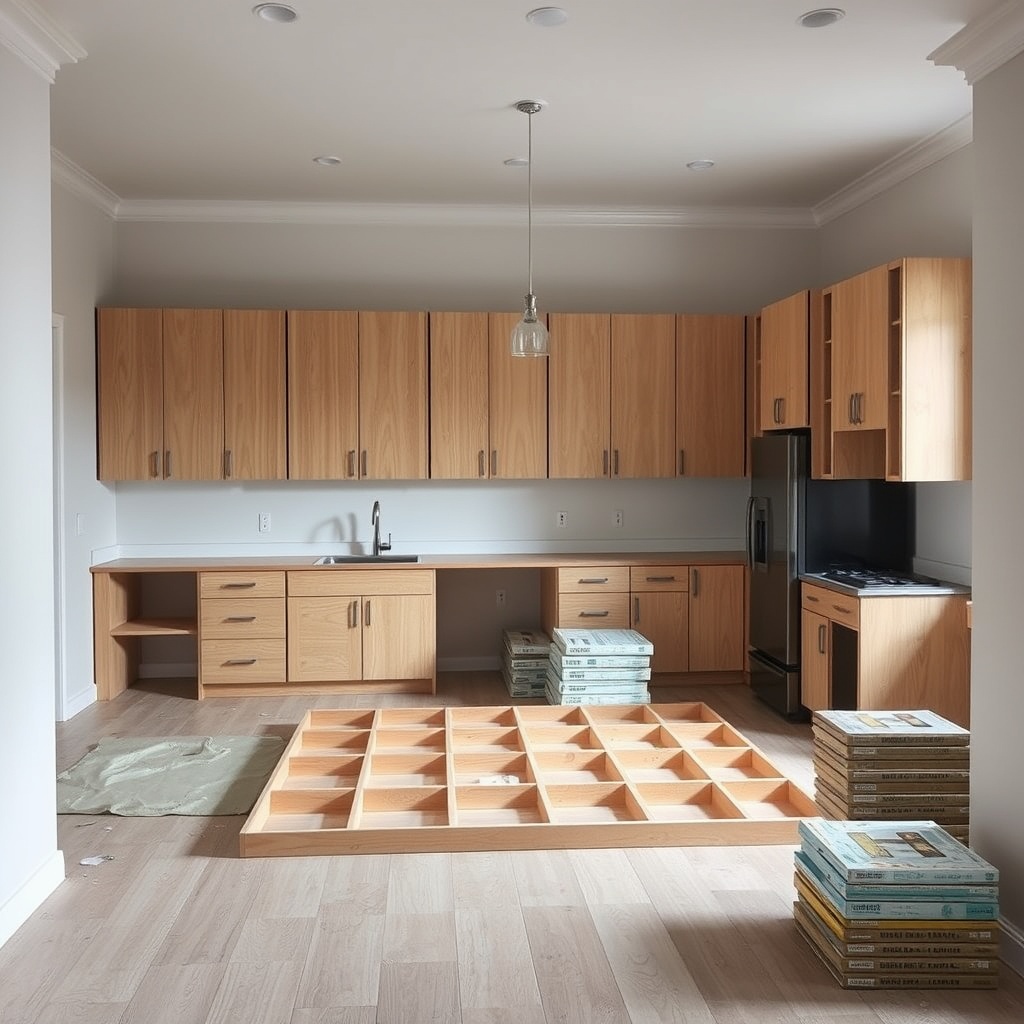
Multiple factors converge to create these patterns. Steep labor costs in the professional sector have pushed more homeowners towards do-it-yourself solutions, especially when faced with 5-figure bids for cabinetry and countertops. However, this deskilling at the installation phase clashes with increasing product complexity: laser-measured countertop templates, solid plywood cabinetry shipped flat, and infrastructure upgrades such as subfloor replacement or electrical rerouting. The proliferation of online resources and ready-to-assemble (RTA) cabinet kits gives a false assurance—yet misses the cumulative downstream labor for prep, install, and post-install fix-ups. Most tellingly, homeowners underestimate the physical and temporal commitment: time to assemble, rework, troubleshoot, and live with the ongoing mess—all while protecting the integrity of foundational elements (subfloor, insulation, electrical) that determine the success of the finished room.
In kitchen renovations, especially with cabinets and surfaces, every overlooked variable—whether it’s a mismeasured sink or a latent subfloor defect—creates compounding project risk. A dollar saved on the visible finish often conceals an hour lost correcting an invisible flaw.
3. Traditional vs Emerging Approaches
Classic kitchen remodels typically followed a tight, pro-driven sequence: demolition, inspection, subfloor repair (if needed), professional cabinetry and countertop install, then punch-list wrap-up. Emerging approaches, propelled by RTA cabinets and budget constraints, fragment that sequence. Homeowners self-assemble, adapt as they go, and accept higher levels of improvisation. This improvisation—necessary but often undersupported—means timelines and satisfaction are increasingly variable, while pro firms are adapting by offering hybrid services focused on only the most technical steps.
| Shift | Legacy | Emerging | Impact |
|---|---|---|---|
| Project Sequencing | Pros control all stages; schedules fixed by milestone | Owners interleave stages; improvisational workflow | Longer durations, more exposure to error and fatigue |
| Material Waste Management | Firm handles packaging removal daily | Packaging accumulates in living spaces | Impacts daily life, can slow project pace |
| Subfloor/Structural Validation | Professionally assessed once, replaced only if needed | Owner discovers issues during demo | Scope creep; added cost and complexity mid-project |
| Cabinet Assembly & Install | Prebuilt, professionally installed | Owner-assembled RTA units | Budget efficiency, but extended timeline and skill burden |
| Quality Assurance | Firm manages fit/finish errors | Owner responsible for fit, alignment, corrections | Higher error rates, project fatigue, incomplete punch list |
4. Homeowner Response Patterns
The lived reality for most DIY remodelers is both anticipation and attrition. Initial optimism (fuelled by vision of savings and customization) crumbles into adaptation: setting up makeshift kitchens, coping with nutrition and health impacts, and learning to renegotiate the project timeline in real time. Two patterns surface—the reactive (removing or repairing hidden issues like missing insulation midstream) and the proactive (bringing tools or checklists to validate measurements even when engaging a pro for specific steps). There is also a pronounced cognitive load: homeowners must shift from visionary decision-making (style, layout, color) to project management, troubleshooting, and hands-on labor. The mounting of packaging waste and the surprise scope of invisible infrastructure problems (subfloor stability, insulation performance) often drive project fatigue. In some cases, owners later voice a willingness to pay for specific expert phases (like drywalling or finish carpentry), marking a nuanced evolution in how cost-benefit is calculated.
5. Strategy Shifts in Design/Remodeling
Design and remodeling strategy is moving away from surface-level refresh toward holistic sequencing and selective outsourcing. DIYers who endure the process once often change tactics: creating livable secondary kitchens, purchasing induction cooktops for the interim, and budgeting for scheduled external meals during the disruption. Infrastructure is no longer a background assumption. Homeowners are learning that insulation gaps, uneven subfloors, and electrical rigidity must be dealt with at the outset or risk downstream complications. There’s a noticeable migration toward modular or staged installation, and an emerging willingness to pay for consultation—be it electrical permitting, layout measuring, or final installation. RTA cabinets dominate budget-focused projects, but owners rarely plan for the learning curve and fatigue of full assembly, leading them to appreciate professional finishing (such as cabinet and countertop installation) after initial exposure.
6. Short-Form Trend Signals
Short-form user stories and social media content reveal a pointed recalibration of what’s considered acceptable DIY project length and mess. Whereas old guidance suggested a 30- to 60-day window for self-managed kitchen projects, discourse is now oriented around three months as a functional minimum—plus an added buffer for unexpected delays. The infrastructure burden (dust proliferation during drywall, packaging overflow, interim kitchen setup) is taking up more social bandwidth in posts than before. Owners highlight the need for robust pre-project planning, willingness to abandon sections of the project to the pros, and pragmatic adaptation (service loops on wiring, adjustable electrical boxes) as learned survivals, not mere tips. This grounds the emerging best-practice: build in slack, question every initial estimate, and prioritize hidden systems—a lesson being internalized by new renovators and the contractors who increasingly serve as technical rescuers or advisors partway through owner-led projects.
7. Key Questions Homeowners Are Asking
- How much hidden infrastructure work (subfloors, insulation, electrical) should I prepare for—and at what cost/effort?
- Is it realistic to handle cabinet assembly for an entire kitchen without professional help?
- What strategies prevent temporary kitchens from degrading meal quality and health?
- How do I balance the initial cost savings of DIY with the long-term toll on personal life and project duration?
8. Future Outlook
The boundaries between do-it-yourself and professional service are blending—not disappearing. The rise of DIY cabinetry and countertop renovation exposes a widening gap between the visible and invisible project work. While surface components (doors, finishes, layouts) remain the locus of homeowner decision-making, success increasingly depends on the management of underlying systems and the orchestration of stages. As more owners internalize the cost of endurance, disruption, and scope creep, both homeowner behaviors and remodel firms will shift: (1) towards hybrid delivery, with owners handling demolition/assembly but pros retained for technical installation or remediation, and (2) toward upfront audits of infrastructure (subfloor, electrical, insulation), offered as a standalone service. Firms specializing in kitchen design and layout will see demand for stage-based packages, not simply whole-project workflow. Homeowners, for their part, will normalize multi-zone living and expect extended disruption windows—making superior interim solutions (secondary kitchens, streamlined packaging disposal) standard parts of remodel planning. The premium is shifting from surface alone toward mastery of logistics.
For deeper exploration of the technical aspects of cabinetry and countertop choices, including custom vs RTA trade-offs, see Cabinets and Countertops. Consider implications for adjacent home systems (such as lighting and electrical upgrades) and how remodel scope can integrate space planning to minimize disruption. Homeowners contemplating bathroom work during kitchen projects can review integrated strategies at Bathroom Remodel.