

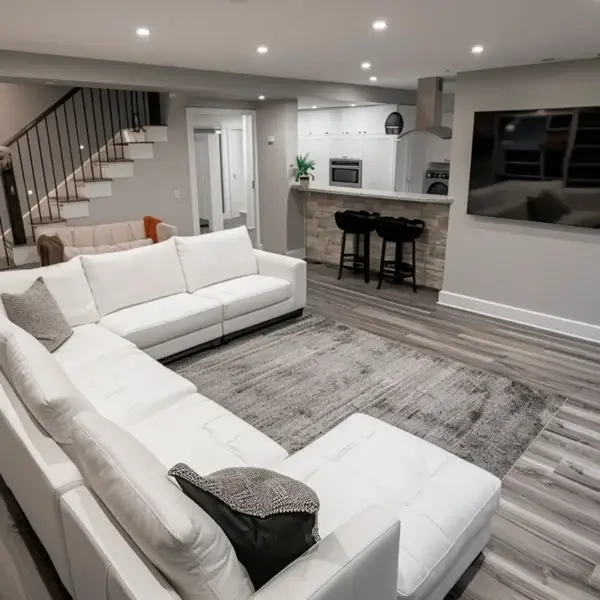
Space Planning for Basement Finishing: Transforming Your Unused Square Footage
A basement remodel or finishing project is an opportunity to unlock the hidden potential of your home’s lower level, whether it’s turning it into a family room, a guest suite, a home office, or a gym. Proper space planning is crucial to ensure the end result is functional, comfortable, and maximizes the available square footage.
Key Considerations When Planning a Basement Remodel
- Defining the Purpose of the Space
The first step in any basement remodel is determining how you want to use the space. Are you looking for an entertainment area, additional bedrooms, or perhaps a home office or gym? Each of these goals will require different design and space-planning approaches. Understanding the primary function of your basement will guide the layout, furniture arrangements, and flow of the space.
- Understanding Layout and Flow
Space planning is about maximizing the functionality of the space while maintaining a natural flow. One of the challenges of basements is ensuring adequate circulation, as they tend to be narrow or have low ceilings. To create an open, airy feel, consider options like an open-plan design with multifunctional spaces or utilizing built-in furniture and storage solutions to save space.
- Egress and Safety Compliance
Any basement remodel must meet safety standards, especially when converting the space into bedrooms or other habitable areas. Proper egress (exit routes) is required by building codes, meaning you’ll need to ensure there’s a window or door large enough to escape in case of emergency. Many older basements don’t have windows that meet modern standards, so you may need to add or enlarge an existing one.
- Moisture Control and Insulation
Basements are often prone to moisture issues due to their location below ground level. Space planning must take moisture control into account. Insulation, waterproofing, and vapor barriers should be integrated into the design to prevent dampness and mold issues. Warm, dry, and energy-efficient materials will make the basement feel more comfortable year-round.
- Lighting and Ventilation
Basements tend to have limited natural light, so lighting plays a vital role in space planning. Layered lighting strategies—task, ambient, and accent—can help brighten the space. Consider recessed lighting, wall sconces, and floor lamps for a cozy, functional atmosphere. Ventilation is also critical in a basement, so installing an HVAC system or ventilation fan will help with air circulation and prevent musty odors.
- Choosing the Right Flooring
Durable and moisture-resistant flooring options are essential for basements. Hardwood, carpet, and laminate are popular choices, but you may want to consider engineered wood, vinyl, or tile, which are more resilient to moisture. For warmth underfoot, consider adding radiant floor heating, particularly if the basement will be used as a living area or guest suite.
- Maximizing Storage
Basements often come with a great opportunity for additional storage. Utilize vertical space with built-in shelving or cabinetry. Under-stair storage can also be a smart way to store seasonal items, household essentials, or even a small library.
- Budgeting for the Remodel
One of the most significant factors in planning a basement remodel is your budget. Make sure to balance the desire for a luxurious space with the practicalities of the project’s cost. A clear budget will help guide the selection of materials, finishes, and the scope of your space planning decisions.
Popular Basement Features and Upgrades
Here are some trendy and practical upgrades that homeowners often opt for during a basement remodel:
Home Theaters & Entertainment Zones
A popular choice is converting a basement into a home theater with acoustic treatments and comfortable seating. This is an ideal use of the space if you love entertaining or want a private area to watch movies with family and friends.
Guest Suites
Adding a bathroom and kitchenette to create a fully-functional guest suite is a great way to use basement space. With its own separate area for sleeping and lounging, your basement can become a self-contained unit.
Home Offices
With the rise of remote work, a dedicated, quiet office space in the basement has become highly sought after. This allows for privacy and separation from the main living areas.
Fitness Rooms or Yoga Studios
For those who prefer to work out at home, a home gym is an excellent use of basement space. Soundproofing and proper lighting can make the space more functional for exercise routines.
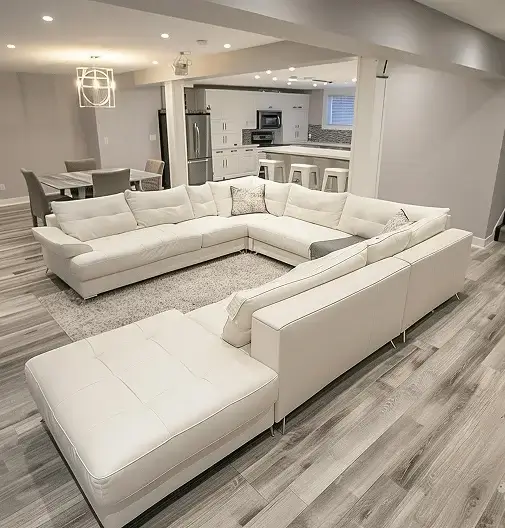
Why Choose Fortress
Built to last
integrity, function, and craftsmanship—start to finish.
A process you can trust
communication and transparency at every step.
Modern, approachable design
quality results with a warm, contemporary feel.
Planning a basement remodel involves thoughtful consideration of the space’s functionality, safety, and aesthetics. By understanding the core aspects of space planning—layout, egress, moisture control, and lighting—you can create a basement that not only enhances your home’s value but also meets your family’s needs for years to come.
Start with a design consult and a clear plan.