

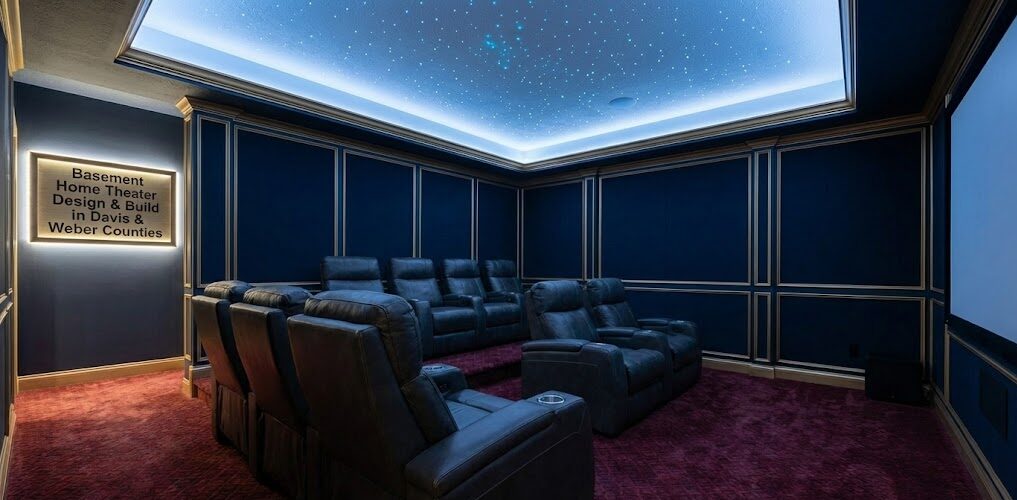
Basement Home Theater Design & Build in Davis & Weber Counties
A great home theater isn’t about buying the biggest screen or the loudest speakers.
It’s about planning the room so sound, sightlines, lighting, and comfort work together—without turning your basement into a complicated tech project.
Fortress Builders designs and builds basement home theaters as part of a complete basement finishing plan, helping homeowners in Davis and Weber Counties create spaces that feel immersive, comfortable, and easy to use—night after night.
Why home theaters succeed (or fail) in basements
Basements are ideal for theaters—but only when they’re planned correctly. Common issues we see in poorly planned basement theaters include:
screens mounted too high or too small for the seating distance
sound that echoes, feels harsh, or leaks through the house
wiring added after walls are finished
lighting that ruins the viewing experience
seats that feel cramped or awkward
A true theater experience is engineered. That’s why Fortress Builders treats home theaters as a room system, not a collection of gadgets.
If you’re searching for a basement home theater in Utah or a media room remodel in Davis County, planning is the difference between “cool idea” and “favorite room in the house.”
What Fortress Builders includes in a basement home theater build
Home theaters work best when they’re designed alongside the rest of the basement—not added after the fact.
Room selection and screen wall planning
We help determine:
the best room for sound control and viewing distance
screen size and placement based on room dimensions
wall construction and layout considerations
The goal is a screen that feels cinematic—not overwhelming or awkward.
Seating layout and sightlines
Comfort matters just as much as visuals.
We plan:
seating distance from the screen
row spacing and clear sightlines
aisle and access considerations
flexibility for recliners, couches, or mixed seating
Sound control and acoustic planning
Basement theaters benefit greatly from thoughtful sound management.
We coordinate:
wall and ceiling assemblies that reduce sound transfer
placement considerations for speakers and subwoofers
acoustic treatments (where appropriate) to improve clarity
This helps keep sound immersive inside the theater—without disturbing the rest of the home.
Electrical, low-voltage, and media wiring
The cleanest theaters are wired before walls go up.
We plan for:
power placement for screens, projectors, and equipment
low-voltage wiring for audio, video, and networking
clean cable routing that avoids exposed cords or retrofits
If you’re planning a home theater basement in Layton or surrounding areas, this early coordination is what keeps the finished space looking intentional.
Lighting zones and dimming scenes
Lighting should support the experience—not distract from it.
We design:
layered lighting zones (entry, seating, accent)
dimmers and scenes for “movie mode” vs “everyday use”
safe navigation lighting without screen glare
Comfort and usability details
A theater should feel easy to use.
We plan for:
temperature comfort and airflow
convenient controls and switch placement
layouts that support both movies and casual TV viewing
Key decisions that shape a great basement home theater
You don’t need to overcomplicate the design. These are the decisions that matter most.
1) How cinematic do you want it to feel?
Some homeowners want a full theater experience. Others want a comfortable media room that still feels flexible.
We’ll help you define:
dedicated theater vs multi-use media space
visual immersion vs everyday practicality
2) Screen size and viewing distance
Bigger isn’t always better.
We plan screen size based on:
room depth
seating layout
comfort for long viewing sessions
3) Sound isolation vs open feel
We help you balance:
sound containment
budget considerations
how the theater connects to the rest of the basement
4) Lighting control and ease of use
The best theaters are easy for guests and family members to use—no “instruction manual” required.
We design lighting that:
transitions smoothly from entry to viewing
avoids glare and reflections
supports both movie nights and everyday use
5) Future flexibility
Families change. Technology evolves.
We plan theaters that:
allow equipment upgrades later
support furniture changes
don’t lock you into one rigid setup
How Fortress Builders plans and builds basement home theaters
Fortress Builders approaches basement theaters as part of a coordinated basement system—not a standalone project.
Step 1: Design consult and experience goals
We start by understanding:
how you want to use the space
who will use it most (family, guests, kids)
how immersive you want the experience
budget and scope expectations
Step 2: Layout, acoustics, and wiring coordination
Before construction begins, we coordinate:
room layout and screen wall planning
seating and circulation
electrical and low-voltage wiring
lighting zones and controls
Step 3: Build sequencing that avoids rework
We manage sequencing so:
wiring is installed before walls close
sound and lighting details are coordinated
finishes go in cleanly—without retrofits
Step 4: Final walkthrough and usability check
At completion, we confirm:
sound and lighting feel balanced
seating and sightlines work as planned
controls are intuitive
the room feels immersive and comfortable
Who this is for
A basement home theater is a great fit if you:
want a dedicated space for movies, sports, or gaming
are finishing a basement and want one standout feature
care about sound quality and viewing comfort
want a clean, built-in look—not exposed wires and add-ons
value planning and coordination over trial-and-error
Related basement finishing pages
Home theaters work best when coordinated with the rest of the basement:
Basement Finishing (Hub Page) – overall layout and planning
Lighting and Electrical – zones, controls, and usability
Moisture Management – comfort and durability below grade
Game Room and Bars – complementary entertainment spaces
Basements Portfolio – see finished basement results
Basement home theater FAQs
Do I need a fully enclosed room for a theater?
Not always. Dedicated rooms offer better sound control, but many homeowners choose media rooms that balance immersion with flexibility.
Can a home theater be part of a multi-use basement?
Yes. We design layouts that support movie nights and everyday living without compromising comfort.
How early should wiring be planned?
Very early. Power and low-voltage planning before walls are closed keeps the space clean and future-ready.
Is acoustic treatment always necessary?
Not always. It depends on room size, layout, and expectations. We’ll recommend options based on your goals—not upsells.
Ready to plan a home theater your family actually uses?
A basement home theater should feel effortless—not overly technical or fragile.
If you’re considering a basement home theater in Davis or Weber County, the next step is a design consult. We’ll help you clarify options, reduce uncertainty, and plan a theater that fits your basement, your lifestyle, and your budget.
Tell us how you want to use the space—and what kind of experience you’re hoping to create. We’ll help you plan a basement home theater that delivers comfort, immersion, and long-term enjoyment.
Ready to elevate your kitchen?
Start with a design consult and a clear plan.