

Low-Maintenance Grout Choices: Color, Type, and Where It Matters Most
Grout is the difference between a bathroom that looks crisp for years… and one that looks “a little tired” no matter how nice the tile is.
In this homeowner-friendly guide, we’ll break down:
- how grout type affects staining, cracking, and long-term cleaning,
- how grout color can make tile look cleaner (or show every speck),
- where “low maintenance grout” matters most (and where you can keep it simple),
- and the biggest mistakes that lead to constant scrubbing—or premature failure.
The Fortress Builders is a Utah design–build company serving Davis & Weber Counties. Their process starts with a detailed design blueprint (so layouts, selections, and budget align early), then continues through permitting, project management, and construction with clear communication—because durable results come from a strong plan, not just good intentions.
Helpful internal pages while you plan:
Grout is the “small” decision that decides how much you’ll clean
Most people choose tile first. Makes sense—tile is what you see. But in many bathrooms, grout is what you maintain.
Here’s why grout deserves more attention than it usually gets:
- Grout joints collect residue. Soap film, minerals from hard water, body oils, shampoo, and everyday dirt all want a place to settle. Grout gives them one.
- Grout is often the first thing to look “off.” Even when tile still looks great, grout can discolor, haze, or develop small cracks that make the whole shower feel older than it is.
- Grout choices are hard to change later. Regrouting or changing grout color can be done, but it’s not as simple as repainting a wall.
The goal: choose a grout type and grout color that match your lifestyle and your tolerance for upkeep.
If you want a bathroom that feels “low drama,” grout is where you win.
First: grout is not waterproof (and that’s a good thing to know)
Let’s clear up one of the most common misconceptions in bathroom remodeling:
Tile and grout are not the waterproofing. They’re the finish layer.
A shower stays watertight because of a waterproofing system behind the tile (membranes, sealed seams, proper drain integration, and correct detailing at corners and penetrations).
If you want a simple, homeowner-friendly overview of what’s behind great tile work, read: Bathroom Waterproofing 101: What’s Behind Great Tile Work.
So why does grout matter if it isn’t the waterproof layer?
- Because grout affects how clean and polished the bathroom feels day-to-day.
- Because grout problems can be an early sign of movement, installation issues, or moisture management problems.
- Because the easiest time to get grout right is before tile is installed, when you still have options.
A quick grout glossary for homeowners
You don’t need to become a tile professional to make smart decisions. But a few simple terms make the whole conversation easier:
|
Grout joint
The space between tiles that gets filled with grout. Joint width varies based on tile type, edge style, and layout. |
|
Change of plane
Where two surfaces meet at an angle—like wall-to-wall corners or wall-to-floor corners. These areas move more and typically need a flexible sealant (often silicone) rather than grout. |
|
Movement joint
A planned flexible joint that allows surfaces to expand and contract without cracking. The concept matters in showers and large tiled floors. |
|
Grout haze
A thin film left on tile after grouting if cleanup isn’t done properly. It can dull the tile surface. |
|
Efflorescence
A white, chalky deposit that can appear when moisture moves through cement-based materials and leaves minerals behind. It’s not “dirt,” but it can look like it. |
Grout types 101: what “grout type selection” really means
When people say “grout,” they’re actually talking about a few different product categories. The right grout type depends on:
- where it’s going (shower floor vs shower wall vs bathroom floor),
- how much water exposure and cleaning it will see,
- the tile itself (material, edge type, recommended joint size),
- and whether you prioritize easiest cleaning, best stain resistance, or simplest installation.
Below is a homeowner-friendly overview of common grout categories and how they typically behave.
Cement-based grout (the “classic” option)
Cement-based grout is the traditional grout most people think of. It’s widely used, widely available, and has a long track record when installed correctly.
Why homeowners choose it:
- often budget-friendly compared to premium options,
- available in a wide range of colors,
- works well for many wall and floor applications.
What to know for low maintenance:
- Cement grout is typically more porous than “stain resistant grout bathroom” options like epoxy. That means it can absorb moisture and discolor more easily in heavy-use showers if not protected.
- Many cement grouts benefit from sealing (and resealing over time), depending on product and location. Always confirm with the grout manufacturer.
High-performance cement grout (stronger, often more stain resistant)
Many manufacturers offer higher-performance cement grouts that include additives for improved strength, color consistency, and staining resistance.
Why homeowners like it:
- often more stain resistant than basic cement grout,
- can provide more consistent color when mixed and installed properly,
- can be a “middle path” between basic cement grout and epoxy grout.
Note: product names vary by brand. If your installer recommends a specific grout product, ask which category it is, where it’s best used, and whether sealing is recommended.
Epoxy grout (a common “low maintenance grout” choice)
Epoxy grout is often described as a premium option for wet and high-traffic areas. It’s known for strong stain resistance and low absorption compared to traditional cement grout.
In the “epoxy grout vs cement grout” debate, here’s the homeowner-level summary:
- Epoxy grout is generally chosen for stain resistance and easier long-term cleaning.
- Cement-based grout is generally chosen for lower cost and simpler installation.
What to know:
- Epoxy grout is often more expensive than cement grout, both in materials and installation labor.
- It can be less forgiving during installation and cleanup. Your tile installer’s experience matters.
- Some homeowners love epoxy for showers because it helps keep grout lines looking new longer with normal maintenance.
Single-component or “premixed” grout (varies by product)
Some grouts come ready to use (often described as single-component). These products can be appealing because there’s no mixing ratio to manage and color can be consistent.
What to know:
- Performance varies by product and manufacturer. Always follow the manufacturer’s guidance for where it’s approved (showers, floors, steam showers, etc.).
- These grouts can offer good stain resistance and can be a low-maintenance option when used in the right application.
Bottom line: There isn’t one “best grout” for every bathroom. The best grout type selection matches the zone, the tile, and your cleaning tolerance.
Grout types compared: stain resistance, cleaning, and where each fits
Here’s a practical comparison you can use when talking with a remodeler or tile installer. (Exact performance varies by brand and product, so confirm specific recommendations with your installer and the manufacturer.)
|
Basic cement grout
Best for: many wall applications, some floors, and budget-conscious projects. Maintenance: can require sealing and more careful cleaning to prevent staining/discoloration. Why it’s chosen: cost-effective and familiar. |
|
High-performance cement grout
Best for: homeowners who want improved stain resistance without jumping all the way to epoxy. Maintenance: often easier than basic cement grout, but still depends on product and sealing recommendations. Why it’s chosen: balanced performance and cost. |
|
Epoxy grout
Best for: showers, wet areas, and high-use bathrooms where “stain resistant grout bathroom” is a priority. Maintenance: typically chosen for easier long-term cleaning and strong stain resistance; installation skill matters. Why it’s chosen: durability and lower staining risk over time. |
|
Single-component / premixed grouts
Best for: certain wall and floor applications where approved by the manufacturer. Maintenance: can be low maintenance; suitability varies by product. Why it’s chosen: convenience and consistent color. |
Where grout matters most: shower floors, shower walls, bathroom floors
Not every grout decision needs to be “premium.” A smart plan puts the right investment in the right place.
Shower floors: the toughest zone for grout
Shower floors deal with constant water exposure, soap film, and slope. That combination can make grout discolor more noticeable over time—especially if you have a lot of grout joints (common with mosaics and small-format tile).
For shower floors, homeowners who want low maintenance typically prioritize:
- a grout choice with strong stain resistance,
- a grout color that doesn’t show every change,
- and a cleaning routine that prevents soap film buildup.
If you’re still choosing tile, these grout decisions tie directly to tile size, traction, and how many grout joints you’ll have. Related guide: Choosing Bathroom Tile: Slip Resistance, Grout Lines, and Maintenance.
Shower walls: easier to keep clean when you plan well
Shower walls don’t deal with foot traffic, but they do deal with water runoff and soap. Two things matter most for wall grout maintenance:
- How many grout lines you have. Large-format wall tile generally means fewer grout joints.
- How visible residue is on your tile + grout combo. Some combinations show water spots quickly; others hide them better.
Main bathroom floors: grout gets “tracked”
Bathroom floors collect dust, hair, and everyday debris—plus wet footprints near the shower or tub. If you want grout that stays looking clean between mops:
- avoid extremely high-contrast grout on busy floors unless you love the pattern and don’t mind extra cleaning detail,
- consider a grout color for easy cleaning that sits closer to a mid-tone,
- and choose a grout type appropriate for floor traffic.
Practical “where to spend” rule: If you’re going to upgrade grout type for low maintenance, the shower floor (and sometimes the shower walls) are the first places it pays off.
Grout color for easy cleaning: what actually works in real bathrooms
Most grout complaints aren’t about grout “failing.” They’re about grout looking dirty faster than the homeowner expected.
So if you want low maintenance grout, grout color is just as important as grout type.
Think in “visibility,” not just light vs dark
Here’s the reality: both very light and very dark grout can show things you don’t want to see.
|
Light grout
What it hides: some lighter mineral residue on dark tile. What it shows: staining/discoloration from soap, shampoo, and everyday grime—especially in showers and on floors near the shower. Best for: homeowners who love a bright, classic look and are okay with consistent upkeep (or choose a grout type with strong stain resistance). |
|
Dark grout
What it hides: some everyday dirt and minor discoloration. What it shows: light mineral deposits and soap film can appear as a hazy or chalky look, depending on water quality and cleaning routine. Best for: patterns and contrast-heavy looks, or bathrooms where you’re prepared to wipe down to prevent film buildup. |
|
Mid-tone grout
What it hides: a little bit of everything. What it shows: less than extremes, in many homes. Best for: homeowners who want a forgiving “clean enough” look between regular cleanings. |
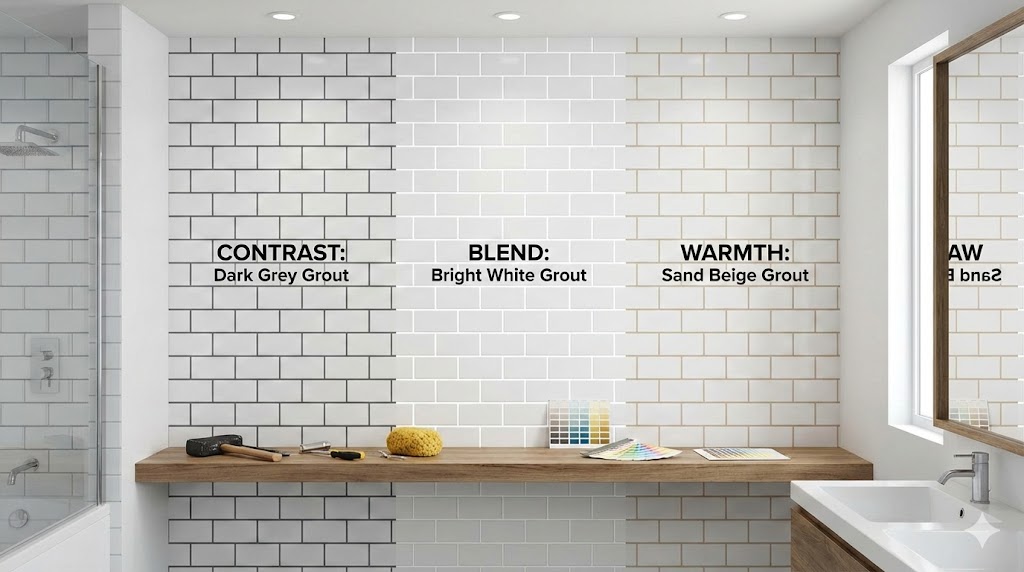
Match vs contrast: pick based on your tolerance for “busy”
Two bathrooms can use the same tile and feel totally different depending on grout color strategy.
Two reliable grout color strategies
- Low-contrast / “blend” grout: Grout color is close to the tile color. The surface reads calmer and grout lines are less visually loud. This often feels more spa-like and can be forgiving visually.
- Moderate contrast grout: Grout is different enough to define tile shape, but not so different that every line screams. This can be a good middle ground.
High contrast grout can look amazing, but it also highlights alignment, spacing, and variation. If you love that look, it’s worth it—just choose it intentionally.
“But I want white grout.” You can—just be strategic.
White grout is classic for a reason. It can make tile feel crisp, clean, and timeless.
If you love white grout, consider these homeowner-friendly ways to make it less stressful:
- Use white grout in lower-stress zones (like a backsplash or feature wall) and a more forgiving color on shower floors.
- Pair white grout with a grout type that is chosen for stain resistance, and follow manufacturer care guidelines.
- Plan ventilation and cleaning routines so soap film doesn’t become “the new normal.”
Mock-ups: the fastest way to avoid grout regret
Grout looks different next to tile than it does on a tiny color chip. Lighting changes it. Tile finish changes it. Even the size of the grout joint changes how it reads.
If you want confidence (and fewer surprises), a mock-up is your best friend.
Simple mock-up method (homeowner-friendly)
- Pick your top 1–2 tile options.
- Select 2–3 grout colors you’re considering (including a “safe” mid-tone option).
- Ask your tile supplier or installer about creating a small sample board—or create a simple visual test with grout swatches against the tile.
- View it in your bathroom lighting (morning, evening, vanity lights).
- Wet the tile and look again (especially for showers).
Result: fewer “it looked different in the showroom” surprises.
Sealing + care: the truth about “stain resistant grout bathroom” claims
Some homeowners are surprised that a “stain resistant” grout can still discolor. Here’s why:
- Soap film and mineral deposits can look like stains. That’s not always the grout absorbing a stain—it can be buildup on the surface.
- Cleaning method matters. Harsh chemicals, abrasive pads, or inconsistent rinsing can create uneven appearance over time.
- Water quality matters. Hard water can leave mineral deposits on tile and grout, especially in showers.
Do you need to seal grout?
It depends on the grout type and the manufacturer. In general:
- Many cement-based grouts can benefit from a penetrating sealer to reduce absorption and staining risk.
- Many epoxy grouts are chosen specifically because they typically don’t require sealing in the same way cement grouts do—yet you should still follow the product’s care recommendations.
- Some newer grout products have different sealing guidance. Always confirm with the manufacturer and your installer.
Important: Sealer isn’t a “set it and forget it” magic shield. It can wear over time, and maintenance requirements vary by product and bathroom conditions.
Cleaning routines that reduce grout maintenance
You don’t need a complicated routine. Consistency matters more than intensity.
Low-maintenance grout care plan
- After showers (optional but powerful): quick rinse or squeegee on walls/glass to reduce soap film and mineral buildup.
- Weekly: gentle cleaner and rinse; focus on areas where shampoo/soap hits.
- Monthly (or as needed): check corners and changes of plane (where sealant is used) and address any gaps or peeling early.
- Seasonally: if you have hard water, keep an eye out for mineral residue and remove it before it becomes stubborn buildup.
If you want a bathroom that stays dry and fresh longer, ventilation matters too. Helpful links:
- Bathroom Vent Fan Sizing: How to Control Humidity and Odors
- Bathroom Ventilation & Moisture Control Done Right
Note: Ventilation and electrical requirements can vary by jurisdiction. Confirm fan sizing, ducting, and any code-driven requirements with qualified professionals and local authorities.
Avoiding common grout problems: discoloration, cracking, and “always looks dirty”
Most grout issues come down to one of three things:
- the grout choice didn’t match the application,
- installation details weren’t handled correctly,
- or the bathroom’s moisture and cleaning realities weren’t considered.
Problem: grout discoloration
Discoloration can happen for multiple reasons (and not all of them are “failure”). Common contributors include:
- Soap film and residue that sits on the surface,
- hard water minerals that leave a chalky haze,
- inconsistent mixing or cleanup with cement grouts (color consistency depends on following product instructions),
- moisture moving through cement materials (efflorescence),
- mildew growth in areas that stay damp and dirty (often more about moisture + residue than the grout itself).
How to prevent it: pick a grout type with the right level of stain resistance for the zone, use a grout color for easy cleaning, and design ventilation/maintenance into the plan.
Problem: cracked grout
Grout cracking is often a sign of movement—either in the substrate behind the tile or at joints where movement was expected.
Common causes include:
- movement at corners where grout was used instead of a flexible sealant,
- subfloor or wall movement that wasn’t addressed (tile needs a stable, properly prepared surface),
- missing movement accommodation where it was needed,
- incorrect grout type for the joint size or application,
- rushed curing or exposure to water before the grout fully cured (follow manufacturer timelines).
Homeowner takeaway: cracked grout isn’t always “bad grout.” Sometimes it’s a clue that the assembly beneath needs attention.
Problem: grout looks dirty no matter what
This is often a design + expectation problem, not a cleaning problem.
Common culprits:
- high-contrast grout that highlights every speck and shadow,
- very light grout in high-use wet zones,
- lots of grout lines (mosaic tile everywhere),
- bathroom ventilation that leaves moisture lingering,
- tile surfaces that show water spots easily.
The fix is usually a combination of smarter material choices and a routine that prevents buildup—not heavier scrubbing.
How to choose low maintenance grout in 5 steps
If you’re feeling overwhelmed by grout options, here’s a simple framework that keeps the decision homeowner-friendly.
Step 1: Decide your cleaning tolerance (honestly)
This is the step most people skip. Answer these questions:
- Do you want to wipe down the shower regularly—or do you want it to look good with basic weekly cleaning?
- Are you okay with some “lived-in” character between cleanings, or do you want it to look crisp at all times?
- Do you have hard water that leaves spots easily?
Your answers guide grout type and grout color choices more than any trend.
Step 2: Choose grout type based on the zone
For example:
- High water exposure (shower floors, heavy-use showers): many homeowners prioritize grout types known for stain resistance and lower absorption.
- Lower water exposure (backsplashes, accent walls): you can often keep it simpler and focus on color and style.
Your installer can recommend options based on your tile and joint requirements. Ask them to explain why the grout is a fit—this is a great way to gauge expertise.
Step 3: Select grout color for easy cleaning
If you want “low maintenance,” mid-tone or blending grout colors are often the most forgiving.
If you want contrast or white grout, you can still do it—just pair it with a grout type that supports your maintenance goals and put it in the right zones.
Step 4: Confirm details at corners and transitions
Changes of plane (like wall-to-wall corners and wall-to-floor corners) typically need special detailing to accommodate movement.
Homeowner tip: Ask your installer how they handle corners and movement joints. Good tile work looks great on day one. Great tile work still looks great years later.
Step 5: Do a mock-up and see it in your lighting
Especially if you’re choosing a bold grout color, a mock-up is worth it.
Grout type selection checklist
- Which zones are most exposed to water (shower floor, shower walls)?
- How many grout joints will you have (mosaics vs large format tile)?
- Do you want stain resistance prioritized over easier installation?
- Will grout be sealed? If so, what’s the maintenance plan?
- How will corners and changes of plane be detailed?
- Have you viewed grout + tile together in your actual bathroom lighting?
Questions to ask your remodeler or tile installer (so you get crisp results)
You don’t need to micromanage the installation, but asking good questions protects your investment—and helps you understand what you’re paying for.
Smart questions homeowners can ask
- What grout type do you recommend for this shower floor—and why?
- How does your recommendation compare in the “epoxy grout vs cement grout” tradeoff?
- Do you recommend sealing the grout? If yes, when and how often should it be maintained?
- How will corners and changes of plane be handled (grout vs flexible sealant)?
- How do you reduce the risk of grout discoloration (mixing consistency, cleanup approach, curing time)?
- What’s the expected cure time before the shower is used? (Always follow the manufacturer’s instructions.)
- Can we do a small grout + tile mock-up before finalizing?
If you’re still in the early stages of hiring, Fortress has a helpful resource here: How to Choose a Remodeler.
If your grout is already stained or outdated: refresh options to know
Sometimes you’re not selecting grout for a new remodel—you’re trying to improve what you already have. While a full tile replacement is sometimes the right solution, there are other options depending on the situation.
Option 1: Deep clean and adjust the routine
If the grout looks dark or uneven, it may be surface buildup (soap film, minerals, residue). A deep clean—followed by a consistent, gentle maintenance routine—can make a noticeable difference.
Tip: Always confirm that the cleaner you use is appropriate for your tile and grout type. Some natural stones and specialty tiles have restrictions.
Option 2: Re-seal (if applicable)
If you have a cement-based grout and it has not been maintained, resealing may help reduce future staining. Sealing doesn’t replace cleaning, but it can improve resilience.
Option 3: Grout colorant / grout stain (change the look without re-tiling)
Some homeowners successfully refresh grout color using grout stain or colorant products. Prep is critical for a good result, and not every situation is a fit (especially if there are underlying moisture issues).
Option 4: Regrout or repair localized areas
If grout is cracking, missing, or failing in specific areas, localized repair may be possible—depending on why the problem happened in the first place. If movement or moisture issues are involved, the underlying cause should be addressed rather than just “patching the symptom.”
Cost factors: why “low maintenance grout” can be a smart long-term value
Most grout decisions feel small—until you consider the lifetime cost of maintenance and frustration.
In general:
- Basic cement grout is often lower cost up front, but may require more attention to sealing and cleaning over time in wet zones.
- Epoxy grout and other stain-resistant options can cost more up front, but may reduce discoloration headaches in heavily used showers when installed correctly.
There’s no “right” answer across all homes. The right answer is the one that matches how you actually live.
Quick value test: If you know you won’t enjoy scrubbing grout lines, investing in a more stain-resistant grout type in your shower can be a quality-of-life upgrade—not just a materials upgrade.
How grout decisions connect to the rest of your bathroom remodel
Grout isn’t a standalone choice. It interacts with:
- tile size and layout (more grout lines = more maintenance, especially on shower floors),
- niches and shelves (more corners and details = more places where planning matters),
- waterproofing systems (grout is not waterproof; the system behind tile matters most),
- ventilation (moisture management makes surfaces easier to keep clean),
- lighting (lighting changes how grout color reads, especially in small bathrooms).
Related reads that pair well with this guide:
- Bathroom Waterproofing 101: What’s Behind Great Tile Work
- Choosing Bathroom Tile: Slip Resistance, Grout Lines, and Maintenance
- Shower Niches, Benches, and Shelves: Storage That Doesn’t Leak
- Curbless vs. Curb Shower: Which Walk-In Shower Is Right for You?
- Bathroom Lighting Plan: Vanity Sconces, Mirrors, and Overhead Lighting
See finished bathrooms (and grout choices) in real Utah homes
Grout decisions are easier when you can see them at full scale—how the lines read, how contrast feels, and how different tile styles translate into livable bathrooms.
Bathroom Portfolio Modern Style Traditional Style Luxury Style
Ready to choose grout that matches your lifestyle?
Grout doesn’t have to be the thing you fight with every weekend. With the right grout type selection and a grout color for easy cleaning, your bathroom can stay crisp with normal routines—not constant scrubbing.
The Fortress Builders design–build process helps homeowners make smart selections early—so tile, grout, waterproofing, and maintenance expectations work together as one plan.
Request a Design Consult Explore Bathroom Remodeling Tile & Waterproofing
Bring your top tile picks (and any grout colors you’re considering) to a consult—we’ll help you choose options that look great and stay practical for the way your household actually lives.