

Choosing Bathroom Tile: Slip Resistance, Grout Lines, and Maintenance
Bathroom tile has to do more than look good on install day. It needs to feel safe under wet feet, hold up to daily routines, and stay reasonably easy to clean—especially in shower zones where water, soap, and steam are a constant.
This guide breaks down bathroom tile selection in plain English, with a focus on three things homeowners care about most:
- Slip resistance: choosing slip resistant shower tile (and safer bathroom floor tile) without ending up with a surface that’s miserable to clean.
- Grout lines: understanding how tile size, shape, and layout affect grout lines maintenance.
- Real-world upkeep: honest, practical bathroom tile cleaning tips so your “dream bathroom” doesn’t turn into a weekly scrubbing marathon.
The Fortress Builders is a Utah design–build company serving Davis & Weber Counties. Their approach starts with a detailed design blueprint—aligning your layout, selections, and budget before construction begins—then carries through permitting, project management, and construction with clear communication. That “strength through structure” mindset matters in bathrooms, where durability is built behind the scenes.
Helpful internal pages while you plan:
Pick tile like a homeowner, not a showroom
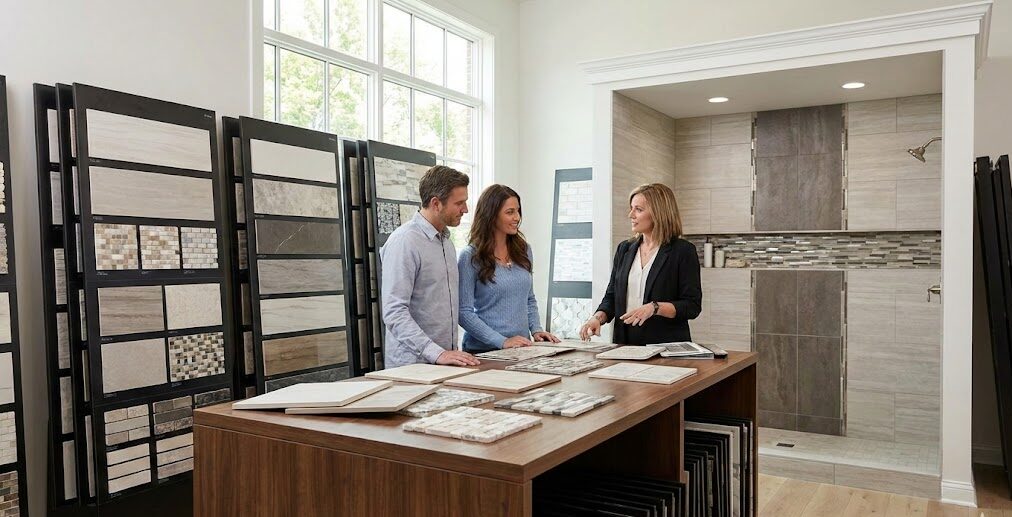
Showrooms are designed to sell the dream: perfect lighting, clean grout, and no one actually using the shower.
Real bathrooms are different. You’ve got:
- wet feet walking out of the shower,
- kids splashing in a tub,
- products sitting on ledges and floors,
- hard water spots on glass and tile,
- and steam that lingers if ventilation isn’t strong.
So instead of starting with “What looks best?”, start with a more useful question:
What needs to be true for this bathroom to be easy to live with?
- The floor feels safe when wet (especially in front of the shower or tub).
- The shower floor drains well and isn’t slippery.
- The tile doesn’t demand constant scrubbing to look clean.
- The grout color and grout type match your tolerance for upkeep.
- The style still feels like “you” when you see it every day.
When you choose tile with your routines in mind, you get a bathroom that stays beautiful and functional.
Start with zones: where slip resistance matters most
Slip resistance isn’t a single “yes/no” decision. It’s about putting the right tile in the right zone. Think of a bathroom in four main areas:
1) Shower floor (highest slip risk)
This is the most important area for traction. It’s constantly wet, often soapy, and usually sloped. Your shower floor tile choice should prioritize:
- traction when wet,
- compatibility with slope (so water drains properly), and
- cleanability (because it’s ground zero for soap scum and mineral deposits).
2) Main bathroom floor (wet traffic zone)
This is where people step out of showers/tubs and walk to vanities, toilets, and closets. Tile that feels fine when dry can become slick with a thin layer of water. In most family bathrooms, you want a floor tile that’s:
- comfortable and safe in socks or bare feet,
- easy to mop, and
- durable enough for daily traffic.
3) Shower and tub walls (low slip risk, high maintenance impact)
Walls don’t need the same traction, but they do need to handle water, steam, and cleaning. Your focus shifts to:
- how easily soap scum shows,
- whether the tile is prone to water spotting,
- and how many grout joints you’re signing up to maintain.
4) Vanity backsplash, accent walls, niches (style + detail zones)
These areas can take a bolder look—mosaics, textured tile, or patterns—because they’re smaller and easier to maintain than an entire shower. They also need thoughtful planning so the tile layout looks intentional.
Quick zone rule: the wetter the area, the more you should prioritize traction + drainability first, and aesthetics second.
If you’re building a walk-in shower or adding niches/benches, coordinate tile choices with the waterproofing approach. If you want a behind-the-scenes overview, read: Bathroom Waterproofing 101: What’s Behind Great Tile Work.
Slip resistance: what “slip resistant shower tile” actually means
Let’s clear something up: there is no tile that is “slip-proof.” What you’re looking for is a surface that provides better traction under wet conditions relative to the alternatives—and that still fits your cleaning comfort level.
Three things that influence traction
|
1) Surface texture / finish
Generally, more texture = more traction. But more texture can also mean more places for soap scum and minerals to cling.
|
|
2) Tile size (especially on shower floors)
Smaller tile usually means more grout joints—those joints can add grip and help the surface conform to the slope of a shower floor.
|
|
3) How the tile is used and maintained
Even a textured tile can get slippery if it’s coated with soap film. Regular cleaning and ventilation matter.
|
About slip ratings (and why you should still test samples)
Manufacturers and showrooms may reference slip resistance ratings or test values. Those can be useful for comparison, but they aren’t the whole story. Real-world traction depends on things like:
- water + soap + shampoo residue,
- bare feet vs socks,
- the slope of the floor,
- and how often the surface is cleaned.
Homeowner-friendly approach: use ratings as a starting point—then verify with a sample you can wet and feel underfoot.
Showroom questions that lead to better answers:
- Is this tile rated for floor use? (Not every tile is.)
- Is it recommended for shower floors specifically?
- Does the manufacturer provide a slip rating or traction guidance?
- What finish is it—matte, polished, textured—and how does that affect cleaning?
- What grout joint size is recommended for this tile and edge type?
Then do your own “real life” test with samples (we’ll walk through that later in this guide).
Tile size + grout lines: the biggest tradeoff in bathroom tile selection
Tile size is where many homeowners accidentally create maintenance headaches.
Here’s the trade-off:
- Larger tile usually means fewer grout lines (easier cleaning), but can be less forgiving on slopes and may feel slicker depending on finish.
- Smaller tile usually means more grout lines (more cleaning), but can provide better traction and conforms more easily to shower floors and transitions.
Common tile sizes and what they’re good at
|
Large format (example: 12×24, 24×24 and larger)
|
|
Mid-size (example: 8×8, 6×12, 4×12)
|
|
Mosaics / small formats (example: 2×2, penny rounds, hex mosaics)
|
If you’re unsure, a very common “balanced” approach in family bathrooms is:
- Shower floor: small tile or mosaic for slope + traction
- Shower walls: larger tile for easier cleaning
- Main floor: medium-to-large floor tile with a slip-conscious finish
Grout line width: small detail, big visual impact
Tile isn’t installed “edge to edge.” It needs grout joints. The joint width depends on:
- tile edge type (some have crisp edges, some have slight rounding),
- tile size variation (some tiles vary more from piece to piece), and
- installation tolerances (walls and floors are rarely perfectly flat).
From a homeowner’s perspective, here’s what matters:
- Thinner grout joints look sleek and modern, but they can also make imperfections stand out if the tile or substrate isn’t very consistent.
- Wider grout joints can look more traditional and can be more forgiving visually, but they increase the amount of grout you’ll maintain.
This is why it helps to decide on tile and grout together (not separately).
Porcelain vs ceramic bathroom tile (and other materials you might consider)
Homeowners often ask about porcelain vs ceramic bathroom tile. The simplest explanation is:
- Both porcelain and ceramic are “ceramic tile” categories.
- Porcelain is typically denser and less absorbent than non-porcelain ceramic tile, which often makes it a strong choice for wet areas and floors.
That said: “best” depends on the tile’s intended use rating, the finish, and the installation—so don’t choose solely by the label.
Material comparison for bathrooms
|
Porcelain tile
Why homeowners choose it: durable, widely available, works well for floors and wet areas, and comes in a huge range of looks (stone-look, concrete-look, wood-look).
|
|
Ceramic tile (non-porcelain)
Why homeowners choose it: often budget-friendly, great for walls, lots of style options.
|
|
Natural stone (marble, travertine, slate, etc.)
Why homeowners choose it: timeless, high-end, unique variation.
|
|
Glass tile
Why homeowners choose it: sparkle, color, and depth—often used as an accent or niche backing.
|
Bottom line: for most homeowners who want durability + manageable maintenance, porcelain tile is a very common winner for floors and shower walls. But you still want the right finish and layout for safety and cleaning.
Finish and texture: matte vs glossy vs textured (and what you’ll clean forever)
Finish is where tile goes from “pretty” to “practical.” And in bathrooms, it affects both traction and how the surface shows water spots and soap film.
A quick, honest guide to finishes
|
Matte finish
|
|
Polished / glossy finish
|
|
Textured / structured finish
|
If you want a practical “sweet spot” that works for many families:
- Main bathroom floor: matte or lightly textured porcelain
- Shower walls: matte, satin, or even glossy (if you’re okay with wiping down), depending on style
- Shower floor: small tile with traction-friendly finish
Grout lines maintenance: how to make grout feel “low drama”
If tile is the star, grout is the supporting actor that determines whether your bathroom looks crisp or constantly a little “off.”
Grout affects:
- how dirty the bathroom looks between cleanings,
- how much scrubbing you do,
- and whether your tile reads as “high-end” or “busy.”
Grout color: the simplest high-impact decision
Grout color is personal, but here’s a practical way to think about it:
Grout color strategy (for real life bathrooms)
- White grout: clean, classic, can look amazing—but it usually shows discoloration faster in high-use wet zones.
- Mid-tone grout: often the most forgiving for daily use (less likely to show every speck).
- Dark grout: can be dramatic and hides some stains, but it can also show hard-water residue and soap film as a lighter haze.
- Matching grout: makes large surfaces look calm and continuous (great for a spa vibe).
- Contrasting grout: highlights the pattern and can feel bold—but it also highlights alignment and variation.
Best practice: always look at grout color with your actual tile, in your bathroom lighting, before you commit.
Grout type: durability and staining resistance vary
Different grout products have different performance and maintenance characteristics. Your installer and tile supplier can guide options based on tile type and joint width.
If you want a deeper homeowner-friendly breakdown, read: Low-Maintenance Grout Choices: Color, Type, and Where It Matters Most.
Where more grout lines make sense (and where they don’t)
More grout is not automatically “bad.” It can be the right choice in the right place:
- Shower floors: more grout joints can add traction and help tile conform to slope.
- Niches or accents: mosaics can look incredible in a small dose.
- Huge shower walls: fewer grout lines often means easier cleaning and a calmer look.
Bathroom tile cleaning tips that actually work in real homes
You can pick the “right” tile and still end up frustrated if the cleaning plan doesn’t match your life. Here are practical principles that apply to most bathrooms:
1) Control the moisture first
Cleaning gets harder when humidity sticks around. A good ventilation plan helps tile, grout, and paint last longer—and keeps the bathroom feeling fresh.
Related resources:
- Bathroom Vent Fan Sizing: How to Control Humidity and Odors
- Bathroom Ventilation & Moisture Control Done Right
Note: Electrical and ventilation requirements can vary by jurisdiction. Confirm fan sizing, ducting routes, and any code-related details with qualified professionals and local authorities.
2) Don’t wait until “gross” to clean
Soap film is easier to remove when it’s fresh. A quick weekly routine often beats a monthly deep scrub. Consider:
- a quick squeegee on glass and some tile after showers,
- a gentle weekly cleaner for tile and grout,
- and a periodic check of caulked joints (especially in corners).
3) Use the right cleaner for the surface
Different tile and grout types can react differently to cleaners. As a general best practice:
- start with a pH-neutral cleaner for regular maintenance,
- avoid aggressive abrasives that can scratch certain finishes,
- and avoid assuming “stronger is better.”
If you’re using natural stone, confirm cleaning recommendations from the tile supplier or manufacturer to avoid damage.
4) Design can make cleaning easier
Small decisions make a huge difference:
- Fewer grout lines on large surfaces often means easier upkeep.
- Mid-tone grout can hide “life” better than bright white in high-use showers.
- Tile layout that avoids skinny cuts can look cleaner and reduce tricky-to-clean edges.
Sample testing: how to choose tile with confidence (not regret)
Tile is one of those purchases that looks totally different in different lighting. And in bathrooms, it looks different again when wet.
If you want to avoid “I loved it in the showroom, but…”—this is the most valuable step.
Step-by-step sample test you can actually do at home
Bathroom tile sample checklist
- Narrow to 2–3 finalists per zone (floor, shower wall, shower floor).
- View samples in your bathroom in morning light, evening light, and with the vanity lights on.
- Wet the sample (spray bottle works) and see how it changes color, reflectivity, and “spotting.”
- Touch test: feel the surface with wet fingers and imagine cleaning it weekly.
- Mock grout color: place grout swatches next to the tile. Even better: ask for a small grout test board.
- Check scale: a tile that looks perfect on a 12″ sample can feel busy (or bland) across an entire room.
- Confirm the tile is rated for the zone (floor vs wall; shower floor suitability).
Tip: If you’re overwhelmed, this is where a design consult pays off—getting the selection right is easier than changing it after install.
Tile layout decisions that affect both looks and maintenance
Two bathrooms can use the same tile and look completely different depending on layout and detailing.
1) Decide the “hero wall” (or keep it calm everywhere)
Many bathrooms benefit from one focal point—like a shower back wall, a vanity wall, or a niche area—while the rest stays quieter. This gives you the “wow” without turning the whole bathroom into a maintenance-heavy pattern.
2) Avoid skinny cuts when possible
Skinny slivers of tile (especially in corners) can make even expensive tile look awkward. A good design plan considers tile dimensions early so the layout lands cleanly. This is part of why design-build planning matters: layout + tile selection should inform each other.
3) Coordinate niches, shelves, and benches before tile is finalized
Storage features affect:
- where grout lines land,
- how corners are waterproofed,
- and how easy the shower is to keep clean.
Related guide: Shower Niches, Benches, and Shelves: Storage That Doesn’t Leak.
4) Match tile choices to the shower style (curb vs curbless)
Curbless showers can be beautiful and more accessible, but they raise the bar on planning—especially slope, drain strategy, and water containment. Tile choice is part of that plan, because some tile formats work better on sloped surfaces than others.
If you’re deciding between the two styles, read: Curbless vs. Curb Shower: Which Walk-In Shower Is Right for You?.
A practical decision guide: what to choose based on your household
If you’re stuck between options, stop thinking like a designer for a moment and think like a person who will clean this bathroom.
If you have kids (splash + speed cleaning)
- Favor traction-friendly floor tile in wet traffic zones.
- Consider mid-tone grout in showers for a more forgiving look.
- Choose wall tile that doesn’t show every water spot.
If you have pets (hair + muddy paws)
- Consider a tile floor finish that hides small debris better (some glossy surfaces show everything).
- Think about grout color for the main floor—mid tones often win.
If you want “spa clean” and don’t mind wiping down
- Large format tile on shower walls can create a clean, calm look.
- Glossy finishes can look bright and crisp—just be honest about your willingness to squeegee.
If you’re planning to age in place
- Prioritize slip-conscious finishes on floors and shower floors.
- Consider how the shower entry and drain plan affect water spread and safe footing.
- Coordinate tile with future grab bar blocking and accessory locations.
Remember: A bathroom can be “luxury” because it works effortlessly—not only because it looks expensive.
Common questions homeowners ask about bathroom tile
What’s the best tile for shower floors?
Most homeowners do best with a smaller format tile (often mosaics) on shower floors because it conforms to slope and can provide better traction. The best option still depends on finish, cleaning preferences, and the shower design.
Is polished tile too slippery for bathrooms?
Polished tile can feel slicker when wet, especially on floors and in showers. Many homeowners choose polished tile for walls (where traction isn’t the priority) and choose matte or lightly textured finishes for floors.
How do I reduce grout cleaning?
Use larger tile on large surfaces (like shower walls), choose a grout color that’s forgiving, and select a grout type appropriate for the area. Good ventilation and consistent light cleaning make the biggest difference long-term. For deeper guidance, see: Low-Maintenance Grout Choices.
Should bathroom floors match the rest of the house?
There’s no rule. Some homeowners prefer continuity; others like contrast. The practical priority is choosing a floor material and finish that behaves well in a wet space.
Do I need special tile for heated floors?
Tile is commonly used with radiant floor heat because it transfers heat effectively. Product requirements and installation details vary, so plan it early with your remodel team. Related guide: Radiant Heated Bathroom Floors for Everyday Comfort.
See bathroom tile ideas in real Utah remodels
Sometimes the fastest way to decide is to see finished bathrooms—how the tile reads at full scale, how grout lines look in real lighting, and how styles translate into livable spaces.
Bathroom Portfolio Modern Style Traditional Style Luxury Style
Want tile that looks great and stays practical?
Choosing tile is easier when your layout, waterproofing approach, and daily routines are considered together—not as separate decisions.
The Fortress Builders design–build process starts with a detailed blueprint so tile selection, grout choices, and maintenance expectations are aligned before the install phase begins.
Request a Design Consult Explore Bathroom Remodeling Tile & Waterproofing
If you’re feeling stuck between “beautiful” and “easy to maintain,” bring your top tile contenders to a consult—we’ll help you make a confident, real-life decision.