

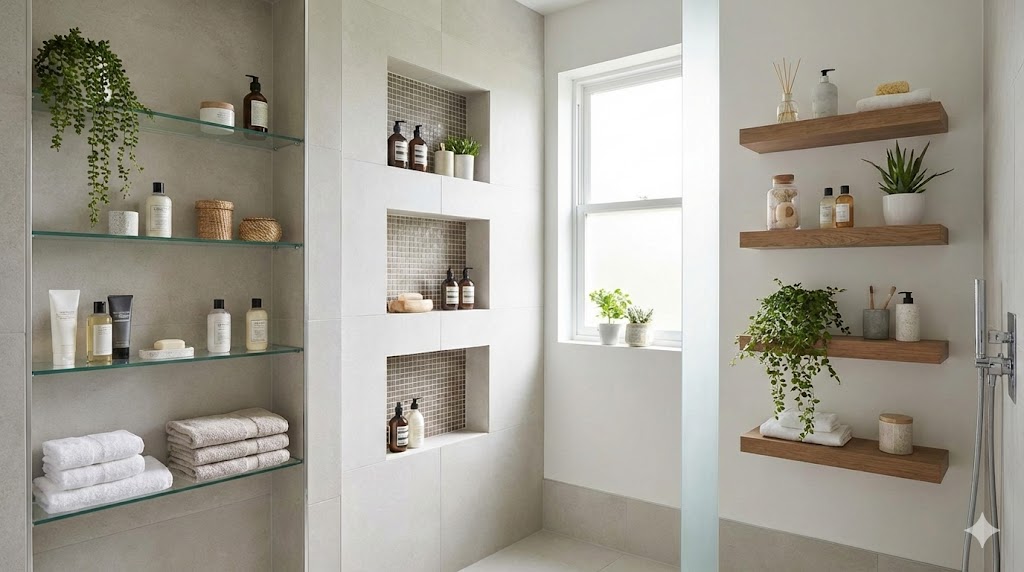
Shower Niches, Benches, and Shelves: Storage That Doesn’t Leak
Great shower storage is one of those “small” details that changes how your bathroom feels every single day. No bottles on the floor. No balancing shampoo on the corner of the tub. No cluttered caddies hanging from the shower head.
But here’s the catch: shower storage is only “nice” if it stays dry behind the tile. A beautiful niche is not a win if water slowly works into the wall. A built-in bench isn’t a luxury if it becomes a moisture trap. And even simple shelves can cause problems if they aren’t sloped, sealed, and integrated into the shower’s waterproofing system.
This guide walks you through walk in shower storage options—niches, benches, and shelves—with a practical focus on shower niche waterproofing, shower bench design, and niche placement planning. You’ll learn what to decide early, what details prevent leaks, and how to coordinate storage with tile so everything looks intentional (not “added on”).
If you’re planning a full remodel, these pages help you connect the dots:
- Bathroom Remodeling in Utah: Built to Last
- Why Walk-In Showers Are Taking Over Home Remodeling
- Tile & Waterproofing Systems Built for Longevity
Fortress Builders’ design–build approach starts with a clear blueprint—so details like storage, waterproofing, tile layout, and long-term maintenance are planned before installation begins. That’s how you get a shower that feels great now and holds up for years.
The big idea: shower storage isn’t “extra”—it’s part of the waterproofing system
Homeowners often think of niches, benches, and shelves as finishing touches. In reality, they’re part of the shower’s water-management strategy. Every time you add storage, you add:
- more corners (where water likes to linger),
- more seams (where waterproofing must be continuous),
- more horizontal surfaces (where slope matters), and
- more design decisions that affect tile layout.
Rule of thumb: If it’s in the shower, it should be treated like a wet-area detail—even if it “feels small.”
- Tile and grout are not the waterproofing. They’re the finish you see.
- The waterproofing system is behind the tile. That’s what protects framing, drywall, insulation, and subfloor from moisture damage.
- Storage details must connect to the system. A niche or bench should not be a “break” in the waterproofing layer.
For the full behind-the-scenes explanation, see: Bathroom Waterproofing 101: What’s Behind Great Tile Work.
Pick your storage strategy: niche, shelves, bench—or a hybrid
There isn’t one “right” solution. The best walk-in shower storage depends on how your household showers (and cleans). A couple with minimalist products might only need a simple niche. A family of five may need multiple zones. Someone who shaves daily might care more about a footrest or bench than a niche.
|
Recessed Niche (in the wall)
Best for: keeping products organized and off the floor, while keeping the shower footprint open.
|
|
Floating/Corner Shelves (on the wall)
Best for: simple storage with flexible placement, including smaller showers where framing a niche is awkward.
|
|
Built-In Bench or Seat
Best for: comfort, accessibility, shaving, kids, and a spa feel—especially in larger showers.
|
|
Hybrid Approach (most common in real life)
Best for: households with multiple users and multiple product types.
|
Quick decision prompt: What’s your “pain point” today?
- Clutter: you want bottles off the floor → start with a niche plan.
- Comfort/accessibility: you want a place to sit or steady yourself → start with bench or seat planning.
- Cleaning: you want fewer crevices and less scrubbing → keep it simple (one niche or one shelf, minimal seams).
- Shared shower: you need zones so products aren’t piled → plan multiple storage areas early.
Shower niche ideas that work in real life (not just in photos)
A niche is a recessed “pocket” in the shower wall—usually framed between studs—designed to hold shampoo, conditioner, soap, and other daily items. Done right, a niche is one of the most useful upgrades in a walk-in shower remodel.
Done wrong, a niche becomes a magnet for standing water, stained grout, and (in worst cases) moisture damage behind the wall. That’s why shower niche waterproofing and niche placement planning matter just as much as the look.
Common niche styles (and who they’re best for)
|
Single horizontal niche
A wide niche with one shelf (or no shelf) that sits at a comfortable reach height.
|
|
Double niche (stacked)
Two niches stacked vertically, or one niche with a shelf that creates two compartments.
|
|
Vertical “tower” niche
A tall, narrow niche that can hold multiple shelves inside a single vertical opening.
|
|
Corner niche
A niche tucked into a corner instead of a flat wall.
|
Niche placement planning: where niches actually work best
Most homeowners choose a niche location based on what looks good in a rendering. A better approach is to choose placement based on:
- Reach and routine: Where do you naturally reach for products while showering?
- Spray zone: Is the niche directly under the shower head spray (which keeps it wetter and can leave more residue)?
- Layout and traffic: Will the niche be blocked by a door swing, glass panel, or a person standing in the shower?
- What’s inside the wall: Plumbing lines, valves, vents, and framing often dictate the “smart” location.
Practical placement tips homeowners love:
- Place niches where you can reach them without stepping into the direct spray. This can make bottles easier to grab and keep labels cleaner.
- Keep niches away from the shower head wall when possible. Many people prefer niches on a side wall for easy access.
- Avoid exterior walls when it creates insulation or vapor barrier headaches. Some showers can still work on exterior walls, but it requires careful detailing and may reduce niche depth. Discuss feasibility with your remodeler.
- Plan for multiple users. Two smaller niches can be easier than one crowded niche.
If your shower design is still being finalized, this overview can help: Walk-In Showers: Layout, Accessibility, and Details That Matter.
Niche sizing: the “right” dimensions depend on what you store
Instead of starting with a standard niche size, start with your products. Take 3 minutes and do this:
- Gather your tallest bottles (shampoo, conditioner, body wash).
- Gather items that need a stable base (pump bottles, shaving cream, kids’ products).
- Decide whether you want storage for accessories (razor, loofah, face wash, hair masks).
Once you know what must fit, you can decide the niche strategy:
- One large niche for all products (simple, but can get cluttered)
- Two zones (top for daily bottles, bottom for soap/razors)
- Vertical niche with flexible shelf spacing
Comfortable niche height guidance (not a rule):
- Many homeowners like the main niche area roughly at chest to shoulder height for easy reach.
- If you want a shaving shelf or kids’ access, consider a secondary lower storage point.
- In shared showers, staggered niches can reduce elbow-bumping and product crowding.
Important: Exact placement depends on user height, shower head location, tile size, and what’s inside the wall. Your design-build team should coordinate all of these before framing is finalized.
Depth: why some niches feel “tight” (and what to do about it)
Niche depth is often limited by wall framing. Many shower walls are built with 2×4 studs, which naturally limits how deep the niche can be once backer board, waterproofing, tile, and thinset are included. That’s normal.
If you want deeper storage, your remodeler might explore options like:
- planning niche location on a wall that has more depth,
- choosing a shelf-based solution instead of a deep niche,
- or using a combination of niche + small corner shelf for “overflow” items.
Shower shelf ideas: great storage without cutting into the wall
If a recessed niche is complicated in your layout—or you simply prefer a cleaner wall—shelves can be an excellent alternative. They’re also a smart “backup plan” when a niche would land exactly where plumbing or framing makes it tough.
Three shelf categories homeowners choose most often
|
Corner shelves (triangular)
Best for: small showers, kids’ showers, simple storage.
|
|
Floating shelves (stone, solid surface, or tile-wrapped)
Best for: modern shower designs and custom looks.
|
|
Manufactured shelves (integrated or mounted)
Best for: durability and simpler maintenance.
|
Where shelves shine (and why homeowners love them)
- They’re flexible. You can place them where the shower “wants” storage, not where studs allow a niche.
- They reduce “boxed-in” walls. Some homeowners find niches visually busy; shelves can feel lighter.
- They can be easier to clean. Fewer inside corners than some niche designs.
A simple shelf strategy that works in many showers:
- One corner shelf at about chest height for daily bottles
- One smaller shelf lower for soap and razors (or kids’ products)
- No bench (to keep floor area open)
This approach gives you function without making tile layout complicated.
Shower bench design: comfort, accessibility, and the truth about footprint
A bench can make a shower feel like a spa—especially when paired with good lighting, a handheld shower, and a clean glass enclosure. Benches also support accessibility and daily routines like shaving and bathing kids.
But benches aren’t “free.” They take up space inside the shower, and they add a big horizontal surface that must be properly sloped and waterproofed. The best bench is the one that fits your shower size and your real routines.
Built-in bench types (and what to know about each)
|
Full depth bench (wall-to-wall)
Best for: large showers with plenty of space.
|
|
Corner bench
Best for: medium showers where you want seating without losing too much floor area.
|
|
Floating bench
Best for: modern bathrooms and easier floor cleaning.
|
|
Fold-down seat
Best for: accessibility needs in smaller showers.
|
Bench sizing: comfortable ranges (not rigid rules)
Bench comfort is personal. But many bench designs use “chair-like” dimensions because they feel familiar:
- Height: Many homeowners find a seat height around typical chair height comfortable (often in the high teens, inches). Exact height depends on user height, tile thickness, and slope strategy.
- Depth: Benches that are too shallow feel unstable; benches that are too deep eat shower space. Medium-depth benches often strike a good balance.
- Location: A bench placed where it’s not directly blasted by the shower head can stay cleaner and reduce water pooling.
Bench or no bench? Ask these 5 questions:
- Do you actually sit in the shower now (or is the bench mostly for “aesthetic”)?
- Will the bench reduce walking space enough to feel cramped?
- Will the bench become a bottle “shelf” (and clutter magnet) unless storage is planned elsewhere?
- Are you okay maintaining another horizontal surface (squeegee/wipe routine)?
- Would a small footrest or fold-down seat solve the real need better?
Waterproofing details that prevent leaks: what homeowners should insist on
Let’s keep this homeowner-friendly and honest: you don’t need to know every product on the market. But you do want to understand what a competent approach looks like.
Shower niche waterproofing: what “good” looks like in plain English
A durable niche build usually includes these ideas (exact products/systems vary):
- Continuous waterproofing inside the niche, not just around it
- Reinforced corners and seams where movement and water exposure are highest
- A sloped bottom surface so water doesn’t sit on the niche base
- Correct integration with the surrounding wall waterproofing so the niche isn’t a “break” in the system
- Careful finishing around trim/edge pieces so water doesn’t sneak behind tile edges
One of the most important niche details: the bottom shelf (or base) should be pitched slightly so any water drains back into the shower instead of pooling in the niche.
Pooling water is what leads to soap scum buildup, discoloration, and that “always looks dirty” niche problem—even when you clean regularly.
Bench waterproofing: why benches are “riskier” than niches
A niche is mostly vertical surfaces. A bench includes a large horizontal top—where water sits the longest. That’s why bench design must prioritize:
- Slope: the top surface should drain toward the shower, not sit flat.
- Edge management: the front edge should be detailed so water doesn’t wrap underneath.
- System continuity: waterproofing must tie into the wall and floor systems without gaps.
|
Common bench mistakes to avoid
|
Pre-formed niches and benches vs site-built: what’s the difference?
Some showers use factory-made niche boxes or bench components designed to integrate with waterproofing systems. Others are built on-site (framed and waterproofed in place). Both approaches can work—what matters is correct installation and system compatibility.
From a homeowner perspective, these are good questions to ask:
- Is the niche/bench part of a complete waterproofing system (membrane, corners, drain connection)?
- How are corners and seams reinforced?
- How is slope created in the niche base and bench top?
- How will the tile layout be coordinated so cuts and joints are clean?
For more context on systems and longevity, explore: Tile & Waterproofing Systems Built for Longevity.
Tile layout coordination: how to make storage look intentional (and easier to clean)
This is the part many homeowners don’t see until it’s too late: your tile size and layout can make a niche look either crisp and custom—or awkward and “off.” It can also change how easy the niche is to clean.
Why niches look weird when they aren’t planned with tile
Niches look most natural when they align with the tile “grid.” If a niche starts halfway through a tile, or creates tiny sliver cuts, it tends to look accidental. More importantly, extra tiny cuts often mean extra grout joints—more maintenance.
Homeowner-friendly tile + niche coordination tips:
- Choose storage before ordering tile. The niche size can often be adjusted to fit the tile module.
- Avoid tiny “sliver” cuts around the niche. They draw attention and can be harder to keep looking clean.
- Decide how the niche edges will be finished. Trim profiles, mitered corners, or bullnose edges all change the final look.
- Plan shelf material and thickness. Shelves should look proportional, not bulky or flimsy.
One niche or two? Consider grout lines and cleaning
Two niches can be more functional, but they can also introduce more inside corners and more grout lines. If low maintenance is a top priority, you may prefer:
- one well-sized niche with a single shelf, or
- a vertical niche with fewer horizontal “ledges,” or
- shelf solutions that reduce inside corners.
If you’re thinking about grout maintenance, this resource helps: Low-Maintenance Grout Choices: Color, Type, and Where It Matters Most.
Tile selection affects storage decisions (especially floor tile and slip resistance)
Storage doesn’t exist in a vacuum. For example, if you choose small mosaic tile on the shower floor (common for slope and traction), you might want the wall tile and niche details to be simpler—so the shower doesn’t feel visually busy.
If you’re still choosing tile, this is a helpful companion read: Choosing Bathroom Tile: Slip Resistance, Grout Lines, and Maintenance.
Maintenance tips: keep shower storage clean without harsh scrubbing
Even a perfectly waterproof niche can look grimy if water sits on shelves or if there’s too much textured tile in the storage zone. The goal is to build storage that’s easy to wipe down, not a “forever scrubbing” project.
Design choices that make cleaning easier
- Fewer grout lines in the niche. Bigger niche tiles or solid shelves can reduce grout maintenance.
- Shelf slope. Small slope = less pooling = less residue.
- Simple shapes. Avoid overly complex multi-step niches unless you truly need them.
- Thoughtful product zones. If everything fits comfortably, bottles don’t get stacked and leak down the wall.
Daily/weekly routines that protect your investment
Low-effort maintenance checklist (homeowner-friendly):
- After showers: a quick rinse and a few squeegee passes on glass and shelf surfaces reduces buildup.
- Weekly: wipe niche shelves and corners with a gentle cleaner appropriate for your tile/grout.
- Monthly: check caulk lines and address gaps early—small maintenance beats big repairs.
- Ventilation: run the bathroom fan long enough to clear humidity and reduce mildew risk.
Cleaner compatibility varies by tile and grout type. When in doubt, follow the tile/grout manufacturer’s care guidance (and avoid harsh abrasives on polished surfaces).
Ventilation is a major part of “stays clean” bathrooms. If your shower is getting a lot of daily use, consider reviewing: Bathroom Ventilation & Moisture Control Done Right and Bathroom Vent Fan Sizing: How to Control Humidity and Odors.
Storage planning for real households: kids, guests, and shared showers
One of the easiest ways to “love” your shower longer is to plan storage around how many people actually use it.
If multiple adults share the shower
- Consider two storage zones. Two smaller niches or a tall niche can reduce bottle crowding.
- Plan for different heights. If one person is much taller, a vertical niche can keep everything comfortable to reach.
- Don’t forget the razor zone. A tiny lower shelf (or a built-in shaving ledge) can keep razors from living on the niche edge.
If kids use the shower
- Lower access matters. A lower shelf or a secondary niche can keep kids from pulling bottles down.
- Think durability. Simple shelves and fewer tiny tile pieces can be more forgiving in a high-use shower.
If it’s a guest bath
- Keep it simple and clean. One niche or one shelf is often plenty.
- Prioritize easy maintenance. Guests won’t treat the shower like a showroom; design for real use.
Pro tip for shared showers: If you don’t want the niche to become “the bottle warehouse,” pair it with a simple shelf or choose a niche layout that forces organization (two compartments, or a tall niche with planned spacing). It’s not about being strict—it’s about making daily life easier.
Planning details that people forget until it’s too late
These are the “oops” moments that often appear mid-construction—right when changes get expensive.
1) “We want a niche… but the plumbing is right there.”
Shower valves, supply lines, and vent stacks can limit where a niche can go. This is where a design–build process saves stress: storage is planned alongside plumbing and layout decisions, not after.
2) “The niche looks off-center now that tile is installed.”
Niche placement can look perfect on studs and feel strange once tile lines are visible. Coordinating niche dimensions with tile layout is what prevents that “almost” look.
3) “The bench is beautiful… but it’s always wet.”
Flat bench tops and poorly managed water paths can create constant moisture on the bench surface. Proper slope, glass strategy, and shower head placement all contribute to a bench that stays cleaner.
4) “We want lighting in the niche.”
LED niche lighting can be a beautiful upgrade—but it adds electrical planning to a wet area. Electrical requirements vary by location, and wet-area installations require careful coordination with qualified professionals. If you’re considering lighting upgrades, explore: Bathroom Fixtures & Lighting That Elevate Daily Routines.
Whenever electrical work is involved—especially near showers—confirm details with a licensed professional and local authorities, since code requirements and inspection needs vary.
Decision checklist: finalize these before tile is ordered
If you want storage that looks clean and doesn’t leak, the best time to plan is before tile is purchased and before walls are closed. Use this checklist as a homeowner-friendly guide during design and pre-construction.
Walk-in shower storage checklist
- Storage type: niche, shelves, bench, or hybrid?
- How many users: one person, couple, kids, guests?
- Product list: tall bottles, pump bottles, razors, kids’ items?
- Niche placement planning: which wall and why (reach + plumbing + layout)?
- Niche configuration: single, double, vertical tower, corner niche?
- Shelf strategy: do you want built-in shelves inside the niche, separate corner shelves, or both?
- Bench decision: no bench, corner bench, full bench, floating, or fold-down seat?
- Water management: how will shelf/bench surfaces be sloped to drain?
- Tile coordination: how will niche edges align with tile layout to avoid slivers?
- Edge finish: trim profile, miter, or bullnose?
- Maintenance goal: minimal grout lines vs detailed mosaic look?
- Ventilation: will fan strategy support the shower’s humidity load?
Best practice: confirm waterproofing system details and installation sequence with qualified professionals. Systems and methods vary, and local code/inspection requirements can also vary by jurisdiction.
Helpful next steps and related resources
Shower storage is one piece of the full remodel puzzle. These internal resources can help you plan everything around it:
Walk-In Shower Planning Curbless vs. Curb Showers Waterproofing 101 Moisture Control Timeline & What to Expect Budgeting Tips
Conclusion: plan shower storage like a system, and you’ll love it for years
Shower niches, benches, and shelves can make a bathroom feel calmer, cleaner, and more premium—if they’re planned as part of the shower’s waterproofing and tile strategy.
- Start with how you live: who uses the shower, what products need a home, and what routines matter most.
- Choose the right storage type: niches for clutter-free walls, shelves for flexibility, benches for comfort and accessibility.
- Prioritize waterproofing details: continuous systems, reinforced corners, and sloped surfaces that don’t trap water.
- Coordinate with tile early: the best-looking niches and shelves are sized to the tile layout—not forced into it later.
If you take away one thing, let it be this: plan storage before tile is selected. That single decision reduces awkward layouts, prevents late-stage compromises, and helps your shower perform the way it should.
Want shower storage that looks clean—and stays dry behind the tile?
The Fortress Builders design–build process starts with a detailed plan so niches, benches, shelves, waterproofing, and tile layout are coordinated from the beginning. That’s how you avoid guesswork and get durable results.
Request a Design Consult Explore Bathroom Remodeling View Bathroom Portfolio
Bring your wish list (niche, bench, shelves, lighting), and we’ll help you choose a storage plan that fits your shower, your tile, and your long-term maintenance goals.